Byam Shaw’s Garden of Kama

shaw01.jpg

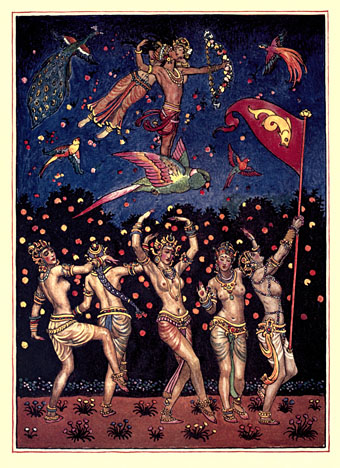
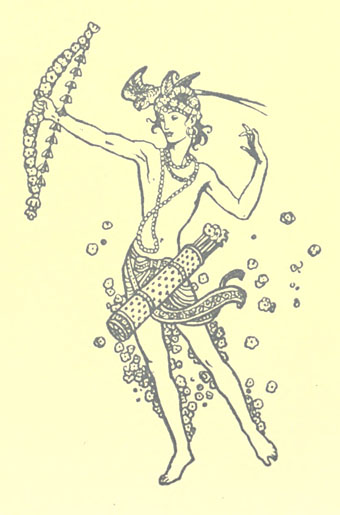
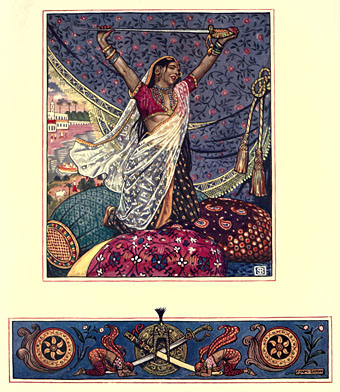
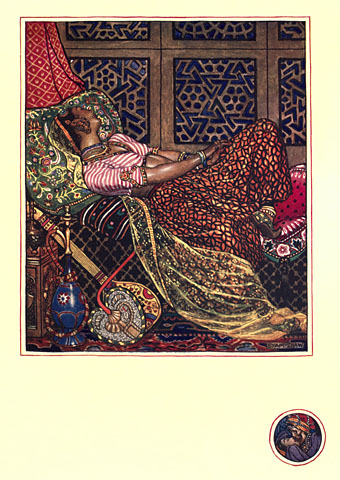
The post title sounds like a psychedelic album but the illustrations are from The Garden of Kama (1901), allegedly a collection of Indian love poems “translated by Laurence Hope”. The translator’s real name was Adela Florence Nicolson who no doubt wished to do for India what Edward Fitzgerald had done for Persia but rather than presenting new translations of unknown verse the poems were all her own work. The book survived this mild scandal to be republished several times, the illustrations here by Byam Shaw (1872–1919) being from a 1914 edition. I linked to a selection of these plates last year when they were posted at Golden Age Comic Book Stories but anyone wanting to see the complete book, poems and all, may do so at the Internet Archive.

The content may be Orientalist pastiche but Shaw paid great attention to the decorative details. This is also an adult work, with violence, death and some sexy females. So many illustrated books of this period are children’s stories it can be a surprise to find something where the characters don’t live happily ever after.

shaw02.jpg

shaw03.jpg

shaw04.jpg

Continue reading “Byam Shaw’s Garden of Kama”

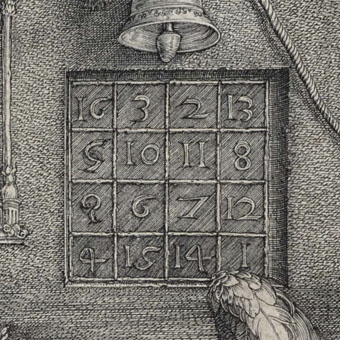
Melencolia details

durer1.jpg

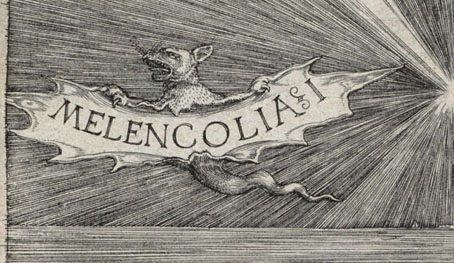
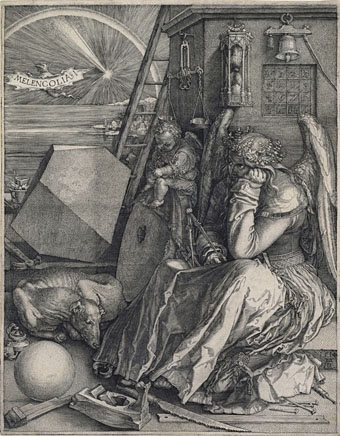
The idle question “Where can you find the best reproduction of Albrecht Dürer’s Melencolia I?” was answered at the Google Art Project where there are four different prints to examine. As usual it seems churlish to complain but I would have preferred one decent copy and a few more Dürer engravings in place of the duplicates; his Knight, Death and the Devil, for example, is absent. There are several other engravings, however, all of whose minute details and shading benefit from close scrutiny. Dürer is well-represented compared to other artists, there are several paintings there as well. The only oddity is the inclusion of this drawing of three witches by Dürer’s pupil Hans Baldung Grien. The museum that owns the drawing credits Grien but a search isn’t really necessary when it’s signed with the artist’s “HBG” monogram in place of Dürer’s famous “AD”. Does Google have any art historians proofing these entries or is it solely the work of technicians copying and pasting information?

durer2.jpg

durer3.jpg

Continue reading “Melencolia details”

Jacques d’Adelswärd-Fersen revisited

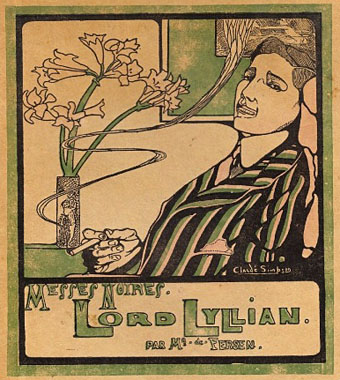
fersen1.jpg

Messes Noires. Lord Lyllian (1905).

An email earlier this week from French bookdealer Chez les libraires associés contained a link to an online catalogue of books by or related to that disreputable Uranian Jacques d’Adelswärd-Fersen, the subject of this earlier post. The catalogue describes the poet as “l’Oscar Wilde français” which isn’t strictly true since Wilde had (and has) a far higher literary reputation. And when it came to homosexual scandal Fersen didn’t suffer anything like Wilde’s appalling treatment, he simply decamped (so to speak) to Capri with his boyfriend, Nino Cesarini. The latter is the subject of another document linked in the same email, Nino et son jumeau, an investigation (in French) concerning “Faces and legends of the friend of Jacques d’Adelswärd-Fersen. What is known of the appearance of Nino, are there pictures of him by von Gloeden, von Plüschow or Vincenzo Galdi?” A number of the pictures in question show Nino and others in various states of undress so those wishing to view the pages will need to be registered at Issuu first.

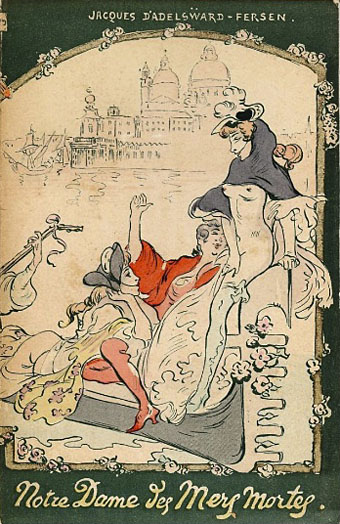
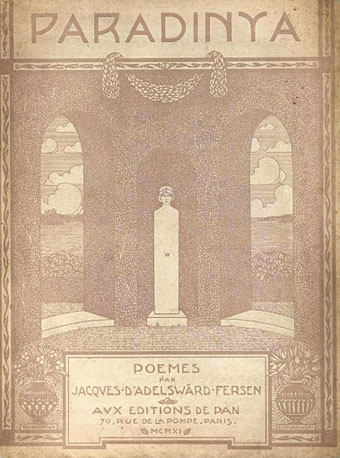
A couple more covers from the catalogue follow. All these publications are rare and correspondingly expensive but I still find it fascinating seeing any of this material at all when it’s been proscribed and ignored for so long. While we’re on the subject, I’ve only just noticed that Fersen’s Le Baiser de Narcisse (with illustrations by Ernest Brisset) can be viewed complete at Gallica.

fersen2.jpg

Notre-Dame des mers mortes (1902).

fersen3.jpg

Paradinya (1911).

Elsewhere on { feuilleton }
The gay artists archive

Previously on { feuilleton }
Le Baiser de Narcisse

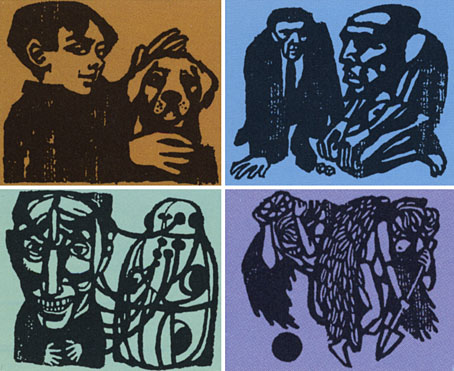
Leo Dillon, 1933–2012

dillons.jpg

Illustrations for Dangerous Visions (1967) by Leo & Diane Dillon.
top left: Lord Randy, My Son by Joe L. Hensley; top right: Gonna Roll the Bones by Fritz Leiber
; bottom left: The Happy Breed by John Sladek; bottom right: Shall the Dust Praise Thee? by Damon Knight

Beyond my love for them and my understanding that they have influenced my ethical and moral life almost more than anyone else I’ve ever known, my respect for their artistic intelligence and their incomparable craft is enormous. Leo and Diane Dillon are the best. Simply put: the best.

Harlan Ellison, from The Illustrated Harlan Ellison (1978)

Pre-internet, illustrators and designers often suffered from being landlocked by whatever territories (to use that wretched marketing term) the work they embellished was sold in. I’ve said as much in the past but it’s worth repeating since it explains how reputations could loom large in one country while the artists in question might be unknown elsewhere. Leo and Diane Dillon are a good example of this, lauded in the US for work that spanned a variety styles and media yet barely visible in Europe unless you chanced across an imported paperback bearing one of their covers. Their long and fruitful relationship with Harlan Ellison saw them illustrate many of his major works, books which when they were reprinted here were often packaged with inappropriate spaceship art by Chris Foss or one of his imitators. Happily the Dillons’ superb woodcut illustrations for Ellison’s Dangerous Visions anthology survived the journey across the Atlantic. I still find those illustrations thrilling for the way they condensed the essence of thirty-two challenging stories with the greatest economy of means. And thanks to the internet we can see just how versatile they were at The Art of Leo and Diane Dillon. That site also includes links to interviews and further examples of their art.

Elsewhere on { feuilleton }
The illustrators archive

Previously on { feuilleton }
Science fiction and fantasy covers
Groovy book covers
Harlan Ellison: Dreams with Sharp Teeth

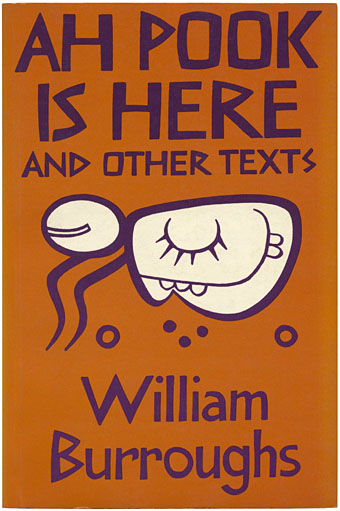
Ah Pook Is Here

pook1.jpg

John Calder edition (1979). Design by Brian Paine incorporating a glyph of Ah Pook from the Dresden Codex.

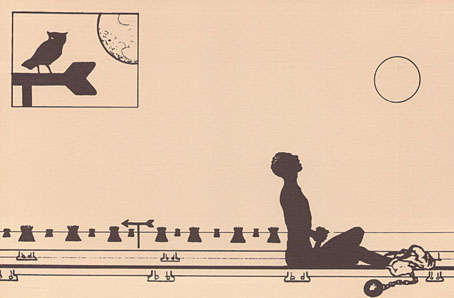
It would have been tempting to write “Ah Pook is finally here” but that’s not quite the case. Artist Malcolm McNeill sent Savoy Books the following preview images last week. What was originally going to be the long-awaited publication of McNeill’s collaboration with William Burroughs, Ah Pook Is Here, will now be two separate volumes published by Fantagraphics Books later this year: The Lost Art of Ah Pook Is Here which will comprise McNeill’s art without the accompanying text (apparently the Burroughs estate objected to its inclusion), and Observed While Falling—Burroughs, Ah Pook and Me, a memoir of the project’s creation. The loss of the text is an annoyance but not the end of the world, at least if you’re fortunate enough to own the scarce Calder book above which comprises a 40-page story that I imagine (and hope) may be read whilst viewing McNeill’s meticulous artwork. Amazon’s listing shows the two books scheduled for October 2012, and there’s now a website for the two books with further preview images.
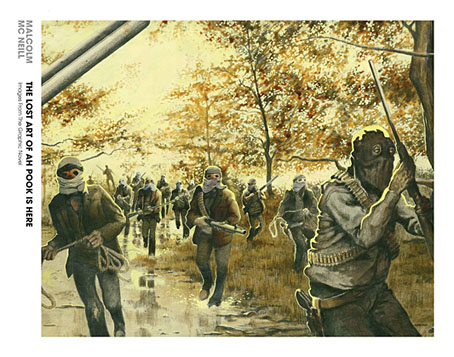
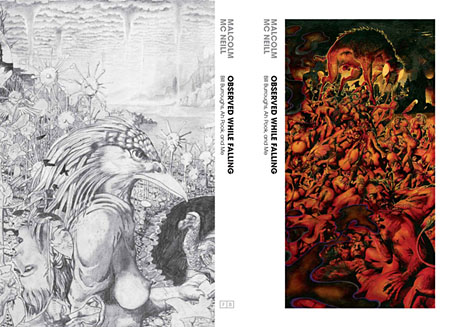
pook2.jpg

pook3.jpg

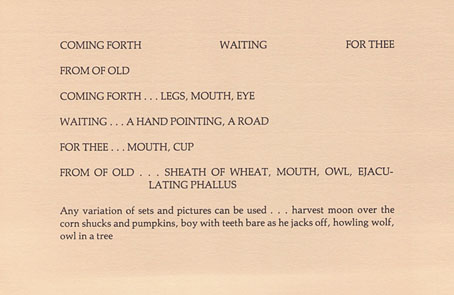
The 1979 Ah Pook Is Here is a fascinating collection, not least for the title piece which fits with the Wild Boys/Port of Saints narratives that Burroughs worked on during the 1970s. It’s also one of the better Burroughs anthologies so it’s always seemed odd that it’s remained resolutely out of print. Burroughs mentions McNeill’s artwork in a preface but doesn’t show any examples of his work. There is other artwork, however: in addition to some uncredited line drawings of figures like those in the Mayan codices there’s the whole of The Book of Breeething, a collaboration with artist Robert F. Gale from 1974. The latter concerns Burroughs’ interest in hieroglyphic communication, and attempts to show how one might convey short sentences through visual images alone, as in the pages below.
breeething1.jpg

The Book of Breeething (1974).

breeething2.jpg

The final piece in the book is The Electronic Revolution, an essay about using technology for guerilla purposes which was an inspiration for Cabaret Voltaire and others. All of this is choice and unusual material so it’s surprising that it’s been out of print for so long. In the case of Ah Pook Is Here it’s even more surprising to find it being prevented from republication despite Burroughs’ hope in his 1978 preface that the text would eventually be published along with the artwork. I’m sure the Burroughs estate have their own reasons for these manoeuvres but you can’t help but feel that this is another example of best intentions acting posthumously against the wishes of the artist they represent. A final irony can be found on the first page of Ah Pook Is Here where we see several mentions of a predatory agency that Burroughs warned against throughout his career, the thing he called CONTROL.

Elsewhere on { feuilleton }
The William Burroughs archive