La Vie Électrique by Albert Robida

robidavie01.jpg

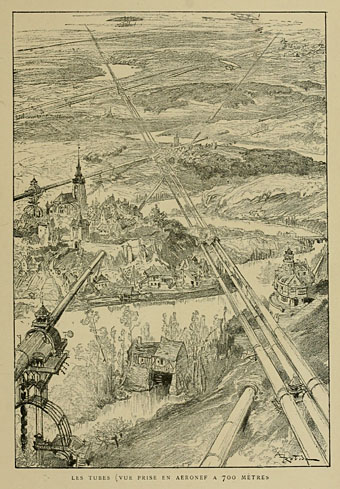
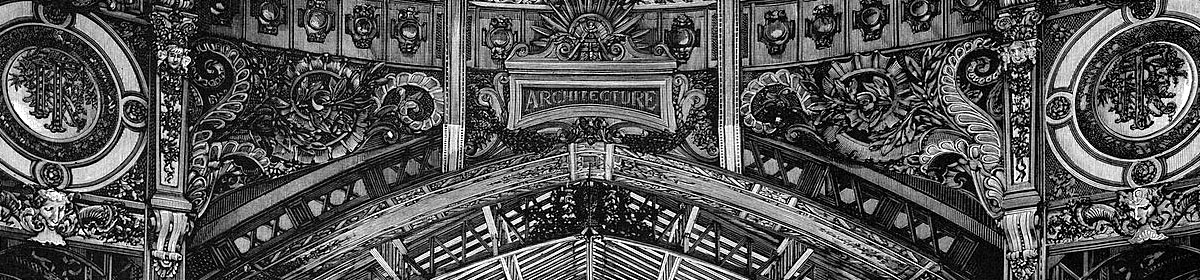
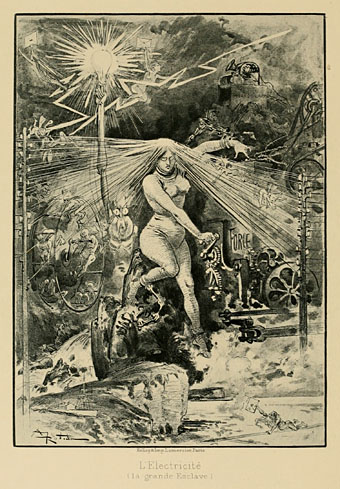
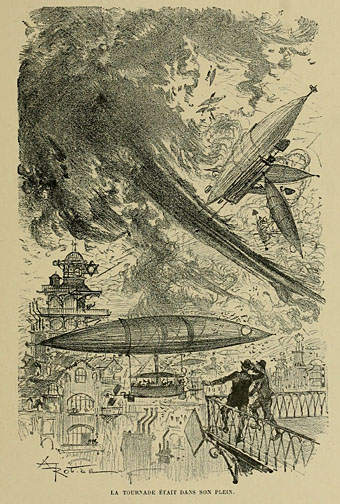
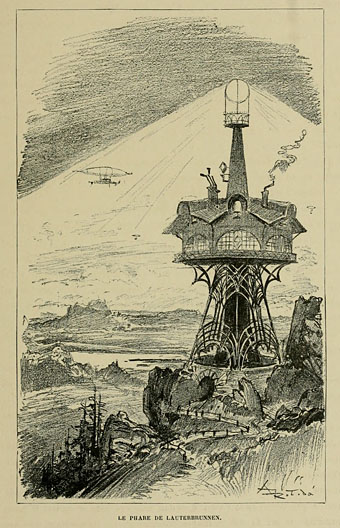
Albert Robida (1848–1926), a French illustrator and writer, might be less well-known today had he not authored several books which attempt to predict what life might be like in the 20th century. He was sufficiently well-regarded in his lifetime to be given the task of imagining “Old Paris” for one of the attractions at that cult event of mine, the Exposition Universelle of 1900. These days his work mostly appears in histories of science fiction as a result of books such as Le Vingtième Siècle: La Vie Électrique, a comic novel published in 1890 that looks at French life in the distant year of 1955. The attitude may be humorous, with a drawing style that resembles the contraptions of William Heath Robinson rendered by Gustave Doré, but some of Robida’s predictions are as prescient as those of HG Wells. The inhabitants of France in the 1950s may still dress like those in the 1890s but they communicate via “Téléphonoscope” while the military wage biological and chemical warfare. The usual fleets of fanciful airships fill the skies; the idea that everyone in the future would be the owner of a flying-machine goes back a long way. Robida also shows submarines, transit tubes connecting cities, and pollution caused by the new technologies.

La Vie Électrique is copiously illustrated so the selection here is a necessarily small sample. Anyone wishing to see the whole book can browse it or download it at the Internet Archive.
robidavie02.jpg

robidavie03.jpg

robidavie04.jpg

Continue reading “La Vie Électrique by Albert Robida”

Weekend links 118

owczarek.jpg

The Garden of Urban Delights (2010) by Marcin Owczarek.

His protagonists are misfits: alienated, implicitly gay, longing for love, frequently hard to be around, always fixated on small pleasures that compensate for an essential feeling of not belonging. […] His patroness Edith Sitwell termed him “that rare being, a born writer.” William Burroughs dedicated The Place of Dead Roads to him, declaring Welch “certainly the writer who most directly influenced my work.” John Waters has called In Youth is Pleasure “so precious, so beyond gay, so deliciously subversive, [it] is enough to make illiteracy a worse social crime than hunger.”

Sadie Stein on Denton Welch, a writer I’m embarrassed about still not having read. Edith Sitwell and William Burroughs had a famously disputatious correspondence in the pages of the TLS over The Naked Lunch. An appreciation of Welch’s work was one of the few things they had in common.

• Don’t mention guitars: Robert Hampson on acousmatic music, the curse of Loop and the rebirth of Main.

• No Straight Lines: A Collection Of Queer Comics part one, part two, part three. A history by Justin Hall.

Pieces Of Gold by The Aikiu: shots from gay porn videos repurposed via some smart editing.

• RIP İlhan Mimaroğlu, electroacoustic composer. Ubuweb has a selection of his recordings.

“A good ground rule for writing in any genre is: start with a form, then undermine its confidence in itself,” he says. “Ask what it’s afraid of, what it’s trying to hide – then write that.” For Harrison, the most satisfying writers are “at odds with their cultural context. They’re trying to fit in and failing, or they’re trying to remove themselves and failing. The attempt to resolve the conflict is an angle – a frame or a context – in itself.”

The Guardian’s A Life in Writing profiles M. John Harrison. His new novel, Empty Space, was published on Thursday. There’s also this recent video interview with Arc magazine.

• Stephen Usery interviews editor Russ Kick about The Graphic Canon: Volume One.

At home with Prince Zaleski, the “most decadent and imperial detective in fiction”.

• A Visit with Magritte: photographs by Duane Michals.

Loitering airships could dispense drones on demand.

• Creating a Forever Object: Ian Schon’s Pen Project.

• A Tumblr for the late, lamented Arthur Magazine.

• “Few cities can boast a railway line for the dead.”

The Lost Tapes by Can: An Oral History.

Space Reflex (1963) by Dick Hyman & Mary Mayo | Space Is Deep (1972) by Hawkwind | Space Is The Place (1973) by Sun Ra | Space Moment (1995) by Stereolab | Space Pong (2006) by T++

Burgonets by Filippo Negroli

negroli1.jpg

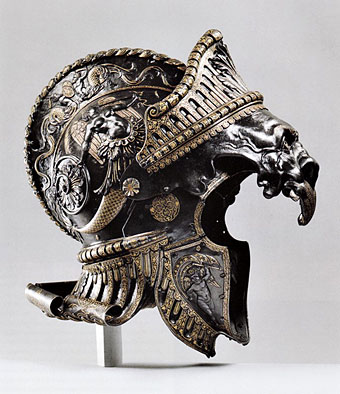
Parade burgonet of Emperor Charles V (1545).

burgonet a. A very light casque, or steel cap, for the use of the infantry, especially pikemen. b. A helmet with a visor, so fitted to the gorget or neck-piece, that the head could be turned without exposing the neck.

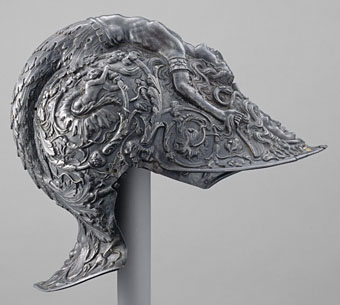
Filippo Negroli (c. 1510–1579) was a Renaissance master of ceremonial armour as is evident from these few examples. Fascinating seeing the kind of elaborate grotesquerie more commonly found in engraved prints rendered into wearable three-dimensional form. Burgonet number four can be viewed in detail at the Google Art Project. There’s more of Negroli’s work at Flickr.

negroli2.jpg

Burgonet (c. 1532–35).

negroli3.jpg

Burgonet Alla Romana Antica (no date).

negroli4.jpg

Burgonet (1543).

Previously on { feuilleton }
Leonardo’s warrior

Un Chant d’Amour (nouveau)

chant.jpg

A brief homage by Sam Scott Schiavo to Genet’s masterwork of homoerotic cinema Un Chant d’Amour (1950). Genet’s film works so well, and is so closely tied to his artistic obsessions, it’s difficult to approach but it’s good to see it still wields an influence. For comparison the original film can be watched at Ubuweb.

Previously on { feuilleton }
Jean Genet… ‘The Courtesy of Objects’
Querelle again
Saint Genet
Emil Cadoo
Exterface
Penguin Labyrinths and the Thief’s Journal
Un Chant D’Amour by Jean Genet

Terminus by John Schlesinger

terminus.jpg

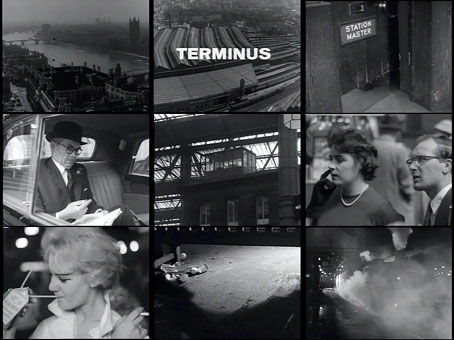
Before John Schlesinger made his debut feature, A Kind of Loving (1962), he directed a number of short documentary films. Terminus (1961), a day in the life of the Waterloo railway station in London, is the most notable of these, an award-winning snapshot of a period when Britain’s railways were still nationalised and steam trains were about to vanish from regular service. The film has that crisp, black-and-white photography so typical of the early 1960s, a look which renders close-ups with uncanny fidelity and makes the outmoded fashions—the bowler-hatted men and gloved women—seem all the more curious. A year later Orson Welles was deploying a similar style when photographing the dishevelled splendour of the Gare d’Orsay in Paris for his film of The Trial.

For a different take on London’s railway stations there’s Terminus by analogue electronic outfit Node, a track inspired by concerts they played live at Paddington station in 1995.

Previously on { feuilleton }
Screening Kafka