Weekend links 148

lanna.jpg

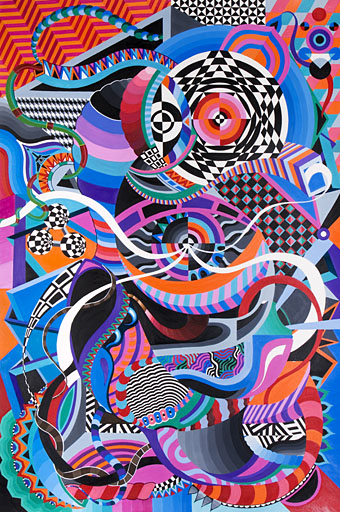
Quantum Entanglement by Duda Lanna.

An hour-long electronica mix (with the Düül rocking out at the end) by Chris Carter for Ninja Tune’s Solid Steel Radio Show.

• “…a clothes-optional Rosicrucian jamboree.”: Strange Flowers on the paintings of Elisàr von Kupffer.

• A Paste review of volume 2 of The Graphic Canon has some favourable words for my contribution.

It is an entertaining thought to remember that Orlando, all sex-change, cross-dressing and transgressive desire, appeared in the same year as Radclyffe Hall’s sapphic romance The Well of Loneliness. The two novels are different solar systems. The Well is gloomy, beaten, defensive, where women who love women have only suffering and misunderstanding in their lonely lives. The theme is as depressing as the writing, which is terrible. Orlando is a joyful and passionate declaration of love as life, regardless of gender. The Well was banned and declared obscene. Orlando became a bestseller.

Jeanette Winterson on Virginia Woolf’s androgynous fantasia.

Jim Jupp discovers the mystical novels of Charles Williams.

Michael Andre-Driussi on The Politics of Roadside Picnic.

Les Softs Machines: 25 August 1968, Ce Soir On Danse.

• At 50 Watts: Illustrations and comics by Pierre Ferrero.

Soviet posters: 1469 examples at Flickr.

Oliver Sacks on drugs (again).

• At Pinterest: Altered States.

• Farewell, Kevin Ayers.

Darkest London

Why Are We Sleeping? (1969) by The Soft Machine | Lady Rachel (1969) by Kevin Ayers | Decadence (1973) by Kevin Ayers
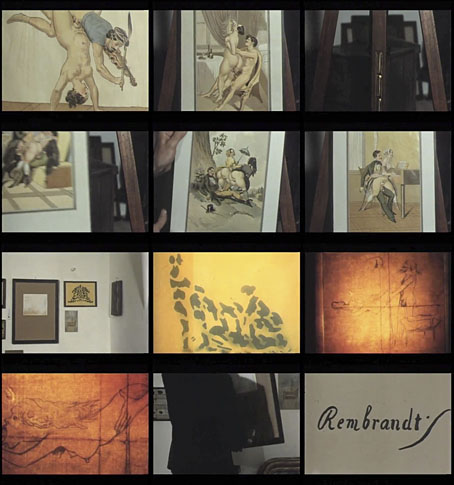
Une Collection Particulière by Walerian Borowczyk

borowczyk.jpg

British animator Bob Godfrey died this week but as a result of copyright restrictions there’s little of his work on YouTube aside from the films he made for children’s television in the 1970s and 1980s. One of those series, Roobarb (1974), is a personal favourite, but Godfrey had a long career in animation, and worked in many different styles. Two years before Roobarb he caused a stir with the bawdy Kama Sutra Rides Again (1972), a cartoon that was banned for a while, animated films being subject to the same ignorant reaction as comics from those who see them as a medium solely for children. Since we can’t watch Godfrey’s film online here’s something he may have appreciated, fellow animator Walerian Borowczyk in 1973 showing off his collection of vintage erotic art. After this Borowczyk abandoned animation for the no doubt more lucrative world of the sexploitation feature film.

Previously on { feuilleton }
Dom by Walerian Borowczyk and Jan Lenica
Les Jeux des Anges by Walerian Borowczyk
Labirynt by Jan Lenica
Short films by Walerian Borowczyk

Fabulous harbours

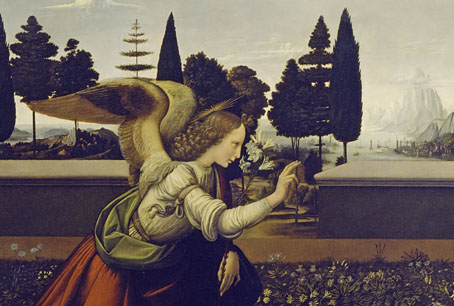
leonardo1.jpg

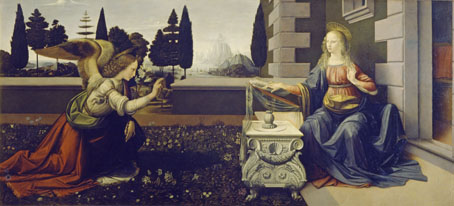
The Annunciation (c. 1472).

One pleasure of seeing paintings in an art gallery is the ability to scrutinise details. I like to be able to see that, yes, Picasso did indeed use a single stroke of the brush beginning here and ending here. Backgrounds are a recurrent source of interest if you’ve ever tried any kind of pictorial painting yourself. I always have a greater sense of the artist’s presence in the background details since that’s the area of a picture which few viewers will pay any attention to. In the foreground the artist is always aware of the viewer’s gaze; in the background the artist has a sense of being left alone. It’s there that the mind is most liable to wander when you’re at work.

leonardo2.jpg

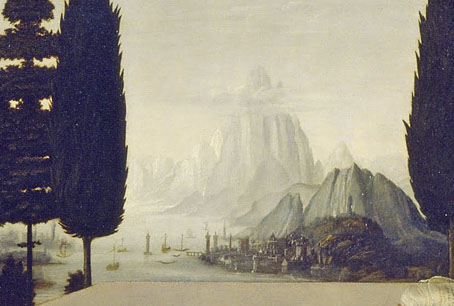
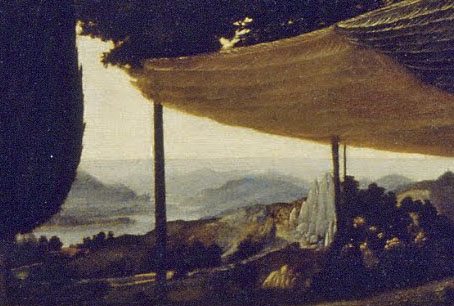
The trouble with very famous paintings is that they’re almost always preserved from this kind of close scrutiny either because they’re too popular—so you have a few seconds to stand there before having to make room for others—or they’re being monitored by gallery staff who don’t want you getting too close, or—as in the case of Leonardo da Vinci’s few paintings—they’re imprisoned behind sheets of glass. Few art books outside the weighty monographs ever show you actual brushstrokes or give you a close view of the background details, so once again it’s thanks to the Google Art Project that we can examine two of Leonardo’s paintings in a manner that wouldn’t be allowed unless you were an art historian.

leonardo3.jpg

The Annunciation originated in Andrea del Verrocchio’s studio where Leonardo was apprenticed. Leonardo is believed to have painted the angel—which certainly looks like his work—and the background which includes a fantastic harbour and, in the vaporous distance, some colossal mountain peaks. I’ve always liked this painting for the composition and sense of stillness, those trees standing outside the garden like vertical plumes of smoke. We’re told that a later hand extended the angel’s wings which I can easily believe since their termination clashes with the disposition of the trees; you’d never do that deliberately when everything else in the picture is so carefully arranged.

leonardo4.jpg

Continue reading “Fabulous harbours”

The art of Konstantin Somov, 1869–1939

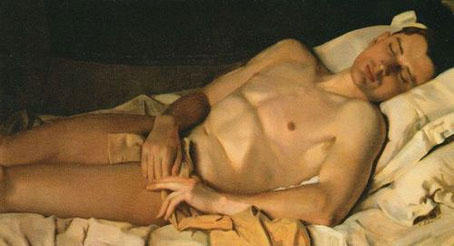
somov01.jpg

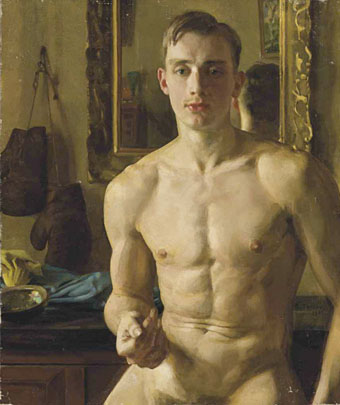
Naked Young Man (1937).

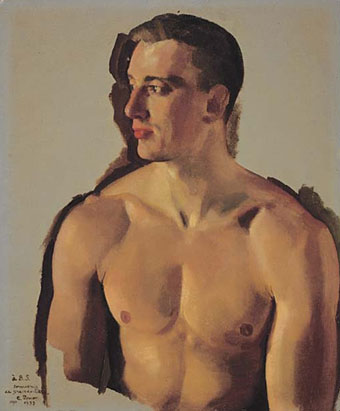
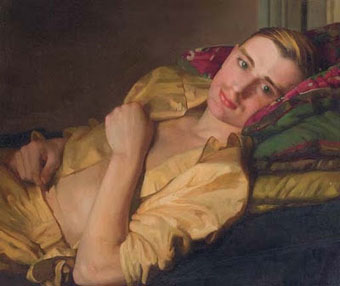
The work of Russian painter Konstantin Somov has a decent presence on the web, albeit separated into his public works which comprised portraits, landscapes and illustrations, and his more private, homoerotic studies of voluptuous Russian men. The former can be seen at WikiPaintings or The Atheneum where there’s a recurrent theme of rococo fantasy similar to that being explored by Rex Whistler in Britain between the wars. (Whistler’s work was recently featured at Little Augury.) It is, of course, the other side of Somov’s work that concerns us here. This gives me an opportunity to put titles and dates to some of the paintings circulating on gay art sites with no details at all.

Somov was friends with Sergei Diaghilev, and provided illustrations and designs for Diaghilev’s Mir Iskusstva arts magazine. This year is the centenary of the first performance of The Rite of Spring so expect to hear more about the great Sergei and company in the coming months.

somov02.jpg

The Boxer (1933).

somov03.jpg

Portrait of A Man (1933).

somov04.jpg

A Reclining Man (1936).

Continue reading “The art of Konstantin Somov, 1869–1939”

Interzone: A William Burroughs Mix

burroughs.jpg

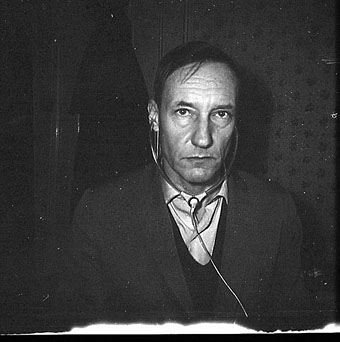
Interzone is a selection of William Burroughs recordings mixed with electronic music and other pieces such as extracts from Howard Shore & Ornette Coleman’s Naked Lunch soundtrack:

A tribute to ‘El Hombre Invisible’. It features some of my favourite readings, to which I’ve added music by John Zorn (from his Burroughs-inspired work), Tod Dockstader, Arne Nordheim and others. Also in the mix are radio recordings and vocal cut-ups by the man himself.

The curator is Mixcloud user Timewriter, one of whose mixes I linked to last Halloween. I was surprised to find I’d already downloaded the Burroughs mix from the Timewriter blog, Include Me Out, but hadn’t managed to listen to it. Better late than never. This week seems a good time to draw attention to both the mix and that blog in general which features among its posts a quantity of Burroughs-related ephemera. Many of the mix readings are from the albums of Burroughs’ tape recordings from the 1960s, including Nothing Here Now But The Recordings, the collection of tape experiments released by Industrial Records in 1981. The latter is essential listening for anyone who appreciates Burroughs’ early novels; some of its pieces such as Last Words of Hassan Sabbah sound less like readings of the author’s work than actual artefacts from the books themselves.

Elsewhere on { feuilleton }
The William Burroughs archive