In A Silent Way

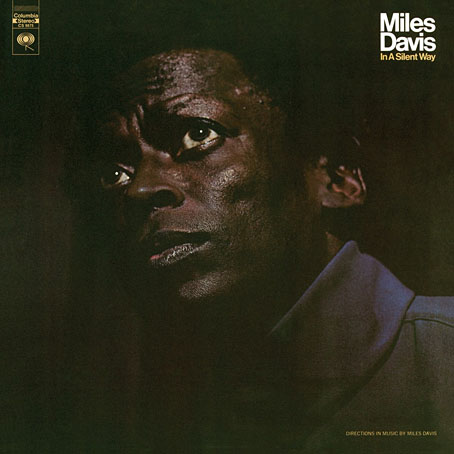
In A Silent Way (1969) by Miles Davis

miles.jpg

In A Silent Way (YT)

In a Silent Way was assembled from various takes from a three-hour session on February 18, 1969, at CBS 30th Street Studio’s Studio B in Manhattan. “Shhh / Peaceful” was composed solely by Davis, while the opening and closing section to “In a Silent Way / It’s About That Time” is based on [Joe] Zawinul’s “In a Silent Way”, which he would record in its original form in 1970 for his third solo album, Zawinul (1971). After Zawinul presented the tune to the group, it was rehearsed as it was originally written, but Davis wished for it to sound more rock-oriented and stripped the various chord changes to leave a more basic melody built around a pedal point. [John] McLaughlin had some difficulty playing in the manner Davis wished of him, but found his way after the trumpeter suggested he play the guitar as if he were a novice. Davis believed that Zawinul was never happy with his adaptation of “In a Silent Way”, but felt that the album would have been less successful had its original arrangement been kept. Zawinul had expressed some dislike of Davis’ arrangement, in particular of two chords that he believed that Davis was wrong to remove. Zawinul claimed that he was responsible for the melodic bass line and descending melody of “It’s About That Time” but was not credited; he blamed [Teo] Macero for this, as he “always put things together so that it came out as if Miles had written it.” (more)


Zawinul (1971) by Joe Zawinul

In A Silent Way (YT)


Celebration (1972) by El Chicano

In A Silent Way (YT)


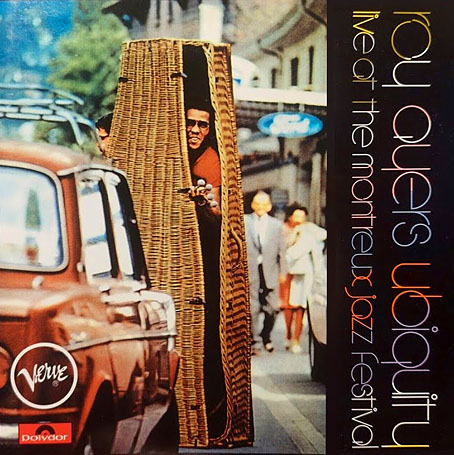
Live At The Montreux Jazz Festival (1972) by Roy Ayers Ubiquity

ayers.jpg

In A Silent Way (Should really be titled It’s About That Time since Ayers is playing the second part of the Davis piece) (YT)


Filmore – The Last Days (1972) by Various Artists

In A Silent Way by Santana (YT)


Double Exposure (1975) by Nat Adderley

In A Silent Way (YT)


Concerto Retitled (1976) by Joe Zawinul

In A Silent Way (YT)


Babel (1978) by Max

D’Una Manera Silenciosa (YT)


Continue reading “In A Silent Way”

Weekend links 740

severin.jpg

Winged Figure (no date) by Mark Severin.

• At Wormwoodiana: News of the publication of two uncollected early stories by Cormac McCarthy. I happen to be reading McCarthy’s penultimate novel, The Passenger, at the moment. Very enjoyable and very different to what I was expecting.

• At Smithsonian Magazine: Yayoi Kusama‘s largest permanent public sculpture arrives in London.

• At Colossal: A futuristic 150-foot installation imagines Chicago’s never-built architecture.

The record sounded like nothing else, seemingly came from nowhere and related to nothing I could identify with any confidence: whistling, whispering, mumbling, pig grunts, exhalations of breath, chants and vocal imitations of nocturnal forest sounds, arco double bass and electric bass, nursery rhymes, impenetrable accents and languages, tambourines, unidentifiable tuned percussion imprecisely struck, mandolin, banjo, flutes, congas, bottleneck guitar, second line drumming with virtually no cymbals, dense percussion, organ bass, harpsichord, reed instruments played through electronic effects and organ lines sounding like anything but themselves. There was no piano, despite what some later commentators have claimed, and in fact very little harmonic underpinning in the majority of tracks. Instead of piano or guitar chords to fill out the ensemble sound there is the celebrated Gold Star echo chamber, into which instruments and voices sank as if dropping away into the abyss.

Zozo la Brique, Jump Sturdy, Coco Robichaux, Queen Julia Jackson, Mama Roux, Tit Alberta—questions flared like fireworks. Who were these characters who populated the lyrics. Were they voodoo practitioners, alive or dead, fictitious or real? Ishmael Reed’s visionary novel, Yellow Back Radio Broke-Down, was published not long after, in 1969. Years later I read it and was startled to bump into Zozo la Brique once more. So these were real people, or named phantoms, or figures of legend at least. “O Doc John,” Reed wrote, “Doc Yah Yah and Zozo Labrique Marie Laveau the Grand Improvisers if I am not performing these rites correctly send the Loa anyway and allow my imagination to fill the gaps.”

David Toop in an extract from Two-Headed Doctor: Listening For Ghosts In Dr. John’s Gris-Gris

• New music: Hidden Structures by Time Being, and Buried (Your Life Is Short) by The Bug.

• At Spoon & Tamago: Minimal and tranquil charcoal drawings by Masahiko Minami.

• New weirdness: Cat Location Conundrum by Moon Wiring Club.

• At Unquiet Things: The art of Dylan Garrett Smith.

• At Dennis Cooper’s: Toshio Matsumoto Day.

• RIP Alain Delon.

Gris-Gris Gumbo Ya Ya (1968) by Dr John | Gumbo (1971) by Santana | Roochoo Gumbo (1976) by Harry “The Crown” Hosono

Stomu Yamash’ta’s Seasons

stomu1.jpg

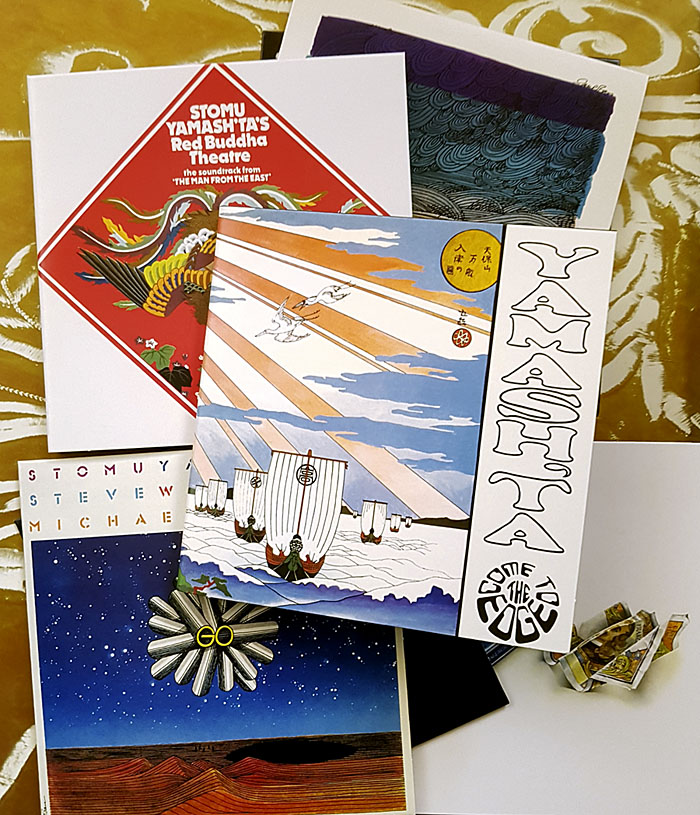
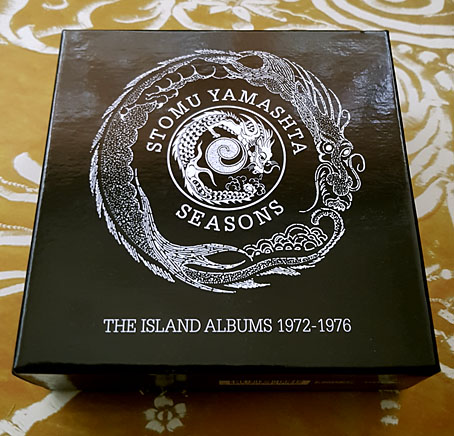
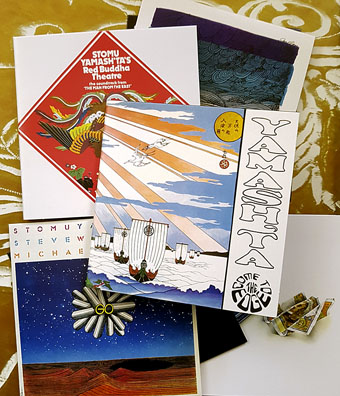
If you’ve ever watched The Man Who Fell to Earth then you’ve heard music by Japanese percussionist and composer Stomu Yamash’ta. The opening scene where David Bowie’s duffle-coated alien stumbles down a hillside (falling to earth for a second time) is scored with the first few minutes of Poker Dice, the opening track on Yamash’ta’s Floating Music album; more Yamash’ta pieces are heard later in the film. Floating Music has just been reissued on CD by Cherry Red in Seasons, a box set which contains all seven of the albums Yamash’ta recorded for the Island label from 1972 to 1976, with each disc housed in a facsimile card sleeve.
stomu2.jpg

Stomu Yamash’ta’s artistic profile was very high in the 1970s, high enough to make his apparent disappearance in the decade that followed an unusual thing. Unusual for me, anyway. I only started to notice his name in the early 1980s, mostly in connection with feature films, and couldn’t work out why he was no longer mentioned anywhere as an active artist. In addition to the Roeg soundtrack he plays on the soundtracks for Robert Altman’s Images (1972) and Saul Bass’s Phase IV (1974); he’s also one of the performers on the Peter Maxwell Davies score for The Devils (1971) although Ken Russell’s film gets to be so chaotic I’ve yet to identify his contribution. Later in the decade Yamash’ta was the only non-Western artist to appear in the final episode of Tony Palmer’s television history of pop music All You Need Is Love, in a programme that explored new musical directions. Away from films and TV there were numerous concerts; Yamash’ta’s history as a percussion prodigy in the 1960s had seen him performing compositions by Peter Maxwell Davies and Toru Takemitsu when he was still in his teens. His energetic performances gave way to a frenzied recording schedule—in 1971 alone he recorded six studio albums—which culminated in 1976 with the founding of Go, a short-lived jazz-fusion supergroup whose lineup included Steve Winwood, Al Di Meola, Michael Shrieve, and (surprisingly) Klaus Schulze.

Yamash’ta’s “disappearance” in the 1980s was really a retreat from the spotlight after a decade-and-a-half of almost continual public activity. He returned to Japan where he continued recording but gravitated away from jazz and avant-garde music towards the spiritual side of Japanese culture. Most of his albums since 1980 have only been Japan-only releases, another factor contributing to his obscurity elsewhere. More recently he’s taken to playing the Sanukitophone, a bespoke percussion instrument made from a variety of volcanic rock unique to the Japanese archipelago.
stomu3.jpg

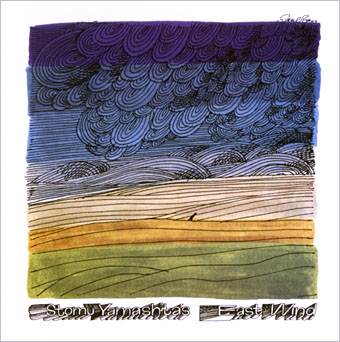
Freedom Is Frightening (1973), one of three Yamash’ta albums with cover designs by Saul Bass.

The albums in the new box set encapsulate what might be called Yamash’ta’s “Kozmigroov” period, although Yamash’ta’s name is absent from the generally thorough and wide-ranging Kozmigroov Index. This is also his most commercial period. Prior to 1972 Yamash’ta’s recordings were soundtracks, performances with orchestras or improvised freakouts; from 1980 his music seems to be predominantly meditational (“New Age”, if you must) but I’ve not heard most of it so can’t say much about it. Kozmigroov is jazz fusion at core, usually combining a variety of disparate influences, which is what you have here: extended arrangements of jazz, funk, soul, rock, electronics, and occasional moments of traditional Japanese music. The continually changing group names testify to a restless nature: Floating Music (1972) by Stomu Yamash’ta & Come To The Edge (a British jazz group), Freedom Is Frightening (1973) by Stomu Yamash’ta’s East Wind, The Soundtrack From “The Man From The East” (1973) by Stomu Yamash’ta’s Red Buddha Theatre, One By One (1974) by Stomu Yamash’ta’s East Wind, and Raindog (1975) by Yamashta [sic]. Then there’s the self-titled Go album (with a cover design by Saul Bass) and its live counterpart, Go…Live From Paris. (A third and final album by the group, Go Too, was released on Arista so isn’t included in this set.) The sound evolves from semi-improvised instrumentals on the first few albums to songs and more rock-oriented arrangements on Raindog and the Go releases, with the Steve Winwood songs on the latter coming across as a step into more predictable territory compared to the earlier recordings. The Go live album is much better than the uneven studio set, a sustained suite of songs and instrumentals linked by Klaus Schulze’s synthesizers; Schulze gets a big cheer when the band is introduced. If you like jazz fusion there’s a lot to enjoy in this box, a third of which I hadn’t heard before. Dunes, the opening track on Raindog, unfolds over 15 minutes with an insistent groove that brings to mind the Mahavishnu Orchestra and early Santana, although Maxine Nightingale is a better singer than anyone on the Santana albums. And if you are familiar with The Man Who Fell to Earth then you get all of Yamash’ta’s music from the soundtrack scattered across these albums, most of which is only heard as extracts during the film.

With the recent reissue of Sunrise From West Sea “Live” I’m tempted to think that we might be due for a resurgence of interest in Stomu Yamash’ta’s music, but the prior availability of the Seasons albums as individual CDs doesn’t appear to have prompted a clamour for more. There’s a lot more out there, however, especially the rare Japanese releases from the early 1970s. Follow the links below for more detail.

The Infinite Horizons of Stomu Yamash’ta by Gregor Meyer.
The Strange World of…Stomu Yamash’ta by Miranda Rimington.

Previously on { feuilleton }
The Devils on DVD
Directed by Saul Bass
Saul Bass album covers
Images by Robert Altman

Mati Klarwein book covers

mati1.jpg

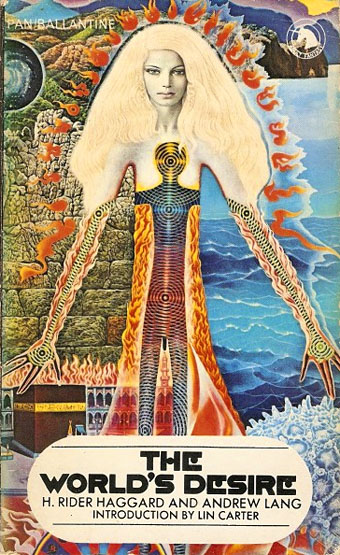
The World’s Desire (1972) by H. Rider Haggard & Andrew Lang. Painting: Astral Body Asleep (1968).

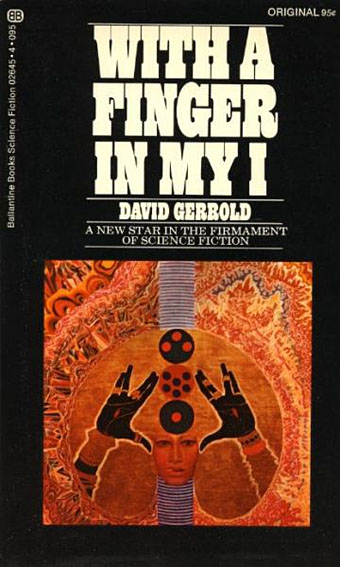
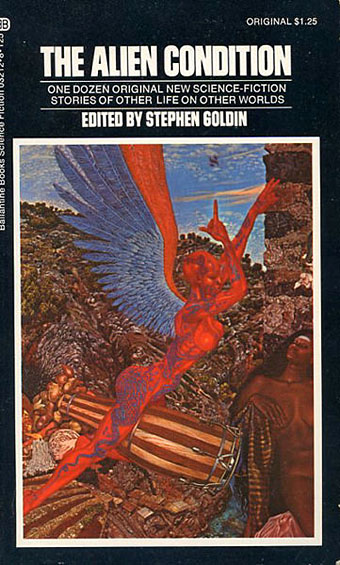
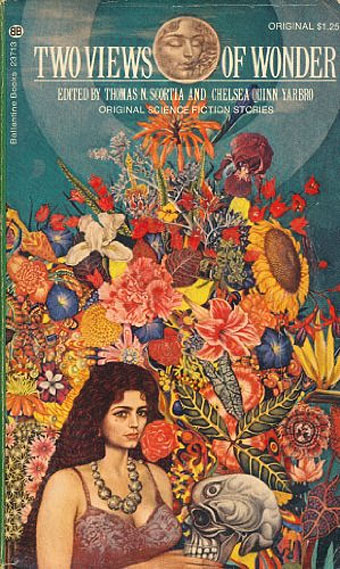
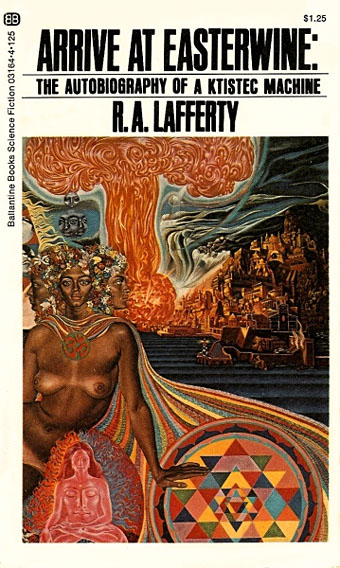
The use of Mati Klarwein’s paintings on album covers is well documented, the official Klarwein site has a small section devoted to some of the covers. Less well-known are these book covers which were evidently the product of a brief enthusiasm for Klarwein’s work in the Ballantine Books’ art department. As with many of the album covers, these are all pre-existing paintings which have been cropped for use as cover art.

The most surprising example is the cover for The Alien Condition with its detail from Annunciation, a painting better known for its appearance on Abraxas (1970), a very successful Santana album. Given how visible that cover art would have been in 1973 you have to suspect that the painting’s use as a book cover was a deliberate bid to attract a youthful readership. All these titles are works of science fiction or fantasy; I don’t recall having seen a Klarwein cover for any non-genre titles. If anyone knows of an example then please leave a comment. (Thanks to Jay for the tip!)

mati2.jpg

With a Finger in My I (1972) by David Gerrold. Painting: Blessing (1965).

mati3.jpg

The Alien Condition (1973) edited by Stephen Goldin. Painting: Annunciation (1961).

mati4.jpg

Two Views of Wonder (1973) edited by Thomas N. Scortia & Chelsea Quinn Yarbro. Painting: Unknown.

mati5.jpg

Arrive at Easterwine: The Autobiography of a Ktistec Machine (1973) by RA Lafferty. Painting: Nativity (1961).

Elsewhere on { feuilleton }
The book covers archive

Previously on { feuilleton }
The art of Mati Klarwein, 1932–2002

Tadanori Yokoo album covers

yokoo01.jpg

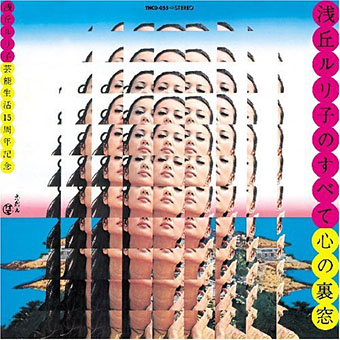
Kokoro No Uramado (1969) by Asaoka Ruriko.

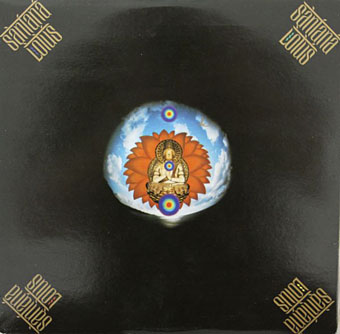
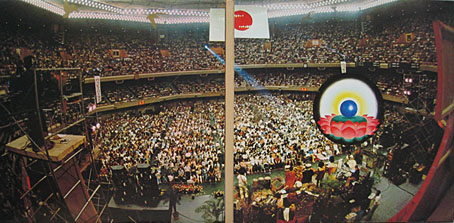
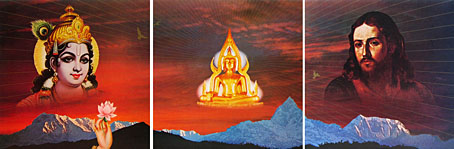
A few examples of Tadanori Yokoo’s earlier cover designs which are the ones I prefer. Although he’s continued to produce collage art for music releases, the CD format does his work few favours. I lose interest musically in Santana after about 1970 so I’d not looked properly at their triple-live set Lotus before, an album which is one of those worth having for the cover alone. Worth having for the cover and the music is Miles Davis’s thundering jazz-rock monolith Agharta which for some reason was given a different cover by Elena Pavlov on its US and European release. For Yokoo’s more recent cover art see his Discogs page.

yokoo02.jpg

Lotus (1974) by Santana.

yokoo03.jpg

Lotus (1974) by Santana.

yokoo04.jpg

Lotus (1974) by Santana.

Continue reading “Tadanori Yokoo album covers”