More from the Decadent Dutch

netherlands3.jpg

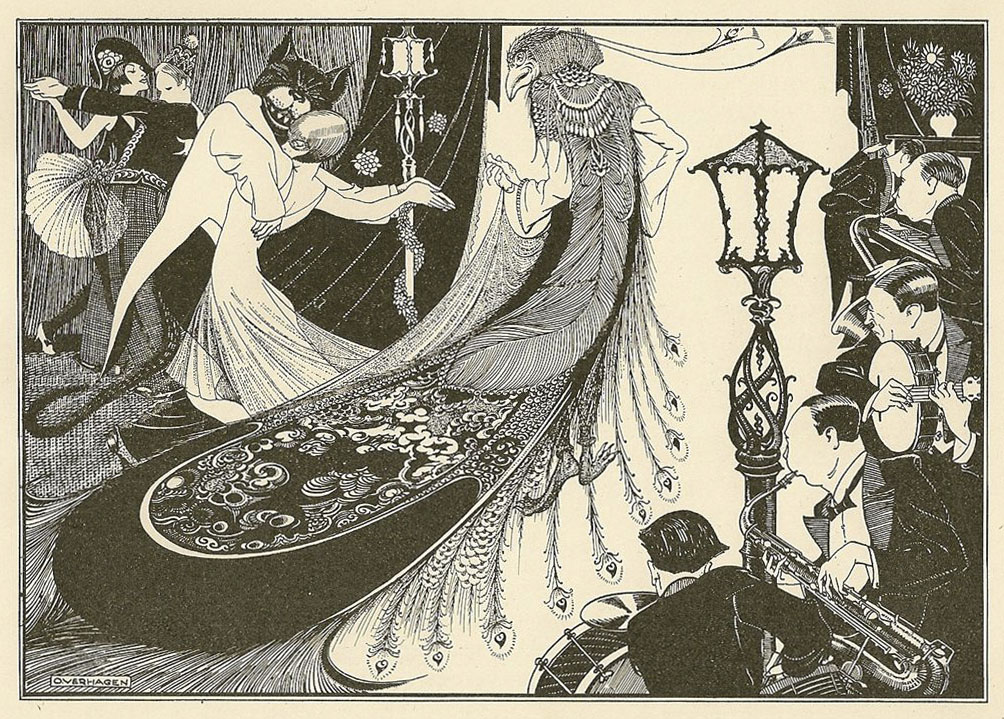
Illustration by Otto Verhagen from Yolanda – Het Boek van Bloei (1931) by Nan Copijn.

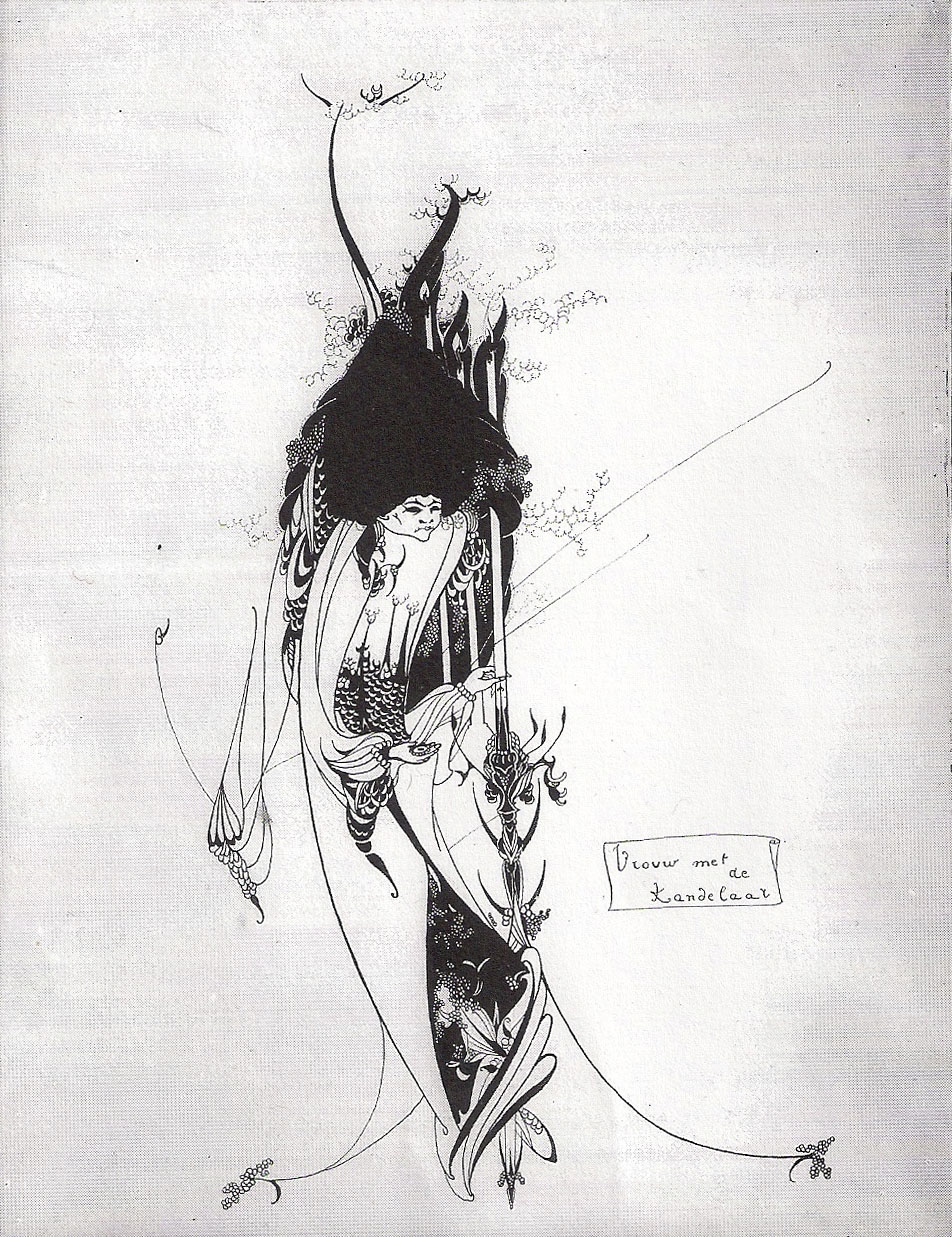
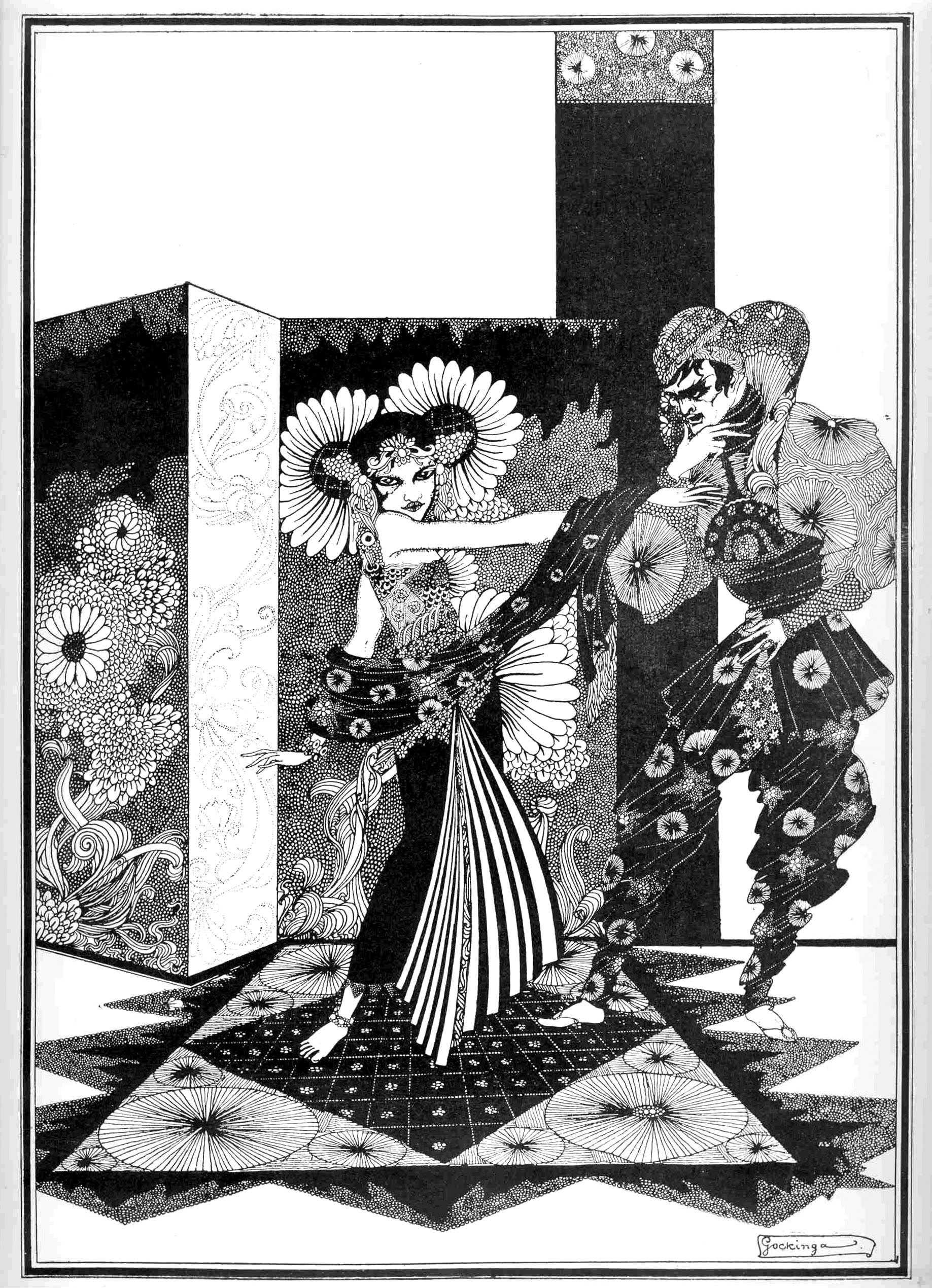
Would-be Decadents is perhaps a better label, the Decadent ship having set sail across an absinthe-tinted sea by the time these artists were putting pen to paper. Their drawings are another set of scarce images forwarded by Sander Bink who maintains the Rond1900 site. (See this earlier post for further examples.) Sandor also sent artwork details which I’ve quoted below. In addition to yet more overt Beardsley influence (the Verhagen above and René Gockinga’s woman with a candle) there’s also a striking Harry Clarke influence in the second Gockinga drawing which is closer to Clarke’s idiosyncratic style than (for example) these later drawings by Cardwell Higgins. Seeing one artist borrow the mannerisms of another is a common thing; far less common is finding an artist who adopts different styles the way Gockinga does. Incidentally, the Couperin novel mentioned below was published with a typically elegant cover design by Symbolist artist Jan Toorop.

(Thanks again Sander!)
netherlands2.jpg

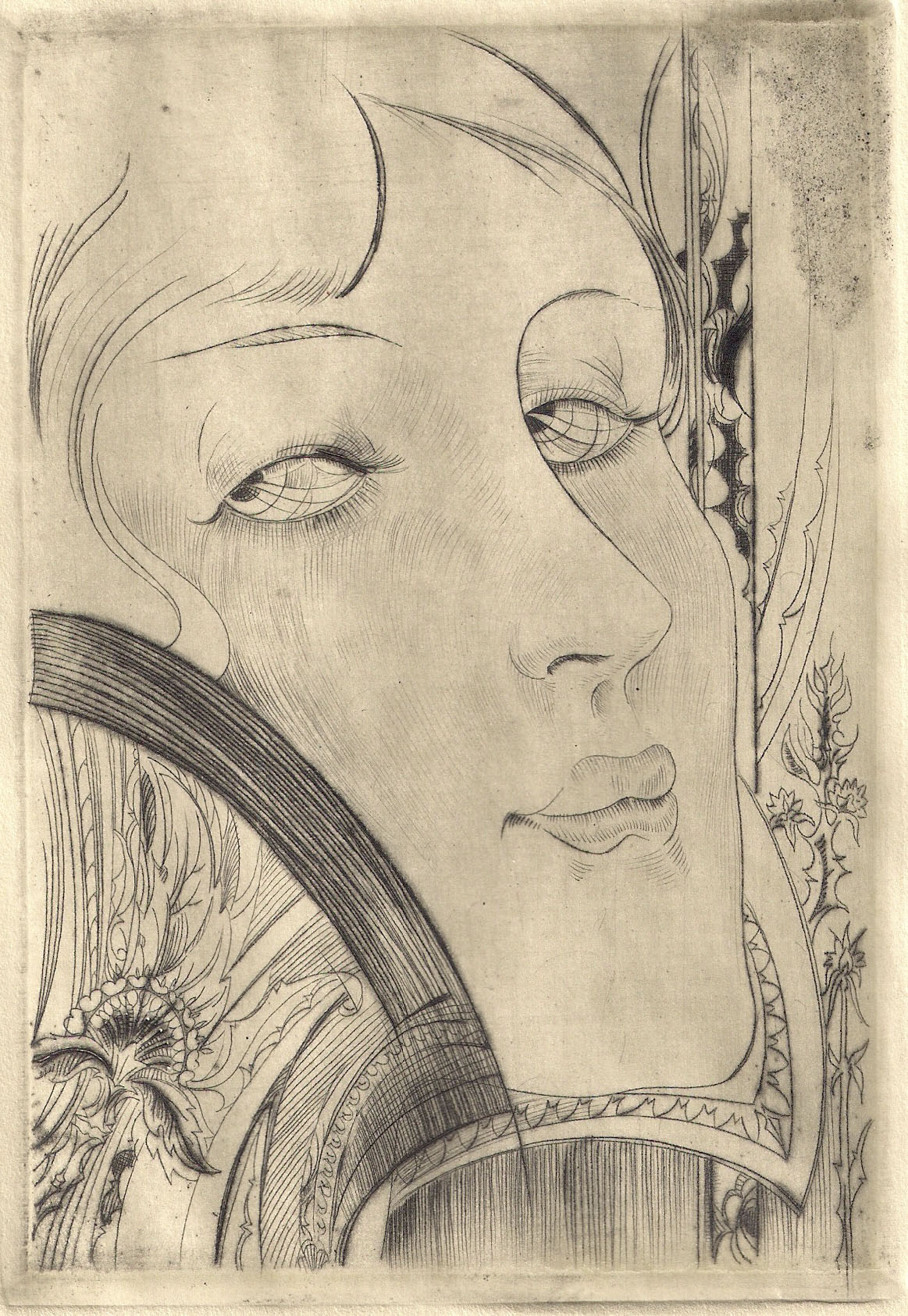
Otto Verhagen. Illustration (not used as such) for Couperus’ Psyche (1898). Engraving, ca 1913. Collection Sander Bink. This is a personage from the story but to me it looks somewhat like an Oscar Wilde portrait!
Illustration for the very popular fairy tale for adults Psyche by Louis Couperus (1863–1923). You might have heard of Couperus: Oscar Wilde appreciated his decadent, somewhat homosexual, novel Noodlot (1890), translated as Footsteps of fate. Some letters were exchanged. Couperus’ wife Elisabeth translated Dorian Gray in 1893. (First Dutch translation.)
netherlands1.jpg

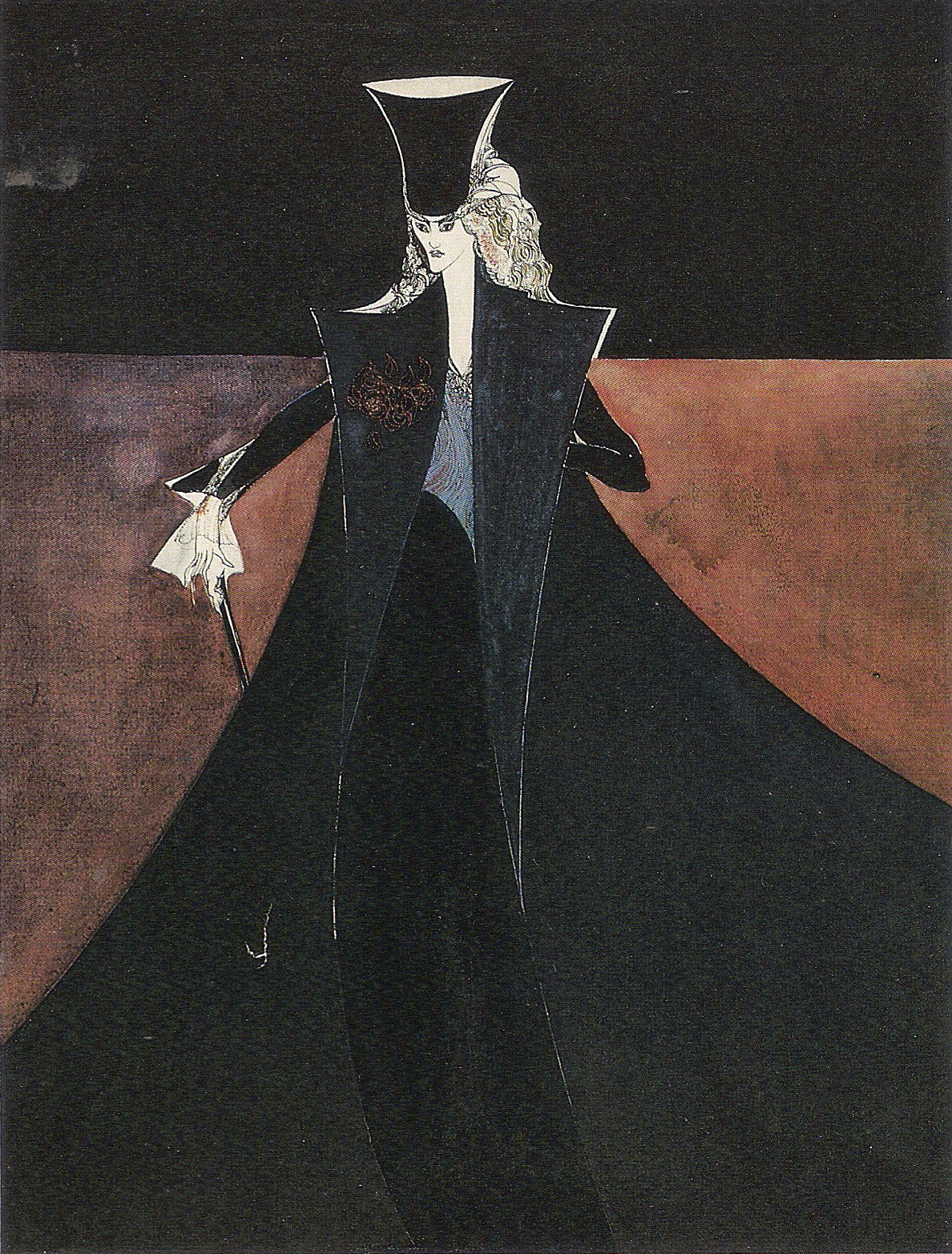
Sortie (1904) by Carel de Nerée tot Babberich. Museum of Modern Art, Arnhem (from De Neree catalogue, 1986). Verhagen’s Dorian Gray seems to be influenced by this.
netherlands4.jpg

Woman with candle by René Gockinga, ca 1916. Current location unknown.
netherlands5.jpg

Indonesian lady dancing [as I call it—SB] by René Gockinga. From the Indonesian satirical-political periodical De Zweep [The Whip] 1922.

Previously on { feuilleton }
Further echoes of Aubrey
A Wilde Night
Echoes of Aubrey
After Beardsley by Chris James
Illustrating Poe #1: Aubrey Beardsley
The art of Karel de Nerée tot Babberich, 1880–1909
Beardsley’s Rape of the Lock
The Savoy magazine
Beardsley at the V&A
Merely fanciful or grotesque
Aubrey Beardsley’s musical afterlife
Aubrey by John Selwyn Gilbert
“Weirdsley Daubery”: Beardsley and Punch
Alla Nazimova’s Salomé

Further echoes of Aubrey

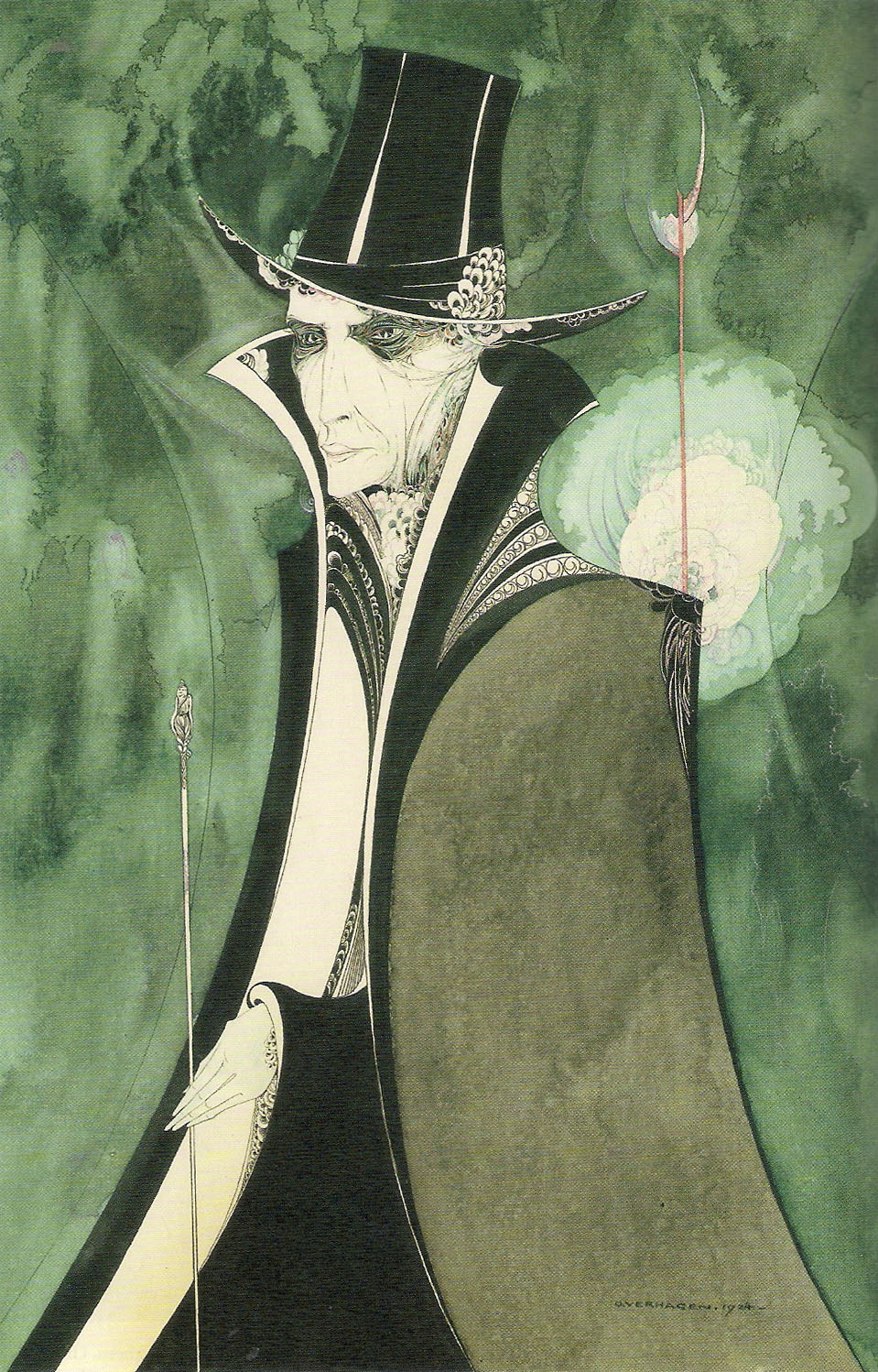
verhagen.jpg

Dorian Gray (1924) by Otto Verhagen (1885–1951).

If you need an idea of the colossal impact Aubrey Beardsley’s drawing had on the art world of the 1890s consider that the entirety of his career—from his first public exposure in The Studio in 1893 to his very untimely death in 1898—lasted a mere five years. Decades afterwards artists around the world were still imitating his style. The later disciples are so numerous and so widespread it’s no surprise if some have yet to be fully acknowledged by subsequent generations. Sander Bink who maintains the Rond1900 site sent copies of these drawings (from Lopende Vuurtjes, Verloren Publishers, 2012) and provided some information about the artists:

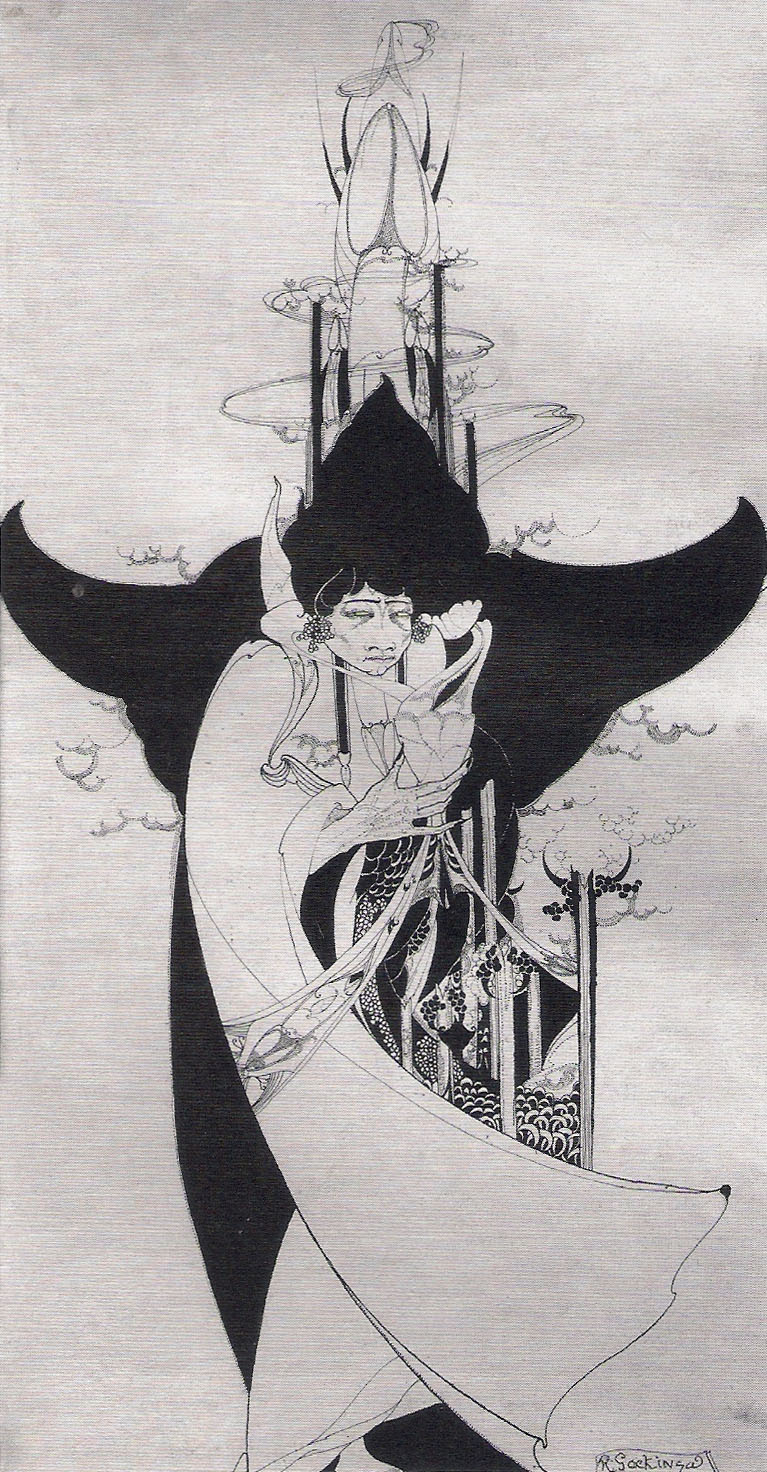
Verhagen was a government official for most of his life and seems to have led a very respected life and made his Beardsley-esque work privately, no expositions as far is I know. Gockinga appears to have led a more interesting life: born in Indonesia, lived in Holland 1908–1922, the Indonesia (Java) again, then New York, and the Indonesia and after wwii Amsterdam, probably homosexual. Had one exposition of his work in 1917.

Sander’s site has further examples of Verhagen’s drawings, and he says that both artists were probably inspired by Carel (or Karel) de Nerée, some of whose work was featured here a while back. Always good to have the dots joined. Verhagen’s Dorian Gray is a curious piece; in style it’s a little like the angular drawings that Beresford Egan was producing in the 1920s, while the subject can’t be Dorian himself unless it’s a rendering of his aged portrait. As for Gockinga’s drawing, it’s a lot more faithful to Beardsley’s early style (complete with phallic extrusions) than the poor Nichols fakes that appeared in 1919. If you want a successful forgery it’s always best to find someone with talent.

(Thanks Sander!)

gockinga.jpg

Old lady with ghost (c.1916) by René Gockinga (1893–1962).

Elsewhere on { feuilleton }
The Aubrey Beardsley archive
The illustrators archive
The Oscar Wilde archive

Charles Ricketts’ Salomé

ricketts1.jpg

Here is my scheme. I proposed a black floor – upon which Salomé’s white feet would show; this statement was meant to capture Wilde. The sky was to be a rich turquoise blue, and across by the perpendicular fall of strips of gilt matting, which should not touch the ground, and so form a sort of aerial tent above the terrace. Did Wilde actually suggest the division of the actors into separate masses of colour, today the idea seems mine! His was the scheme, however, that the Jews should be in yellow, the Romans were to be in purple, the soldiers in bronze green, and John in white. Over the dresses of Salomé, the discussions were endless: should she be black “like the night”? Silver, “like the moon”? Or – here the suggestion is Wilde’s – “green like a curious poisonous lizard”? I desired that the moonlight should fall upon the ground, the source not being seen; Wilde himself hugged the idea of some “strange dim pattern in the sky”.

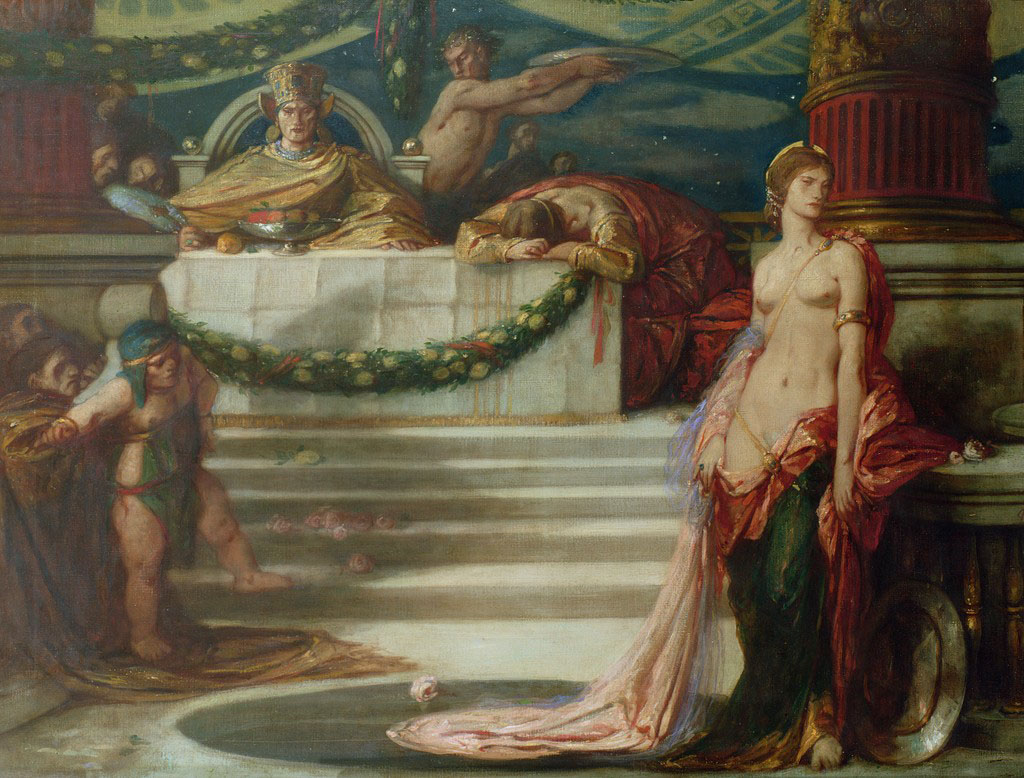
Thus artist, designer, publisher and writer Charles Ricketts (1866–1931), describing in later years his proposal for what would have been the first staging of Oscar Wilde’s Salomé in London. The scheme never materialised since the play was banned but Ricketts did create costume and stage designs for subsequent productions elsewhere, including performances in Japan in 1920. The V&A has Ricketts’ sketch of the stage for a private production in 1906 by the Literary Theatre Society, London. (The ban on Biblical themes in theatre kept the play from public performance in London until 1931.) In the Tate archives there’s what may be one of Ricketts’ costume designs from the Japanese production. Ricketts’ painting of Salomé dates from 1925, and for such a lurid and passionate subject seems rather passionless and inert. This isn’t so surprising, he was always a better designer and graphic artist than a painter; his lifelong partner, Charles Shannon, was the one who excelled with oils.

And speaking of Ricketts and Shannon, searching around turned up this recent blog devoted to the pair which contains much detail about their celebrated book designs.

ricketts2.jpg

Elsewhere on { feuilleton }
The Salomé archive

Previously on { feuilleton }
Charles Ricketts’ Hero and Leander

William Mortensen’s Salomés

mortensen1.jpg

Joyzelle Joyner as Salomé.

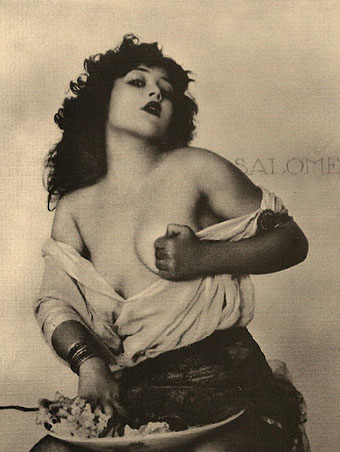
Two undated photographs by William Mortensen (1897–1965) which use the Salomé theme as a possible disguise for motives that have little to do with Biblical storytelling; looking at this collection of Mortensen’s work he evidently had a thing for arty erotica. Joyzelle Joyner was an American actress who appeared in minor roles in a number of silent films. Her lascivious scene in Cecil B. DeMille’s The Sign of the Cross (1932) was deemed scandalous enough to later be cut from the film by censors. Watch it here. (Tip via Beautiful Century.)

mortensen2.jpg

Elsewhere on { feuilleton }
The Salomé archive