Deutsche Kunst und Dekoration #4

dkd04-01.jpg

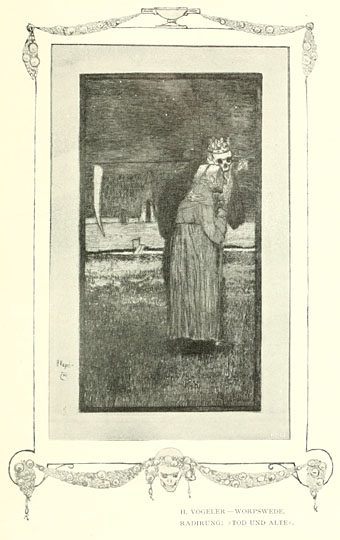
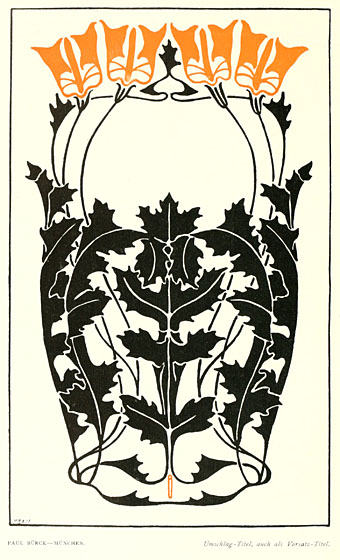
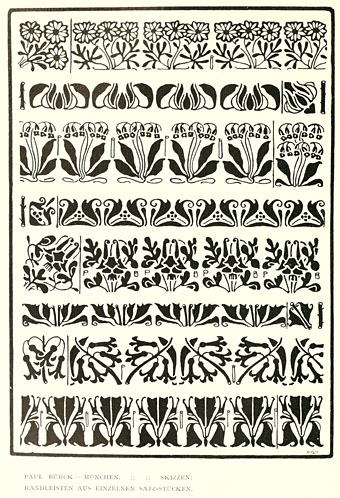
Continuing the delve into back numbers of Deutsche Kunst und Dekoration, the German periodical of art and decoration. There isn’t a volume 3 in the Internet Archive collection, hence the jump in the series to volume 4 which covers the period from April–September 1899. This edition features a few more familiar names beginning with artist and illustrator Heinrich Vogeler whose illustrated edition of Oscar Wilde stories was featured here last year. Vogeler’s work isn’t always to my taste although I liked his Wilde drawings; the Tod und Alte piece above is an exception to his usual work of this period rather than the rule. Elsewhere there’s a feature on the graphic designs of Paul Bürck, a profile of Dutch Symbolist Jan Toorop and a report on the Dresden art exhibition of 1899 which includes an array of beautiful Art Nouveau interiors. As with all such idealised exhibition displays, they point the way to a future that was never to be.

More DK&D next week.

dkd04-02.jpg

dkd04-03.jpg

Continue reading “Deutsche Kunst und Dekoration #4”

Art Deco bindings

deco1.jpg

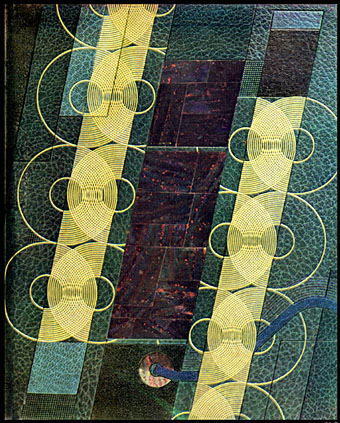
Contes Oscar Wilde (c. 1928), design by Paul Bonet.

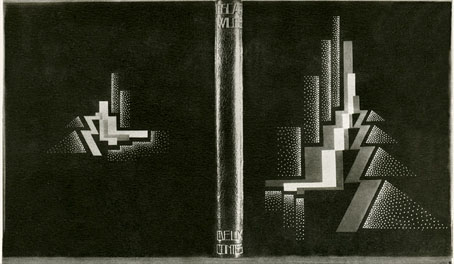
Two selections from this gallery of bookbindings from the 1920s. Few books receive this kind of treatment today but it’s by no means a lost art, The Guild of Book Workers has examples of recent designs.

deco2.jpg

La Canne de Jaspe (c. 1925), design by Pierre Legrain.

Elsewhere on { feuilleton }
The book covers archive

Previously on { feuilleton }
Prismes
The art of Thayaht, 1893–1959
The Mentor
The art of Cassandre, 1901–1968
The Decorative Age
The World in 2030

Alastair’s Carmen

alastair1.jpg

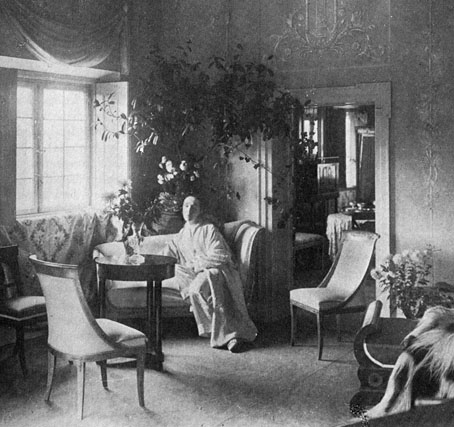
“The artist at home” from Alastair: Illustrator of Decadence (1979) by Victor Arwas.

More Beardsley derivations in the form of some illustrations by Hans Henning Voigt (1887–1969), better known as Alastair, and an artist who more than anyone carried the Beardsley style and the fin de siècle ethos into the 20th century. If the photograph above is anything to go by he seemed to take Beardsley’s effete and languid characters as role models for an equally effete and languid manner.

alastair2.jpg

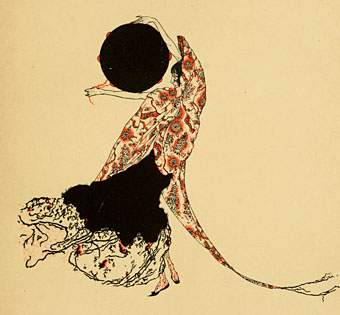
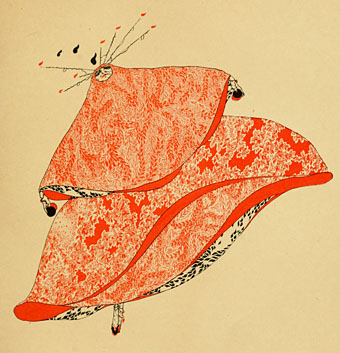
The drawings here are a selection from twelve pieces for a 1920 edition of Prosper Mérimée’s Carmen, the novel upon which Bizet based his opera. Alastair for me has always been an artist whose enthusiasm for his subject matter outpaced his technique, his figure drawing can be rather weak at times which perhaps explains some of his more eccentric costume designs. Every so often the weakness becomes a virtue when it provides a surprising composition. Carmen didn’t seem to inspire him as much as other works, his illustrations for Oscar Wilde’s Salomé are a lot better and I may post some of them here if I can find a way of scanning my Victor Arwas book without spoiling it. There still isn’t much else of his work on the web but S. Elizabeth did make a start recently with her post A Decadent Parade of Outrageous Fancies at Coilhouse.

alastair3.jpg

Continue reading “Alastair’s Carmen”

Wildeana 4

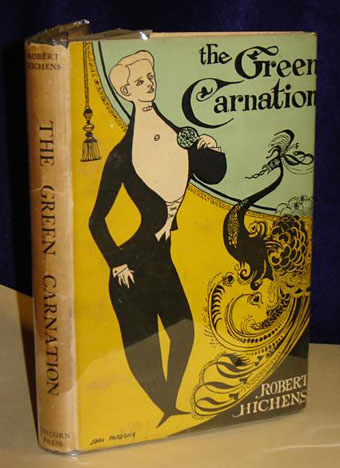
hichens.jpg

I could make these posts a lot more often since there’s seldom a week goes by when Oscar Wilde’s work or something from his life isn’t making the news somewhere. I forget now how I came across the Robert Hichens book but the Beardsley-derived cover design is the best I’ve seen for this title. The Green Carnation was first published in 1894 and is the notorious roman à clef whose lead characters, Esmé Amarinth and Lord Reginald Hastings, are based on Wilde and Lord Alfred Douglas. Hichens paints the pair as very obvious inverts with none of the “is he or isn’t he?” subtlety that Wilde managed to sustain in public. For a scandalised London the book seemed to confirm what was already suspected about Wilde and Bosie’s relationship.

The cover art is credited to one John Parsons, an illustrator whose other work, if there is any, eludes the world’s search engines. This edition was published in 1949 by Unicorn Press and it’s something I’m tempted to buy as a companion for my Unicorn Press edition of Dorian Gray.

The following links are to recent articles spotted whilst looking for other things:

Oscar Wilde, Classics Scholar. A review of The Women of Homer by Oscar Wilde, edited by Thomas Wright and Donald Mead.
• A new Broadway production of The Importance of Being Earnest has actor Brian Bedford playing Lady Bracknell.
Buyers go Wilde for Oscar as short note to his friend sells for €1,500.
Outsmarted: What Oscar Wilde could teach us about art criticism.

Elsewhere on { feuilleton }
The Oscar Wilde archive
The book covers archive

Le Baiser de Narcisse

brisset1.jpg

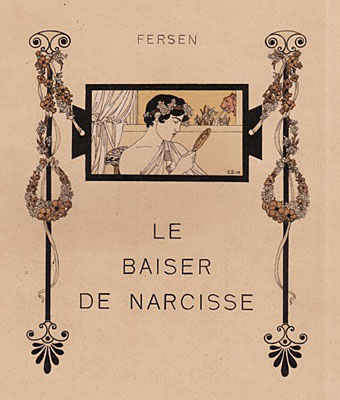
We have the French gay culture site Bibliothèque Gay to thank for posting illustrations by Ernest Brisset from Jacques d’Adelswärd-Fersen’s rare volume of homoerotic fiction, Le baiser de Narcisse (The Kiss of Narcissus). The book was originally published in 1907 but it was a new edition in 1912 which came embellished with Brisset’s Classical drawings and decorations. If these lack a degree of eros it should be noted that the text would have been condemned as outright pornography in the Britain of 1912, a paean to youthful male beauty which lingers over details of a boy’s “polished hips” and his “round and firm sex like a fruit”. As is usual with homoerotics of this period, the Classical setting and allusion to Greek myth provides the vaguest excuse for the subtext even though prudes of the time weren’t remotely fooled by this, as Oscar Wilde discovered.
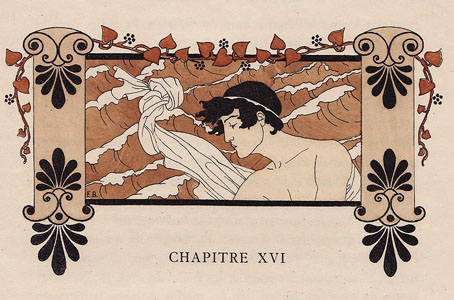
brisset2.jpg

Among other works by Fersen there’s a decadent roman à clef, Lord Lyllian: Black Masses (1905), which I’ve been intent on reading since it was translated into English a couple of years ago. Here Fersen provides us with yet another fictional extrapolation of Oscar Wilde who the author gifts with some of his own scandalous history. Fersen had been driven from France following a public outrage involving the “Black Masses” of the novel’s title, and the alleged debauching of Parisian schoolboys.
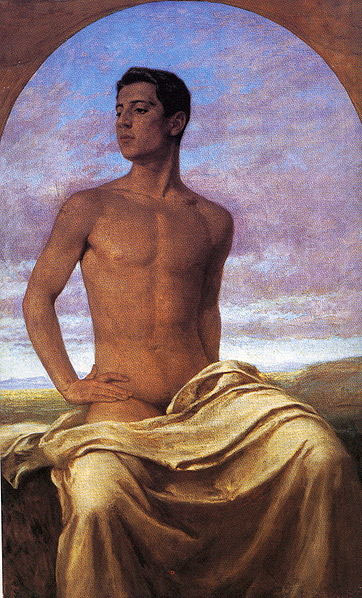
hocker.jpg

Nino Cesarini by Paul Höcker (1904).

Fersen settled in Capri with his partner Nino Cesarini where they spent some years reinforcing the reputation of that island (not for nothing is Noël Coward’s camp and catty character in Boom! named “the Witch of Capri”), and proselytising for the Uranian cause with a literary journal, Akademos, modelled on Adolf Brand’s Der Eigene. Fersen’s later life is reminiscent of that of Elisar von Kupffer, a wealthy contemporary who created a secluded homoerotic paradise of his own, the Sanctuarium Artis Elisarion. Unlike Kupffer, however, Fersen ended his days prematurely in a haze of opium and cocaine. As for Ernest Brisset, if anyone finds other work of his online, please leave a comment.

Elsewhere on { feuilleton }
The gay artists archive

Previously on { feuilleton }
Reflections of Narcissus
Narcissus