Weekend links 35

cr.jpg

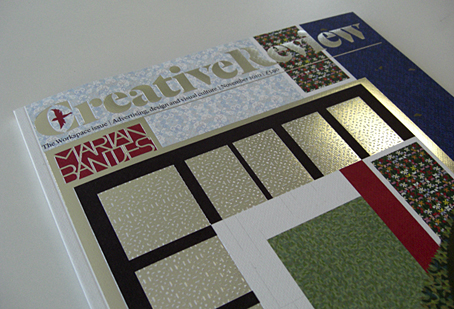
Marian Bantjes designs the cover of the latest Creative Review and there’s a feature about her work inside.

• “…the question: ‘was Shakespeare gay?’ strikes me as so daft as to be barely worth answering. Of course he was. Arguably he was bisexual, of sorts, but his heart was never on his straight side.” Don Paterson throws the cat among the pigeons in an examination of the Shakespeare’s sonnets. Related (sort of): Shakespeare and Company: The bookshop that thinks it’s a hotel. Also related: Jeanette Winterson revisits Shakespeare and Company.

100 orbs of light float in the Schuylkill River. Also in Philadelphia: Animators Amok in a Curiosity Cabinet: the Brothers Quay are making a film in the Mütter Museum. Can’t wait to see it.

• More Alan Moore: Fossil Angels, a lengthy essay about magic and the occult, was written in 2002 but hasn’t been given a public airing until now.

Alberto Manguel is always worth reading:

As Borges was well aware even then, the history of literature is the history of this paradox. On the one hand, the deeply rooted intuition writers have that the world exists, in Mallarmé’s much-abused phrase, to result in a beautiful book (or, as Borges would have it, even a mediocre book), and, on the other hand, to know that the muse governing the enterprise is, as Mallarmé called her, the Muse of Impotence (or, to use a freer translation, the Muse of Impossibility). Mallarmé added later that all who have ever written anything, even those we call geniuses, have attempted this ultimate Book, the Book with a capital B. And all have failed.

• Here Comes Everybody: Wake In Progress is a self-described “foolhardy attempt to illustrate Finnegans Wake”. Easier to illustrate than make a film of the book, I’d have thought, and Mary Ellen Bute already attempted the latter.
hoffmeister.jpg

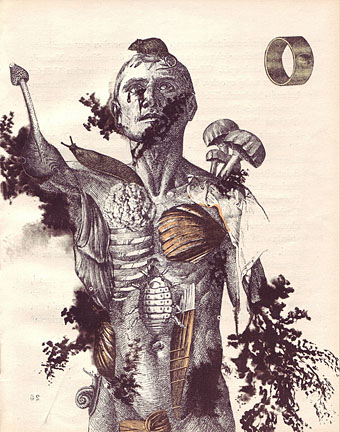
Psychic Explosion: Adolf Hoffmeister’s illustrations for a 1967 edition of Lautréamont’s Poesies at A Journey Round My Skull.

Craig Colorusso’s Sun Boxes can be seen at Turner Falls, Massachusetts, during November.

Clive Hicks-Jenkins has a book and retrospective exhibition of his art due next year.

• A sneak peek into The Steampunk Bible to which I’m a contributor. And also here.

• “Human or other; depends who comes”: the Ballardian films of Paul Williams.

Transmission (1979) by Joy Division; Transmission (1995) by Low; Monkey (2010) by Robert Plant.
1 Top Class Manager

rg1.jpg

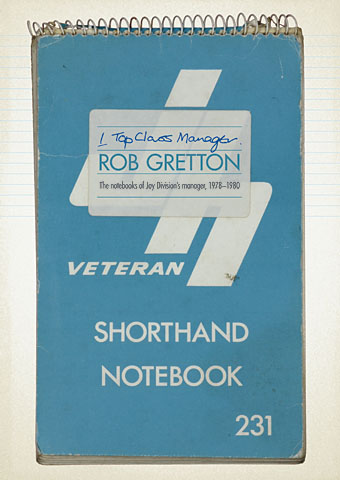
1 Top Class Manager is a book bearing the subtitle “The notebooks of Joy Division’s manager, 1978–1980” published this week by Anti-Archivists, Manchester. I’ve been working on the design for this on and off since March although we actually started putting it together this time last year.

Rob Gretton, manager of Joy Division and later New Order, died in 1999 so this is something of a memorial to his work in giving Joy Division the status they have today. Rob’s widow, Lesley, oversaw (and paid for) the production. She and editor Abigail Ward contributed much to my design efforts which underwent considerable back and forth adjustment until we had something everyone was happy with. Some spreads from the book follow below and when I get the time I’ll add larger page views to the book design section of the main site. Music critic and historian Jon Savage wrote the foreword. This was an exciting and fascinating project to be involved, not least for the wealth of rare documentary material which it reveals.

1 Top Class Manager is available via mail order from the book’s website.

Continue reading “1 Top Class Manager”

Another playlist for Halloween

bauhaus.jpg

A follow-up to last year’s list. Seeing as Joy Division are very much in the news at the moment with the release of Control and the re-issue of the albums, I thought a post-punk theme would be appropriate. The period which immediately followed punk in the late Seventies saw a lot of doom being imported into what was then still a proper alternative to the mainstream of popular music. This trend quickly ossified into the distinct and far less adventurous genres of goth and post Throbbing Gristle/Cabaret Voltaire industrial but between 1978 and 1982 everything was in a state of fascinating flux.

Hamburger Lady (1978) by Throbbing Gristle.
TG’s heart-warming ode to a burns victim.

6am (1979) by Thomas Leer & Robert Rental.
Leer and Rental’s The Bridge album was originally one of the few none-Throbbing Gristle releases on TG’s Industrial label, one half songs, the other moody electronic instrumentals. 6am perfectly conjures a picture of empty streets at dawn and sounds like a precursor of Ennio Morricone’s score for The Thing.

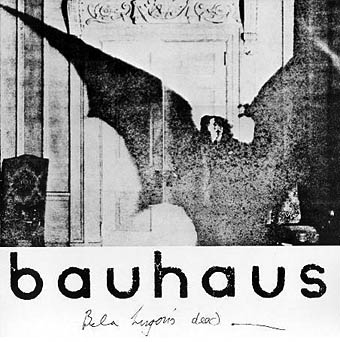
Bela Lugosi’s Dead (1979) by Bauhaus.
The first Bauhaus single and the only song of theirs I liked. Put to great use at the beginning of the otherwise pretty risible The Hunger.

Day Of The Lords (1979) by Joy Division.
If anything shows that Ian Curtis was a Romantic in the 19th century sense, it’s this grandiose wallow in the atrocities of history. “Where will it end?”

James Whale (1980) by Tuxedomoon.
Church bells toll and a lonely violin shrieks for the director of the Universal Frankenstein films.

Halloween (1981) by Siouxsie & the Banshees.
With a title like that, how could it not be included here?

Goo Goo Muck (1981) by The Cramps.
Always superior collagists of rockabilly weirdness and early garage riffs, The Cramps started out in the horror camp (“camp” being a big part of their act) with the Gravest Hits EP. Goo Goo Muck was a cover of a great single by (I kid not) Ronnie Cook & the Gaylads. “When the sun goes down and the moon comes up / I turn into a teenage goo goo muck.”

Raising The Count (1981) by Cabaret Voltaire.
An obscure moment of resurrection originally on the Rough Trade C81 cassette compilation from the NME.

Gregouka (1982) by 23 Skidoo.
Gregorian monks meet Moroccan pipes and drums with the result sounding like a voodoo ceremony taking place in cathedral catacombs.

The Litanies Of Satan (1982) by Diamanda Galás.
The formidable Ms Galás was part of last year’s list and her first album is just as hair-raising as her later works. The second part is the marvellously titled Wild Women With Steak-knives (The Homicidal Love Song For Solo Scream).

Happy Halloween!

Previously on { feuilleton }
White Noise: Electric Storms, Radiophonics and the Delian Mode
The Séance at Hobs Lane
A playlist for Halloween
Ghost Box