The return of The Thing: Artbook

thing-artbook.jpg

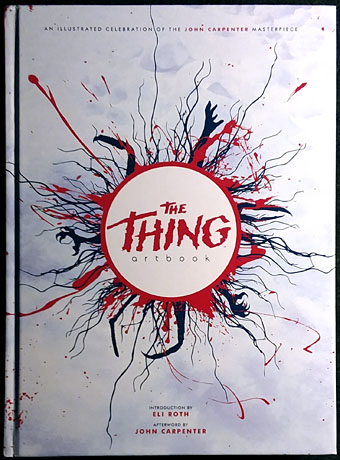
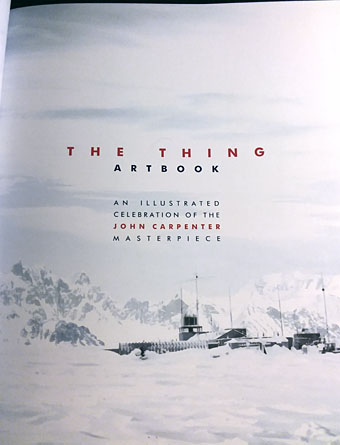
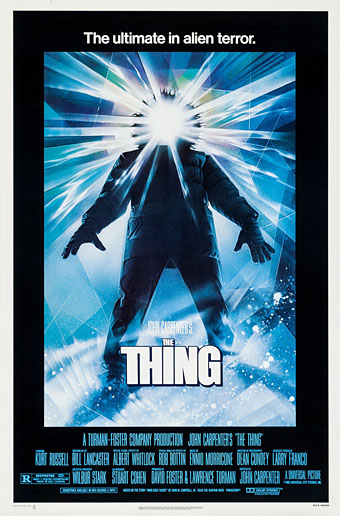
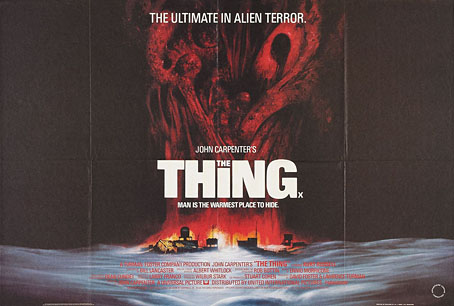
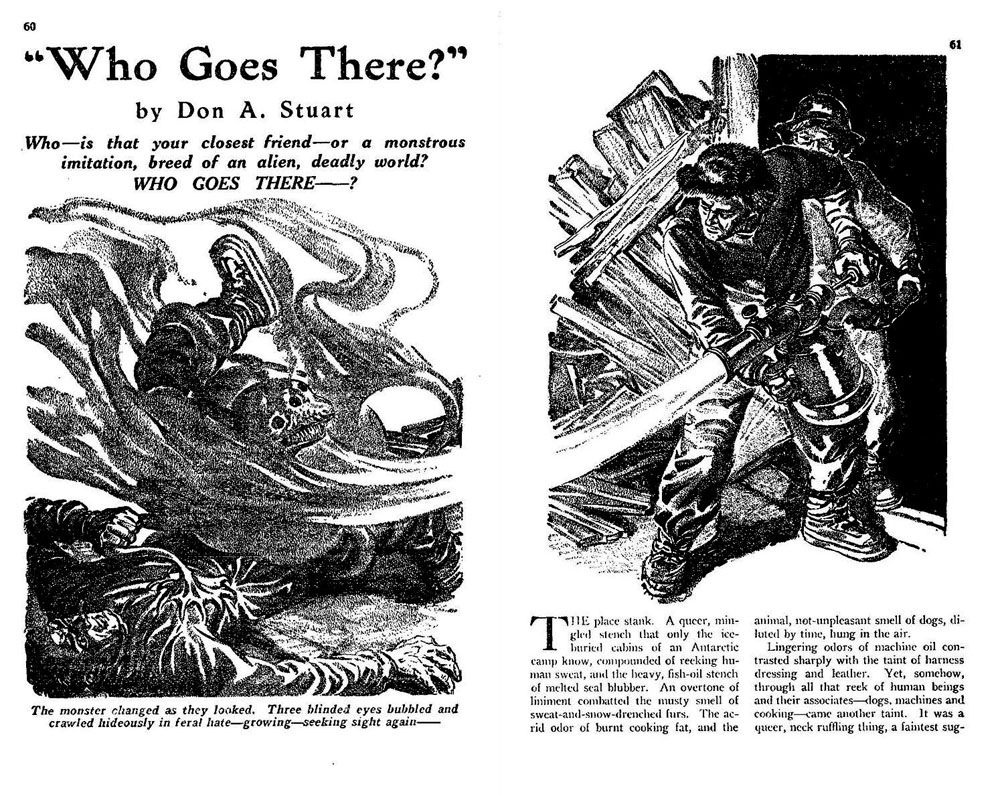
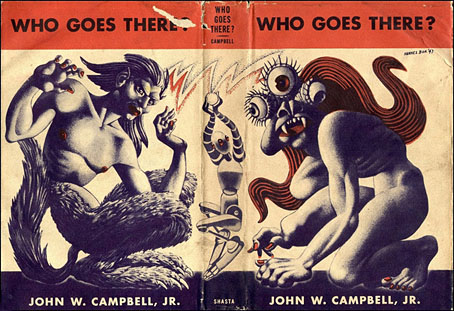
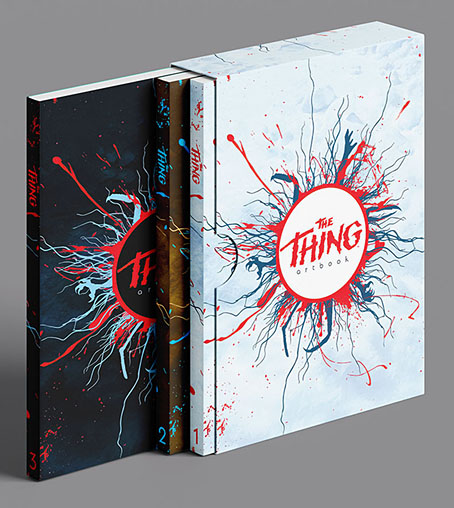
The most notable feature of the alien organism in John W. Campbell’s “Who Goes There?” is its physical mutability, a quality memorably expressed in John Carpenter’s film adaptation of the story, The Thing. Fitting, then, that The Thing: Artbook is due to be republished later this year in a new edition which adds fresh material to the original volume. I was one of over 350 artists asked to create personal responses to Carpenter’s film in 2016, the results of which were published by Printed In Blood as a heavyweight, large-format hardback. The new book will divide the original into a more manageable two-volume paperback set to which a third volume of fresh material will be added, with all three volumes being contained in a slipcase. The third volume will also be available as a standalone book. Pre-orders may be placed here.

For the reprint there’s the possibility of original contributors doing a new piece, a tempting idea but not something I have the time for at the moment. Last month I started work on a new series of book illustrations which I need to concentrate on even though I wouldn’t mind doing something new based on the film. Before the book was published I guessed that many of the artists would be working variations on favourite scenes or characters, an accurate prediction as it turned out. My own contribution was an attempt to depict some of the moments we don’t see, when transformations are taking place offscreen, but I also had a more complicated, poster-style design in mind which I never managed to work out to my own satisfaction. For now the idea will have to remain frozen in the conceptual ice.
thing-bantam.jpg

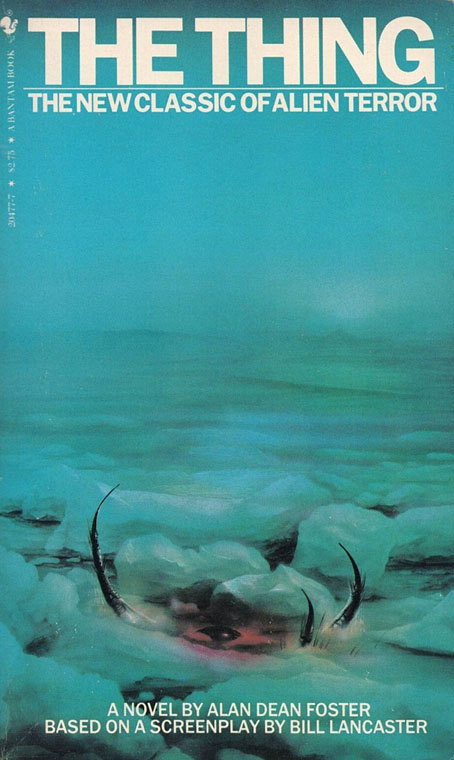
Before starting work on my own drawing I also read John W. Campbell’s story and looked for earlier depictions of his alien. One of the book covers that turned up was the Bantam paperback of Alan Dean Foster’s novelisation (above), a book with a better cover than the UK editions which recycled elements from the film posters. I couldn’t find an artist credit at the time but the cover art is by Jim Burns, a British illustrator best known for his depictions of spacecraft and futuristic technology. Looking for confirmation of his credit turned up a picture of the original painting which has a husky looking at the frozen alien. I can see why the art director wanted the dog removed—the cover is better with all the viewer’s attention drawn to those insectile legs—but Burns’ colour scheme is spoiled by the greenish tinge of the printed version. Ice is a difficult substance to paint well. If I was Burns I would have been a little annoyed that all those icy details had been lost.

Previously on { feuilleton }
The Thing: Artbook
The Thing Group Art Show
Things

The art of Alexander Cañedo, 1902–1978

canedo15.jpg

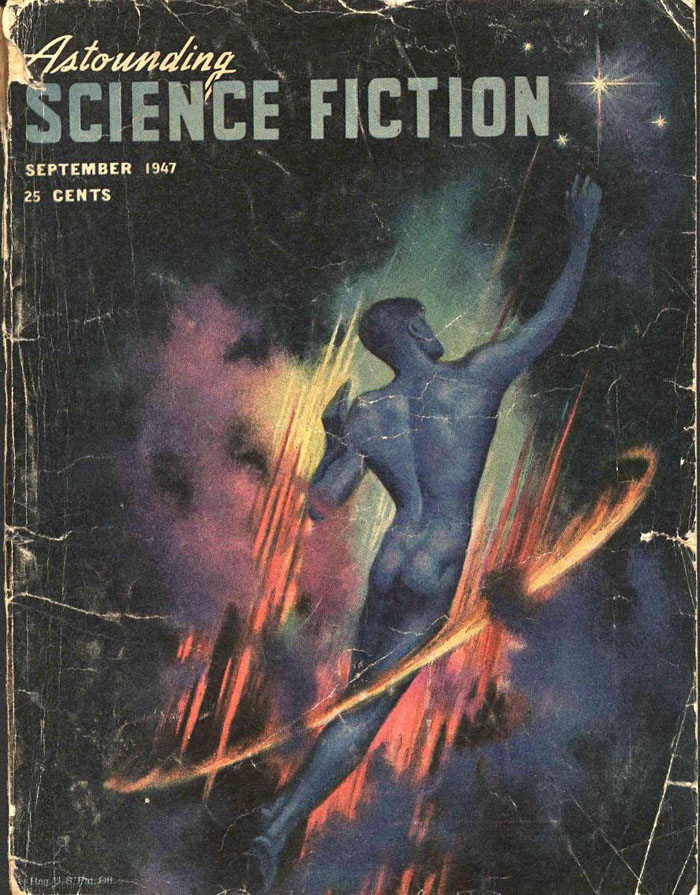
September, 1947.

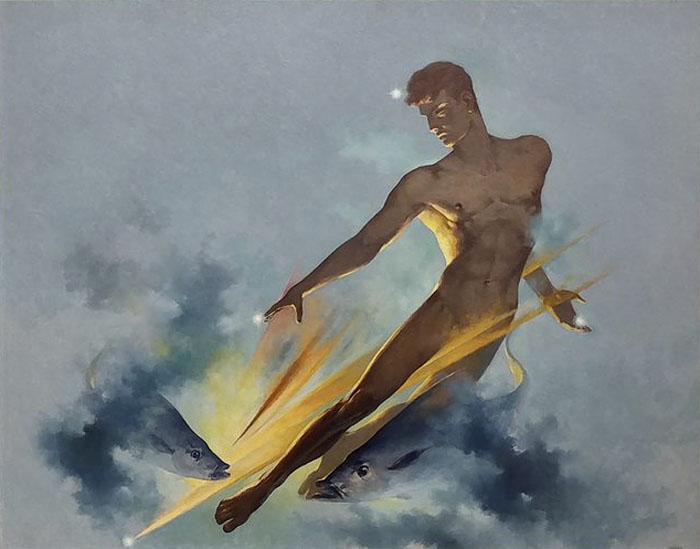
Harry Harrison used to enjoy referring to the “sexual dimorphism” of the cover art on pulp science-fiction magazines, by which he meant that male astronauts would usually be depicted wearing sturdy spacesuits or functional attire while their female counterparts would be given spray-on outfits with plunging necklines, if they were given any clothes at all. Sexism was still thriving in the future, in other words, with visible male flesh in short supply. This makes the handful of cover paintings produced by Alexander Cañedo for Astounding Science Fiction uncommon enough to be almost unique.

canedo16.jpg

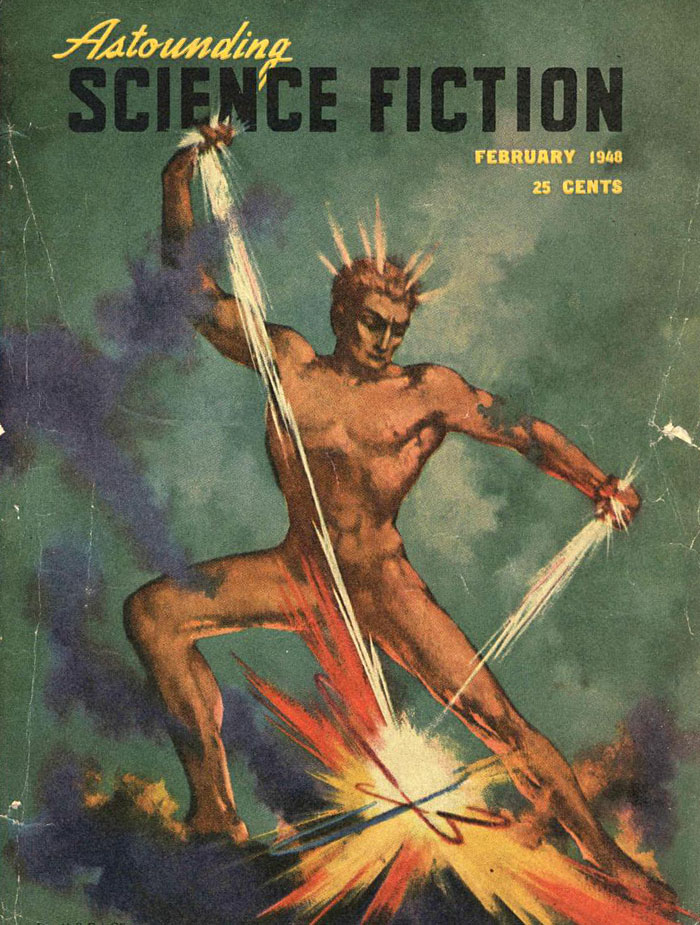
February, 1948.

Cañedo was a Mexican-American, born Alejandro de Cañedo, whose covers for Astounding were simply credited to “Alejandro”. The editorial policy at the magazine favoured hard-headed, technology-oriented science fiction, with cover art that avoided the scantily-clad women (and, to be fair, shirtless men…) seen each month on the covers of swashbuckling rival, Planet Stories. Robots and rocket ships were still required at Astounding, however, and half the covers produced by Cañedo feature more predictable imagery. The first of the cosmic nudes appeared after editor John W. Campbell spotted an unsold painting during a visit to Cañedo’s studio. Campbell and his readership regarded the naked males as purely symbolic, which they are up to a point, and Cañedo was praised for his art in the magazine’s letters section. When seen in the context of his overtly homoerotic work the pictures evidently reflect more personal proclivities.

canedo17.jpg

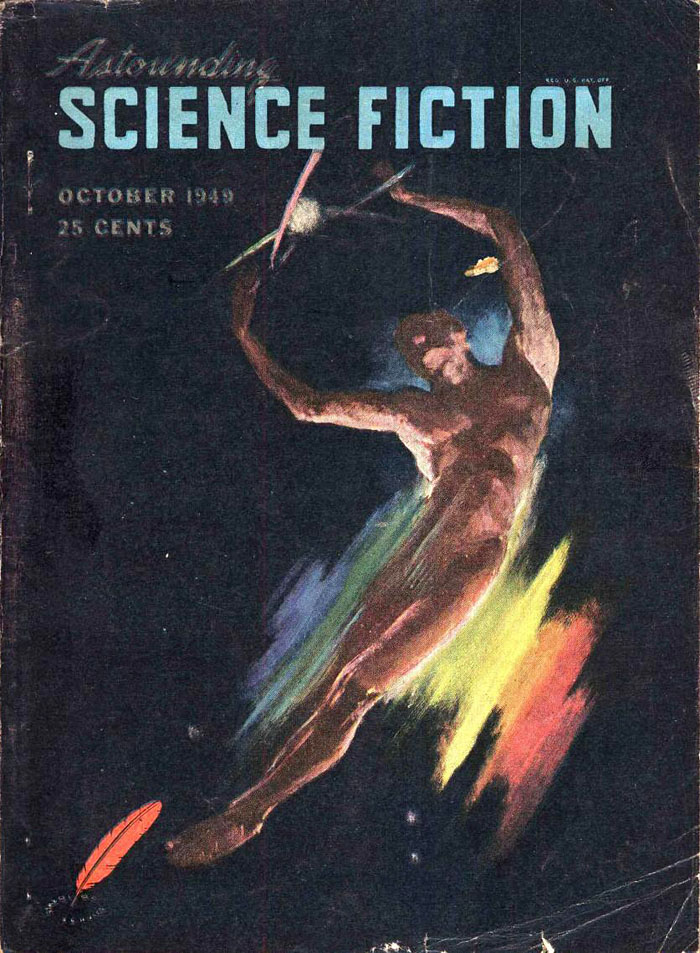
October, 1949.

Cañedo is described today as a gay artist, a claim that can’t easily be verified when the available biographical details repeat the same few facts. But his art away from Astounding returned continually to the human body, a subject where his mastery was sufficient to warrant the publication in 1954 of a short guide for artists, How Cañedo Draws the Human Figure. Most of his drawings and paintings listed on auction sites are nude (or semi-nude) studies, with lovingly rendered male figures predominating. Several of his later paintings could easily have served as additional magazine covers. The manipulation of light and colour in these pictures is outstanding, unlike any treatment of male nudes that I’ve seen before, and by an artist worthy of greater attention.

(Note: Most of these pictures are untitled and undated. I’m also not an art dealer so please don’t ask for valuations.)

canedo18.jpg

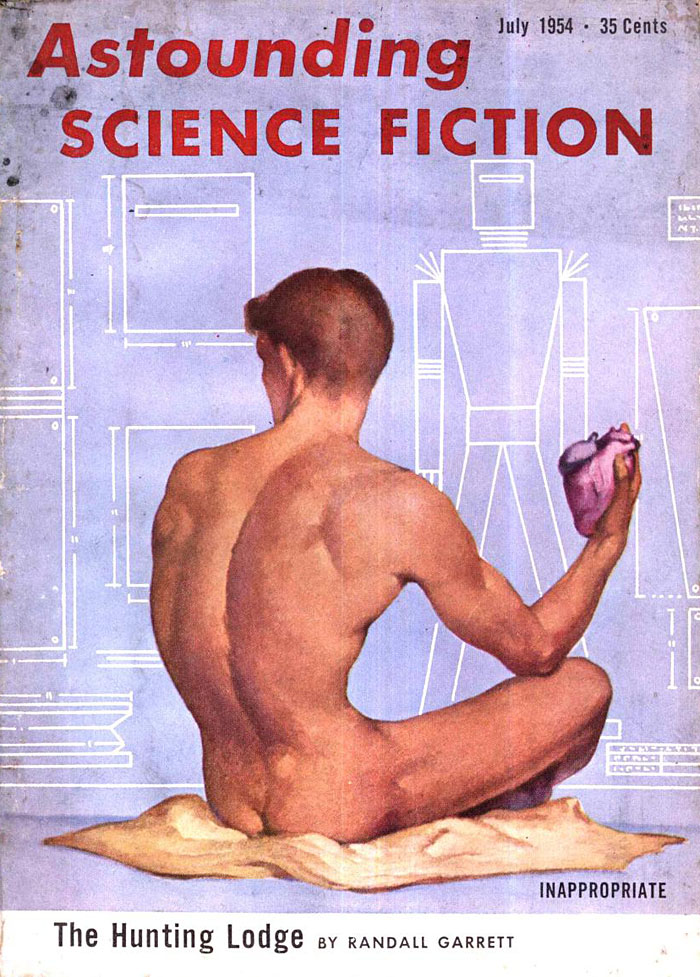
July, 1954. “Inappropriate” is the title of the picture which doesn’t relate to anything inside the magazine.

canedo09.jpg

Continue reading “The art of Alexander Cañedo, 1902–1978”

The Cthulhu Mythos in the pulps

mythos01.jpg

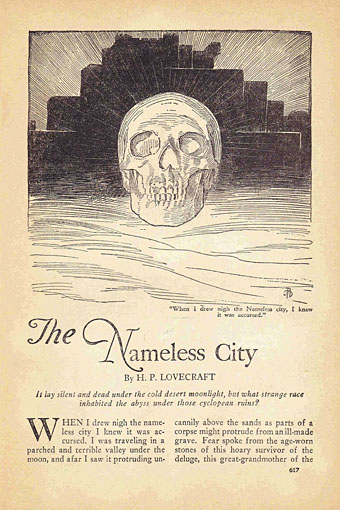
The Nameless City: First published in The Wolverine, November 1921. Reprinted in Weird Tales, November 1928. Illustration by Joseph Doolin.

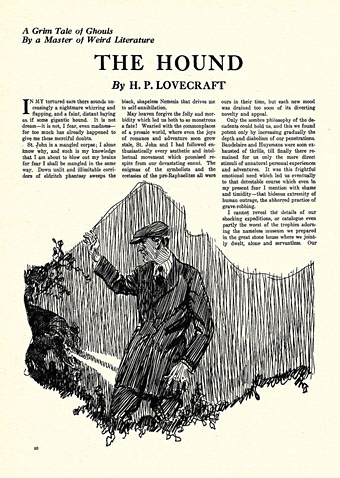
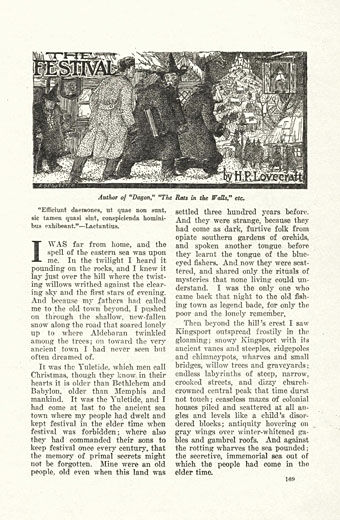
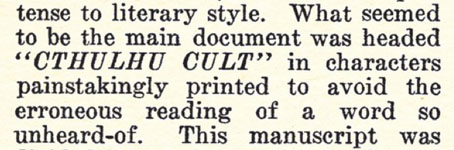
This would have been “The Cthulhu Mythos in Weird Tales” if some of HP Lovecraft’s more substantial stories hadn’t been published elsewhere. To prevent sprawl I’ve limited the list to Lovecraft’s own stories even though the Mythos takes in the work of contemporaries such as Clark Ashton Smith, Robert E. Howard, Frank Belknap Long, Zealia Bishop, August Derleth and others. I like seeing the first appearance in print of familiar tales, and I like seeing their accompanying illustrations even if the drawings are inferior pieces, which they often were for the first decade of Weird Tales. These are the short-story equivalent of first editions, and in the case of The Call of Cthulhu you get to see the first printing anywhere of that mysterious name.

mythos02.jpg

The Hound: Weird Tales, February 1924. Illustration by William Fred Heitman.

This issue is also notable for a story by Burton Peter Thom which shares a title with a Mythos-derived song by Metallica, The Thing That Should Not Be.

mythos03.jpg

The Festival: Weird Tales, January 1925. Illustration by Andrew Brosnatch.

mythos22.jpg

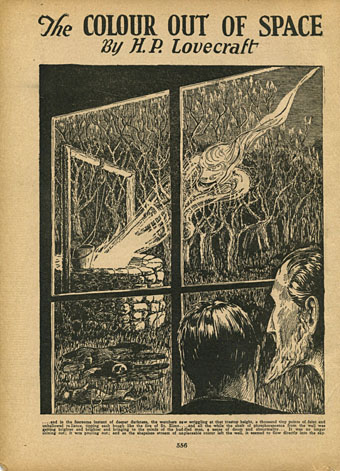
The Colour Out of Space: Amazing Stories, September 1927. Illustration by JM de Aragon.

Lovecraft didn’t think that Weird Tales would appreciate this one even though it’s more horror than science fiction so he sent it to Amazing Stories instead.

mythos04.jpg

mythos26.jpg

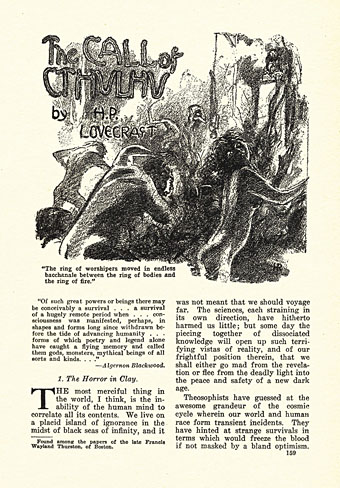
The Call of Cthulhu: Weird Tales, February 1928. Illustration by Hugh Rankin.

It’s doubtful that Rankin, Senf and co. would have been up to the task of depicting Great Cthulhu or the non-Euclidean nightmare of R’lyeh, but this hardly excuses editor Farnsworth Wright’s decision to give the cover to Elliott O’Donnell’s ridiculous ghost table.

Continue reading “The Cthulhu Mythos in the pulps”

The Thing: Artbook

thing01.jpg

It was just over a year ago that I was asked to contribute to The Thing: Artbook, and the thing itself (so to speak) turned up in the post a few days ago. This is a large, heavyweight volume of 400 colour pages, stuffed to the slavering gills with fanged abominations (and more than a few Kurt Russells), a suitably excessive tribute to an excessive film.

thing02.jpg

Publishers Printed In Blood have previewed a fair amount of the artwork over the past year but the variety of interpretations of John Carpenter’s (and, lest we forget, John W. Campbell’s) monsters is quite overwhelming. After wondering how (or if) they were going to order contributions from 375 different artists, the book turns out to be divided into sections based on lines of dialogue from the film, a clever idea when much of the imagery reprises the same scenes or characters. My piece, which you can see below the fold, is in the “Nobody trusts anybody now” section.

thing03.jpg

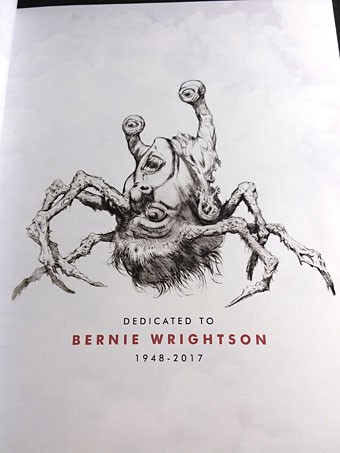
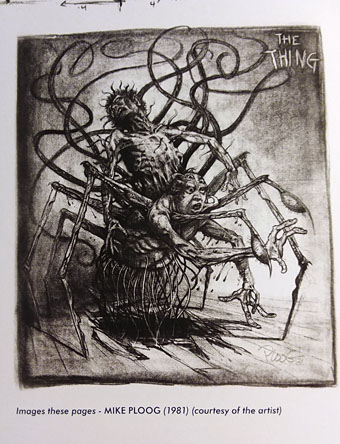
One surprise was the dedication to Berni Wrightson who died earlier this year. As for Mike Ploog’s original designs for the film’s creatures, I was hoping there might be more of these but the book does open with a couple of Ploog’s drawings.

thing04.jpg

thing05.jpg

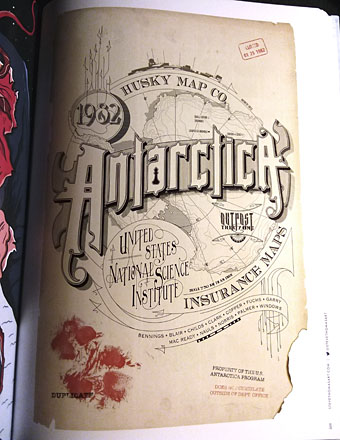
I’ve resisted the temptation to post favourites by other artists aside from this piece by Steve Thomas. This one stood out for me since it’s a riff on the same lettering designs from fire insurance maps that I pastiched myself a few years ago for Lavie Tidhar’s The Bookman Histories. Not all the artists produced monster art, there are quite a few contributions like this which present the film via infographics or pastiche.

Continue reading “The Thing: Artbook”

Things

thing01.jpg

Art by Drew Struzan.

One of my current commissions is a piece of art for a book based on John Carpenter’s The Thing, due to be published next year. This was a request I agreed to immediately, having been astonished by the film when it appeared in 1982 (I saw it three times), and having rated it ever since as Carpenter’s best, as well as one of my all-time favourite horror films. I haven’t started on the planned piece just yet but the commission encouraged me to upgrade my DVD copy of the film to the Blu-ray version, and to also read for the first time John W. Campbell’s “Who Goes There?”, the short story that was the origin of both Carpenter’s film and The Thing From Another World (1951) directed by Christian Nyby. Reading the story set me hunting around for other interpretations of Campbell’s alien.

thing02.jpg

UK poster. Art by Les Edwards.

The story was instructive in several ways, the first being how closely Bill Lancaster’s script for the Carpenter film follows the story’s outline. The paperback collection I was reading has an introduction by James Blish which complains about the Howard Hawks/Christian Nyby production turning the polymorphous alien into another clone of Frankenstein’s monster. That’s true but the Nyby film still scared me to death when I first saw it aged 11 or so, and it has its merits. Lancaster not only stayed closer to the original shape-shifting premise but also kept many of the character names, plus details such as the blood test and the Thing’s attempt at the end to build a machine to escape from the encampment. The unforgettable opening, however, with the lone helicopter pursuing the dog, is all Lancaster’s.

thing03.jpg

Astounding Science-Fiction, August 1938; artist unknown. “Don A. Stuart” was a pseudonym for John W. Campbell, at that time the newly appointed editor of Astounding. Campbell’s editorship changed the name of the magazine from Astounding Stories to Astounding Science-Fiction.

It was face up there on the plain, greasy planks of the table. The broken haft of the bronze ice-axe was still buried in the queer skull. Three mad, hate-filled eyes blazed up with a living fire, bright as fresh-spilled blood, from a face ringed with a writhing, loathsome nest of worms, blue, mobile worms that crawled where hair should grow—

Campbell’s description of the ice-bound alien is better than some of his writing elsewhere. I’m used to tempering my judgement when visiting stories written for the pulps but Campbell’s writing is really awful, and a reminder of why I never got very far with the early SF writers. Weird Tales magazine had its share of ham-fisted journeymen (and women), but Campbell’s contemporaries such as Clark Ashton Smith and HP Lovecraft read like the most finessed and mandarin prose stylists in comparison. Well, The Thing isn’t the first great film to be based on a poor-quality story so we can at least thank Campbell for his scenario, although how much of it was his own has never been clear. The idea of ancient aliens in Antarctica (some of which are amorphous shape-shifters) had already been explored by HP Lovecraft in At the Mountains of Madness; Lovecraft’s story was published in 1936 by Astounding Stories, the same magazine that published “Who Goes There?” two years later. This lineage, and the possible influence, makes The Thing one of the foremost Lovecraftian films even without all of its tentacled abominations.

thing04.jpg

Art by Hannes Bok.

The story provided the title of Campbell’s debut collection of short fiction in 1948. I’ve known the Hannes Bok cover art for many years but hadn’t realised until recently that the three-eyed monster on the front was a Bokian rendering of Campbell’s alien. The figure on the back is presumably a human/husky hybrid, while I’d guess the robot relates to one of the author’s other stories.

Continue reading “Things”