Harry Clarke and the Elixir of Life

clarke1.jpg

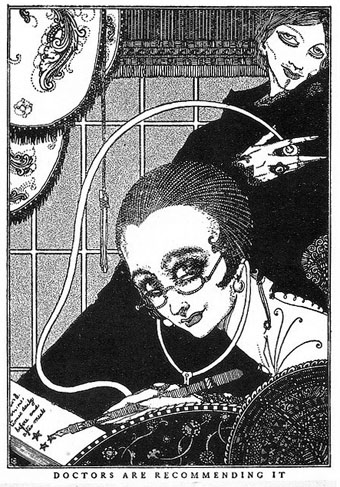
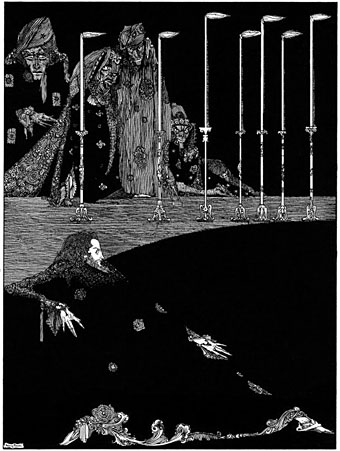
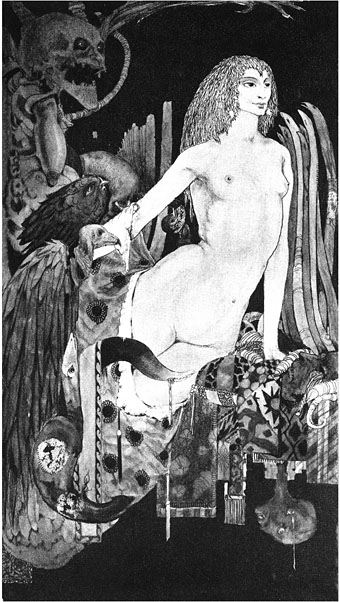
A little something for the season of strong drink. Harry Clarke’s books command high prices in their original editions yet two of the costliest items in the Clarke bibliography are a pair of promotional booklets the artist illustrated for Jameson & Son’s Irish Whiskey: A History of a Great House in 1924, and Elixir of Life a year later. Given the quality of Clarke’s work for these publications it’s a shame they remain out of print; I’m sure I’m not the only Clarkeophile who’d be happy to buy a facsimile edition.

clarke2.jpg

Elsewhere on { feuilleton }
The illustrators archive

Previously on { feuilleton }
Cardwell Higgins versus Harry Clarke
Modern book illustrators, 1914
Illustrating Poe #3: Harry Clarke
Strangest Genius: The Stained Glass of Harry Clarke
Harry Clarke’s stained glass
Harry Clarke’s The Year’s at the Spring
The art of Harry Clarke, 1889–1931

Gustave Doré’s Ancient Mariner

dore01.jpg

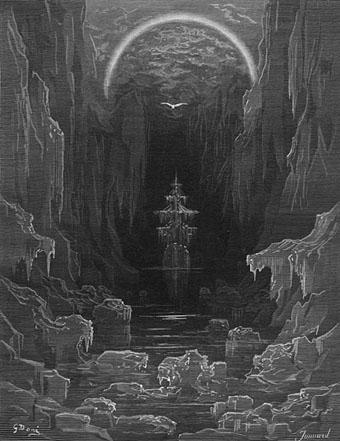
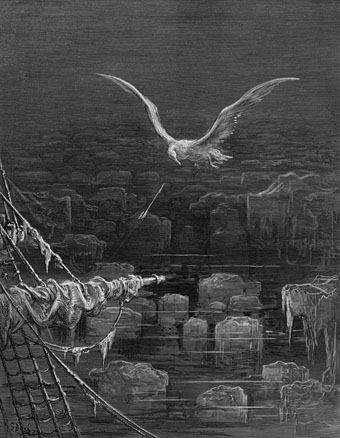
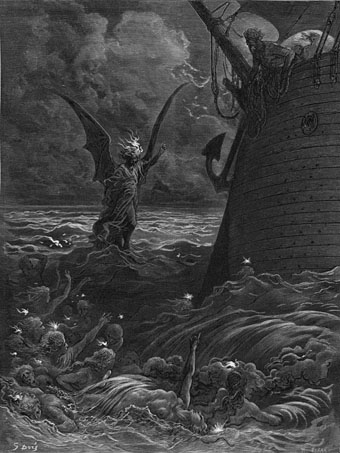
A final Coleridge post, also the oldest illustrated edition featured this week. Gustave Doré’s The Rime of the Ancient Mariner was first published in 1870, and the poet’s sombre, doom-laden tale was more suited to Doré’s Gothic proclivities than many of the lighter books he illustrated. Despite their age, these engravings have proved memorable enough to keep turning up whenever an illustration of the poem is required. The ship among the icebergs above is close enough to a scene in the third Pirates of the Caribbean film to have maybe been an influence, while the ice-bound section of the poem inspired one of Doré’s few paintings.

Art Passions has a complete set of these engravings together with many more of the artist’s works. And while we’re on the subject, two of Harry Clarke’s surviving Ancient Mariner drawings appeared in a post last year. A third drawing from the series can be seen here.

dore02.jpg

dore03.jpg

Continue reading “Gustave Doré’s Ancient Mariner”

Weekend links 70

swinburne1.jpg

Faustine (1928) by Harry Clarke.

• This week’s Harry Clarke fix: 50 Watts reposts the Faust illustrations while Golden Age Comic Book Stories has the illustrated Swinburne.

What Goes Steam in the Night is an evening with contributors to The Steampunk Bible hosted in London by The Last Tuesday Society on September 6th:

Co-author S. J. Chambers invites you to the official U.K. celebration of her book The Steampunk Bible (Abrams Image). Part lecture, part signing, and part entertainment, S. J. will be accompanied by contributors Jema Hewitt (author of Steampunk Emporium ) and Sydney Padua (Lovelace & Babbage) for a discussion of the movement, a special performance by Victorian monster hunter, Major Jack Union, and inevitable hi-jinks and shenanigans to later be announced.

• RIP Conrad Schnitzler, an incredibly prolific electronic musician, and founder member of Tangerine Dream and Kluster/Cluster.

Golden Pavilion Records reissues fully-licensed late 60’s and 70’s psychedelic, progressive, acid-folk & art-rock music.

Dressing the Air is “an exclusive consulting and online resource for the creative industries”.

Luke Haines explains how to cook rabbit stew whilst listening to Hawkwind.

Wood pyrography by Ernst Haeckel from his home, the Villa Medusa.
swinburne2.jpg

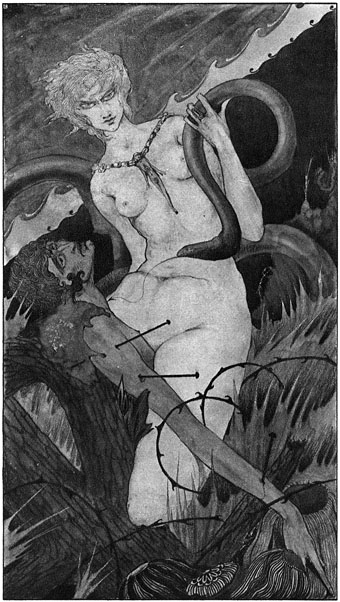
Satia Te Sanguine (1928) by Harry Clarke.

The truth is, the best novels will always defy category. Is Great Expectations a mystery or The Brothers Karamazov a whodunnit or The Scarlet Letter science fiction? Does Kafka’s Metamorphosis belong to the genre of fantasy? In reality men don’t turn into giant insects. And it’s funny. Does that mean it’s a comic novel? […] At a time when reading is in trouble, those readers left should define themselves less rigidly.

Howard Jacobson: The best fiction doesn’t need a label.

Pace the redoubtable Jacobson, Alan Jacobs believes We Can’t Teach Students to Love Reading.

How Ken Kesey’s LSD-fuelled bus trip created the psychedelic 60s.

Salvador Dalí creates something for Playboy magazine in 1973.

JG Ballard: Relics of a red-hot mind.

Electric Garden (1978) by Conrad Schnitzler | Auf Dem Schwarzen Kanal (1980) by Conrad Schnitzler.

Deutsche Kunst und Dekoration #10: Heinrich Vogeler

dkd10-01.jpg

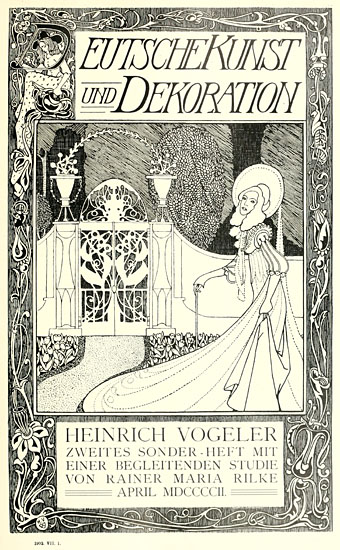
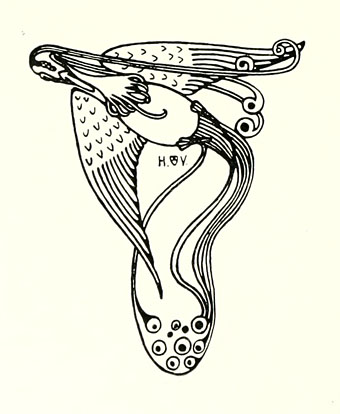
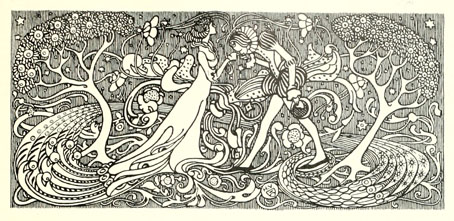
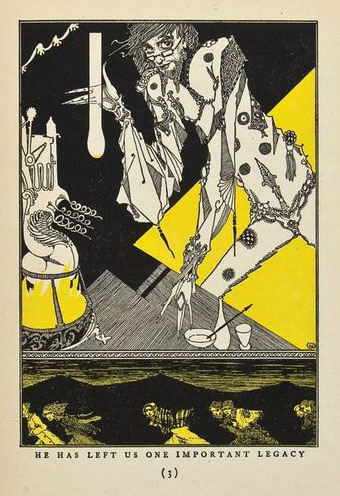
Continuing the delve into back numbers of Deutsche Kunst und Dekoration, the German periodical of art and decoration. Volume 10 covers the period from April to September 1902. There’s so much of interest in this edition I thought it worth making a two-part post. The number opens with a substantial piece devoted to artist and illustrator Heinrich Vogeler (1872–1942) whose edition of Oscar Wilde stories was featured here a while ago. One of the pleasures of this journal is the attention they devote to overlooked artists. Vogeler has an unusual and distinctive style, playful and florid, and with the same enthusiasm for filling the paper with tiny details as later illustrators such as Harry Clarke. Some of these illustrations are for fairy stories, others for more adult fare; peacocks abound. The article also has examples of his painted work although I find his line drawing to be of greater interest. As before, anyone wishing to see these samples in greater detail is advised to download the entire volume at the Internet Archive. Part two follows tomorrow.

dkd10-02.jpg

dkd10-03.jpg

Continue reading “Deutsche Kunst und Dekoration #10: Heinrich Vogeler”

Cardwell Higgins versus Harry Clarke

higgins1.jpg

A Delightful Page in the Record of My Existence.

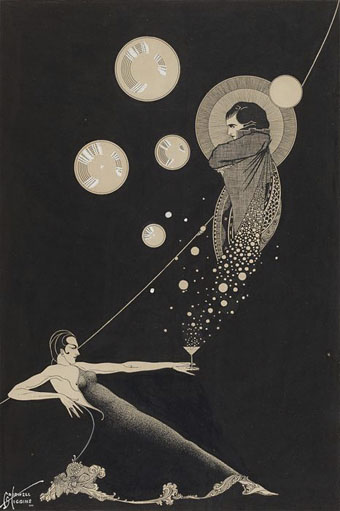
This picture popped up at Chateau Thombeau a few days ago and it’s also been circulating in Tumblr’s recursive labyrinth. The very obvious debt to Harry Clarke’s black-and-white style caught my attention, especially to the artist’s Poe illustrations with the reclining woman being a blatant swipe from one of the Pit and the Pendulum drawings.

clarke.jpg

The Pit and the Pendulum (1919) by Harry Clarke.

Searching around revealed that the artist responsible, Cardwell Higgins, produced a small series of similar pieces in the late 1920s. He then settled into a career as an illustrator for American magazines and advertising, working in a far more commercial style which isn’t really the kind of thing I get very excited over. Six drawings from the black-and-white series were published as a lthograph set in 1979. Some of the originals came up for sale recently which accounts for the surfacing of these copies.

Continue reading “Cardwell Higgins versus Harry Clarke”