Shadowland covers

shadowland01.jpg

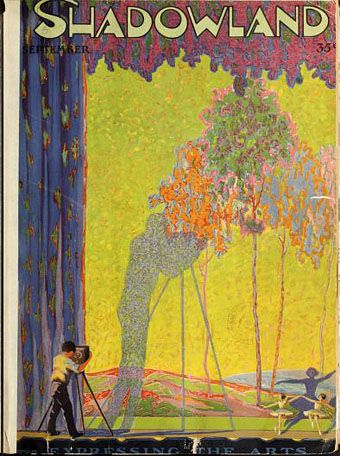
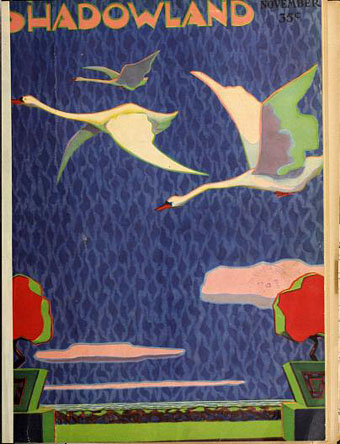
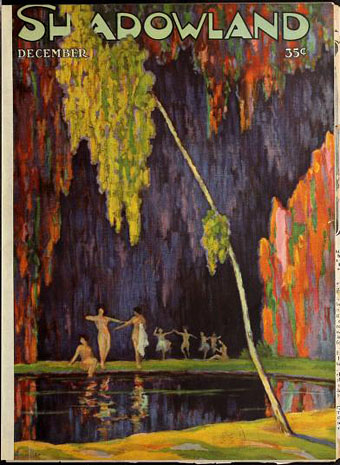
Not the horror magazine, this is an earlier American title that ran from 1919 to 1923. Shadowland covered the arts in general with a preference for stage and film. The thing that immediately sets it apart from other film magazines of the period is the cover art by AM Hopfmuller; many of the paintings resemble theatre backdrops or backgrounds for animated films. The Internet Archive doesn’t have a complete run, unfortunately—the examples here are from volumes 1, 7 and 8—but more of Hopfmuller’s work may be found on other sites. The magazine interiors are also worth a browse for their colour plates and art photographs. (Thanks to Kristian for the tip!)

shadowland02.jpg

shadowland03.jpg

Continue reading “Shadowland covers”

Leo Visser calendar, 1903

visser01.jpg

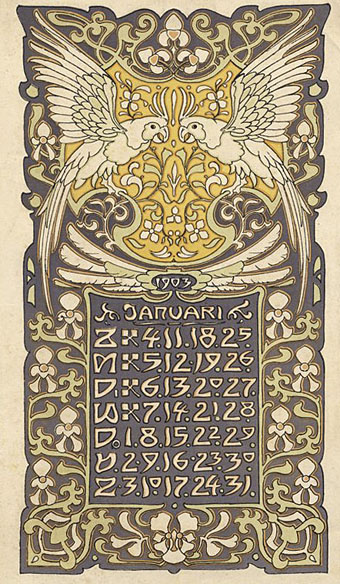
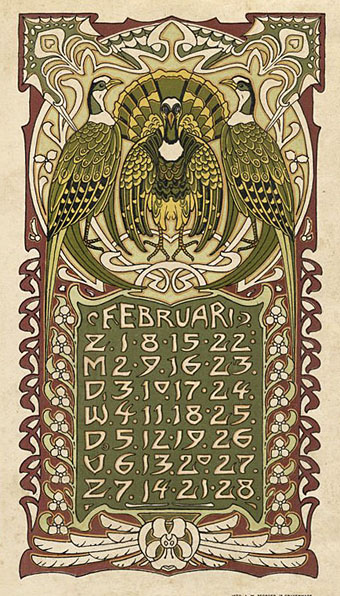
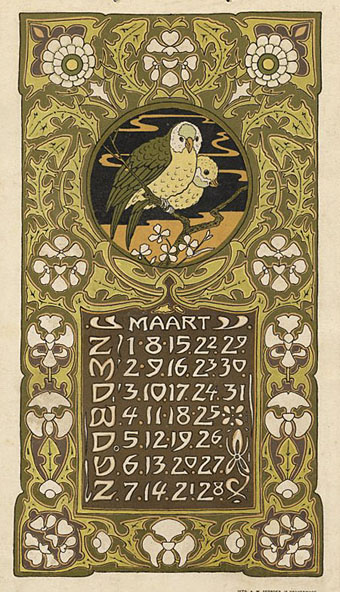
Leo Visser (1880–1950) was a Dutch artist who created a number of calendars in addition to other decorative designs featuring plants and animals. This example is one of the earliest, combining both flora and the fauna in a series of attractive Art Nouveau plates. You don’t see monkeys very often in Art Nouveau designs, for some reason they were more popular during the Art Deco period.

visser02.jpg

visser03.jpg

Continue reading “Leo Visser calendar, 1903”

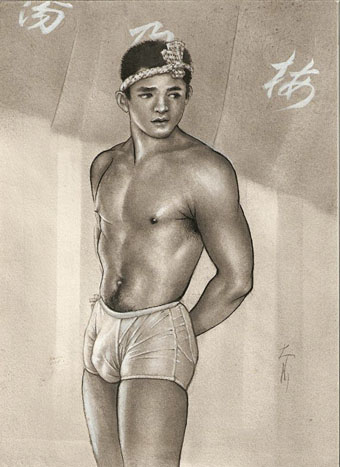
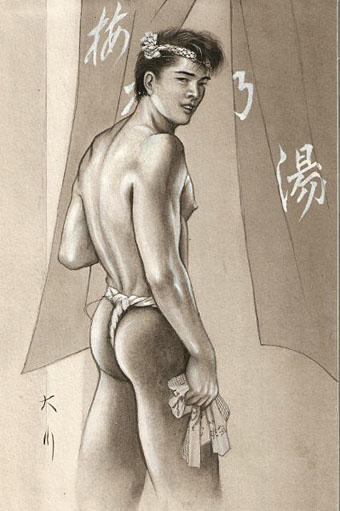
The art of Tatsuji Okawa, 1904–1994

okawa1.jpg

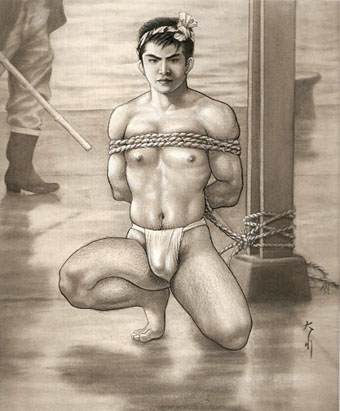
More from Japan. I found some of Tatsuji Okawa’s bondage drawings on a website some years ago but there was no information about the artist other than his name. The reproductions were also poor quality, being grainy scans from books. These drawings are from the excellent Japanese Gay Art site, a wonderful resource that also sells the work on display. Most of the drawings deal with bondage and/or humiliation—popular themes in Japanese porn—but there are a few portrait-style pieces like the ones below. No surprise to read that Yukio Mishima enjoyed Okawa’s work.

okawa2.jpg

okawa3.jpg

Elsewhere on { feuilleton }
The gay artists archive

Foreign appearances

steam1.jpg

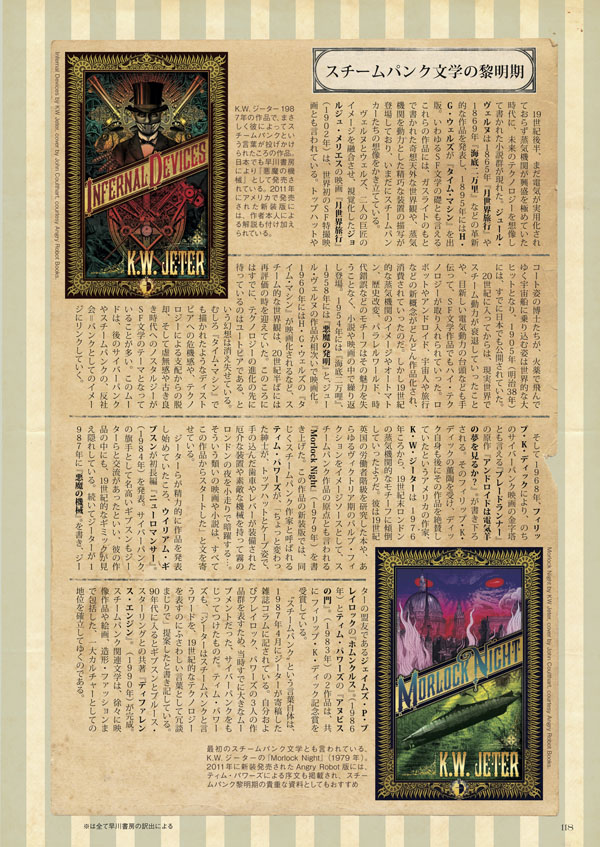
My work has appeared in a couple of foreign collections recently, each approaching popular culture from very different directions. The volume above is called Steampunk Japan Fashion Book according to a German bookseller although the title may read differently to Japanese speakers. This was published at the end of last year, and features my ever-popular covers for the Angry Robot editions of two steampunk novels by KW Jeter, Infernal Devices and Morlock Night. The book is the work of a collective who call themselves The Japanese Steampunkers.

steam2.jpg

popculture1.jpg

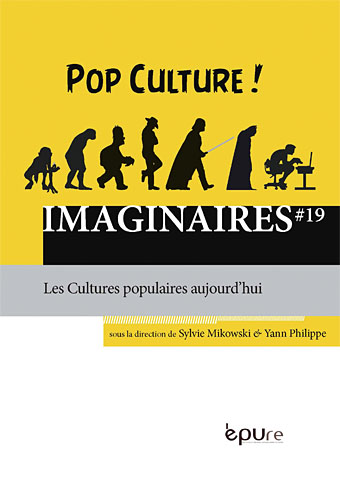
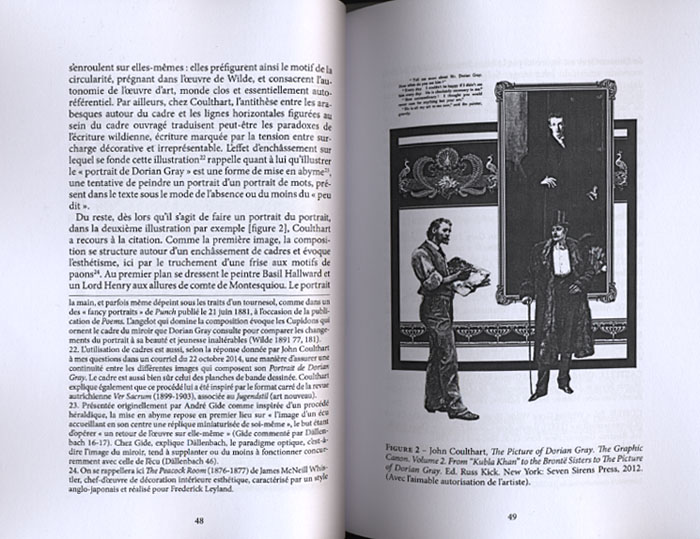
Meanwhile in France, Imaginaires #19: Les cultures populaires aujourd’hui is a collection of academic pieces about popular culture published by ÉPURE, Éditions et Presses universitaires de Reims. Inside there’s an essay by Xavier Giudicelli (University of Reims Chamapgne-Ardenne), The Picture of Dorian Gray et la culture populaire: du texte à la bande dessinée, which compares Wilde’s novel to various graphic adaptations. Xavier wrote to me some time ago about my Dorian Gray adaptation for the Russ Kick-edited Graphic Canon (2012) so the piece includes some of my remarks about my interpretation together with two of the pages.

popculture2.jpg

Previously on { feuilleton }
Picturing Dorian Gray

Weekend links 294

napoleon.jpg

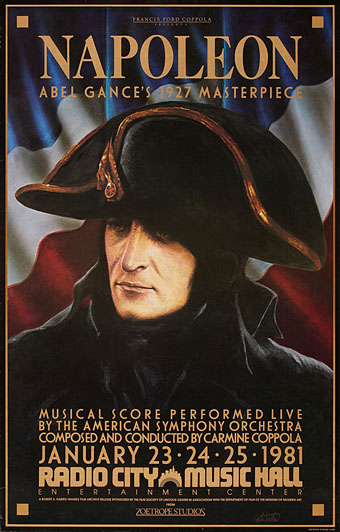
Painting by Alex Tavoularis.

• There are silent films, and then there is Abel Gance’s Napoleon (1927), a five-and-a-half hour historical drama following the emperor’s life from boyhood to the invasion of Italy. The word “epic” is overused but Gance’s film demands the description: in addition to the recreation of huge battles and scenes from the French Revolution, cinema screening required three projectors for sequences which are either multi-screen or three times the width of the Academy ratio. The film was revived in the early 1980s after an extensive restoration by Kevin Brownlow, but Napoleon is still more talked about than seen so news of a forthcoming digital release by the BFI is very welcome indeed. The poster above is from this collection which includes more information about the film and its troubled history. Related: a trailer for a 2012 screening at the San Francisco Silent Film Festival.

• “His films broke with traditional production methods, having virtually no shooting script and capturing the freshness of their genesis.” RIP Jacques Rivette. In 1998 Frédéric Bonnaud talked to Rivette about the director’s cinematic likes and dislikes. Elsewhere, Jonathan Romney speculates that Rivette’s Céline and Julie Go Boating (1974) “might be the only film in which the story is dreamed by a passing cat”.

Strange Flowers‘ selects 16 books for (what’s left of) 2016. Stand-out for me is Aubrey Beardsley: A Catalogue Raisonné by Linda Gertner Zatlin which will be published in May. Two cased volumes, a total of 1104 pages, and a price tag of $300.

It’s a powerful trope, but it also risks trading one stigma for another: ‘‘Phobia’’ is now so embedded in our language that it’s easy to forget that it is a metaphor comparing bigots to the mentally ill. The comparison also has the effect of excusing those Americans—like certain presidential candidates in the 2016 race—who wield prejudices strategically. It’s not your fault if you get sick. But hating people is a choice.

Amanda Hess on how “-phobic” became a weapon in the identity wars

• Delving into the shadowy world of occult art: Priscilla Frank talks to Pam Grossman about her Language of the Birds exhibition. Related: “The occult never quite goes away,” says Kenneth Anger.

• “It was a magic day in our happy, young lives.” A proposal for a monument in Baltimore celebrating the final scene of John Waters’ Pink Flamingos.

• Mixes of the week: Wrap Up Warm Mix by Moon Wiring Club, Secret Thirteen Mix 175 by Inner8, and FACT mix 533 by Roly Porter.

• “He was less an architect than a Busby Berkeley with a penchant for Black Masses.” Jonathan Meades on Albert Speer.

• More film posters: Benjamin Lee on the compromises that have made contemporary posters “drab and uninspiring”.

• The vast and ghostly landscape of “Britain’s only desert”: photographs by Robert Walker.

Wyrd Daze, Lvl2 Issue 5, is free and brimming with the weird.

• The films of Michael Mann in 44 shots.

Laurie Anderson‘s favourite films.

Flamingo (1959) by Henry Mancini | Moon Occults The Sun (2006) by Espers | The Moon Occults Saturn at Dawn (2015) by Steve Moore