Design as virus 11: Burne Hogarth

mighty_baby.jpg

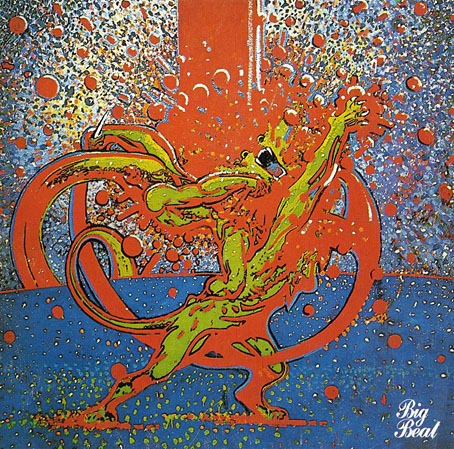
Mighty Baby (1969). Illustration by Martin Sharp.

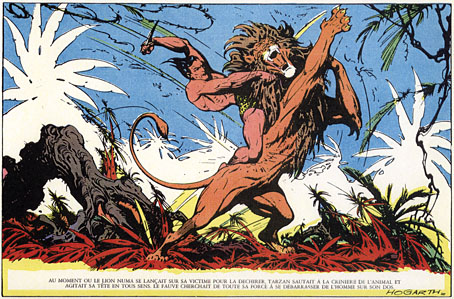
Yet another album cover prompts this post, part of an occasional series. Mighty Baby were a British rock band who formed out of psychedelic group The Action in the late Sixties, and their music is fairly typical of the period, being “heavy” without any of the psych trappings which—for me—often make everything from that time a lot more interesting. This was a journey undertaken by many groups at the end of that lurid decade, a junking of the playful and evocative side of what was now called rock music in favour of a denim-clad earnestness. This album isn’t one I like very much—I’d rather listen to their earlier incarnation—but the cover painting by psych artist Martin Sharp is certainly a startling piece, being a violent mutation of one of the most famous Tarzan drawings by comic artist Burne Hogarth.
hogarth.jpg

Tarzan by Burne Hogarth (194?).

Hogarth was drawing Tarzan for much of the 1940s and this particular panel showing the Ape-Man attacking Numa the lion dates from the latter part of his run on the series. I wish I could pin this to an actual year but I don’t have a complete set of the comics and that detail eluded me. If anyone knows the date, please leave a comment.
Continue reading “Design as virus 11: Burne Hogarth”

The art of Oleg Denysenko

denysenko1.jpg

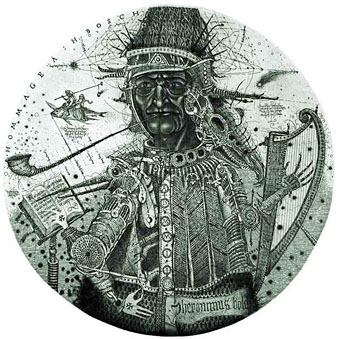
Between heaven and hell.

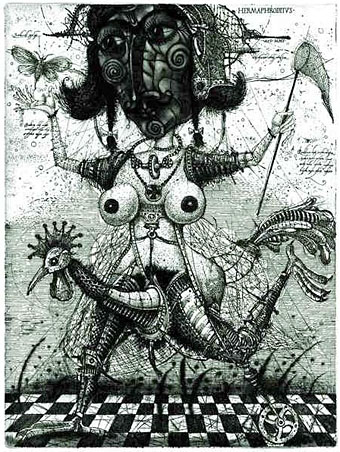
These intaglio prints by Ukranian artist Oleg Denysenko remind me of Ian Miller in their fine, spidery detail, and Ernst Fuchs in some of their subject matter. Denysenko also makes sculptures based on some of his etchings.

denysenko2.jpg

Hermaphroditus.

Elsewhere on { feuilleton }
The etching and engraving archive
The fantastic art archive

Previously on { feuilleton }
The art of Ian Miller
The art of Ernst Fuchs

Uranian inspirations

gloeden2.jpg

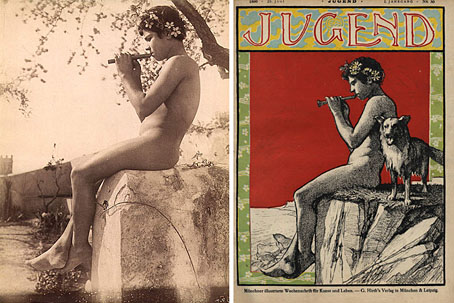
left: Sicilian boy by Wilhelm von Gloeden (no date); right: Jugend cover by Hans Christiansen (1896).

My current reading is The Secret Life of Oscar Wilde (2003), a long and fascinating study by Neil McKenna which attempts to disentangle the true nature of Wilde’s sex life from the myths and evasions of his biography and biographers. Among the pictures in the book, McKenna shows a couple of the “Uranian” photographs by Wilhelm von Gloeden (1856–1931) which Wilde owned. Von Gloeden’s views of naked Sicilian boys were described as “Classical” in a barely-believable subterfuge familiar during the 19th century, and it’s understandable why Wilde, who’d been praising the attractions of Mediterranean youth for most of his adult life, would have found these pictures worthy of purchase. Wikimedia Commons has a substantial set of the photos, although it should be noted that provenance is often uncertain; there were other photographers active in Taormina at the time who catered to a similar market. One photo in particular stood out recently when I recognised it as the possible source for the figure on a Hans Christiansen cover for Jugend magazine of 1896. The cover above has appeared here before but this is the first time I made the photographic connection.

gloeden1.jpg

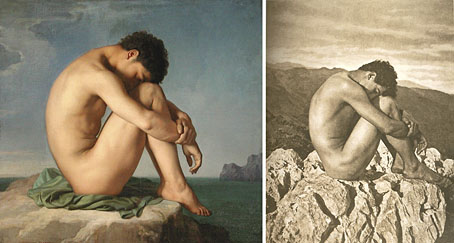
left: Jeune homme assis au bord de la mer by Jean Hippolyte Flandrin (1836); right: Cain by Wilhelm von Gloeden (c. 1902).

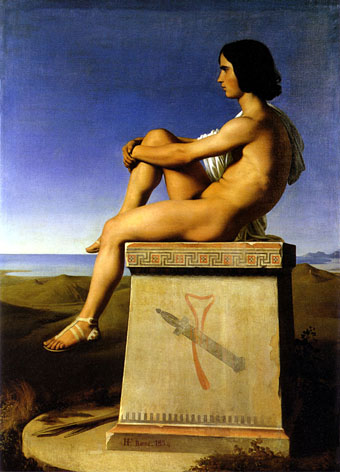
Gloeden, of course, was one of the first people to use the Flandrin pose, as I noted in the original post on that theme. I wonder if he knew he’d been copied in turn? That Jugend cover and its inspiration reminds me a little of Flandrin’s other depiction of Classical youth, his portrait of Polites, a painting which Oscar would no doubt have enjoyed.

polites.jpg

Polites, Son of Priam, Observes the Movements of the Greeks by Jean Hippolyte Flandrin (1834).

Elsewhere on { feuilleton }
The recurrent pose archive
The Oscar Wilde archive

Previously on { feuilleton }
Forbidden Colours
Jugend Magazine
Evolution of an icon