Photographic Amusements, 1905

photos01.jpg

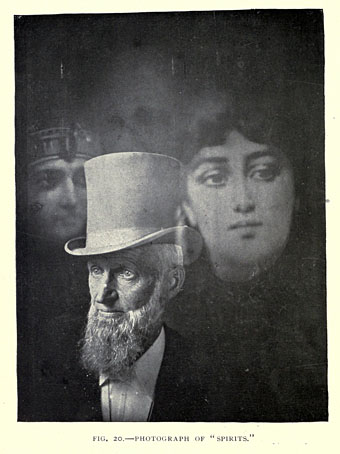
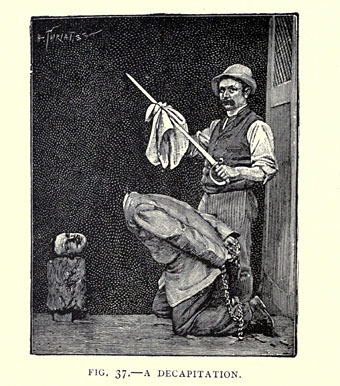
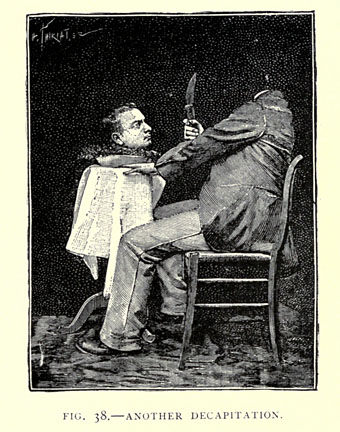
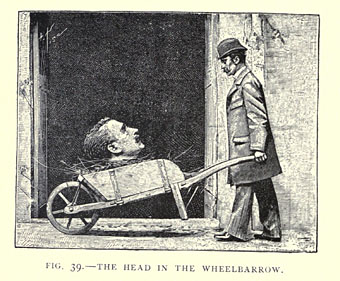
Walter E. Woodbury’s Photographic Amusements (1905) is a guide for photographers to the many kinds of photographic manipulation. None of the effects would raise an eyebrow today but I was surprised to see what must be one of the earliest examples of a multi-person composite (see below), with the faces of twelve physicians combined to form a single portrait. Elsewhere some examples of “freak pictures” by a French photographer, M.R. Riccart, are presented as engravings which for me makes them more interesting. Browse Woodbury’s book here or download it here.

photos02.jpg

photos03.jpg

photos04.jpg

Continue reading “Photographic Amusements, 1905”

Proverbial details

bruegel06.jpg

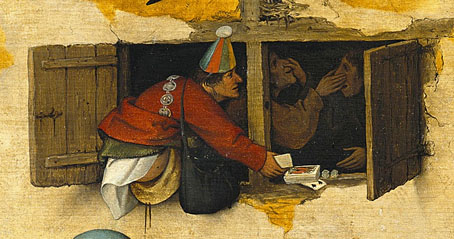
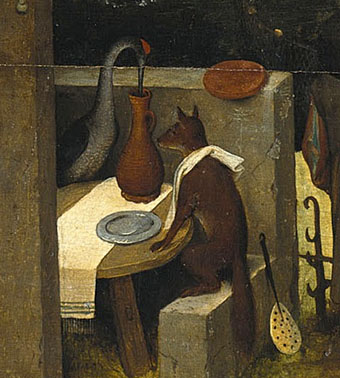
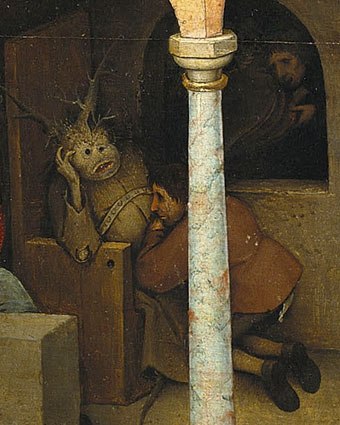
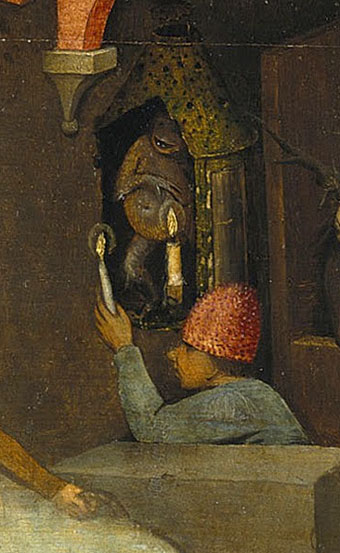
More Google Art Project details from the amazing Pieter Bruegel the Elder. The Netherlandish Proverbs (1559) is one of Bruegel’s many paintings which are crammed with curious incident; it’s also one of the more bizarre examples. In a crowded scene the artist depicts in a literal manner one hundred different proverbs or figures of speech. Wikipedia has a guide to the details but if you ignore that you can treat the whole thing as another example of Surrealism before its time. In addition to the usual complement of medieval grotesques there’s a fair amount of earthy humour of a kind which pretty much vanished from painting until the 20th century.

bruegel01.jpg

bruegel02.jpg

bruegel03.jpg

Continue reading “Proverbial details”

The Sea of Monsters

beatles1.jpg

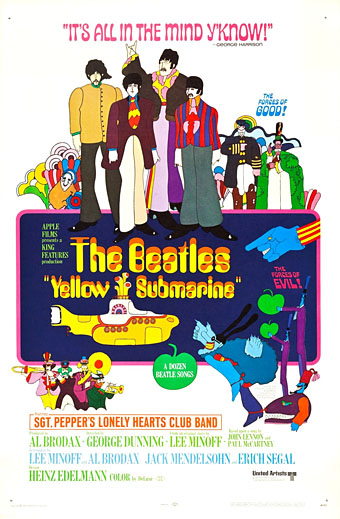
The German definite article has unfortunate implications when applied to a group of Brits, but if we overlook this detail the poster makes an interesting contrast with its US counterpart. Where the American design depicts all the film’s main characters, Heinz Edelmann’s painting concentrates almost solely on the creatures from the Sea of Monsters with no Blue Meanies in sight. As is often the case with film posters, both designs give a slightly different impression whilst being accurate in their selective representations. Yellow Submarine was reissued on DVD and Blu-ray last year. It looks and sounds marvellous.

beatles2.jpg

Previously on { feuilleton }
Tomorrow Never Knows
Yellow Submarine comic books
A splendid time is guaranteed for all
Heinz Edelmann
Please Mr. Postman
All you need is…

Richard Matheson, 1926–2013

matheson1.jpg

The Incredible Shrinking Man.

Of Richard Matheson’s many books I’ve only read I Am Legend so can’t say much about his fiction other than to confirm (as everyone else does) that none of the three adaptations so far have managed to do it justice. Of his work for film and television there’s too much to say, it’s so copious and indelibly memorable. Here’s a list of five favourite Matheson creations.

The Incredible Shrinking Man (1957)

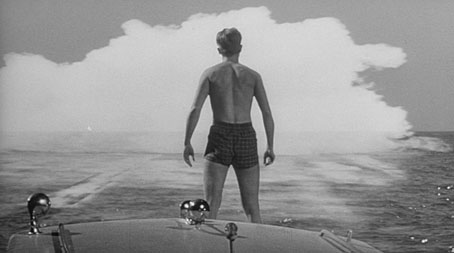
JG Ballard frequently referred to this as one of his favourite science fiction films, not because of the SF element, which is never properly explained, but because of its inadvertent Surrealist qualities. For my part, every time I watched this I was always impatient to get to the later scenes where the unfortunate Scott becomes trapped in the cellar, and his own house becomes an increasingly alien and hostile environment. The ending where he accepts his condition is very Ballardian.
matheson2.jpg

Duel (1971)

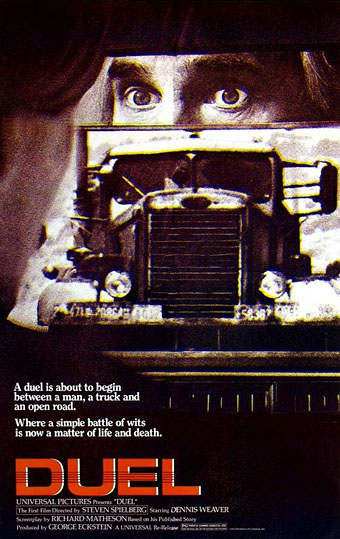
A sweating and manic Dennis Weaver is pitted against an anonymous truck driver who remains unseen but for a few shots of an arm and some boots. The lethal game of cat-and-mouse was famously directed by Steven Spielberg, his second feature, and one that’s a lot more impressive than some of his subsequent films. Watch it on YouTube.
matheson3.jpg

The Legend of Hell House (1973)

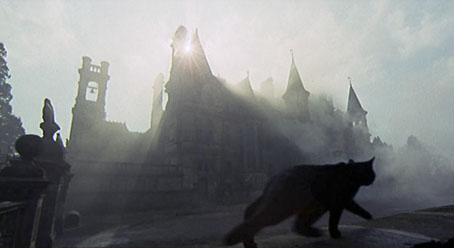
Matheson’s take on Shirley Jackson’s The Haunting of Hill House—four investigators in a haunted mansion—with the gain ramped up 100%. The film starts off quietly but is very soon into full-on hysteria; director John Hough finds so many eccentric camera angles you could actually calm down after this by watching a Terry Gilliam film. Meanwhile Roddy McDowell chews the scenery as though over-acting is going out of fashion. Bonuses are a grown-up Pamela Franklin (Flora in Jack Clayton’s superb The Innocents), and a great score from Radiophonic synthesists Brian Hodgson and Delia Derbyshire. Watch the trailer.
matheson4.jpg

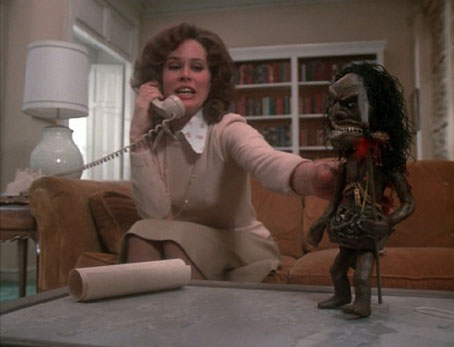
Trilogy of Terror (1975)

A three-story TV movie in which Karen Black took all the leading roles. No one remembers the first two stories but everyone who’s seen this remembers the third, Amelia (based on a Matheson short story, Prey), in which Ms Black is hunted in her apartment by a Zuni fetish doll. It’s on YouTube!
matheson5.jpg

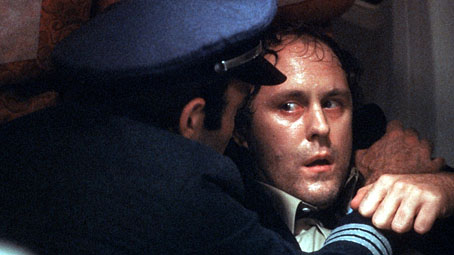
Nightmare at 20,000 Feet (1983)

Sorry, Shatnerphiles, but the superior version of this story is the one from Twilight Zone: The Movie. John Lithgow is a much better actor than William Shatner, the gremlin on the wing of the plane is a fearsome creature that’s seriously destructive (not, as Matheson lamented of the original, “a surly teddy bear”), and the whole sequence is directed by George Miller fresh from Mad Max 2. The original Twilight Zone episode wasn’t bad but it can’t compete with Miller pulling out all the stops. Watch it here.

Previously on { feuilleton }
New York City abandoned

What Is A Happening?

technicolor.jpg

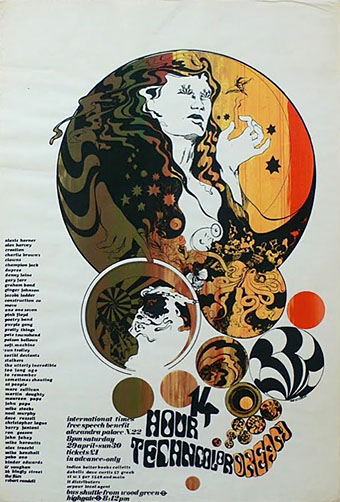
Poster for the 14 Hour Technicolor Dream (1967) by Michael McInnerney.

“The language of Mellow Yellow, the art of the Happening…”

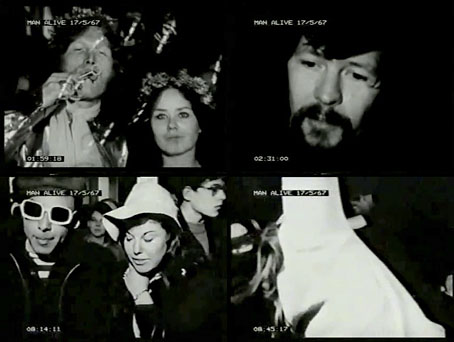
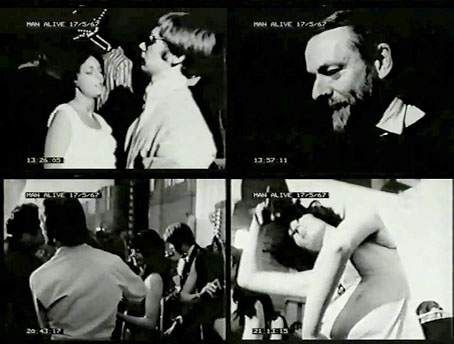
Yesterday’s story from International Times appeared in the same week in 1967 as this 30-minute BBC documentary shown as part of the Man Alive documentary strand. Taking them together you receive contrasting views of a major moment for London’s psychedelic underground, The 14 Hour Technicolor Dream, an all-night indoor arts-and-music festival staged at Alexandra Palace on 29th April, 1967. The event was a benefit to raise money for International Times following a prosecution for obscenity (Oz magazine later had to endure a similar, more notorious rigmarole). Alexandra Palace was an odd choice of location, being a huge Victorian exhibition space which had once served as the BBC’s main studios. (The first Quatermass serial was filmed there in 1953.) The venue was apparently chosen because it had previously hosted blues all-nighters but the acoustics are dreadful for live music, as the BBC’s documentary demonstrates. The film also shows that most of the audience wouldn’t have been too concerned; being there was more important.

manalive1.jpg

When you’ve been reading about an event like this for years it’s fascinating to get an extended view of the thing. The BBC were there all night, and capture many key incidents. The three interviewers are deeply sceptical of the whole business but that’s inevitable when they were making a film for a general audience. All the same, the repeated questions of “Why are you here? What’s this for?” are ones that would never be asked of a group of visitors to, say, Ascot, or the Henley Regatta. “It’s the audience which is the interesting part,” an upper-class Chelsea bookseller astutely declares, the interviewer seeming surprised that an older person might wish to be present. If the event looks trivial and even stereotypical today (tripped-out kids and blissful sentiments), it needs to be remembered that this was the very first time anything like this had been seen in Britain, hence the presence of the documentary crew. For sceptics and initiates alike the night was a glimpse of bright new territory opening up. The excitement of the moment still communicates itself.

What Is A Happening?: part one | part two | part three

The 14 Hour Technicolor Dream at UK Rock Festivals

manalive2.jpg

Previously on { feuilleton }
My White Bicycle