Weekend links 262

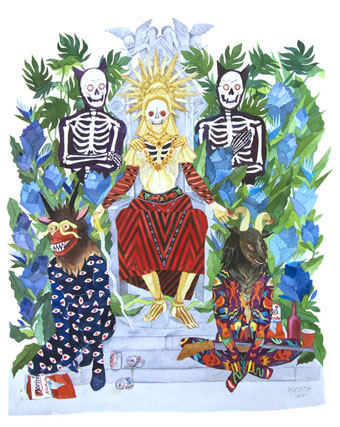
rozich.jpg

You’ll Never Be Alone, Even In Death (2014) by Stacey Rozich.

• “But the CD-R format, which eventually replaced the mix tape, turned out to be a technological letdown. ‘CD-Rs are just such an unstable format,’ Margolis says. ‘When you made 10 cassettes, the 10 cassettes generally played. If you made 10 CD-Rs, 8 of them played and 2 of ’em skipped. So that partially explains why people are going back to cassettes—it’s a cheap format that actually works.'” A huge article by Lisa Hix on the history and resilience of cassette tapes.

• “The word speculative comes from speculum, or mirror, and with speculative music the goal is to mirror the hidden processes of nature in sound.” David Metcalfe on Hawthonn, Coil and imaginal landscapes.

• Mixes of the week: FACT Mix 498 by The Cyclist, and Adventures In Sound And Music 28 May 2015 compiled by Joseph Stannard.

Nabokov was an intimate writer. His reticences, his formal estrangements, his denial of interest in any reality beyond the text all need to be measured against that. Maximum closeness: not the closeness of ostentatious empathy but the closeness of one mind addressing another in the most thrilling terms. He speaks into the ear, sometimes dripping a little poison. He contrives to have a reader identify intimately with a protagonist or narrator, but even that is not enough; the reader receives secret handshakes from the author himself, behind a narrator’s back.

Michael Dirda quoting from Nabokov in America by Robert Roper

• Books old and new: The Encyclopedia of the Dead by Danilo Kis, and Stranger Days by Rachel Kendall.

• At Dangerous Minds: Il caso Valdemar (1936), a short Italian adaptation of the Edgar Allan Poe story.

Lustpiel is “a new online magazine for gay, lustful literature”. And a fair amount of art and porn.

• “Q: Is there any subject that is never acceptable to joke about?” No, says Curtis Brown.

Machines Are Obsolete, a new piece by Pye Corner Audio for the Ghost Box label.

• Ishbelle Bee (see yesterday’s post) is interviewed at SFFWorld and Book Swoon.

Laura June on the life of Djuna Barnes, stunt reporter and shocking modernist.

• Stream the debut LP from Ghost Harmonic, a new John Foxx project.

• Portraits of the BDSM community by Natasha Gornik.

Rainer Werner Fassbinder: 10 essential films

Loplop

Mirrorball (2009) by John Foxx & Robin Guthrie | Mirror (2012) by Emptyset | Mirrored (2013) by Silje Nes
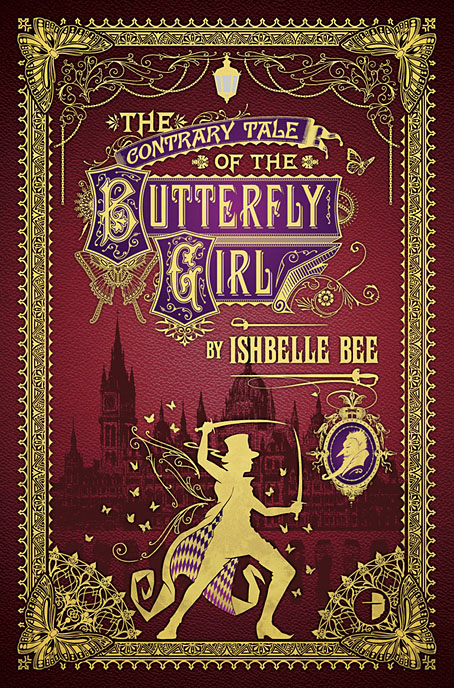
The Contrary Tale of the Butterfly Girl

butterfly1.jpg

Three months after The Singular & Extraordinary Tale of Mirror & Goliath I can reveal my cover design for Ishbelle Bee’s sequel, The Contrary Tale of the Butterfly Girl. Here’s a summary, swiped once again from the Barnes & Noble SF & Fantasy blog:

Two orphans, Pedrock and Boo Boo, are sent to live in the sinister village of Darkwound. There they meet and befriend the magical and dangerous Mr Loveheart and his neighbour Professor Hummingbird, a recluse who collects rare butterflies. Little do they know that Professor Hummingbird has attracted the wrath of a demon named Mr Angel-Cakes.

One night, Mr Angel-Cakes visits Boo Boo and carves a butterfly onto her back. Boo Boo starts to metamorphose into a butterfly/human hybrid, and is kidnapped by Professor Hummingbird. When Mr Loveheart attempts to rescue her with the aid of Detective White and Constable Walnut, they are turned into butterflies.

Caught between Professor Hummingbird and the demon Angel-Cakes, Loveheart finds himself entangled in a web much wider and darker than he could have imagined, and a plot that leads him right to the Prime Minister and Queen Victoria herself…

I also supplied some comments about the design for the B&N post. I knew this would be an enjoyable job as soon as I read the title since I approve of anything involving butterflies. The main challenge was that the first cover came out so well—and has been very well received—that the new design needed to be just as successful. Ishbelle’s novels are wild and crammed with so much incident I keep thinking these covers are, if anything, a little sedate. But the main task of a cover is to attract new readers not illustrate every last plot detail, and in that the first cover seems to be doing its job. The Singular & Extraordinary Tale of Mirror & Goliath will be out at the end of June; The Contrary Tale of the Butterfly Girl will be published at the beginning of August.

Previously on { feuilleton }
The Singular & Extraordinary Tale of Mirror & Goliath

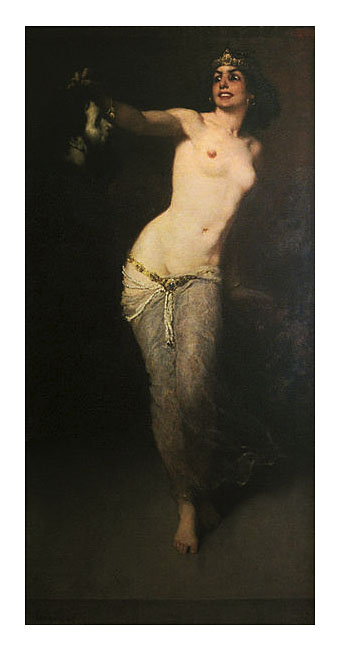
A few more Salomés

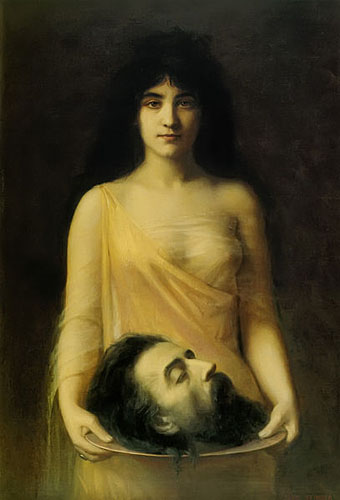
benner.jpg

Jean Benner (1899).

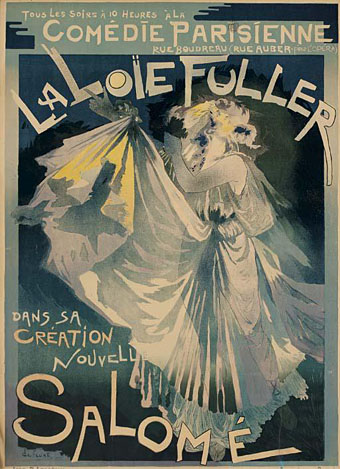
I’ve not done a Salomé post for a while so here’s another handful of different interpretations. The most interesting ones are the two most recent: a drawing by Barry Windsor Smith I’d not seen before (undated but it looks like his work from the 1980s), and a great piece by Paula Andrade that can also be seen in a black-and-white version here.

fuller.jpg

Georges De Feure (1900).

eder.jpg

Gyula Eder (1907).

Continue reading “A few more Salomés”

Lachman’s Inferno

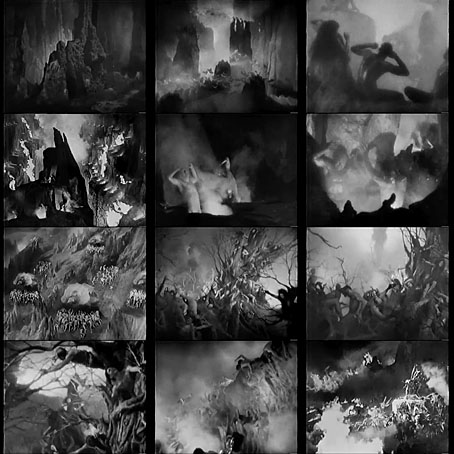
lachman.jpg

I’ve written already about Harry Lachman’s remarkable melodrama, Dante’s Inferno (1935), but the links to the Inferno sequence are now defunct so here’s an updated one. Lachman was an artist before he became a production designer for Rex Ingram, and later a director in his own right. The French government awarded him the Légion d’Honneur for his painting but it’s this short piece of film for which he’s remembered today, a dreamlike journey through the circles of Dante’s Hell intended as a warning to the crooked fairground owner played by Spencer Tracy. The sequence is notable for closely following Gustave Doré’s illustrations, and also for the surprising amount of naked flesh given that this was made when the Hays Code was in operation.

Previously on { feuilleton }
Hell, a film by Rein Raamat
Inferni
Mirko Racki’s Inferno
Albert Goodwin’s fantasies
Harry Lachman’s Inferno
Maps of the Inferno
A TV Dante by Tom Phillips and Peter Greenaway
The last circle of the Inferno

Hell, a film by Rein Raamat

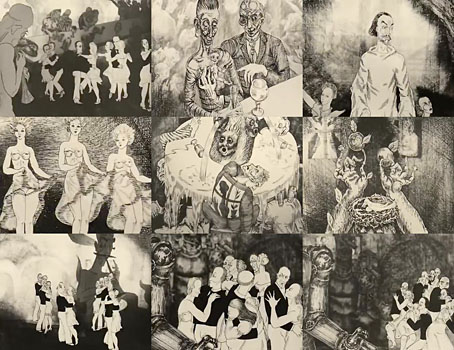
porgu.jpg

An inferno of a different kind, Hell (1983) is a short film by Estonian animator Rein Raamat based on a series of etchings by Estonian artist Eduard Wiiralt (1898–1954). The drawings date from around 1930 when Wiiralt was living in Paris so they’re understandably connected to Surrealism. Browse some of the originals at 50 Watts. (Thanks to Modzilla for the tip!)

Previously on { feuilleton }
Inferni
Mirko Racki’s Inferno
Albert Goodwin’s fantasies
Harry Lachman’s Inferno
Maps of the Inferno
A TV Dante by Tom Phillips and Peter Greenaway
The last circle of the Inferno