The South Bank Show: Michael Powell

powell1.jpg

This is the other great TV documentary about The Archers, the focus being on Michael Powell alone this time. The first volume of Powell’s autobiography, A Life in Movies, was published in 1986 which prompted this episode of The South Bank Show. Powell got to direct this one so there are many playful visual moments while tracing a career from a chance meeting with a Hollywood film crew in the south of France to the heights of the British film industry (and, in Black Narcissus, the painted peaks of the Himalayas). If you like Powell’s films his autobiography is essential reading. For a guide to the films of The Archers I’d recommend Arrows of Desire: The Films of Michael Powell and Emeric Pressburger by Ian Christie.

powell2.jpg

Previously on { feuilleton }
Powell & Pressburger: A Pretty British Affair
The Rite of Spring and The Red Shoes
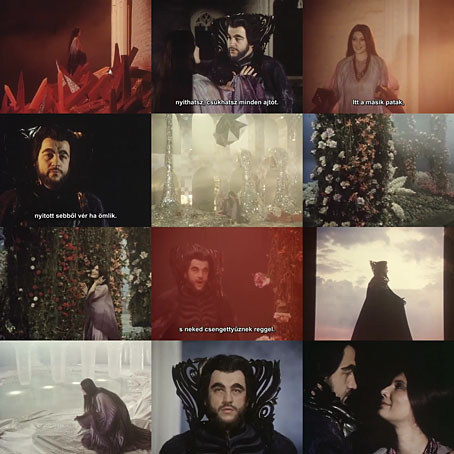
Michael Powell’s Bluebeard revisited
The Tale of Giulietta

Powell & Pressburger: A Pretty British Affair

archers1.jpg

“It’s the only thing that fulfils its promise…magic,” says Martin Scorsese, referring to a shot of an arrow thudding into its target at the beginning of a feature film. A pierced target accompanied by the words “A Production of The Archers” heralded the films made by Michael Powell and Emeric Pressburger from 1943 to 1957, films that included The Life and Death of Colonel Blimp (1943), A Canterbury Tale (1944), I Know Where I’m Going! (1945), A Matter of Life and Death (1946), Black Narcissus (1947), The Red Shoes (1948), Gone to Earth (1950) and The Tales of Hoffmann (1951). A Very British Affair (1981) is a 50-minute documentary made for the BBC’s Arena strand by Charles Cabot and Gavin Millar that charts the progress of Powell and Pressburger’s partnership. There’s also some discussion of Powell’s Peeping Tom (1960), the film that sank his career in Britain but which is now regarded as a masterpiece of self-reflexive cinema.

archers2.jpg

This is the best documentary about The Archers, not only for the interviews with the two men but also for the extraneous business with Michael Powell in Los Angeles and New York. In both cities the director is seen with two younger filmmakers who helped resurrect his reputation in the 1980s: Francis Coppola (seen wandering around the sets used in One from the Heart) and Martin Scorsese. The latter is interviewed during the filming of The King of Comedy, and we get to see a brief between-takes moment with Jerry Lewis and Robert De Niro. Powell was a kind of backroom advisor to Scorsese at this time, offering suggestions during the production of Raging Bull and After Hours. On the west coast he was working on projects that would have been films for Coppola’s American Zoetrope but—as we now know—nothing materialised.

Previously on { feuilleton }
The Rite of Spring and The Red Shoes
Michael Powell’s Bluebeard revisited
The Tale of Giulietta

Cosmic eggs

1: The Metamorphosis of Narcissus (1937) by Salvador Dalí.

dali1.jpg

dali2.jpg


2: Geopoliticus Child Watching the Birth of the New Man (1943) by Salvador Dalí.

dali3.jpg


3: The Crack in the Cosmic Egg: Challenging Constructs of Mind and Reality (1971) by Joseph Chilton Pearce.

pearce.jpg


4: Karthago (1971) by Karthago.

karthago.jpg

Cover design by JH Löffler.


5: Edge Of Time (1972) by Norma Winstone.

winstone.jpg

Cover art by Terry Eden.


6: Supernature (1973) by Lyall Watson.

watson.jpg

Cover art by Jerry Pinkney.


7: A Cosmic Book (1988) by Itzhak Bentov.

bentov.jpg


8: The Crack in the Cosmic Egg (1996) by Steven Freeman & Alan Freeman.

freeman.jpg


9: Cosmic Egg (2009) by Wolfmother.

wolfmother.jpg

Cover by Invisible Creature.


10: Krautrock: Cosmic Rock and Its Legacy (2012) edited by Nikos Kotsopoulos.

krautrock.jpg

Edmund Dulac’s Tanglewood Tales

dulac23.jpg

Another Dulac I’d not seen before, and what an exceptional edition it is. Tanglewood Tales is Nathaniel Hawthorne’s retelling of Greek myths, a popular book for children that’s been through many reprints. Dulac’s edition dates from 1918, with the illustrations combining some of the stylisation of Greek art with Dulac’s own derivations from Persian miniatures. This might seem odd historically—the Greeks and Persians were enemies, after all—but every plate is a beautiful piece of work. Collectors of Pan imagery should note a fine example in the twelfth painting.

dulac24.jpg

dulac25.jpg

Continue reading “Edmund Dulac’s Tanglewood Tales”

Edmund Dulac’s Tempest

dulac02.jpg

This is a copy of The Tempest that I managed to miss when I was looking for illustrated editions a few years ago. When Edmund Dulac is away from his beloved (and mythical) Arabia or Persia his work tends to resemble that of Arthur Rackham, and that’s what you get in this volume from 1915, a series of Rackham-like colour plates with a handful ink vignettes. Dulac shows us Ariel in his harpy form, and as the more familiar fairy being, while Caliban is depicted as a bearded troglodyte. Of note near the end is Prospero’s sword—which has a moon-shaped hilt of a type only seen in modern-day witchcraft or ritual magic—and the plate for “We are such stuff as dreams are made on”, a suitably strange and almost abstract rendering of a dissolving cosmos.

dulac01.jpg

dulac03.jpg

dulac04.jpg

Continue reading “Edmund Dulac’s Tempest”