Weekend links 289

hermes.jpg

Fathomless Sounding (1932) by Gertrude Hermes.

• Over at Greydogtales (“weird fiction, weird art and even weirder lurchers”) I talk about art, design, the writing of this blog, and I also reveal more about my ongoing Axiom project. The latter currently stands at two novels, a couple of half-finished stories and a few pieces of artwork. I may be unveiling some of the art in the new year so watch this space.

• Howard Brookner’s Burroughs: The Movie (1983), a definitive film portrait of William Burroughs, is released at last on DVD/Blu-ray. US-only for the moment but further releases elsewhere are promised. The director’s nephew, Aaron Brookner, has a documentary about his uncle released next year.

• “…beautifully articulated bawdiness, perverse pleasures and a radical, though nondidactic, political view.” Melissa Anderson reviews Boyd McDonald’s Cruising the Movies: A Sexual Guide to Oldies.

The crisis, as Ellis and Silk tell it, is the wildly speculative nature of modern physics theories, which they say reflects a dangerous departure from the scientific method. Many of today’s theorists — chief among them the proponents of string theory and the multiverse hypothesis — appear convinced of their ideas on the grounds that they are beautiful or logically compelling, despite the impossibility of testing them. Ellis and Silk accused these theorists of “moving the goalposts” of science and blurring the line between physics and pseudoscience. “The imprimatur of science should be awarded only to a theory that is testable,” Ellis and Silk wrote, thereby disqualifying most of the leading theories of the past 40 years. “Only then can we defend science from attack.”

Natalie Wolchover on A Fight for the Soul of Science

• Mixes of the week: A mix by Front & Follow, and The Ivy-Strangled Path Vol. XIV by David Colohan.

• “Psychedelics can’t be tested using conventional clinical trials,” says Nicolas Langlitz.

• At Dangerous Minds: Ralph Steadman illustrates Ray Bradbury’s Fahrenheit 451.

• Why does Moby-Dick (sometimes) have a hyphen? Erin Blakemore investigates.

• My thanks again to Dennis Cooper for including this blog on his year-end list.

• Cian Traynor was given 20 minutes to ask Ennio Morricone some questions.

Lolita at 60: Ten writers reconsider Nabokov’s novel, page by page.

• At Ballardian: High-Rise: Wheatley vs Cronenberg.

Poison Ivy: The Queen of Psychobilly Punk

The Cinema of Hotels: a list

Solo intimacy DIY

Moby Dick (1970) by Led Zeppelin | William Burroughs Don’t Play Guitar (1996) by Islamic Diggers | Physical (2001) by Goldfrapp
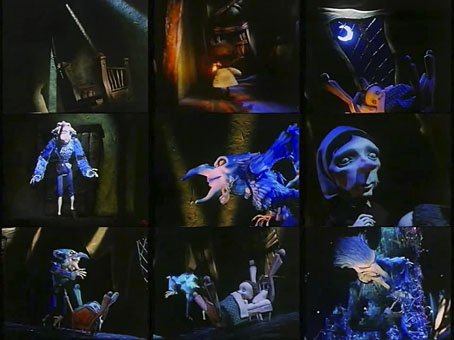
The Sandman, a film by Paul Berry

sandman.jpg

Nothing to do with Neil Gaiman’s Goth dream-master, and not a film for children despite appearances, Paul Berry’s short animation, The Sandman (1991), is based on Der Sandmann by ETA Hoffmann. The less said about its content, the better; watch it to the end. Paul Berry later worked as a puppet animator on feature films including The Nightmare Before Christmas. I didn’t know—and was dismayed to discover—that he died in 2001 at the age of 40.

The Legend of Sleepy Hollow

sleepy01.jpg

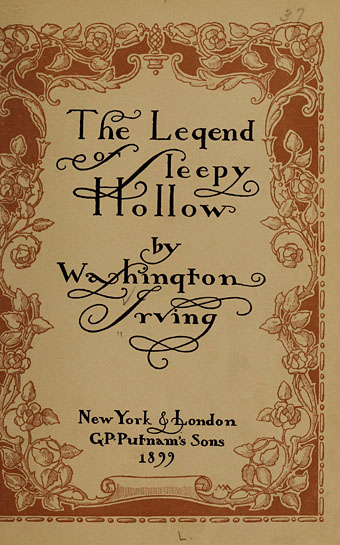
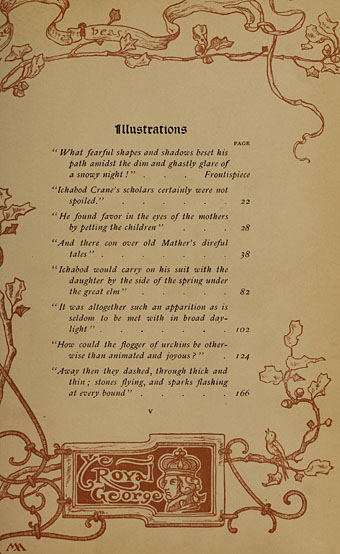
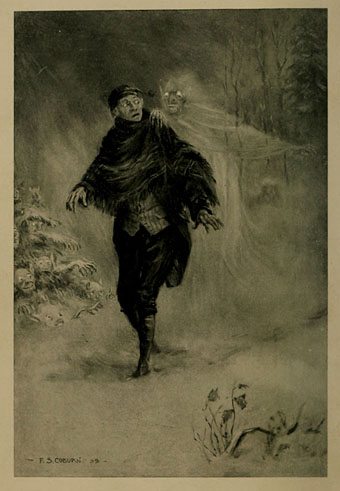
Washington Irving’s ghost story is illustrated by Frederick Simpson Coburn for an 1899 edition, with page decorations by celebrated book designer Margaret Armstrong. Coburn’s gloomy plates don’t look so good in this scanned copy but he also produced the many spot illustrations that run through the book. See the rest of the pages here.

sleepy02.jpg

sleepy03.jpg

Continue reading “The Legend of Sleepy Hollow”

Text Videovoid by David Larcher

larcher.jpg

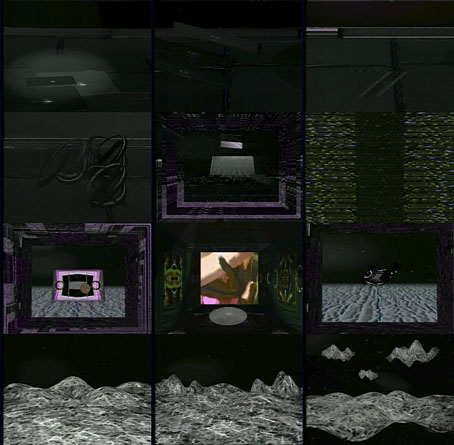
Yesterday’s post concerned an atypical piece of art by David Larcher. Text Videovoid (1993) (aka Videovoid Text, etc) is a good example of Larcher’s more usual work in film and video which is non-narrative yet remains eminently watchable, something you can’t always say about the outer limits of video production. The UK’s Channel 4 broadcast a large chunk of Larcher cut-ups one evening in the 1980s, something they’d never do today; I used to have that broadcast on tape, and enjoyed watching it with the sound off and music playing. Text Videovoid (1993) is a lot stranger:

The viewer is navigated through dark electronically constructed seascapes, conjuring a lighthouse beam and the Blue Peter code flag (“all on board – this ship is leaving port”) to lead us into a heaving ocean of alphabetic patterns where dolphins formed from letters leap from the waves. Larcher’s eloquent stream of consciousness monologue proceeds from a reflexive incantation of video terminology into a philosophical discourse on the state of non-being at the heart of the void itself.

Larcher’s video is also described as a work-in-progress which may explain why different times (and titles) are listed. The copy linked here runs for 30 minutes.

Collagescapes

tortoise1.jpg

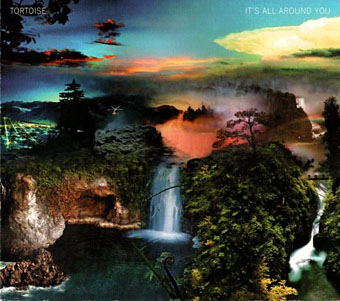
Oliver Wasow‘s artwork for It’s All Around You (2004), an album by US group Tortoise, contains some fine examples of disjunctive (Surrealist, if you must) collage landscapes. This is a sub-genre of collage that I’ve always enjoyed, especially when it’s carefully done, and I was wondering recently whether Wasow had done anything similar for other groups. Discogs has a few more examples, one of which looks like something from the masters of the photo-collage cover, Hipgnosis.

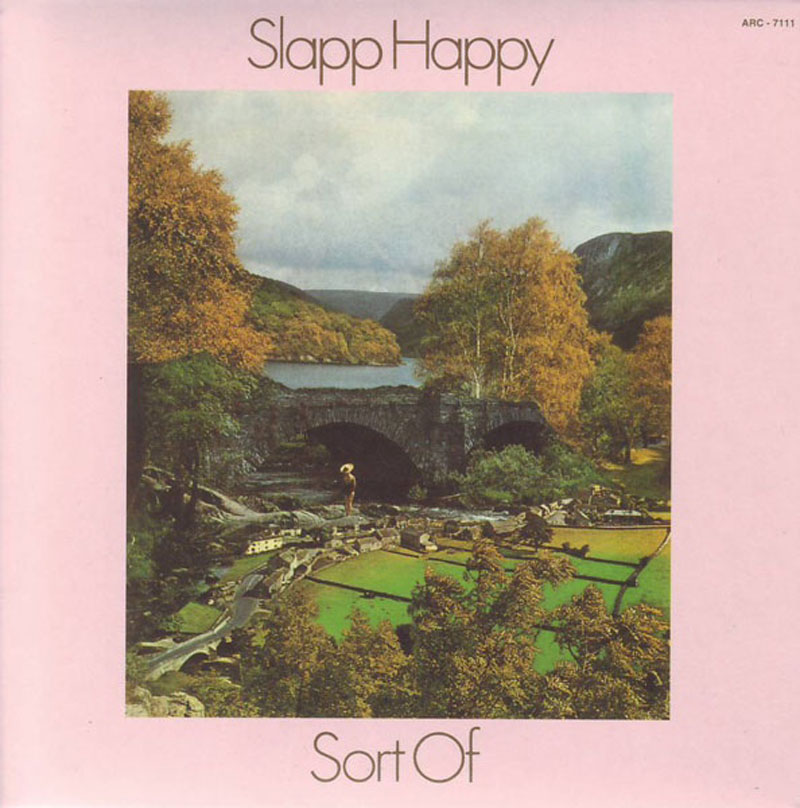
slapphappy.jpg

But searching was curtailed when I remembered a much earlier example of the disjunctive collagescape on the cover of Sort Of (1972) by Slapp Happy. I’d forgotten all about this superb piece by avant-garde filmmaker David Larcher which really needs to be seen on a 12-inch sleeve; this is one of those collages where the combination of careful composition, equalised light and shade, and concealed edges makes the picture seem at first glance like an ordinary photograph. Whether Larcher has produced more work of this quality, I can’t say. Another of his collages can be found at The Quietus where Cyclobe enthuse about his films. For more elaborate collagescapes you have to look elsewhere, to one of the prime exponents of the technique, Tsunehisa Kimura.

Elsewhere on { feuilleton }
The album covers archive