Jodorowsky times three, or The box that never was

jodorowsky1.jpg

The first three feature films by Alejandro Jodorowsky—Fando y Lis, El Topo and The Holy Mountain—are released this week on Region B blu-ray by Arrow Video, but the box they’re packaged in won’t look like any of the designs shown here. It was almost three years ago that Arrow asked me to create something for this box set, but backstage wrangles meant the project moved out of my hands in the early stages. This was a great disappointment since Jodorowsky’s interests and aesthetics align with my own much more than many other directors whose work has been released by Arrow. And having written the notes for the Arrow release of Henri-Georges Clouzot’s The Mystery of Picasso, I was looking forward to working with the company again.

In preparation for the work I rewatched almost all of Jodorowsky’s films (I still haven’t seen Tusk or The Rainbow Thief), then drew up a detailed proposal with sketches, something I seldom do for commissions. Arrow releases all have double-sided inserts in the boxes that hold the discs, one side of which shows a poster design from the film’s original release, the other a new design. My idea for the new art was to connect the three films using Tarot-like iconography (the director is a Tarot scholar, among other things), with each film also being assigned a symbol of some kind. The Surrealist fable of Fando y Lis lacks any suitable graphics so for this I chose a yin and yang symbol to represent the film’s opposed-yet-connected brother and sister characters; El Topo was to be represented by a cross-section through a revolver chamber, while the seven characters from The Holy Mountain are represented by the enneagram that Jodorowsky himself wears in the film. All three symbols are connected by the eye-in-a-triangle from El Topo, a symbol that worked while a three-film box was being planned but which wouldn’t have worked for the final release which adds Jodorowsky’s most recent film, Psychomagic, A Healing Art. For the box design I suggested metallic inks (or foils) either as highlights or in other combinations. The font was a further suggestion, Roberta being one of the typefaces of the occult revival of the 1970s. The art for each film didn’t go further than the sketch stage although I was asked to work up the El Topo design into a final piece; I wasn’t very satisfied with the end result so it isn’t posted here. One problem with the extended negotiations was they were taking place at a time when I was extremely busy with other projects, including contracted illustration work for Editorial Alma. There was no contract for the Arrow commission so it had to take second place even though it was the work I most wanted to be concentrating on at the time. Collisions such as these are an occupational hazard when you’re working freelance.

jodorowsky2.jpg

As things turned out the stumbling block wasn’t my art and design suggestions (which Arrow liked) but the parties described in communications as “the rights-holders”. These individuals apparently disliked the Arrow Video aesthetic and wanted something more directly connected with the films, preferably photographic material which is what you now see on the discs and the box art. It should be emphasised that the rights-holders are not the director, whose wishes for the presentation of his work were never part of the discussion. Given the previous activities of the rights-holders we should probably be grateful that the first three films have been reissued at all. For details of Jodorowsky’s difficulties with one rights-holder in particular, see this interview by Jay Babcock.

On the upside (there is one!), the box set is a typically high-quality Arrow release, with new transfers of the films approved by the director. The bonuses include Jodorowsky’s short films (including his explanation of Tarot symbolism), Louis Mouchet’s feature-length documentary, La Constellation Jodorowsky (1994), soundtrack CDs of El Topo and The Holy Mountain, a small poster and set of postcards, and a substantial booklet. In the end the most important thing is that the films are available for home viewing once again, not their exterior decoration.

Previously on { feuilleton }
Fabulas Panicas by Jodorowsky
• Alejandro Jodorowsky’s Dune
• Jodorowsky on DVD

Weekend links 531

miller.jpg

Cover art by Ian Miller, 1979.

• Ray Bradbury was born 100 years ago today. Emily Temple expresses surprise that Truman Capote encouraged the publication of a Bradbury short story at Mademoiselle in 1946. I’m more surprised that Bradbury was paid $400 for his work; no wonder he was so eager to write for the non-genre magazines. Elsewhere: Ray Bradbury—The Illustrated Man: the BBC’s Omnibus arts strand profiled Bradbury in 1980 with enthusiastic assistance (narrating/reading/performing) from the man himself; Ray Bradbury book and magazine covers at Flickr.

Anna Smith asks whether Linda Fiorentino was the greatest femme fatale ever in The Last Seduction (1994). A substantial claim, especially for a neo-noir playing so self-consciously with the theme, but it’s a very good film, and one I’d like to see again.

• “Bad as a work of art, and morally bad…” Vladimir Nabokov’s Lolita being reviewed by Kingsley Amis, a writer who preferred the peerless prose and stainless morals of Ian Fleming. Dan Sheehan looks at other contemporary reactions to Nabokov’s novel.

• At Dennis Cooper’s: Mary Ellen Bute Day, and (how could I avoid it?) ClicketyClack presents…Brothers Quay Day.

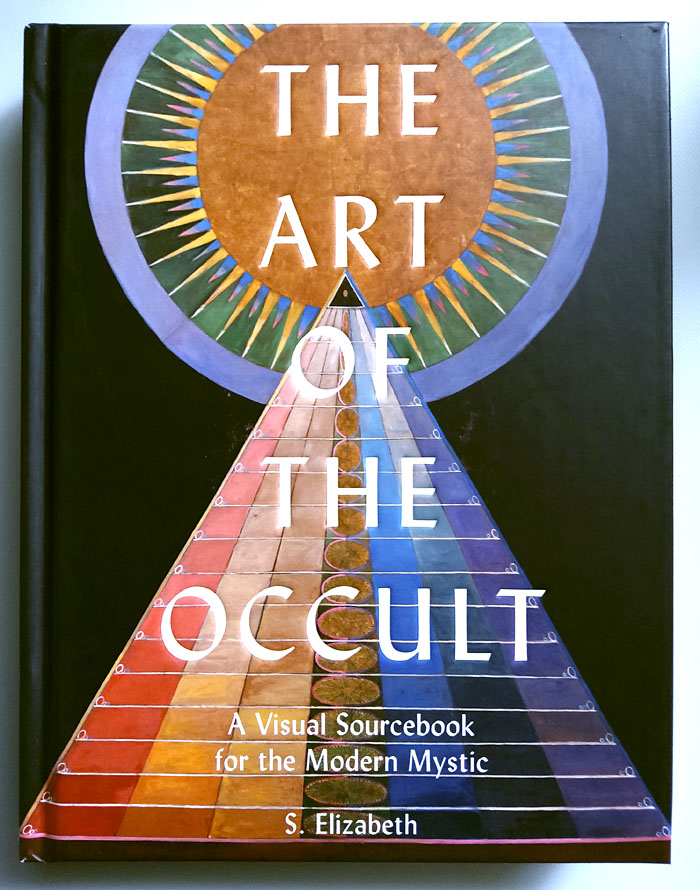
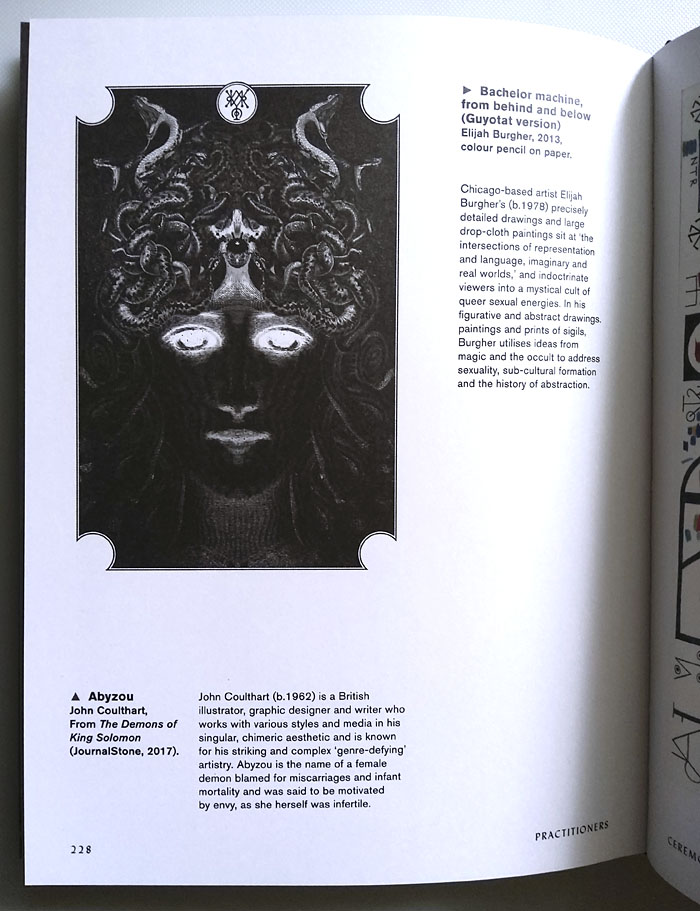
• More from The Art of the Occult: S. Elizabeth offers a glimpse of the contents of her forthcoming book.

• Make the letter bigger: John Boardley on the development of the illuminated capital.

• In 1987 Anne Billson talked to Nicolas Roeg about his latest film, Castaway.

• Five controversial arthouse features from Japanese filmmaker Sion Sono.

• It’s that group again: Joe Banks on the strange world of Hawkwind.

C82: Works of Nicholas Rougeux.

Fahrenheit 451 (1982) by Hawkwind | Something Wicked This Way Comes (1996) by Barry Adamson | The Martian Chronicles (2007) by Dimension X

Recoil and Cabaret Voltaire

recoil1.jpg

Since it was announced this week that Cabaret Voltaire will release a new album in November, here’s a short Cabs-related film that used to be impossible to see. A Sheffield art student, Nick Allday, made Recoil in 1981 as part of his course work, and managed to persuade Cabaret Voltaire to create a soundtrack:

The concept originated with raw material of video feedback and some sparse nuclear bomb footage available at the time. The idea was to represent in abstract form the cruel chaotic dysfunctional nature of the human condition with all its potential for self destruction. It was conceived as a manifestation of wretched anger, fury, and regret. (more)

Very typical of the early 1980s, in other words. The film was mentioned in a few of the group’s interviews around this time, and was also screened before some of their performances, but it otherwise remained a mystery until the footage was rediscovered and restored a few years ago. The copy of Recoil at Vimeo was uploaded by the organiser of the Gofundme launched to pay for the restoration, revealing music that sounds like an outtake from Red Mecca. (According to the post linked above this was mostly the work of Stephen Mallinder rather than the group as a whole.) And having written about Last and First Men a couple of days ago, it’s worth mentioning that Chris Watson, who was still a member of Cabaret Voltaire in 1981, recorded the natural sounds for Jóhann Jóhannsson’s film.

recoil2.jpg

As to the forthcoming album, Shadow Of Fear, I’m not the only person who finds everything credited to the group since Plasticity (1992) to be barely distinguishable from many of Richard Kirk’s solo works. Stephen Mallinder seems to be present in name only on these albums which makes you wonder what there is about a CV release that differs from a Kirk release, especially when the preview track, Vasto, sounds like more of the same. The real shadow of fear is the worry that a worthwhile project is being perpetuated for no good reason.

Previously on { feuilleton }
Pow-Wow by Stephen Mallinder
TV Wipeout revisited
Doublevision Presents Cabaret Voltaire
Just the ticket: Cabaret Voltaire
European Rendezvous by CTI
TV Wipeout
Seven Songs by 23 Skidoo
Elemental 7 by CTI
The Crackdown by Cabaret Voltaire
Neville Brody and Fetish Records

The Egyptian Tarot

tarot01.jpg

I: The Magus

While looking at Tarot designs for work purposes (again) I remembered a book I used to own that demonstrated the symbolism of the Major Arcana by using side-by-side comparisons of cards from the more well-known decks: the Tarot de Marseille, Aleister Crowley’s Thoth deck, the Rider-Waite-Smith cards, and so on. One of the decks shown wasn’t so familiar, a 19th-century design that purported to depict the Ancient Egyptian figures from which the modern Tarot is derived. Like much occult history, this is an invention but I liked the look of the cards with their simple line drawings and clever matching of Egyptian motifs with the traditional symbols. My book was borrowed years ago and never returned (the second Tarot book I’ve had this happen to; don’t lend people your Tarot books!), so I couldn’t look for a reference, but this account of the history of the so-called Egyptian Tarot supplies all the relevant details and more.

tarot02.jpg

II: The Gate of the Sanctuary

The examples shown here are from Practical Astrology (1901), a book by Edgar de Valcourt-Vermont writing under the preposterous pseudonym “Comte C. de Saint Germain” (a real person, albeit dead by 1901, with a long history of appropriation by writers and charlatans). The drawings are reworkings of the first appearance of the Egyptian designs in an earlier book, Les XXII Lames Hermètiques du Tarot Divinatoire (1896) by R. Falconnier, the drawings there being the work of one M.O. Wegener. In addition to copying the designs Valcourt-Vermont filled out the set with a Minor Arcana of his own devising that looks distinctly amateurish next to the Wegener set. Since then the cards have continued to evolve, a more recent version being the Ibis Tarot which colours the drawings in a manner that doesn’t really suit this type of art. The cards shown in my errant book were memorable in part because they stood out from their vividly-coloured counterparts.

tarot03.jpg

III: Isis-Urania

It’s good to see these again, and also surprising to discover a further detail, that the Wegener drawings had been based on descriptions by Paul Christian in another occult study, Histoire de la Magie (1870). Christian’s book was the subject of a previous post for also being the source of an illustration of a witches’ sabbat that turns up all over the place, usually without credit. Not for the first time, the occult world is smaller than it seems.

tarot04.jpg

IV: The Cubic Stone

Wikipedia has copies of the drawings from the Falconnier book which may also be seen at Gallica, although the copy I found there was incomplete. The Valcourt-Vermont designs were published as a complete deck, The Egyptian Tarot, by Müller in 1978.

tarot05.jpg

V: Master of the Arcanes

Continue reading “The Egyptian Tarot”

Last and First Men

johannsson1.jpg

“Existence has always been precarious. At any stage of its career, humanity might have been exterminated by some slight alteration to its chemical environment, by a more than usually malignant microbe, by a radical change of climate, by the manifold effects of its own folly.”

I loved this, but then it had several points immediately in its favour: a late work by Jóhann Jóhannsson (with a superb score written in collaboration with Yair Elazar Glotman); a study of the concrete memorials from the former Yugoslavia known as spomeniks; narration by Tilda Swinton; and science fiction that isn’t more tiresome Hollywood space opera. Olaf Stapledon’s novel was published in 1930 but it took until 2017 for it to reach a cinema screen when Jóhannsson’s film was premiered at the Manchester International Festival. The film is not only the first adaptation of the novel but also the first film based on any of Stapledon’s novels. Last and First Men and Star Maker (1937) have inspired many notable writers but the philosophical nature of Stapledon’s work combined with the colossal spans of time he deals with make his novels resistant to adaptation by popular narrative forms. Jóhannsson’s film is very small-scale—mostly black-and-white, and shot on grainy 16mm—but it demonstrates how a work that those with greater resources might consider unfilmable can be turned into a substantial drama. The technique of using narration to connect disparate images is a familiar one from documentaries but is less common in fiction cinema despite its flexibility and convenience, especially for low-budget films such as this.

johannsson2.jpg

Tilda Swinton’s voice is that of a spokesperson for “the Eighteenth Men”, a terminal evolution of the human species 2,000 million years in the future. The last humans now live on the planet Neptune, a forced relocation after the expansion of the Sun has made the inner planets of the solar system uninhabitable. Swinton’s unidentified messenger is speaking to us, “the First Men”, describing some of the history that awaits while also warning of an impending and inescapable cataclysm. This is the last section of Stapledon’s novel, the previous chapters of which relate the intervening aeons between our time and the distant future. While the voice informs us about humanity’s fate we contemplate the enigmatic spomeniks, filmed in close-up or at a distance, in bright sunlight or shrouded in mist. What connection there is between the narration and the concrete structures is for the viewer to decide, there are few points of direct correspondence. The combination of strange architectural forms with a vast, invented history had me thinking of At the Mountains of Madness by HP Lovecraft, although in Lovecraft’s story the stellar evolution is an alien one which human beings discover. The congruence is reinforced by Lovecraft’s enthusiasm for Stapledon’s novel which he called “a thing of unparalleled power“. It should be noted, however, that Jóhannsson never suggests that the monuments are anything other than what they are.

johannsson3.jpg

Roger Luckhurst’s Sight & Sound review of the film included questions about the use of the spomeniks, while elsewhere Owen Hatherley has expressed concern about the fetishising of memorials and structures that mark sites of wartime massacre. Stapledon’s novel explores the continuity of human endeavour in all its best and worst aspects; warfare and strife remain persistent problems, so Jóhannsson’s roaming views may be taken as signposts to the future as much as remembrances of the past. There’s also one significant detail that many critics will be unaware of (and which Luckhurst does acknowledge): the first part of the novel is titled “Balkan Europe”, and the opening chapters describe the wars that ravage the Earth throughout the 21st century, wars which have their root in the very conflicts that the spomeniks record. Stapledon’s future history was an attempt to consider the ways in which humanity might overcome its worst impulses. Beyond this, the concrete structures also stand as simple markers of the passage of time; many of the monuments are now weathered and eroded, blained with lichens and besieged by weeds. Humanity may live long enough to resolve its own internal conflicts but its creations, whatever they represent, face a continual struggle against the universal process of entropy.

johannsson4.jpg

Jóhannsson’s film is available in a digipak release from Deutsche Grammophon which packages a blu-ray disc with a CD of the score. This is now a memorial to its creator so the sombre livery seems appropriate: the last major work we’ll have from a remarkable, much-missed artist.

Further reading: The Spomenik Database.