Empyrean/Ritual

empyrean.jpg

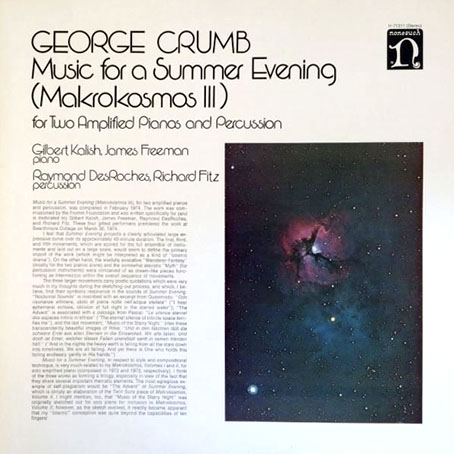
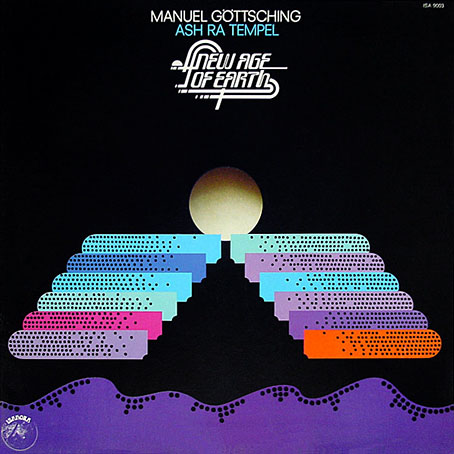
Today is another Bandcamp Friday, meaning that Bandcamp artists receive 100% of the proceeds from their sales, so I’ll link to this latest release from Grey Frequency which was very generously sent to me earlier this week. (Thanks!) Empyrean/Ritual is a limited 7-inch single on Haemoccult whose sides examine “the tangled threads of magick and superstition which lie beneath the surface of our everyday modern lives.” Untangle the threads here, and check out the rest of the Grey Frequency catalogue while you’re there.

The Fall of the House of Usher, 1928

usher1.jpg

Halloween approaches, in case you hadn’t noticed. This silent short had eluded my attention until this week even though I knew the directors, James Sibley Watson and Melville Webber, via a later film, the homoerotic Biblical fantasia Lot in Sodom (1933). Watson and Webber’s Poe adaptation was made in the US the same year as a longer French version of the same story directed by Jean Epstein with partial assistance from Luis Buñuel.

usher2.jpg

The American Usher was described by its directors as an amateur work but it fills its running time with a remarkable range of visual effects: slow motion, tilted angles, multiple exposure, kaleidoscope views, even a touch of animation in the caption lettering when Madeline breaks out of her tomb. The visuals overwhelm the storytelling but that’s the advantage of using a familiar tale, the narrative can be subordinate to the style which in this case extends to the Caligari-derived sets. Watson and Webber’s Usher is less an imitation of Robert Wiene’s thriller than a condensation of everything that German Expressionist cinema had been doing throughout the 1920s, a fitful dream or hallucination.

Previously on { feuilleton }
Mask of the Red Death, 1969
The Pendulum, the Pit and Hope
The Tell-Tale Heart from UPA

The Midnight Parasites by Yoji Kuri

kuri.jpg

The Midnight Parasites (1972) is a good example of the kind of animation I’m often searching for: strange and grotesque yet with its own internal logic. Yoji Kuri populates a Surrealist landscape with infernal creatures borrowed from Hieronymus Bosch, a succession of humanoids and predatory monsters whose struggles for survival are overlaid with an uncredited electronic score. I can imagine Roland Topor enjoying this one, it belongs in the same solar system as Fantastic Planet. Watch it here.

Elsewhere on { feuilleton }
The Surrealism archive

Previously on { feuilleton }
Bosch details

Weekend links 641

coin.jpg

For mysterious and eldritch reasons the Republic of Palau has minted a Cthulhu-themed 20 dollar coin. Via.

• “Pre-gap tracks are a CD-specific phenomenon, paralleled only by DVD Easter Eggs, or hidden levels in a computer game. On the one hand, they’re only possible digitally, on the other, they seem to be an attempt to add some mystique to a circle of plastic.” Daryl Worthington on the 40th anniversary of the Digital Audio Compact Disc. Regular readers will know that CD has been, and remains, my favourite musical format for reasons I won’t bother arguing here. Related: Wikipedia’s list of albums with tracks hidden in the pregap. Also: “There’s endless choice, but you’re not listening”: fans quitting Spotify to save their love of music.

• “Meek’s use of sound effects and swathes of ghostly reverb, woven into seemingly innocuous pop songs and rock and roll instrumentals—as if the BBC Radiophonic Workshop was directed by Phil Spector—created a sense of the sublime and hinted at strange realities beyond our own.” Mark Pilkington explores the strange world of Joe Meek.

• “Structured as a ‘dream within a dream’, the narrative weaves together mythological, biblical, and occult references to construct a universe filled with ruinous landscapes and orgiastic celebrations.” Demetra Vogiatzaki on the enigmas, architectural and otherwise, presented by Hypnerotomachia Poliphili (1499).

The man who made this absurd noir was answerable neither to studio nor Shakespeare, but only his own monumental whims. Thus, Mr. Arkadin sends Citizen Kane (1941) through the looking glass—the action transposed to post–World War II Spain and given a spin somewhere between metaphysics and megalomania…

If Jean Cocteau’s Orpheus recast myth as pulp, Mr. Arkadin elevates pulp to myth. It is the most Borgesian of Welles’s movies. Writing in Cahiers du cinéma, the young Eric Rohmer compared Mr. Arkadin to Jules Verne and Fantômas: It creates something that is ­nearly impossible today: a romantic fiction that involves neither the future nor any removal from one’s usual surroundings…

J. Hoberman writing in 2006 about Orson Welles’ Mr. Arkadin (1955). I was rewatching the film earlier this week in its guise as Confidential Report, the version re-edited by its producer to try and create something with greater commercial appeal. I’ve yet to see the recent restoration but even in its butchered form it’s a fascinating piece of work

Early Cormac McCarthy interviews rediscovered: “Between 1968 and 1980, he gave at least 10 interviews to small local papers in Lexington, Kentucky and east Tennessee, a region where he lived and had friends.”

• New music: Perceptions by Model Alpha (Jonathan Fitoussi & Julie Freyri), and Epektasis by Nicklas Barker.

Dreams of Space: Books and Ephemera; “Non-fiction children’s space flight stuff 1945–1975”.

• At Dennis Cooper’s: Roget Malot presents…Spirit Photography Day.

• Mix of the week: A mix for The Wire by FOQL.

Spirit (1978) by Frédéric Mercier | Spirit (1990) by Jah Wobble’s Invaders Of The Heart | Spirit Level (Lost In Space) (1992) by Horizon 222

John Austen’s Harlequin

austen01.jpg

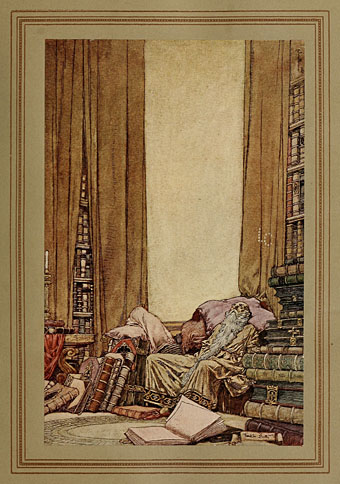
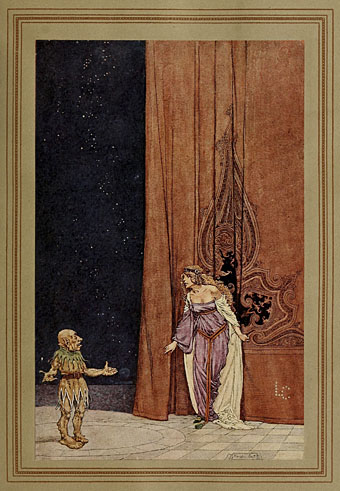
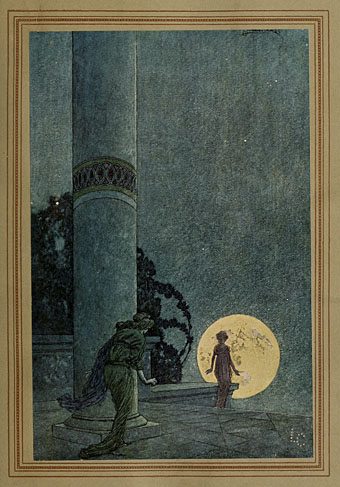
The familiar characters of the Commedia dell’arte—Harlequin, Columbine, Pierrot et al—are depicted here by British illustrator John Austen for The Adventures of Harlequin (1923), a prose recounting by Francis Bickley of events in the life of the trickster character. Or a life… Since Harlequin has only ever been a theatrical archetype Bickley has to employ considerable invention to flesh out the details. The enterprise may be a questionable one but I’m always happy to see another book illustrated by Austen, especially when so many of his illustrated editions remain difficult to find. A Pierrot figure appeared in the first of these, The Little Ape and Other Stories, at a time when Austen’s drawing style was closer to Harry Clarke in its use of decorative detail. His style continued to evolve throughout the 1920s. Here it’s closer to George Barbier, the French artist who drew his own Commedia dell’arte trio when illustrating Michel Fokine’s Carnaval for a ballet portfolio, Designs on the Dances of Vaslav Nijinsky.

austen02.jpg

austen03.jpg

austen04.jpg

austen05.jpg

Continue reading “John Austen’s Harlequin”