Some arcades via Wikipedia.
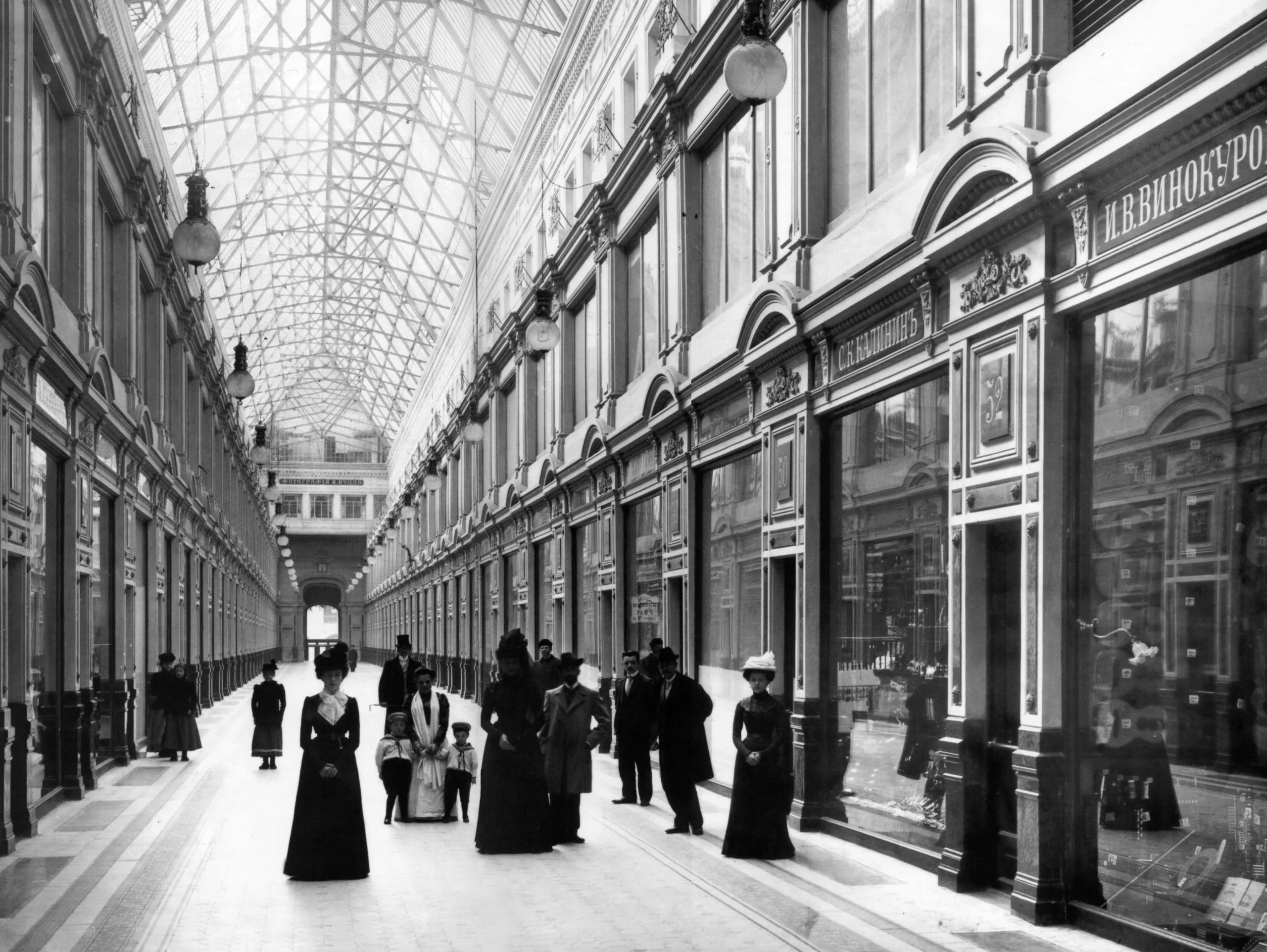
The Passage, Nevsky Avenue, Saint Petersburg.

The Galleria Vittorio Emanuele II, Milan.
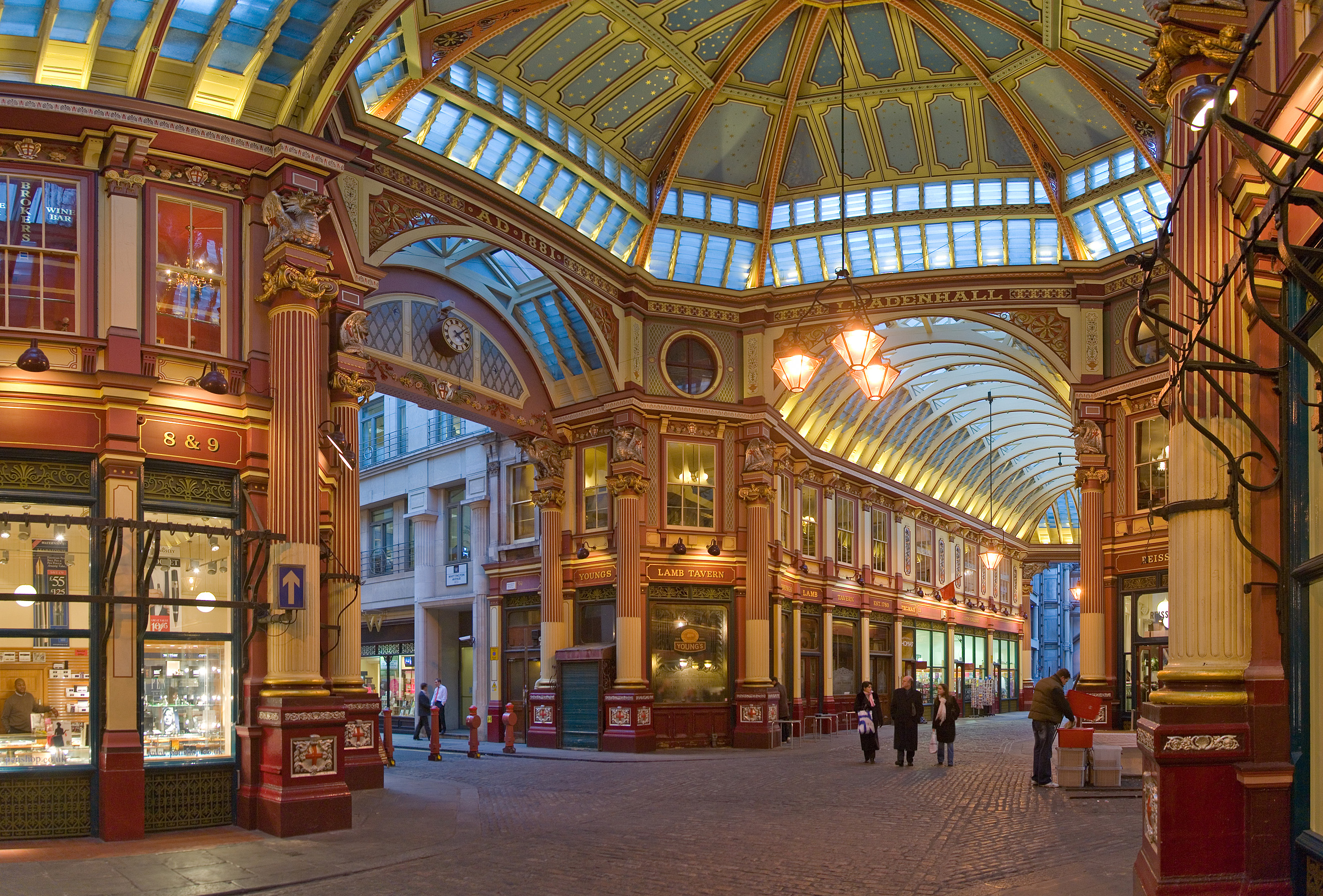
Leadenhall Market, London.
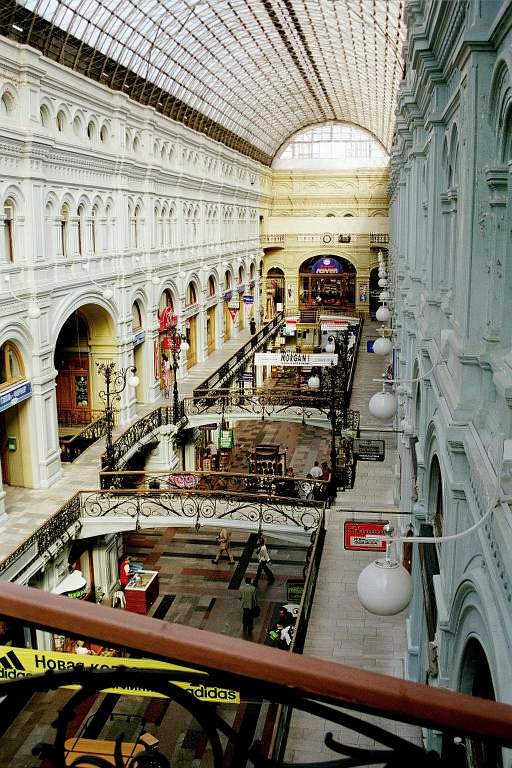
Gum department store, Moscow.
Previously on { feuilleton }
• Passages
A journal by artist and designer John Coulthart.
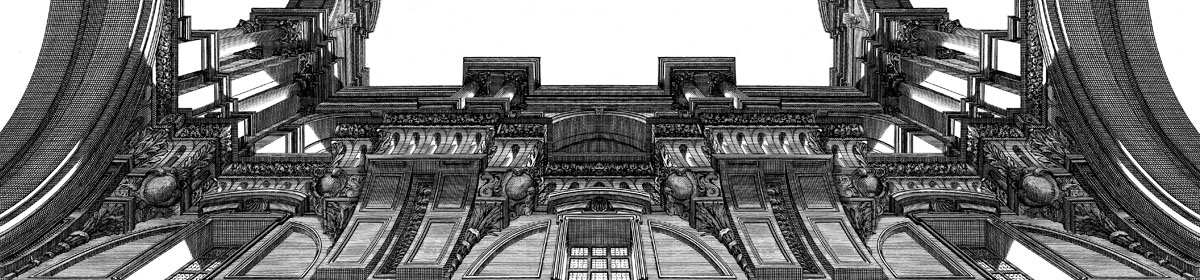
Photographer Alvin Langdon Coburn (1882–1966) illustrates HG Wells’ wonderful short stories in a rare edition of The Door in the Wall and Other Stories, from 1911. More pictures here.
The Door in the Wall was a true three-way collaboration between the author, the photographer and the typographer, Frederic W. Goudy, who specifically produced his Kennerley Old Style typeface for this book. Designed in the elegant Arts-and-Crafts style, it was printed on French hand-made paper at Goudy’s Village Press in an edition of 600 copies. In fact, only 300 copies contain the full compliment of Coburn’s rich photogravures, due to some being damaged in shipment and being replaced by aquatones. The photographer personally prepared the gravure plates, pulled proofs and oversaw the printing of the edition.
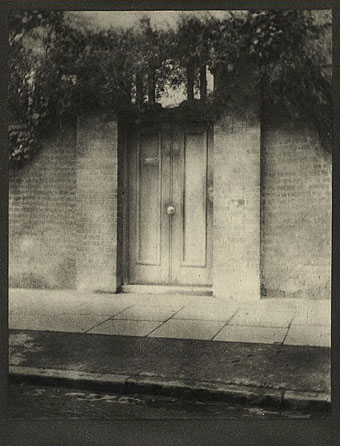
The Door in the Wall.
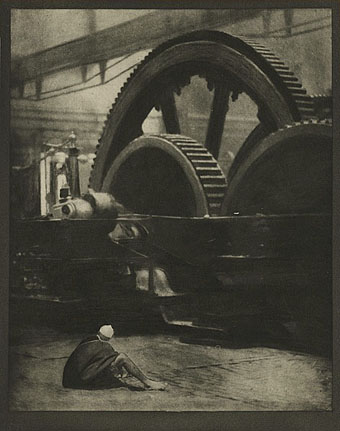
The Lord of the Dynamos.
Previously on { feuilleton }
• War of the Worlds book covers
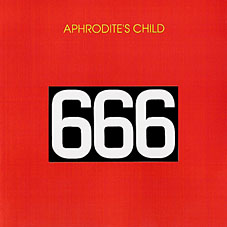
The oft-despised concept album of the 1970s doesn’t come more demented than 666, a double disc set by Greek group Aphrodite’s Child released in 1972. The group featured Vangelis and Demis Roussos among their number (Roussos later turned up on Vangelis’s score for Blade Runner) and this is about the only thing they’re now remembered for, a post-psychedelic fantasy based on the Book of Revelations. So far, so heavy. Searching for information about the album turned up a proposal by Salvador Dalí for a celebratory “happening” to be staged in Barcelona for the album’s world premiere (lyricist Costas Ferris having met Dalí in Paris shortly after the recording):
The main concept:
1. Martial Law shall be ordered on a Sunday, in Barcelona. No one shall be allowed to walk in the streets, or watch the event. No cameras, no TV. Only a young couple of shepherds will have the privilege to witness the event. So, they can later describe it to the people, by oral speech.
2. Giant loudspeakers shall be put in the streets, playing all day the work 666, by Vangelis, Ferris and the Aphrodite’s Child. No live performance.
3. Soldiers dressed in Nazi uniforms, will walk in military march in the streets of Barcelona, arresting who-ever wants to break the law.
4. Hundreds of swans will be left to move in front of the Sagrada Famiglia, with pieces of dynamite in their bellies, which will explode in slow motion by special effects. (real living swans, that should be operated for putting the dynamite inside their belly).
5. Giant Navy planes, will fly all day in the sky of Barcelona, provoking big noise.
6. At 12:00 sharp, in the mid-day, those planes will start the bombardment of the great church, throwing all of their munitions.
7. Instead of bombs, they shall throw Elephants, Hippopotami, Whales and Archbishops carrying umbrellas.
No, it didn’t happen, but if you do hear the album try and think of swans exploding in slow motion while elephants and archbishops rain down from the sky.
Previously on { feuilleton }
• The apocalyptic art of Francis Danby
• The music of Igor Wakhévitch
• Dalí Atomicus
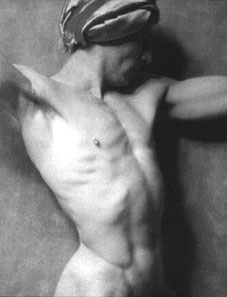
Left: Stowitts photgraphed by Nickolas Muray, 1922.
Hubert Julian Stowitts had a number of careers, including dancer, film actor, painter, designer and metaphysician. As a dancer he worked with Anna Pavlova, who discovered him in California in 1915 and took him on tour around the world. His statuesque figure was used by Rex Ingram for the infernal scenes in The Magician (1926), an adaptation of Somerset Maugham’s rather limp roman-à-clef based on the exploits of Aleister Crowley. The scene with Stowitts as a satyr owed nothing to the book, however, being more inspired by the director’s fondness for the tales of Arthur Machen. Most photos that turn up from this film show Stowitts rather than Paul Wegener who played the sinister alchemist of the title.
Stowitt’s painting developed in the 1930s and included a series of 55 paintings of nude (male) athletes for the 1936 Olympics (see Ewoud Broeksma’s contemporary equivalents at originalolympics.com). Other paintings depicted dance scenes, costume designs, people encountered during travels in the Far East and, in the 1950s, a series of ten Theosophist pictures entitled The Atomic Age Suite.
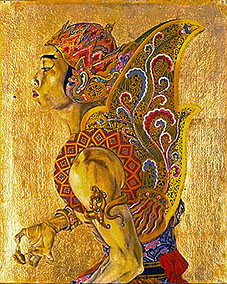
Prince Suwarno in Mahabarata role (1928).
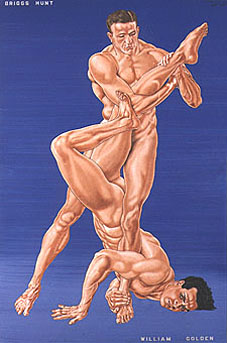
Briggs Hunt and William Golden (1936).
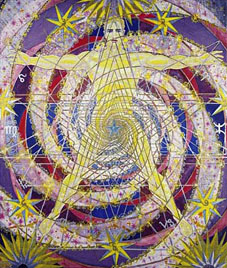
The Crucifixion in Space (1950).
• The Stowitts Museum and Library
• Stowitts at the Queer Arts Resource
Elsewhere on { feuilleton }
• The gay artists archive
Previously on { feuilleton }
• The art of Nicholas Kalmakoff, 1873–1955
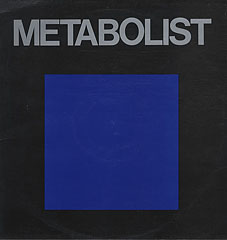 No, not the school of Japanese architecture, we’re concerning ourselves here with a UK band from the early 1980s. There’s still a number of important albums from this period that remain caught in a curious limbo between the end of the time when vinyl was the prime carrier for new music and the start of the CD era. A few groups such as Metabolist expired before CDs became something commonly used by smaller labels and their recordings have tended to evade reissue. In addition, what recordings there are were often released in small quantities through obscure independent labels (the origin of the now thoroughly disreputable term “indie”) which means that the original works can be hard to find.
Metabolist were Malcolm Lane (guitar, synth, vocals), Simon Millward (bass, vocals, synth) and Mark Rowlatt (drums, percussion), with Jacqueline Bailey designing the covers in a Suprematist style that would no doubt have pleased Kazimir Malevich. All Metabolist covers feature variations on the same line of Helvetica plus a coloured (or black) square. As to the music, here’s my good friend Gav (who carefully digitised his Metabolist collection for me) on an old forum posting:
Initially very underrated and now just unknown, Metabolist were reviewed in the UK music press (NME & Sounds specifically) alongside The Pop Group, Cabaret Voltaire, Throbbing Gristle & This Heat as part of a brief vanguard of new UK experimental music, and for a little while it looked like fractured noise and Europe-inspired riffing might become an important part of the independent (as opposed to indie) mainstream…but alas…
According to “Eurock” magazine in 1980:
“gladiators of independent music, Metabolist have existed in one form or another for 3 or 4 years, the present group consisting of Malcolm Lane, Anton Loach, Simon Millward and Mark Rowlatt. The group is run along co-operative lines to include Jacqueline Bailey who handles publicity promotion, etc. The five of us have all reached the decision to work outside of the large companies in the music business and have therefore formed our own company – Drömm Records. So far we have released 1 EP, 15 minutes of music incl. “Drömm”, “Slaves” and “Eulam’s Beat”, plus a cassette tape of first take rehearsal material called “Goatmanaut”, also containing 3 tracks “Zordan Returns”, “Chained” and “Thru the Black Hole”. The groups first album “Hansten Klork is released in January 1980, closely followed by a single, “I Can’t Identify”. All these recordings have been made at the group’s studio with members of the group being responsible for recording, mixing and editing. We feel that this is the only way, apart from having unlimited cash, that Metabolist can have control over their musical output at every stage. All artwork and sleeve design are also handled within the group. Thanks to the growth of alternative distribution networks in recent years our records can now become available worldwide, so we consider independence to be both viable and desirable. Musically the group has been through many changes, Metabolist refuse to be dictated to by fashion, or by establishing a Metabolist “sound” and sticking to it for ever after. You can therefore find that you love the album, but hate the EP and so on. You will have to trust us as we do not intend to have 10 versions of a hit sound on our LP’s.”
Metabolist only released one full-length vinyl LP, 2 cassettes, a 7″ EP and a single, and their entire oeuvre, including peripheral compilation contributions, would fit onto a nice double CD comp, but none of it has ever been re-released – DURTRO were rumoured to be interested at one time, but as all original members were either untraceable or uninterested, it remains up to original fans (like myself – for the record I bought all their releases directly from the band) to champion their cause – and a worthy cause it is: imagine a lo-fi garageband Magma rehearsing & recording in a gents’ toilet, minus the chorale but compensating with the intensity of ‘Metal Box’ PiL or ‘Monster Movie’ Can, grunted vocals in a kind of proto-Kobaïan neo-dialect (‘Chained’, ‘King Quack’), or short bursts of bleeping and burping feedback and electronics like a lost ‘Faust Tapes’ outtake (‘Racing Poodles’, ‘Zordan Returns’)…and at a time when ‘Krautrock’ was just the first track on ‘Faust IV’ and ‘Mekanïk Destruktïw Kommandöh’ was a quid in any and every secondhand record shop, Metabolist were citing Der Kosmische Music and Magma as major influences, not a good starting point for a suspicious post-punk record-buying public…I’ve always loved this band because they did it their way, they rocked hard, and they then just disappeared, leaving a small but perfectly-formed Ur-Cosmic body of work that will be rediscovered at some point…surely…
Surely, but not yet. My summation of the Metabolist sound would be something like “Magma’s Christian Vander jamming with This Heat”, but seeing them as a poor man’s This Heat is rather unfair since they have their own distinct personality beyond the few areas of sound and production (This Heat also had their own studio) that overlap with Brixton’s finest. In place of This Heat’s familiar post-punk concerns, Metabolist are often fiercer and weirder, deliberately plugging themselves into a post-Magma “Zeuhl” axis as they growl many of their songs in an invented (?) tongue. Little wonder, then, that they remain beyond the pale. Other bands from the period such as Wire, The Gang of Four—even The Fire Engines!—have been resurrected, reissued and even reformed, with younger groups declaring them as influences. We’re currently lacking any enterprising Drömm-heads prepared to take this formidable sound as the starting point for something new. If they’re out there, they’ll need to be hardy souls with little expectation of reward; Franz Ferdinand wouldn’t have graced the charts shouting incoherently into an echo chamber while heavy bass rumbles and drums pound and ricochet in the background.
Thanks to Gav for permission to re-use his words. And for the music, of course…
The recordings:
Dromm (7″) (Drömm Records, 1979).
Goatmanaut (cassette) (Drömm Records, 1979).
Hansten Klork (LP) (Drömm Records, 1980).
Identify (7″) (Drömm Records, 1980).
Split (7″) (Bain Total, 1981).
Stagmanaut! (cassette) (Cassette King, 1981).
Tracks appear on:
Compilation Internationale No.1 (LP) Le Grand Prique, Chained (Scopa Invisible, 1980).
Miniatures (LP) Racing Poodles (Pipe, 1980).
Elsewhere on { feuilleton }
• The album covers archive
Previously on { feuilleton }
• Maximum Heaviosity
• The music of Igor Wakhévitch
• This Heat