Lines and colours

block1.jpg

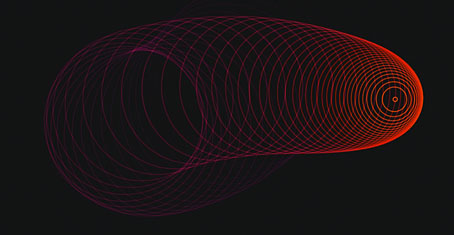
OMG Particles II.

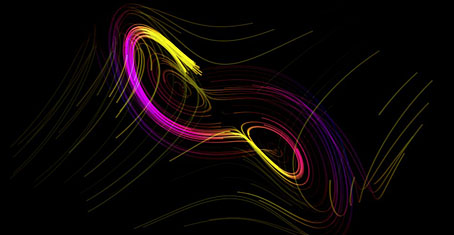
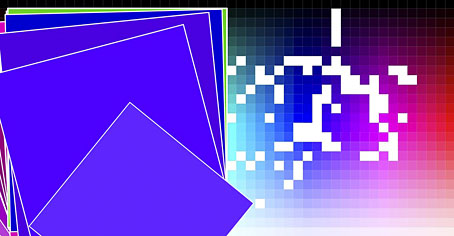
From the Algorithms Are Fun Dept., some of the more colourful examples of script pyrotechnics and coding samples at mbostock’s pages. Many of the routines have data-crunching applications but a few eye-candy pieces may be found among them. What’s most surprising is how many of them work immediately, and also operate at great speed which makes them difficult to capture in screen grabs. Via Coudal.

block2.jpg

Lorenz Toy.

block3.jpg

Transform Transitions.

Previously on { feuilleton }
Eyecandy
The Kaleidoplex
Colorscreen

Swinging Britain, 1967

pathe.jpg

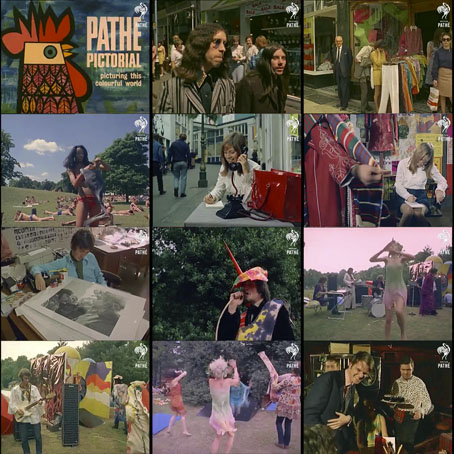
My thanks to Jay for turning up this gem from the huge British Pathé archive which recently landed at YouTube. British Pathé provided short newsreel films for UK cinemas up until 1970. The flaws of these films have always been immediately apparent, chiefly an irritating editorial attitude manifested by patronising voiceovers and sequences staged for the camera. On the plus side, everything was being shot for cinema screens so 35mm film was used which means the footage always looks better than the TV news of the time.

Swinging Britain is an 8-minute jaunt from the Portobello Road and Carnaby Street, to the offices of Intro magazine (launched that year), Mary Quant’s boutique, a “happening” in a park, and various nightclubs (not the UFO, unfortunately). Most footage along these lines tends to concentrate exclusively on London but this one also includes scenes in Manchester and Newcastle. The voiceover is as sceptical as you’d expect, leavened with a few qualifying remarks: “It’s good business for Britain!” The event in the park was one of a number of happenings and art events staged by Keith Albarn (Damon’s dad). The Pathé archive has another film showing the interior of Albarn’s Fun City environment at Margate, Kent. Of more general interest is this film of one of the popular beat groups of the period, four young men who call themselves The Pink Floyd.

See also:
Woburn Love-In (1967)
Light Fantastic (1968)
Out Takes / Cuts From Cp 662 – Reel 1 Of 3 – Swinging Britain (1967)
Out Takes / Cuts From Cp 662 – Reel 2 Of 3 – Swinging Britain (1967)
Out Takes / Cuts From Cp 662 – Reel 3 Of 3 – Swinging Britain (1967)
Out Takes / Cuts From Cp 719 – Fun Palace, Air Cushion And Balloon Race (1968)

Previously on { feuilleton }
San Francisco by Anthony Stern
Smashing Time

Kusama’s Self-Obliteration, a film by Jud Yalkut

kusama1.jpg

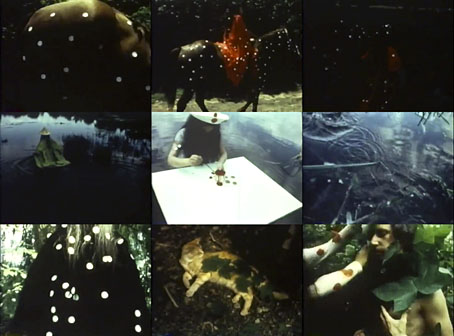
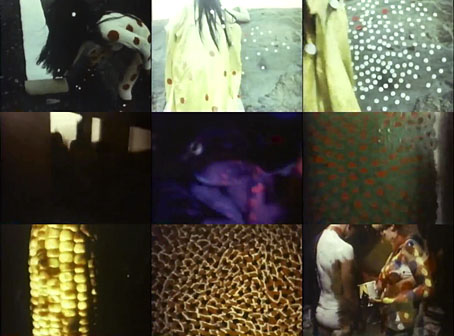
Yayoi Kusama’s art has often been classed as psychedelic—some of her mirrored rooms were featured in the travelling Summer of Love exhibition in 2005—but this is more a consequence of her activities meshing with the interests of the late 60s than anything else; her preoccupations always seem a lot more personal and obsessive. Jud Yalkut’s short film shows Kusama and various friends cavorting in typical underground-movie fashion in 1967, the main indicator of the artist’s involvement being her sticking polka dots (and leaves) onto everything: trees, people, cats, horses, even a river. Later on there’s more polka-dotting at some kind of body-paint happening inside one of her mirrored rooms. The film itself is pretty psychedelic in the second half, looking like outtakes from Roger Corman’s The Trip. The of-the-moment score was provided by The CIA Change, whoever they were. Watch it here.

kusama2.jpg

Previously on { feuilleton }
Infinite reflections
Yayoi Kusama
The art of Yayoi Kusama

Trip texts

trip1.jpg

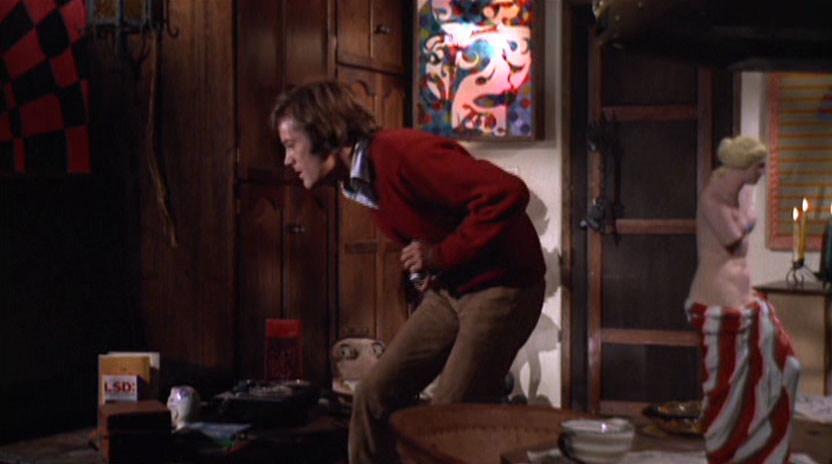
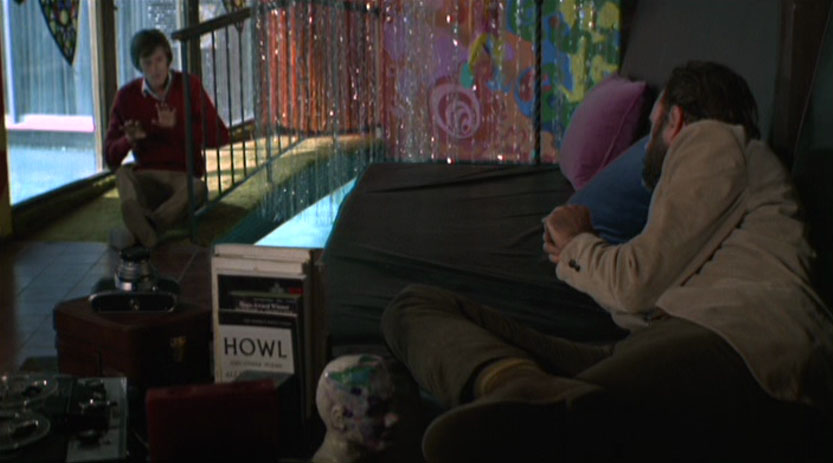
I would have changed the subject today if it wasn’t for spotting a copy of David Solomon’s LSD: The Consciousness-Expanding Drug (1964) in Roger Corman’s notorious and rather creditable stab at psychedelia, The Trip (1967). Corman’s film is an oddity in his run of AIP exploitation films in being far less condemnatory than you’d expect (although Peter Fonda’s character isn’t always enjoying his experience), and must also be the only film in the whole AIP canon with signifying texts.

trip2.jpg

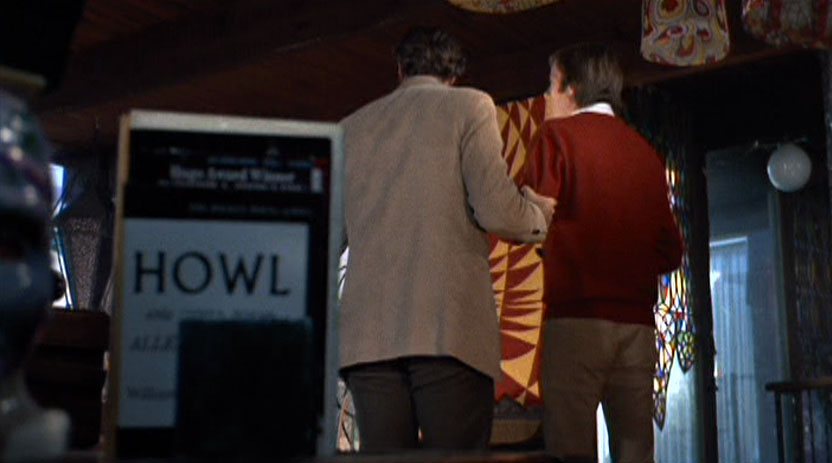
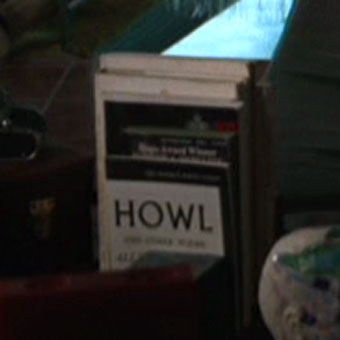
By the time Solomon’s book makes an appearance, Fonda’s character, Paul, has started freaking out but earlier on, during his conversations with John (Bruce Dern), we have Allen Ginsberg’s Howl and Other Poems (1956) shouting out of the frame. “I saw the best minds of my generation destroyed by madness…” Okay Rog, we get it.

trip3.jpg

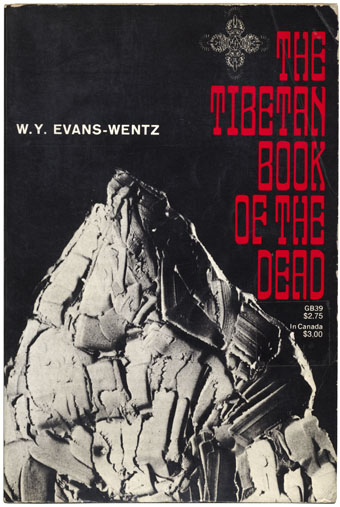
There’s more, however. Behind Howl there’s another book whose identity eludes me, while behind that you can make out the red typography and white dorje symbol from the 1960 OUP edition of The Tibetan Book of the Dead. The only reason I recognised this is because I own that edition so the cover is very familiar. This would be a popular text in an acid-tripper’s apartment; John tells Paul to “Relax and float down stream”, a line that recapitulates the advice given in Leary, Metzner and Alpert’s The Psychedelic Experience: A Manual Based on The Tibetan Book of the Dead (1964). Most surprising for me about this inclusion is that The Tibetan Book of the Dead features a lot more prominently in that other major film about psychedelic experience, Enter the Void (2009). Am I the only person to have made this material connection? Probably. Does anyone care? Probably not, but I do like recording these associations.

trip4.jpg

tbotd.jpg

Cover design by Lawrence Ratzkin.

Previously on { feuilleton }
Acid albums
Acid covers
Lyrical Substance Deliberated
The Art of Tripping, a documentary by Storm Thorgerson
Enter the Void
In the Land of Retinal Delights
The art of LSD
Hep cats

Acid albums

acid1.jpg

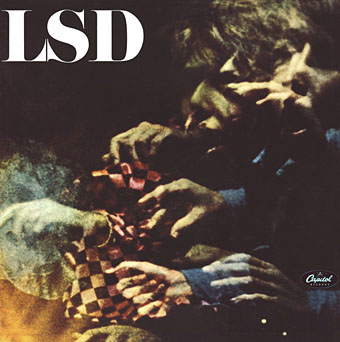
LSD (1966).

A handful of album covers, all for the vinyl equivalents of the books and magazines in the Acid covers post. The album-as-documentary/essay is one of those curiosities that no one would ever produce today but in the 1960s there were still many of them around. All of these albums have been plundered for samples in recent times.

Capitol Records’ LSD is in two parts: The Scene, examining the attitudes of the youthful acid trippers, and The Trip, which looks at the acid experience itself. Allen Ginsberg, Timothy Leary and Sidney Cohen offer expert testimony. Side two apparently features a 5-minute recording of a bad trip to balance the proselytising elsewhere. Discogs shows the interior art which typically depicts the trippers as looking far more freaked out than people usually do on these occasions. The drug that regularly turns people into mewling, puking, unhinged maniacs is called alcohol.
acid2.jpg

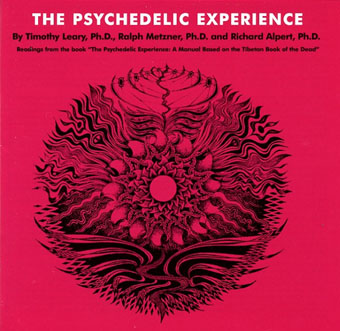
The Psychedelic Experience (1966) by Dr. Timothy Leary, Ralph Metzner & Richard Alpert.

The album of the book of the same name from which John Lennon borrowed some lines for Tomorrow Never Knows. The cover shown here is from the CD which slightly altered the typography. Neither CD or vinyl have a credit for that nice piece of art. Side one is Going Out, side two is Coming Back.
acid3.jpg

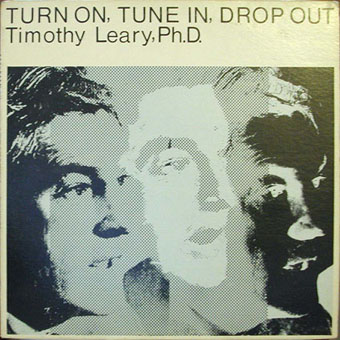
Turn On, Tune In, Drop Out (1966) by Dr. Timothy Leary.

Timothy Leary’s doctor status was very much to the fore until possession of LSD was made illegal and he became public enemy no. 1. Here he talks for two sides about the drug. Typical ESP Disk cover art which tends to the cheap and perfunctory.
acid4.jpg

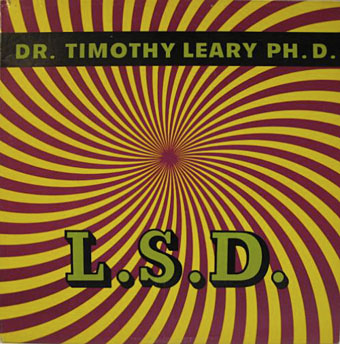
LSD (1966) by Dr. Timothy Leary.

And Leary again on the same subject. It’s hard to believe there might have been enough of a market for four spoken-word albums on the subject of LSD in one year alone but that’s what we have here. After 1966 there was no further need to instruct the public, acid was out in the culture at large, and no longer required support or qualification from voices of authority.

Elsewhere on { feuilleton }
The album covers archive

Previously on { feuilleton }
Acid covers
Lyrical Substance Deliberated
The Art of Tripping, a documentary by Storm Thorgerson
Enter the Void
In the Land of Retinal Delights
The art of LSD
Hep cats