A Shameless Longing by Josh Quigley

quigley.jpg

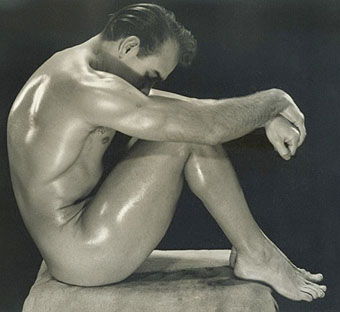
Cody and Zach (2008) by Josh Quigley.

I’m still besieged by work this week so here’s another quick post. Arriving in today’s inbox was a notification of an opening at the Michael Mazzeo gallery, NYC, for A Shameless Longing, an exhibition of Josh Quigley’s narrative photographs. The reception is next Thursday, November 18, and there’s a set of his prints to view here, about which the artist says:

The two themes running parallel within my work are that of the domestic family, and the awkward depiction of sexuality and desire within this same environment.

While we’re on the subject of two guys kissing, a post I made on a whim in 2007 continues to be a popular result in Google searches with the consequence that it’s gained a trail of funny comments. Let’s talk about sexy !!

Darq Dreamz

marton.jpg

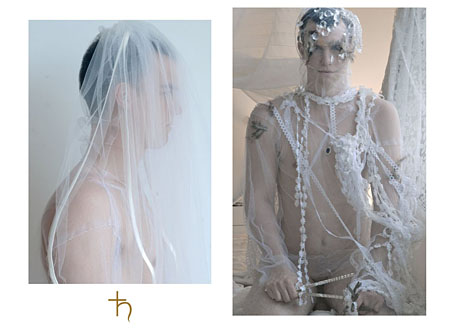
Fey Saturn.

Arriving as a welcome palliative for the sudden seasonal gloom, Mikel Marton’s autumn photo series is an exploration of homoerotic paganism and occult tableaux he calls Darq Dreamz. “Photography is the medium that allows me to be a medium,” he says. “Some of the photos added to the collection are from a series about a dying breed of incestuous modern witch boys forced to practice their rituals in an over populated decaying city, devoid of nature and solitude.” The witch boys and contrary spirits await you here.

Elsewhere on { feuilleton }
The gay artists archive

Previously on { feuilleton }
The art of Hector de Gregorio
Richard de Chazal’s Zodiac
The Major Arcana by Jak Flash
Ode to the Classics
In the Shadow of the Sun by Derek Jarman
Mikel Marton
Tiger Lily
Toxicboy

Design as virus 13: Tsunehisa Kimura

kimura.jpg

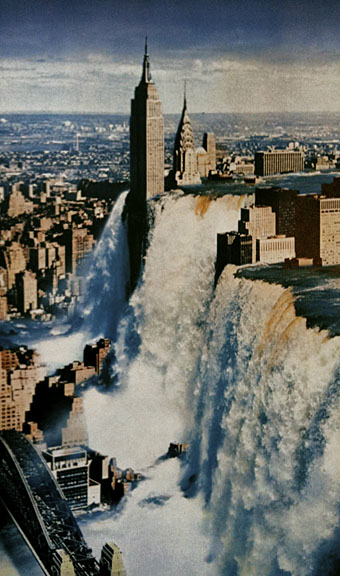
Waterfall by Tsunehisa Kimura.

Continuing an occasional series. Japanese artist Tsunehisa Kimura (1928–2008) was initially inspired by the polemical graphics of John Heartfield to create his own photomontages, a painstaking collage technique now rendered obsolete by Photoshop. Kimura’s work exchanges Heartfield’s satire for an overt and frequently apocalyptic Surrealism, as in his most visible piece, Waterfall. The copy above is one of a number of pictures reproduced by Geoff Manaugh at BLDGBLOG from a 1979 Kimura collection, Visual Scandals by Photomontage.
schutze1.jpg

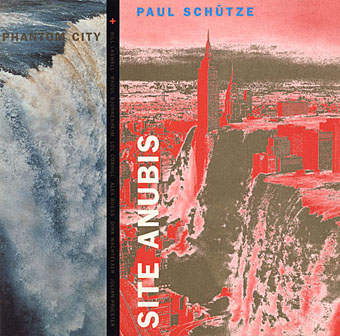
Design by Anne-Louise Falson & Paul Schütze.

I was first startled by Waterfall in 1996 when Paul Schütze released his Site Anubis album, the product of a “virtual group” comprised of musicians recording in different studios around the world:

The musicians comprising Phantom City—the name, incidentally, originating from the book title Topology of a Phantom City by French novelist Alain Robbe-Grillet—never met for the recording of Site Anubis, as each one recorded in a different studio in a different country: guitarist Raoul Björkenheim in Helsinki, bass- and contra-bass clarinetist Alex Buess in a Basel studio, soprano saxophonist Lol Coxhill in London, bassist Bill Laswell at Green Point Studio in Brooklyn, New York, trombonist Julian Priester in Seattle, drummer Dirk Wachtelaer in Brussels, and Schütze himself in London and Basel. Incredibly, Laswell had only Schütze’s electronic backing track to respond to. Wachtelaer had Laswell and Schütze to play against, Björkenheim had drums and bass,—in short, certain players had more information than others.
schutze2.jpg

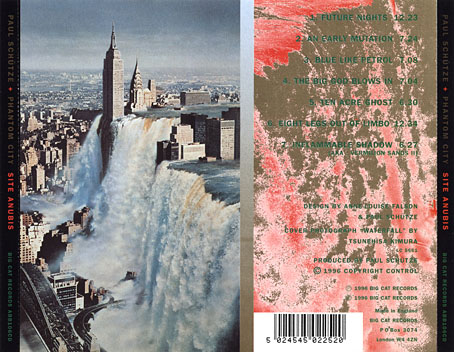
Kimura’s picture is an ideal accompaniment to this excellent album, especially when you note a Ballard reference in the titles (not the first in Schütze’s oevre), and read the scene-setting piece of fiction on the CD insert, an explanation of the album title:

That morning a report came in from an unmarked helicopter somewhere over the city. The waters were subsiding and the smoke from a thousand fires had begun to drift inland revealing an impossible new structure. Towering some eight hundred feet over the gleaming devastation of the streets, its base occupying an entire city block, was a colossal black basalt figure. The body was male and human, – the head, which stared expectantly toward the boiling western horizon, was the head of a jackal. From the air it was clear that the pattern of destruction on the ground was radial and that the massive figure was sited precisely at its centre.

Continue reading “Design as virus 13: Tsunehisa Kimura”
Weekend links: the Halloween edition

goddem.jpg

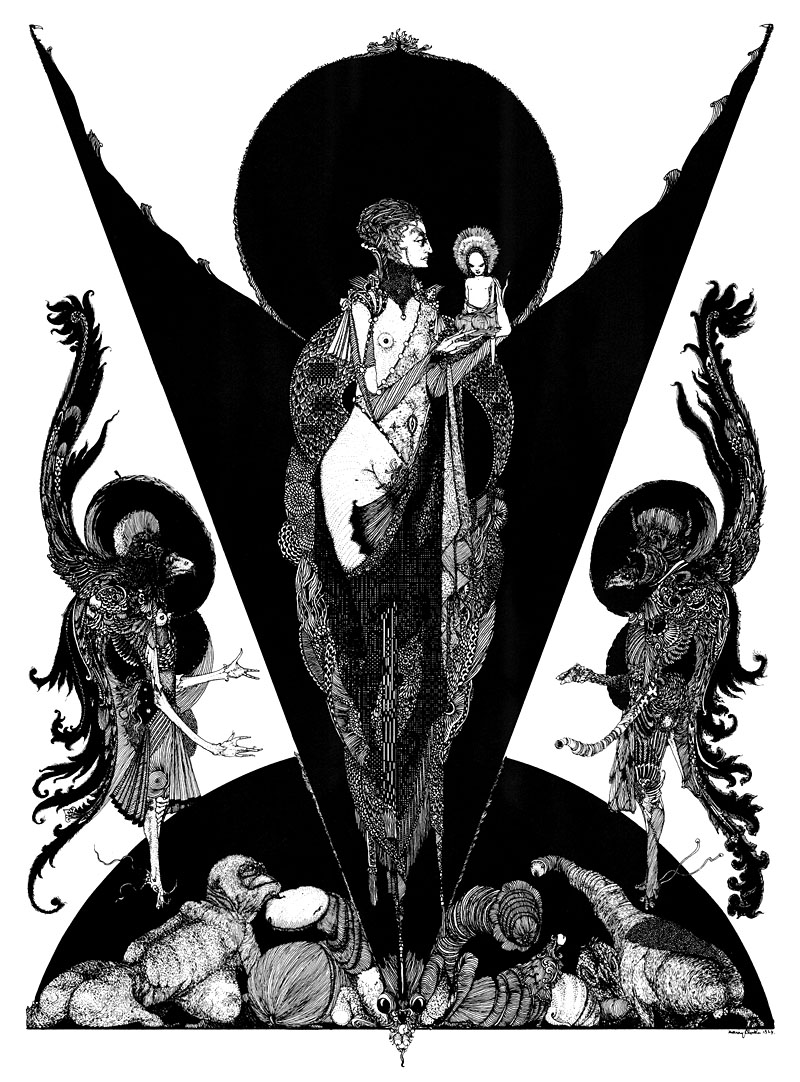
Goddem with Attendants (1924) by Harry Clarke.

• Some of Harry Clarke’s extraordinary illustrations from Goethe’s Faust can be seen at A Journey Round My Skull. And a reminder for anyone who missed them, Clarke’s Poe illustrations at Golden Age Comic Book Stories.

HP Lovecraft – Audio Books, Radio Plays, & Audio Documentaries. Out-of-print recordings and (no doubt) pirate copies of more recent things. I found this page by accident so it was a surprise to see my 1999 Lovecraft portrait used there. I used to own the David McCallum Dunwich Horror, an album with a singularly appalling sleeve illustration.

• Better album sleeves can be found here: Prospective 21e Siècle, a collection of foil designs from 1967. Some of the very challenging music within can be downloaded at the Avant Garde Project archive. Related: Have an electroacoustic Halloween with İlhan Mimaroğlu’s Le Tombeau d’Edgar Poe (1964) and Wings of the Delirious Demon (1969).

startrails.jpg

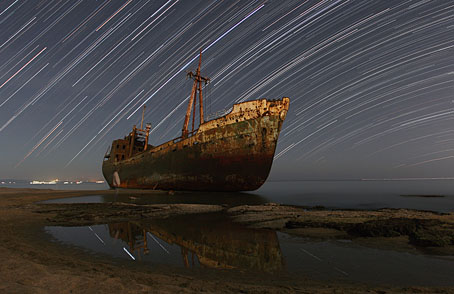
Star Trails and the Captain’s Ghost, a photo by Chris Kotsiopoulos at Astronomy Picture of the Day.

• “The horror industry is totally male dominated from its directors to its slashers, and even its bloggers…and I think that needs to change.” Day of the Woman, a blog for the feminine side of fear.

6 of the Scariest Queer Horror Books Ever. I think I’d agree with the commenter in picking The Haunting of Hill House by Shirley Jackson.

• Designer Jonathan Barnbrook (pictured in a graveyard by the looks of things) is interviewed at MyFonts.

A Weird and Scratching Beauty: The Art of John Coulthart and Call of Cthulhu.

Is the Royal Masonic School for Boys the scariest building in Britain?

50-million-year-old insect trove found in Indian amber.

The Café Kaput Samhain 2010 mixtape.

The Groovy Age of Horror.

Monster Mash (1962) by Bobby “Boris” Pickett & The Crypt-Kickers.