Powell’s Bluebeard on blu-ray

bluebeard1.jpg

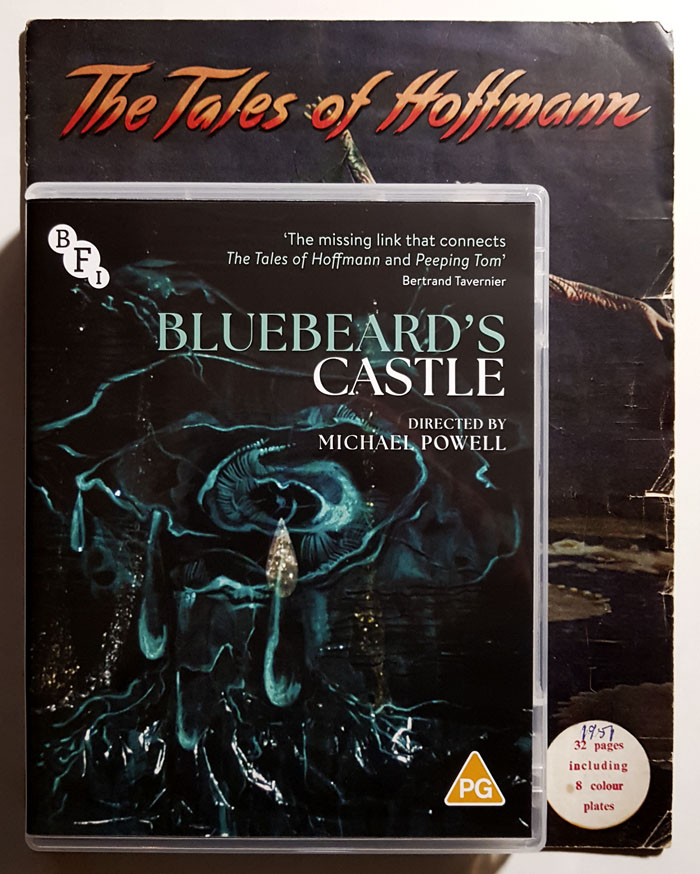
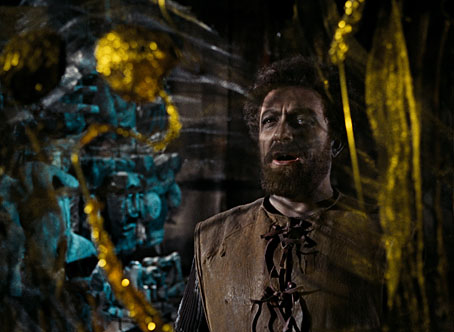
My film viewing at the weekend included a return visit to Michael Powell and Emeric Pressburger’s opéra fantastique, The Tales of Hoffmann, followed by the new blu-ray restoration of Powell’s Bluebeard’s Castle. This is the third time I’ve written about Powell’s film of the Bartók opera, the first occasion being a “When will I get to see this?” post, the second a review of a VHS copy which had turned up on YouTube. The new release, which is the film’s debut appearance on disc, is a restoration by the BFI under the supervision of Thelma Schoonmaker and Martin Scorsese.
bluebeard2.jpg

Norman Foster (Bluebeard).

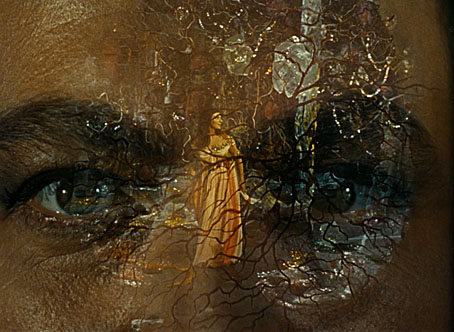
Powell directed the hour-long dramatisation for the German TV channel Süddeutscher Rundfunk in 1963, at a time when his career was in the doldrums following the critical outrage provoked by the release of Peeping Tom. The production was a smaller one than he was used to but it was still shot on 35mm which has now been polished to a breathtaking degree, revealing rich shadows, deep colours and a profusion of glittering detail. (See this clip.) The audio track remains monophonic but the sound is a great improvement on the VHS version. Seeing the latter was gratifying after so long a wait but was also an underwhelming experience. The restoration proves once again how unfair it is to judge filmmakers from a low-grade copy of their work that’s been thrown onto the internet.
bluebeard3.jpg

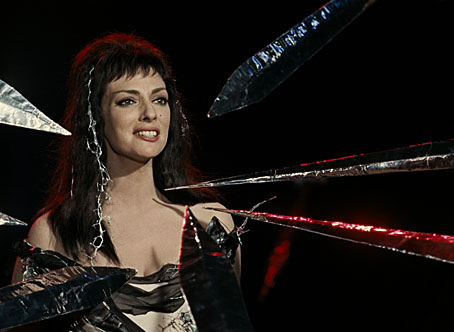
Ana Raquel Satre (Judith).

Bluebeard’s Castle (or Herzog Blaubarts Burg, to use the film’s German title) wasn’t a project that Powell inaugurated. Hein Heckroth, the production designer on many of Powell and Pressburger’s colour features, had been working for German TV since the late 1950s, and suggested to singer/producer Norman Foster that Powell might be interested in directing the film. The presence of Heckroth’s weirdly Expressionist designs give Bluebeard’s Castle a continuity with the extended ballet sequence in The Red Shoes and the “Giulietta” episode of The Tales of Hoffmann; all three stories share a dream-like atmosphere whose grading to nightmare is enhanced by Heckroth’s decors. I’ve often wondered whether the strangeness of some of Heckroth’s set designs, whose aesthetics extend to Dalínean Surrealism, were a factor in the frequent grumblings of distaste expressed by British critics for Powell and Pressburger’s films even before Powell made Peeping Tom. The first film that Powell worked on was The Magician in 1926, Rex Ingram’s adaptation of the Somerset Maugham novel, and a film which is at its best in its moments of visual excess. Powell’s films are valued today for their own visual excess but this quality hasn’t always been encouraged in British cinema, as Ken Russell later discovered. Favourable critics like Ian Christie often point to this as part of the “European” sensibility of Powell and Pressburger’s oeuvre, something which is present even when the subject matter is very English. Pressburger was a Hungarian emigré, while Powell met Ingram when he was living in the south of France; the production designers on all the major P&P films, Alfred Junge and Hein Heckroth, were both German, and the films themselves, especially The Red Shoes and The Tales of Hoffmann, feature a host of different nationalities. Watching Bluebeard’s Castle again I was reminded of Italian horror cinema, especially the films of Mario Bava. When you combine the artificiality of Heckroth’s sets with the Gothic story of a woman imperilled by a powerful aristocrat, plus the resemblance of Ana Raquel Satre to Barbara Steele, the whole thing assumes a very Bavaesque flavour.
bluebeard4.jpg

On a musical level I much prefer Bartók to Offenbach, (although Offenbach’s famous Barcarolle is always worth hearing) so I’m pleased that this minor work has been treated to the same restorative care as The Tales of Hoffmann. The 1988 version of Bartók’s opera directed for the BBC by the late Leslie Megahey remains my favourite filmed Bluebeard even though it lacks Powell’s flamboyance; Megahey’s film has more gravitas, and the direction, performances and musical recording are better. But seeing Powell’s film again revealed nuances I’d missed before, like the sustained shot near the end when Judith seals her fate by asking for the key to the forbidden room. It also makes a change hearing the whole thing sung in German, a language I can understand in parts. Bluebeard’s Castle is a further example of Powell’s idea of a “composed film”, a work that would combine all the dramatic arts. (Or almost all—this one lacks dance.) As I said ten years ago, it may be minor compared to the films that he made with Emeric Pressburger but it offers a more satisfying coda to his career than his final features.

Previously on { feuilleton }
Bluebeard’s Castle, 1981
Powell’s Bluebeard revisited
Joseph Southall’s Bluebeard
Leslie Megahey’s Bluebeard
Powell’s Bluebeard
The Tale of Giulietta

Weekend links 702

miller.jpg

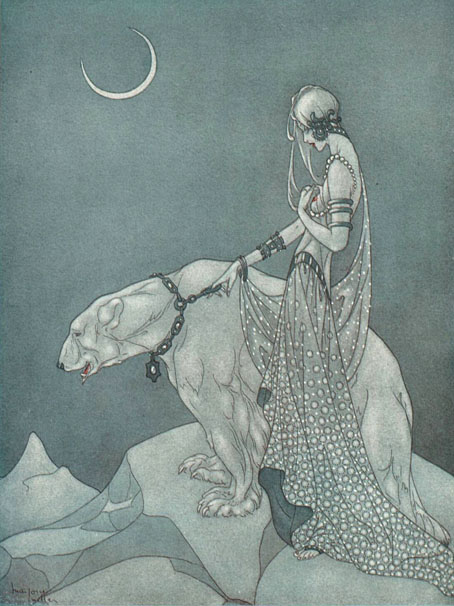
The Great Bear (1933) by Marjorie Miller.

• New music: “Lo-fi no-fi post-fi fragments of disparate SCATTERBRAIN thoughts scrapbooked together using industrial glue discretely purloined from building site tea-break opportunities to fully form the definitive SEPIA PUNK AMBIENT (?) statement of assiduous apathy intent ~ hextracted from SEPIA CAT CITY (GEpH017LP) available via moonwiringclub.com areet now TA.” Nobody writes product descriptions like Moon Wiring Club.

• “Both the Harry Smith and the Sun Ra books were hard sells, because they were virtual unknowns who had pretty much given their life for art. In each case only about two publishers were interested in either one of them. The editors said either that they hadn’t heard of him, or else they had heard of him and didn’t want to hear any more.” John Szwed talking to Raymond Foye about the mercurial Harry Smith, and the problems of writing biography.

• At Public Domain Review: Max Beerbohm’s A Christmas Garland (1912), a collection of seasonal parodies of well-known writers of the day. As with any such work, the success of each piece depends upon familiarity with the author being parodied, but Beerbohm’s prose is always a delight.

Mirrorshades (1986), the cyberpunk story anthology edited by Bruce Sterling, is currently available for reading or e-text download at Rudy Rucker’s website. The book is still in copyright but I’m guessing this has been done with the agreement of the contributors.

• “…the richness of terrestrial creatures which at points are capable of sounding utterly extra-terrestrial.” Daryl Worthington explores the history of birdsong and its influence on human music.

• At Smithsonian Magazine: Listen to the centre of the Milky Way translated into sound or look at yet more photos of the aurora borealis. (Or do both at the same time.)

• At Wormwoodiana: Through the Golden Valley to the Dark Tower. Mark Valentine and friends go on a book-buying expedition.

14 x 14, a collection of Oulipo poems by Ian Monk, translated by Monk and Philip Terry, with collage cover art by Allan Kausch.

• “I am fascinated by electromagnetic waves.” Carsten Nicolai (aka Alva Noto) discussing art and creativity with Max Dax.

Secret Satan, 2023, the essential end-of-year book list from Strange Flowers.

Spice Islands Sea Birds (1957) by Les Baxter | Trippin’ With The Birds (1997) by Stereolab + Nurse With Wound | Strange Birds (1999) by Coil

Atomos

awvfts1.jpg

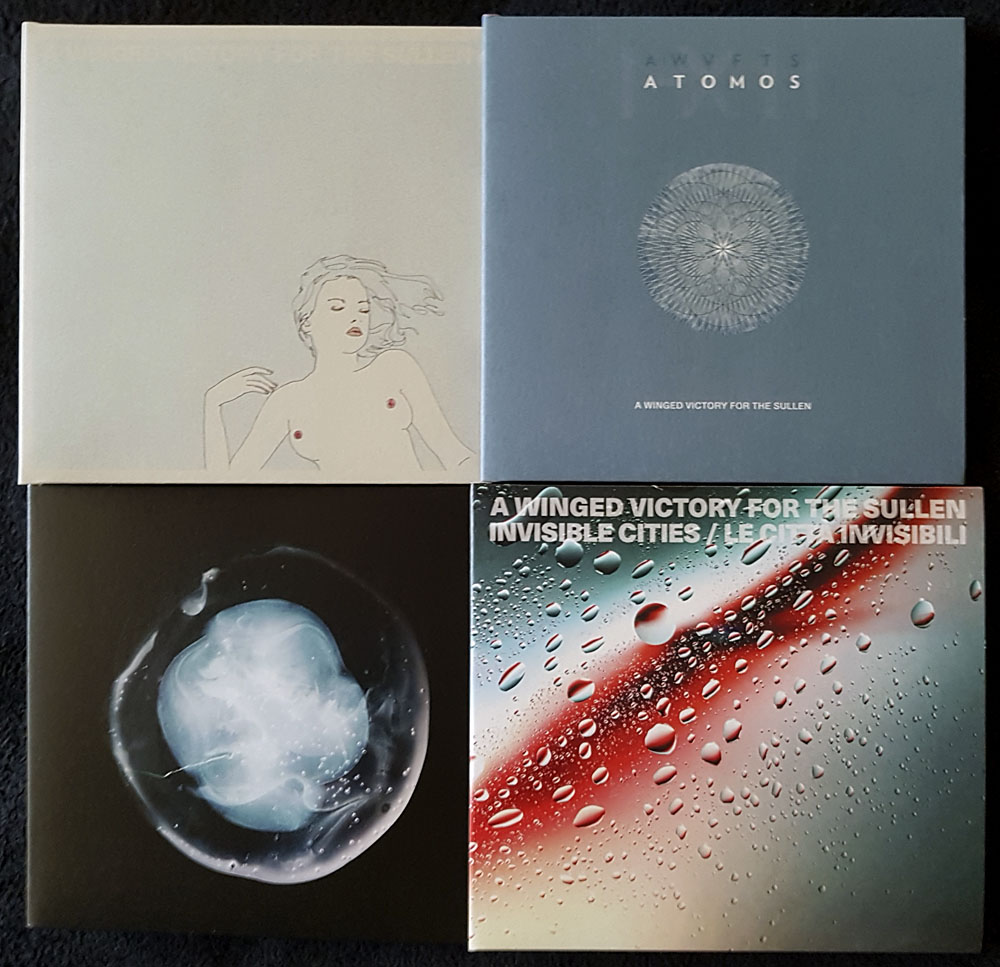
A Winged Victory For The Sullen (2011) / Atomos (2014) / The Undivided Five (2019) / Invisible Cities (2021).

A quartet of albums by A Winged Victory For The Sullen (Adam Wiltzie and Dustin O’Halloran) that have been regular visitors to my CD player over the past couple of weeks, especially the second one Atomos. Wiltzie and O’Halloran have been active as A Winged Victory For The Sullen since 2011 but their discography is a small one so I’ve been doing my usual thing of looking around for lengthy live recordings to avoid over-playing the studio albums. What you have here are four different performances of Atomos, most of which don’t vary much on the visual side but, for three of them at least, music is the primary concern.

awvfts2.jpg

Atomos (2014).
The music was originally commissioned by Wayne McGregor as a score for a dance piece so I was pleased to find a recording of the whole thing at McGregor’s Vimeo channel. Atomos works well enough as a standalone composition but seeing it presented like this throws a new light on the music. This is also the only place you can hear Atomos IV which for some reason is missing from the CD and vinyl releases.

awvfts3.jpg

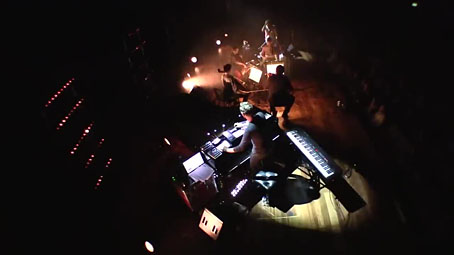
Boiler Room, Barbican, London (2014).
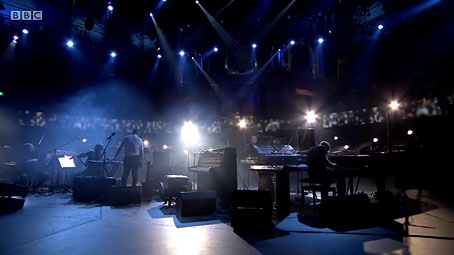
Boiler Room concerts are always good value, being long sets, professionally filmed and recorded.

awvfts4.jpg

Flèche d’Or, Paris (2014).
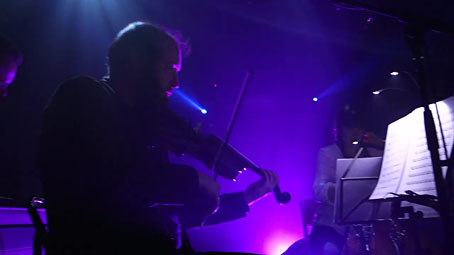
A performance filmed in a smaller venue with a single camera. The camera-work is from the amateur “hosepiping” school but the sound is excellent and you get a lot of close shots of the string players.

awvfts5.jpg

BBC Proms (2015).
Mary Anne Hobbs presents the group at the cavernous Royal Albert Hall, together with a performance by pianist Nils Frahm who, at the time, was sharing a label with AWVFTS. A few of Wayne McGregor’s dancers also appear in this one. Half of the session is devoted to Frahm but he’s very good so it’s worth staying with.

Previously on { feuilleton }
Jóhannssonia
More Invisible Cities (and an invisible author)

Weekend links 701

kawase.jpg

Frosty Morning in Nagaoka, Izu (1939) by Hasui Kawase.

• “A few years ago, retired professor of religious studies Chris Bache wrote a book called LSD and the Mind of the Universe. His book is the story of 73 high-dose LSD experiences he had over a period of 20 years, from 1979 to 1999, and how they changed his understanding of the very nature of reality. Bache believes psychedelics represent a ‘true revolution in Western thought,’ and his life has been lived around that premise. But after his long psychedelic journey, Chris ends up in a really interesting place. He wonders, ‘Can you have too much transcendence?'” Steve Paulson talks to Chris Bache about mega-dosing LSD.

• “Operating in the margins and intersections of folklore, experimental electronics, dreams and nightmares…” Or Hauntology, German-style. Louis Pattison at Bandcamp looks at some of the artists featured on Gespensterland, a compilation album released by Bureau B. The latest news reports about Bandcamp haven’t been encouraging. Download those digital purchases.

• “Cassel favored botanically inspired lines, distilled geometries, and a crepuscular-or-witching hour palette to capture the strange wind and cold light of a particular metaphysical space.” Johanna Fateman reviews Anna Cassel: The Saga of the Rose, a book about the occult artist edited by Kurt Almqvist and Daniel Birnbaum.

• At Dennis Cooper’s: 10 filmmakers, 20 short films, 2 each: Joyce Wieland, Vivienne Dick, Eileen Maxson, Sue de Beer, Amy Greenfield, Chiaki Watanabe, Coleen Fitzgibbon, Germaine Dulac, Lori Felker, Barbara Hammer.

• Rambalac took his roaming camera to the slopes of Mount Fuji. More drone shots, please.

• New music: A Field Guide To Phantasmic Birds by Kate Carr, and Inland Delta by Biosphere.

Winners and finalists for the 2023 Ocean Photographer of the Year.

• At Wyrd Daze: the latest Disco Rd zine and related podcast.

Transcendental Express (1975) by Can | Transcendence (1977) by Alice Coltrane | Transcendental Moonshine (1991) by Steroid Maximus

Weekend links 700

demorgan.jpg

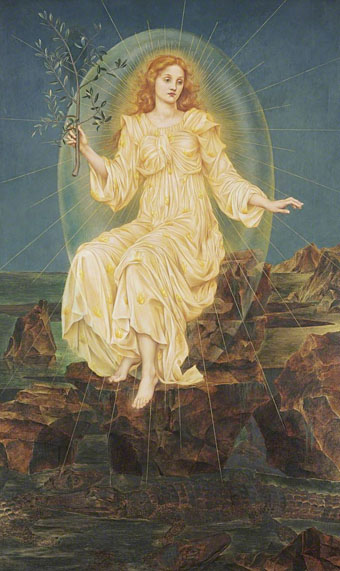
Lux in Tenebris (1895) by Evelyn De Morgan.

• “NASA celebrates the worm logo designer, Richard Danne“. Until I read this story (and this one) I wasn’t aware that the NASA logos were known as The Meatball and The Worm.

The Red Shoes: behind the scenes of the classic Powell and Pressburger film – in pictures. Related: Kings of the movies: Martin Scorsese on Powell & Pressburger.

• The 700th weekend post happens to arrive on Alan Moore’s 70th birthday. Many happy returns to the Northampton Magus.

Fundamentally, we face a choice. Either:

• it’s a coincidence that, of all the possible values that the finely tuned constants of physics may have had, they just happen to have the right values for life;

or:

• the constants have those values because they are right for life.

The former option is wildly improbable; on a conservative estimate, the odds of getting finely tuned constants by chance is less than 1 in 10-136. The latter option amounts to a belief that something at the fundamental level of reality is directed towards the emergence of life. I call this kind of fundamental goal-directedness ‘cosmic purpose’.

As a society, we’re somewhat in denial about fine-tuning, because it doesn’t fit with the picture of science we’ve got used to. It’s a bit like in the 16th century when we started getting evidence that our Earth wasn’t in the centre of the universe, and people struggled to accept it because it didn’t fit with the picture of the universe they’d got used to. Nowadays, we scoff at our ancestors’ inability to follow the evidence where it leads. But every generation absorbs a worldview it can’t see beyond. I believe we’re in a similar situation now with respect to the mounting evidence for cosmic purpose. We’re ignoring what is lying in plain view because it doesn’t fit with the version of reality we’ve got used to. Future generations will mock us for our intransigence.

Philip Goff, professor in philosophy at Durham University, making an argument for cosmic purpose

• At Spoon & Tamago: Exploring Japanese Hell through art from the 12th to 19th century.

• New music: Turning The Prism by Ben Frost, and Sanctuary Of Desire by Steve Roach.

• Mix of the week is DreamScenes – November 2023 at Ambientblog.

• DJ Food looks at Tomi Ungerer’s Electric Circus posters.

• At Dennis Cooper’s: Alain Resnais Day.

Strange Flowers visits the Villa Stuck.

Diet Of Worms (1979) by This Heat | Opera Of Worms (1981) by Van Kaye & Ignit| Wormhole (2002) by Cliff Martinez