Weekend links 710

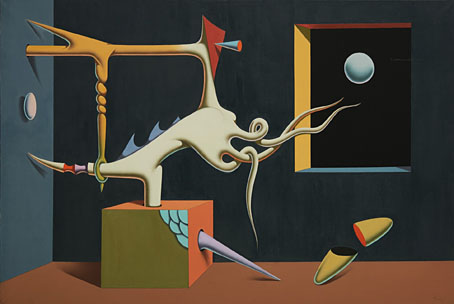
Menace (1974) by Ivan Tovar.

• “I find myself going back to Early Water more and more in recent years. It should be better known.” B. Sirota reviewing the one-off musical collaboration between Michael Hoenig and Manuel Göttsching. (Previously.) It should indeed be better known.

• At Unquiet Things: “Come for the cosmic awe, stay for the skeletons in spacesuits”; S. Elizabeth talks to Adam Rowe about the science-fiction art of the 1970s.

• “The architectural style wars have started all over again.” Owen Hatherley on the unending debate between traditionalists and modernists.

• At Public Domain Review: Clear Shadows (1867), a book of Japanese silhouette portraits by Ochiai Yoshiiku.

• New music: Flux Gourmet Original Motion Picture Soundtrack by Various Artists, and Volta by Loula Yorke.

• Meta machine mantras: Steve Barker on the birth of the Buddha Machine.

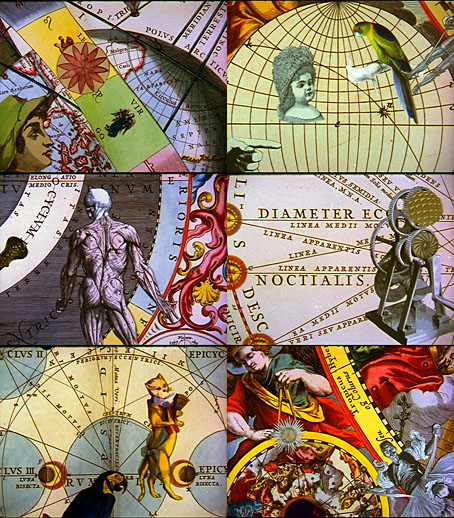
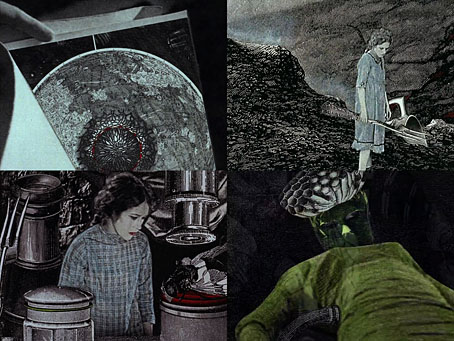
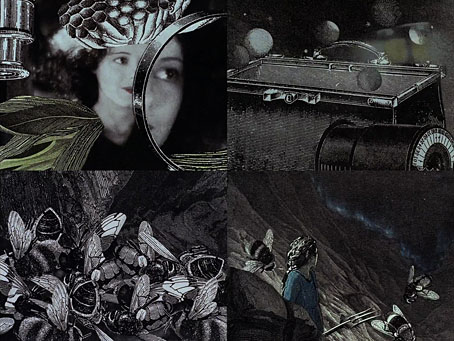
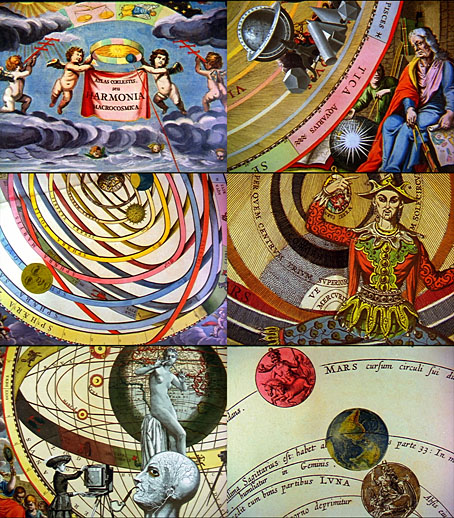
Cosmohedron, a short animated film by Duncan Hatch.

• Mix of the week: isolatedmix 125 by Sa Pa.

Chelsea Wolfe’s favourite music.

• At Dennis Cooper’s: Mirrorers.

A Silhouette Of A Man And A Wasp (1995) by Add N To (X) | A Silhouette Approaches (2005) by Robin Guthrie & Harold Budd | Silhouette (2015) by Julia Holter

Weekend links 706

jardine.jpg

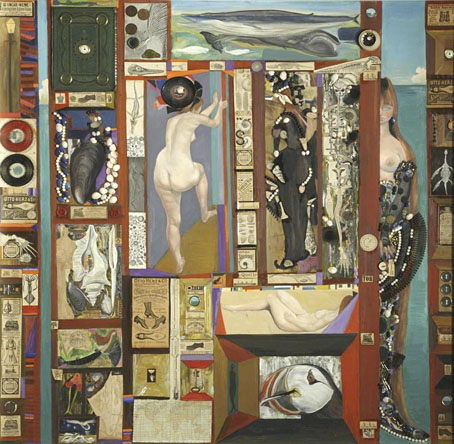
Sea Change (c.1966) by George Wallace Jardine.

A paucity of links this week thanks to the Xmas blight which reduced my RSS feed to a wasteland of no activity at all or too many of those lazy listicles devoted to “our top ten things of the year”. There was, however, this from Simon Reynolds:

I miss the inter-blog chatter of the 2000s, but in truth, connectivity was only ever part of the appeal. I’d do this even if no one read it. Blogging, for me, is the perfect format. No restrictions when it comes to length or brevity: a post can be a considered and meticulously composed 3,000-word essay, or a spurted splat of speculation or whimsy. No rules about structure or consistency of tone. A blogpost can be half-baked and barely proved: I feel zero responsibility to “do my research” before pontificating. Purely for my own pleasure, I do often go deep. But it’s nearer the truth to say that some posts are outcomes of rambles across the archives of the internet, byproducts of the odd information trawled up and the lateral connections created.

Setting aside the inter-blog conversation, which I was never very interested in, Reynolds articulates precisely why I still enjoy posting things here. I also agree with his comments about the psychological constraints that doing the same for Substack or similar would impose: a paying readership creates responsibilities that would make the whole thing feel like another form of work rather than play. To Reynolds’ comments I’d add that I also enjoy having a tiny area of the internet over which I exercise complete control. If I fall out with my webhost, as I did in the summer, I can move the entire site to a new location.

Reynolds expanded on his article at his regular forum, blissblog, where he examines the current state of the thing that people used to call the blogosphere. My thanks to Simon for including this place in his list of diehard operatives. I can’t say I’ve noticed the younger generations picking up the habit (then again, I haven’t really been looking…) but the small percentage of any generation who want to do more than simply follow the herd will always find outlets for their interests. And the tools for doing this have never gone away. This particular medium may not suit most people, but for those who can accommodate themselves to the format it’s a better way to spend your time than marinating your soul in the corrosive sump of social media.

• Elsewhere: Among other things, 2024 will be the year that the earliest manifestation of Walt Disney’s ubiquitous rodent enters the public domain in the USA. Jennifer Jenkins lists some of the more prominent books, films, songs, etc that will be following suit.

• At Open Culture: The Beautiful Anarchy of the Earliest Animated Cartoons.

• At Dennis Cooper’s: Another day for Shirley Clarke.

Suspended Animation (1980) by Bernard Szajner | Animation (1983) by Cabaret Voltaire | Reanimation (1996) by Bill Laswell feat. DJ Rob Swift

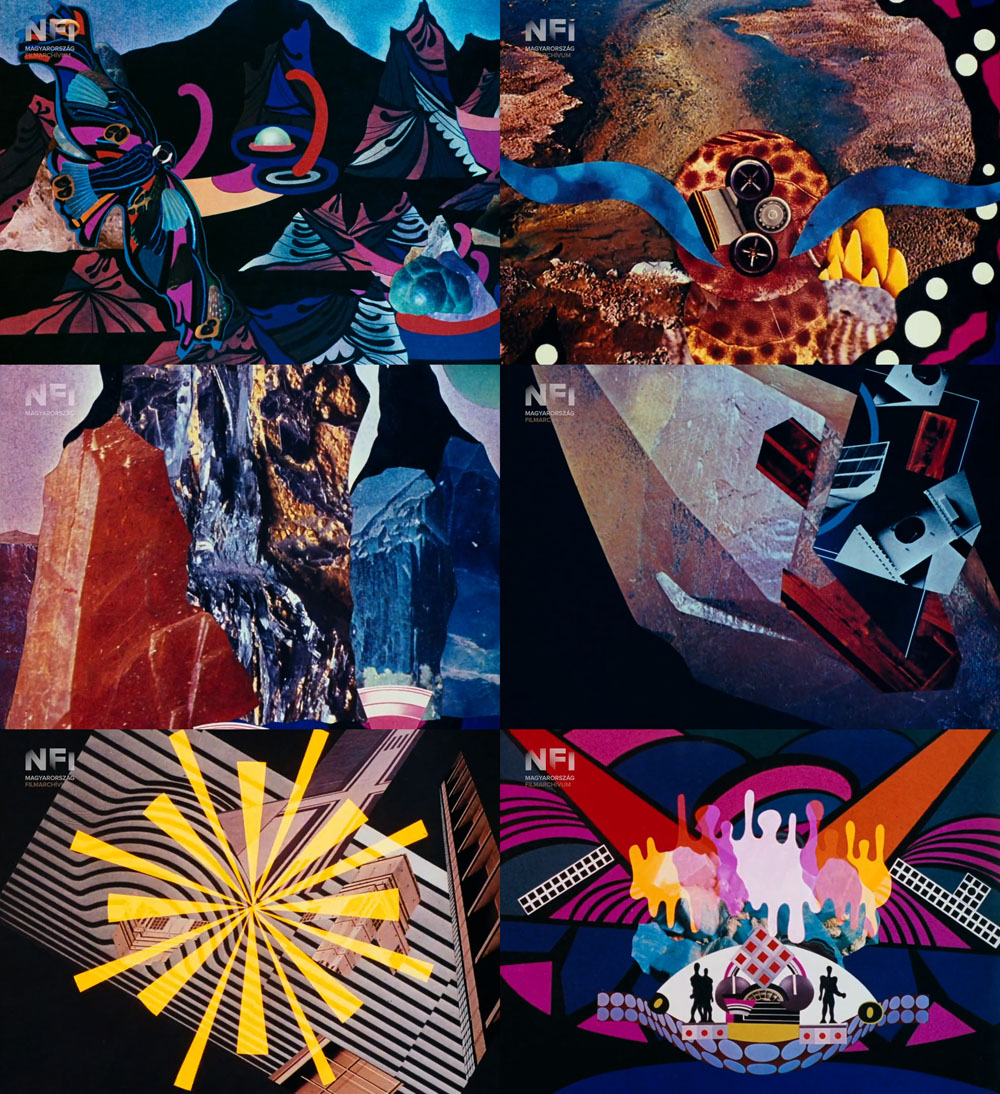
Moon Flight by Sándor Reisenbüchler

reisenbuchler1.jpg

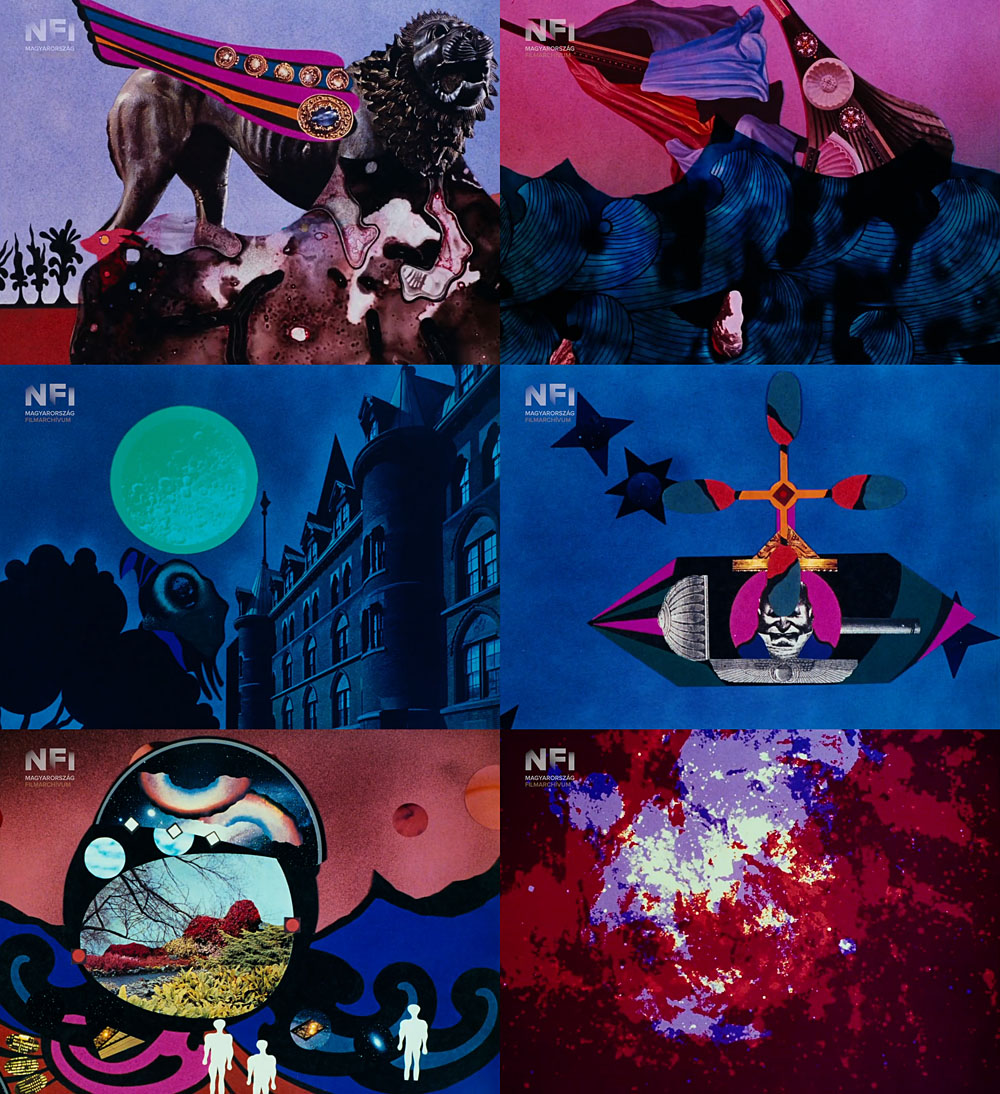
Moon Flight is the English title given to Holdmese, a Hungarian word that Google translates as “Moon tale”. Both translations suit this short film by Hungarian animator Sándor Reisenbüchler in which we discover that the Moon is a giant space vehicle contructed by an alien race. Moon Flight was Reisenbüchler’s third short, made in 1975 using the same collage technique as an earlier film, The Year of 1812 (1973). The animation is minimal but there’s an immense amount of variety in the tableaux that convey the story. The visual style is also strikingly vivid in a manner that might be labelled “psychedelic” if that term means anything when applied to cinematic fare from the Eastern Bloc. Reisenbüchler wasn’t the only Hungarian animator borrowing Pop and psychedelic influences at this time. The first two feature films by Marcell Jankovics, Johnny Corncob (1973) and The Son of the White Mare (1982), are equally vivid; Johnny Corncob even mimics some of the style of Yellow Submarine. I’ve not seen much other Hungarian animation from this period so this makes me wonder what else I may have been missing.

reisenbuchler2.jpg

Moon Flight is a recent upload at Rarefilmm where you can also see The Year of 1812, both as high-quality transfers. The Year of 1812, which concerns Napoleon’s failed invasion of Russia, won an award at Cannes but I prefer Moon Flight. It’s not only more visually interesting it’s also free of Tchaikovsky’s bombast. Reisenbüchler’s first short, Kidnapping of the Sun and the Moon (1968), is another work of fantasy which may be seen at the YouTube channel for NFI, the Hungarian film archive.

Previously on { feuilleton }
Three short films by Marcell Jankovics
Short films by Gérald Frydman
Raoul Servais: Courts-Métrages
Scarabus, a film by Gérald Frydman
The Heat of a Thousand Suns by Pierre Kast
L’Araignéléphant
Le labyrinthe and Coeur de secours
Chronopolis by Piotr Kamler

Weekend links 696

hornel.jpg

The Brownie of Blednoch (1889) by Edward Atkinson Hornel.

• “None of the theatrics of most films are available in Bresson, because in some ways Bresson’s characters, along with Dreyer’s and Cassavetes’s are the most inscrutable in motion pictures—maybe since their creators are the best believers in suggestion.” Greg Gerke explores the later films of Robert Bresson.

Iizuna Fair is a short animated film by Sumito Sakakibara that will be viewable at Vimeo for the next few months.

• Occult scholar Mitch Horowitz returns to the Aquarium Drunkard podcast for a wide-ranging discussion.

Marty [Scorsese] went to the Edinburgh Film Festival in 1974 to collect an award for Alice Doesn’t Live Here Anymore. They asked him who he wanted to present it to him, and he said Michael Powell. They had no idea who he was. No one did, but I found an American doing publicity for Kubrick’s 2001 who knew where he was. He introduced Michael to Marty at a lunch where Marty bombarded Michael with questions about how he did this and how he did that. Michael writes in his autobiography that the blood started to run in his veins again, it had been so long that he and Emeric had been living in oblivion.

Marty brought Michael to America, where we had already started working on Raging Bull. Marty had been educating me about Powell and Pressburger’s films, sending me home with VHSs. I had fallen in love with them, and then he said that Michael Powell was coming for dinner one night and asked if I would like to meet him. That’s how we met and eventually became involved, all thanks to Marty.

Thelma Schoonmaker remembering her husband, Michael Powell, and discussing the ongoing restoration of his films. Good to hear that plans are afoot to resurrect Gone to Earth

Whole Earth Index is a near-complete archive of the Whole Earth Catalog and its related publications.

• At the Daily Heller: David Byrd, the East Coast’s psychedelic poster man.

• See the winners of the Nikon 2023 Photomicrography Competition.

• New music: Golden Feelings by Better Weather.

Mikrostruktury (1963) by Wlodzimierz Kotonski | La Chasse Aux Microbes (1977) by Michael Bundt | Microscopic (1995) by Gas

Oskar Fischinger: Visual Music

fischinger1.jpg

Every so often I go looking for more of the documentaries about avant-garde cinema that Keith Griffiths produced for Channel 4 (UK) in the 1980s and 1990s. Oskar Fischinger: Visual Music (1992) is one I’d been after for a while but it took some time to finally surface in searches as a result of the uploader misspelling the name of its subject. Film historian William Moritz describes Fischinger’s films as “visual music”, a term which has since become more widely applied to abstract cinema although not all abstract films have musical scores. Fischinger was a pioneer in this area, not necessarily the first but a film-maker who in the 1930s pushed his techniques to a peak of complexity far beyond anything being attempted elsewhere. The acclaim for his short films attracted the attention of Paramount, MGM and Disney but Hollywood typically didn’t allow him to do the things he was best at once he’d been hired. As I’ve said before, Fischinger’s tests for the Toccata and Fugue in D Minor section of Fantasia were rejected as “too dinky” by the creator of an anthropomorphic cartoon mouse.

fischinger2.jpg

Griffiths’ documentary ought have been twice as long as its 25 minutes but at least it was commissioned and broadcast. The interviewees are the aforementioned Moritz and Fischinger’s widow, Elfriede, who helped create some of the films and talks a little about her husband’s techniques. Half the running time is taken up with extracts from the films but the video quality does these no favours (and the picture is too damned dark…uploaders: adjust your gamma!), you’d be better off looking for copies of the complete films elsewhere. More from Moritz’s interview session turned up a year later in Griffiths’ Abstract Cinema, an excellent history of the form which, of course, included Fischinger’s films.

Elsewhere on { feuilleton }
The abstract cinema archive

Previously on { feuilleton }
An Optical Poem by Oskar Fischinger