The Look presents Nigel Waymouth

granny1.jpg

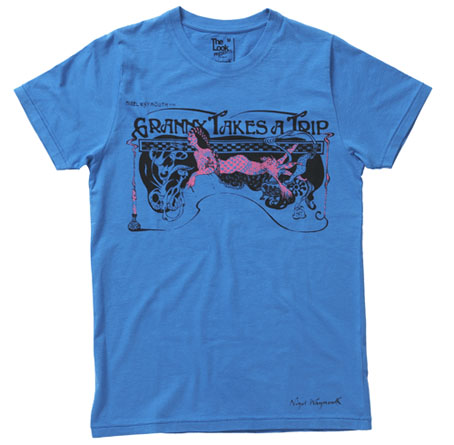
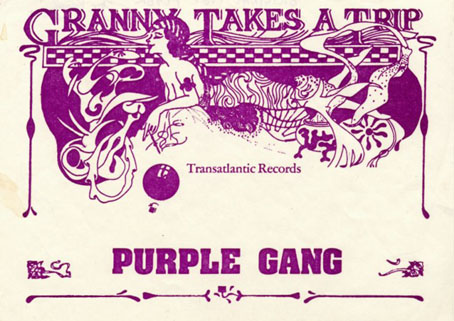
This delightful piece of Art Nouveau-inflected grooviness is one of the new T-shirts designed by Nigel Waymouth for The Look via Topman. Waymouth, as some readers here may know, was part of Hapshash & the Coloured Coat in the late Sixties, London’s leading group of psychedelic poster artists. In addition to design, Waymouth and Sheila Cohen opened the legendary Kings Road boutique Granny Takes A Trip (named after its stock of antique clothes) in 1966. That shop’s fame inspired a one-off single by Stockport group The Purple Gang in 1967 which the BBC banned for alleged drug references, although the trip in question concerns an elderly woman journeying each year to Hollywood. Waymouth’s flyer for the single, of which the shirt design is a variant, can be seen below.

The Look Presents Nigel Waymouth – in-store and online at Topman from Friday August 8

“Sepia tints and flouro tones…darkly psychedelic graphics for the 21st Century…”

Nigel Waymouth is a legend of British rock fashion and design.

Not only did he found the wild 60s Kings Road boutique Granny Takes A Trip (whose ever-changing shop design attracted the likes fo the Rolling Stones, The Beatles, Anita Pallenberg, Brigitte Bardot and Marianne Faithfull), but his graphic design company Hapshash produced eye-popping designs, posters and record sleeves for the The Who and Jimi Hendrix.

Original Hapshash artwork is highly prized in collector circles and Granny’s clothes are seriously sought-after on the vintage market. Now Nigel Waymouth makes his re-entry into fashion via The Look Presents – http://thelookpresents.com – with a contemporary t-shirt range reflecting the original Granny’s aesthetic by delving into decadent psychedelia replete with sepia tints and flouro tones.

The first five t-shirts are available in-store and online at Topman from August 8, with the launch party on August 14 at the George and Dragon in Shoreditch.

The Look Presents Nigel Waymouth is the second collection from the creative hub formed by author Paul Gorman and Soho boutique owner Max Karie. Our first, a collaboration with rock & roll brand Wonder Workshop, proved a great success earlier this summer and this autumn we launch The Look Presents Priceless, a menswear capsule collection with couturier to rock royalty Antony Price.

The shirts are priced £20 each. I rarely wear T-shirts on their own but I’ll probably have to get one of these, for the associations if nothing else.
granny2.jpg

Previously on { feuilleton }
The New Love Poetry
Dutch psychedelia
Family Dog postcards
The 14-Hour Technicolor Dream revisited
Rene Beauclair

beauclair.jpg

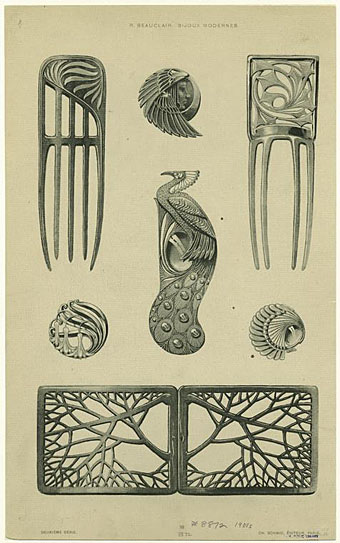
Bijoux modernes (c. 1900) from a series of Art Nouveau designs by Rene Beauclair. As usual the peacock caught my attention on this page. There’s more by Beauclair at the NYPL Digital Gallery

Previously on { feuilleton }
Elizabetes Iela 10b, Riga
The Divine Sarah
Whistler’s Peacock Room
Lalique’s dragonflies
Lucien Gaillard

The skull beneath the skin

skull1.jpg

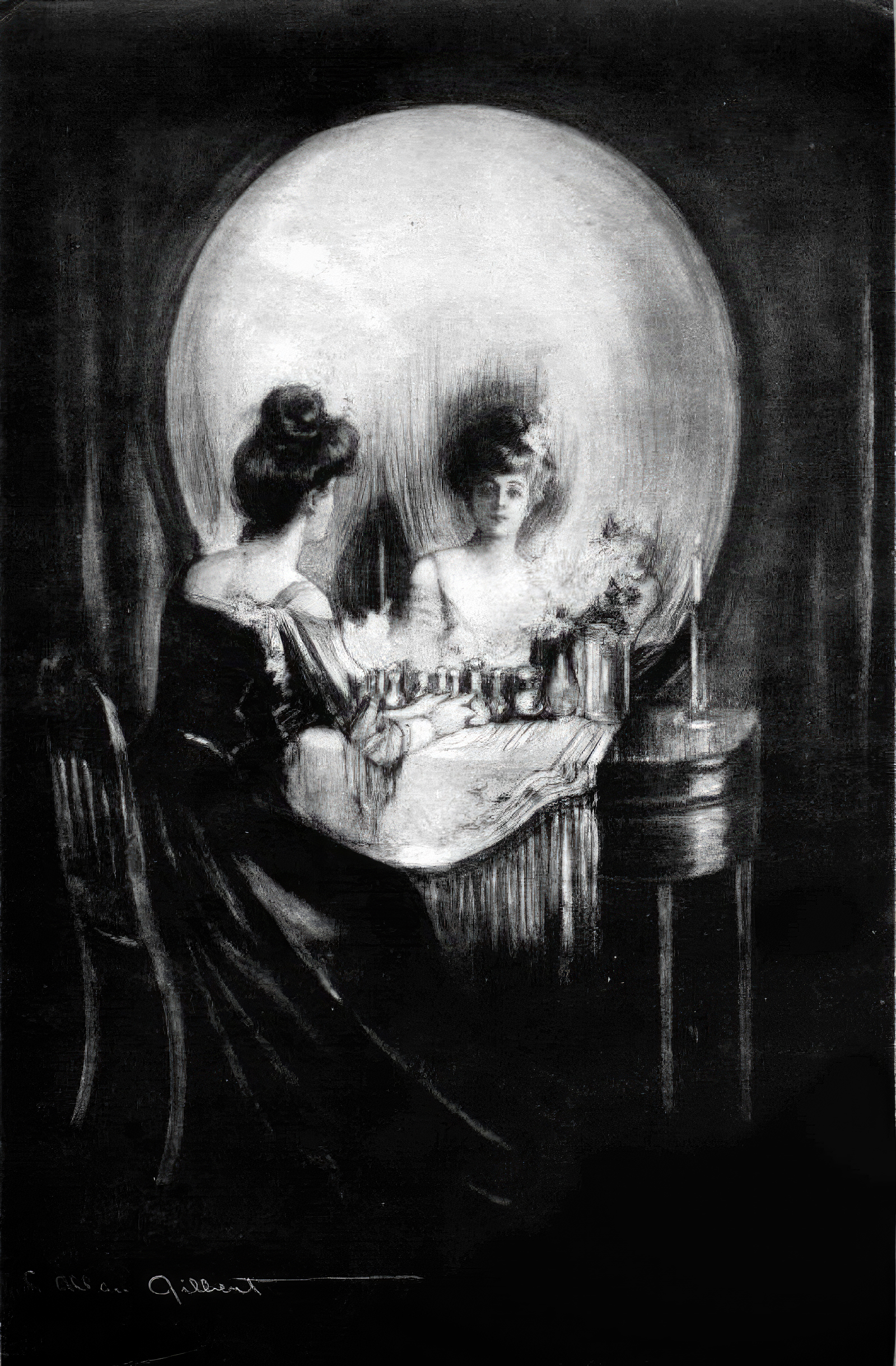
All Is Vanity by Charles Allan Gilbert (1892).

The subliminal skull is another of those perennial motifs that recur in art from time to time, and one which has become especially prevalent since the late 19th century. There seem to be a number of reasons for this, the most obvious being that if you’re going to show how clever you are by hiding one image inside another you may as well make the hidden thing something that everyone recognises. A secondary reason would seem to be the waning power of the vanitas theme. As painting became more pictorially sophisticated it wasn’t enough to simply show a skull and expect people to accept this with a stern moral as the principal content. Hence the development of death as a non-skeletal character in Symbolism and the reduction of skulls in pictures to a kind of playful game.

Holbein’s anamorphic skull in The Ambassadors is probably the grandfather of all the later versions but the more recent popularity of the hidden motif can be traced back to Charles Allan Gilbert whose 1892 picture, All is Vanity, drawn when he was just 18, was sold to Life Publishing in 1902, and subsequently spread all over the world in postcard form. Despite giving birth to a host of imitators, Gilbert’s picture is the one that still inspires artists and photographers up to the present day.

Continue reading “The skull beneath the skin”

The Divine Sarah

bernhardt11.jpg

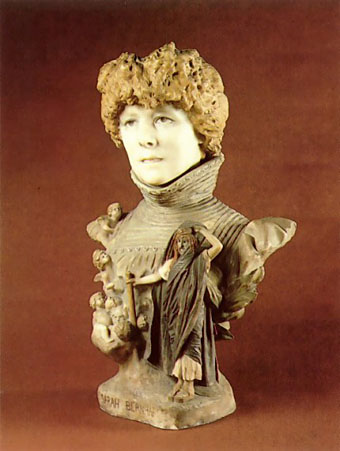
Sarah Bernhardt by Jean-Léon Gérôme (1895).

You can’t be a fin de siècle fetishist and not develop a fascination with actress Sarah Bernhardt, a woman who was muse to many of the era’s finest artists, most notably Alphonse Mucha, who she employed as her official designer. Mucha’s marvellous posters are endlessly popular, of course; less well-known is the sculpture by academic painter and Orientalist Jean-Léon Gérôme, a rare three-dimensional work inspired by the actress.

bernhardt2.jpg

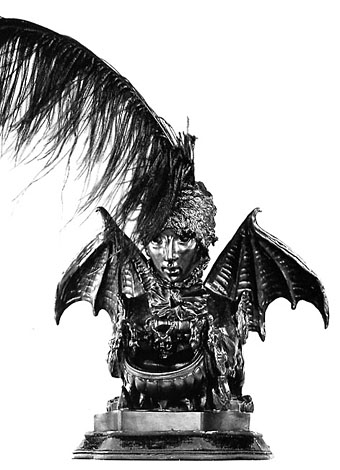
Inkwell by Sarah Bernhardt (1880).

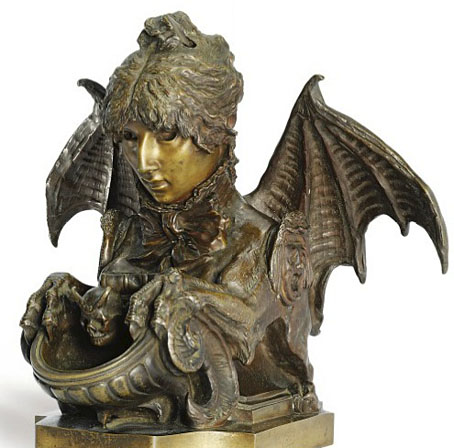
Even less well-known is Ms Bernhardt’s own design for a curious bat-winged inkwell. I’ve read of her having created other sculptural works but so far this is the only one I’ve seen a picture of. With something as decadent as this you’d really have to use peacock quills for pens, wouldn’t you?

bernhardt4.jpg

bernhardt3.jpg

Bracelet by Alphonse Mucha & Georges Fouquet (1899).

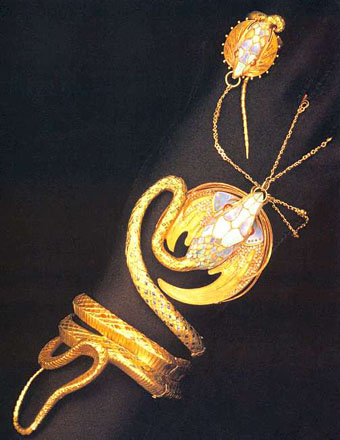
And in a similar sinister vein to the inkwell there’s this serpentine bracelet and ring, a superb one-off, designed by Mucha and crafted by the jeweller Fouquet. After seeing works such as this and the Lalique dragonfly (which Ms Bernhardt once wore), most other jewellery seems timid and unadventurous in comparison.

Update: Added another photo of the inkwell.

Previously on { feuilleton }
The art of Philippe Wolfers, 1858–1929
Lalique’s dragonflies
Lucien Gaillard
Smoke
The Masks of Medusa