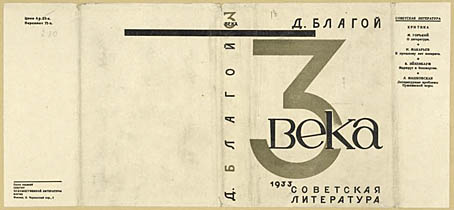
Jack Kerouac book covers

ontheroad.jpg

left: Andre Deutsch (1958); right: Penguin (1972).

In a year filled with cultural anniversaries, here’s another. Jack Kerouac’s On the Road is fifty years old next month and to celebrate this Penguin is publishing the book in its original form for the first time. Although the cover of the first edition described the text as “complete and unexpurgated”, names were changed to protect the innocent and/or guilty and other aspects, such as some very mild gay sex references, were removed. The same site I linked to last year with a great selection of William Burroughs book covers has another section devoted to Kerouac’s magnum opus.

The challenge with this book is whether or not to feature a road as the main image; some designers rise to that challenge better than others. The Ukrainian cover crudely modelled on a Jack Daniel’s label is a particularly unfortunate choice considering that the author died prematurely from cirrhosis of the liver. As with William Burroughs, some translations of the title work better than others: Unterwegs (German) sounds clunky to English ears while Sulla Strada (Italian) has more poetry than the original.

The Observer on the book’s fiftieth anniversary
Beat Scene magazine
Kerouac’s bisexuality explored at GLBTQ

Elsewhere on { feuilleton }
The book covers archive

The Darjeeling Limited

darjeeling.jpg

There aren’t many directors whose next films I await with impatience but Wes Anderson is one of them. I still haven’t seen his debut, Bottle Rocket (1996), but Rushmore (1998) was good, The Royal Tenenbaums (2001) was great and The Life Aquatic with Steve Zissou (2004) was a masterpiece. The Darjeeling Limited will be out later this year and stars Owen Wilson (who’s been in all of Anderson’s films apart from Rushmore but he did co-write that one) Adrien Brody, and Jason Schwartzman who made his debut in Rushmore and can be seen in another odd and inventive comedy, I Heart Huckabees. Schwartzman also co-writes this new opus. I have an unproven theory that Anderson is responsible for an annoying trend in recent American independent cinema—the “quirky comedy” which features multiple shots of charmingly flawed characters standing motionless centre-screen while staring at the camera. With groovy music playing on the soundtrack. Anderson does (or did) enough of this but he does a lot more besides. His films are better written and a lot more inventive than those of his imitators.

The most striking thing about the Darjeeling Limited trailers and poster (although it’s not something most people would notice) is the complete absence of Futura. Anderson is possibly unique among filmmakers in having what amounts to an obsession with a single typeface; Futura appears in different weights and styles throughout Rushmore, The Royal Tenenbaums and The Life Aquatic. I’m not quite sure which typeface is used on the poster (and neither are the people at Typophile); Proxima Sans is the closest match I can find but it may be a grotesk variant created specially for the film. I ask you: how many filmmakers are there that can get people talking about their work simply by changing a font?

Previously on { feuilleton }
Masonic fonts and the designer’s dark materials
Helvetica: the film

Black is the new black

star_flyer.jpg

This is what we want—an airline that matches my monochrome wardrobe. Star Flyer is Japanese, unfortunately, and I’m guessing that black doesn’t have the same funereal associations in Japan; that livery wouldn’t, er “fly” here. Makes a change from the sky blue monotony that’s the usual colour scheme in aircraft, anyway. PingMag looks at the resurgence of interest in black as a Japanese design choice, from toilet paper to cotton swabs, toothpaste and even black eggs. If you were eating the latter you’d have to be listening to the Nightcrawlers at the same time. And drinking black coffee. But I’d advise that you avoid black pudding; that stuff is just nasty.

Design as virus 1: Victorian borders

bookplate.jpg

There’s nothing new about drawing attention to the viral nature of design, whether in the repeated use of motifs and styles or the way in which typefaces breed and proliferate; Jonathan Barnbrook alludes to this process directly by calling his font house Virus.

The plate above comes from a Victorian book I bought several years ago, The Pictorial Cabinet of Marvels, a reasonably lavish volume for children concerning places and things of interest around the world. Since I like playing with excessive Victorian flourishes now and then I’m always on the look out for new examples and the border here immediately caught my eye. I have a decent selection of clip art books from Dover and Pepin containing this kind of thing but nothing quite like this particular design. When I was putting the Damnation and A Day album together for Cradle of Filth I took one of the corner pieces as a starting point for a border design I used on the front and back of the booklet and the tray.

damncov.jpg

The poor old Xaverian Brothers of Manchester’s Catholic Collegiate Institute would no doubt be mortified to see part of their prize bookplate being used to decorate such a blasphemous artefact. The album was released by Sony Music in 2003 so this little border motif has travelled the world by now. I seem to recall sending the record company the border design separated from the artwork so they could make up some posters.

And so we come to what I’m assuming is its latest manifestation, a poster design for Manifest Destiny, a Los Angeles music event organised by Tee Pee Records.

tee-pee.jpg

I say “assuming” since I’ve no idea whether this example is from my design or not. But it seems a safe bet seeing as the original is from such an obscure source. Not that I mind if it is, of course. I can’t very well complain when I swiped the thing in the first place, now can I?

Update: Tee Pee designer Sarah MacKinnon writes to say her Victorian motif is from one of Dover’s clip art books. Now I know that I wouldn’t mind finding the book for my own collection. This makes the occurrence of the original more unusual, at least from my point of view, since it’s the only time I’ve spotted one of these reprinted elements in its period setting.

Previously on { feuilleton }
Masonic fonts and the designer’s dark materials

New things for July

motorway_city_sm.jpg

Motorway City by Hawkwind, Flicknife Records single (1983).

This month’s issue of Record Collector magazine has a feature about Hawkwind which featured my Motorway City sleeve among its illustrations. It was odd seeing this again, being a single it doesn’t turn up so often and it has the distinction of being one of the oldest of my works in print. Although the single was released in 1983, the drawing was done in 1980 (I was 18 at the time) and it ended up with Dave Brock somehow.

The A-side is taken from the Zones album, which sports one of my more successful cover illustrations for the band, and the song is a Ballardian eulogy to driving on motorways at night. Despite their reputation for being a bunch of spaced-out hippies, Hawkwind were frequently drawn to the harder side of things (Lemmy used to shout “Die! Die!” at their tripping audience and was proud of freaking people out), and this song isn’t even science fiction, despite my flat futuristic cityscape in the background. Before he finished with the band for good, singer Robert Calvert wrote two songs based on JG Ballard books, High Rise and the punk- and Crash-derived thrash piece Death Trap, both on the PXR5 album from 1979. Motorway City was written around the same time and it’s a shame it didn’t have Death Trap on the B-side instead of yet another version of Master of the Universe. My drawing was done as black on white but the record company smartly (for once) reversed out the design which I always felt made it look a lot better, as well as fitting more with the night-driving theme.

Also this month, I’m in the process of reworking the website a bit which means making more prints of artwork available. I’ve started with some of the Lovecraft pictures, which is always the most popular stuff but I’ll gradually be working through everything and setting up PayPal facilities for other items. Many pictures and designs can already be had as prints at CafePress but that system is best for t-shirts and other goods, it lacks the personal touch which people often want from a signed print.

Previously on { feuilleton }
Hawkwind: They’re still feeling mean
Barney Bubbles: artist and designer