The art of Harry Clarke, 1889–1931

hc1.jpg

The Masque of the Red Death.

Halloween approaches so let’s consider the finest illustrator of Edgar Allan Poe’s stories, Irish artist Harry Clarke. Aubrey Beardsley once declared “I am grotesque or I am nothing” yet even his grotesquery—which could be considerable—struggled to do justice to Poe. Clarke, the best of the post-Beardsley illustrators, found a perfect match in the Boston writer’s Tales of Mystery and Imagination, his edition being published by Harrap in 1919. He could decorate fairy tales with the best of the great Edwardian book illustrators but a flair for the morbid blossomed when he found Poe. Only his later masterpiece, Goethe’s Faust, improved on the dark splendour of these drawings. “Never before have these marvellous tales been visually interpreted with such flesh-creeping, brain-tainting illusions of horror, terror and the unspeakable” wrote a critic in The Studio.

Lots more pictures at Grandma’s Graphics (although none of the colour plates, unfortunately) including many of the Faust drawings. Wikipedia has photos of some of Clarke’s incredible stained-glass windows, as does Bud Plant’s biography page.

hc2.jpg

Ligeia.

hc3.jpg

The Facts in the Case of M. Valdemar.

Elsewhere on { feuilleton }
The illustrators archive

Ghost Box

ghost_box.jpg

Q: What do you get when you cross analogue synthesizers, samples from obscure public information films, the graphic design of Pelican Books, Arthur Machen, HP Lovecraft, Algernon Blackwood, CS Lewis, Hammer horror, the Wicker Man and the music from Oliver Postgate’s animated films for children?

A: the CD releases by artists on the Ghost Box label. Ghost Box describe themselves as “an independent music label for artists that find inspiration in library music albums, folklore, vintage electronics, and the school music room” which, if you’re familiar with the reference points, is exactly what you get. A rather wonderful blend it is too, some of the tracks on Belbury Poly’s The Willows (named after Algernon Blackwood’s stunning horror tale) are how I expected Stereolab to sound until I heard them and was rather disappointed.

Favourite of the Ghost Box releases I’ve heard to date is (perhaps inevitably) Ourobourindra by Eric Zann (the “artist” here is named after Lovecraft’s haunted musician from The Music of Erich Zann). The website description—”Eric Zann’s radios, oscillators and recordings conjure eldritch, echoing spaces and invoke the voices of the dead that whisper within them”—again is a pretty accurate summation of this atmospheric and sinister audio collage. “Sinister” is a term that can be applied to much of this music and the Ghost Box founders, Julian House and Jim Jupp, declare in a Wire feature this month that matters spectral are of particular concern, hence the label name. Ourobourindra works especially well in this regard, sounding like the product of someone working through a trauma caused by viewing the seance scene from Dracula AD 1972 at too young an age. This is one I’ll be playing on Halloween.

Ghost Box music can be purchased online here.

Elsewhere on { feuilleton }
The album covers archive

Previously on { feuilleton }
Penguin book covers
The music of Igor Wakhévitch
The music of the Wicker Man
The Absolute Elsewhere

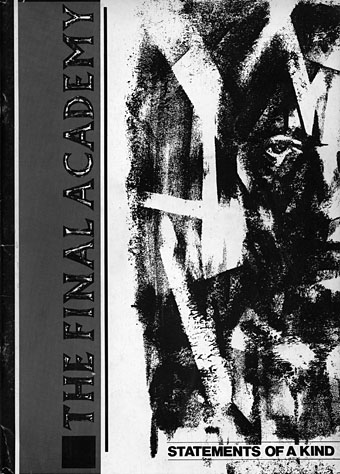
The Final Academy

final_academy.jpg

The event booklet, designed by Neville Brody.

William Burroughs’ reading in the city of Manchester took place on the 4th of October, 1982, at Factory Records’ Haçienda club, as part of the Manchester “edition” of The Final Academy, a Burroughs-themed art event put together by Psychic TV (Genesis P Orridge & Peter Christopherson) and others. A recent posting on the Grey Lodge is a torrent of The Final Academy Documents, the shoddily-produced DVD made from the low-grade video recordings that captured the event (originally an Ikon Video production from Factory). The DVD is so badly presented by Cherry Red that no one should feel guilty about downloading this.

I’ve always been grateful that a record was made of this event, however poor, since I was in the audience that evening, very conscious of the fact that this was my one and only opportunity to see Burroughs in the flesh. His appearance was the magical part of a scaled-down version of the larger two-day Final Academy that had taken place earlier that week in London. The rest of the event was either strange or underwhelming, not helped by the chilly and elitist atmosphere of Manchester’s newest and most famous club. In the days before “Madchester” and the rave scene (the period that gets excised from the city’s cultural history), the Haçienda was a cold, grey concrete barn with terrible acoustics and a members-only policy that required the flourishing of a Peter Saville-designed card at the door. The place was usually half-empty and the clientèle tended to be students living nearby.

Continue reading “The Final Academy”

New things for October

melechesh.jpg

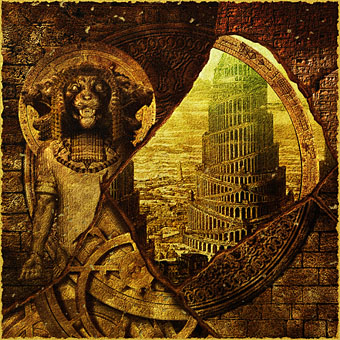
Two new pieces of work appear this month. The cover for the Emissaries CD by Melechesh was something I did earlier this year but the album release was delayed. Melechesh are Sumerian Thrashing Black Metal maestros and their website is here.

sieg_heil.jpg

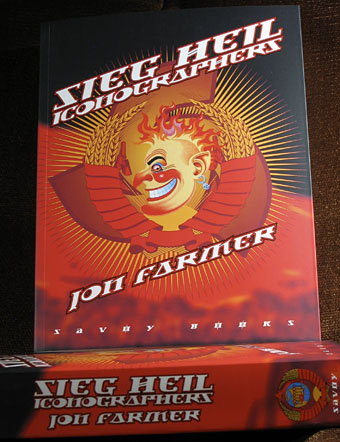
And finally this month, Jon Farmer’s book, Sieg Heil Iconographers, arrives from the printers. At 608 pages this is by far the largest book I’ve designed to date. Featuring illustrations and photos on nearly every page, it was a lot of work, so I’m very pleased that Anthony Rowe have done their customary excellent print job. The book is softcover and I was worried that the binding might be too tight to allow for easy reading but it falls open very easily. Savoy will have this on sale later this month, details at their site.

Penguin book covers

clockwork_cover.jpg

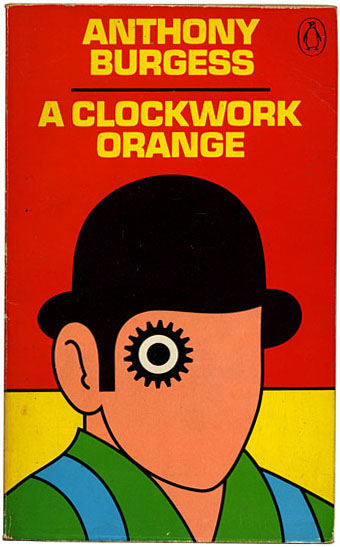
Nice collection of old covers for Penguin Books on Joe Kral’s Flickr pages. Looking over these, many of which are very familiar even though I’ve never owned them, makes me aware of how many hours of my life must have been spent in secondhand bookshops. The David Pelham cover for A Clockwork Orange has always been a favourite Penguin design. Pelham did a number of great covers for Penguin’s SF titles in the 1970s but the Burgess volume proved the most durable, unusually for a cover design surviving many reprintings. Via Boing Boing.

Elsewhere on { feuilleton }
The book covers archive