Old New Orleans

neworleans01.jpg

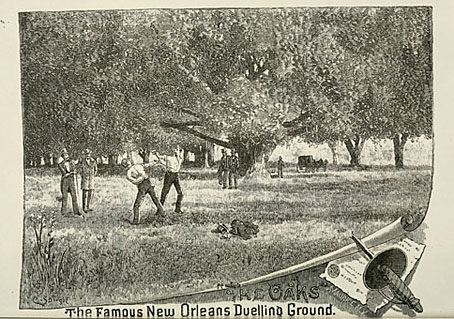
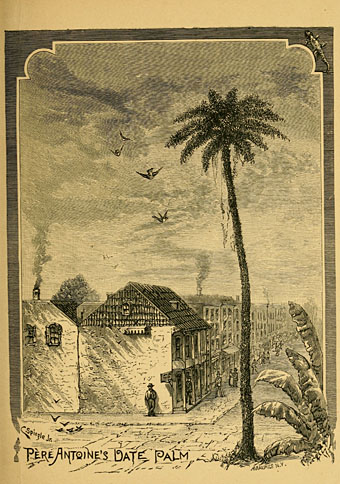
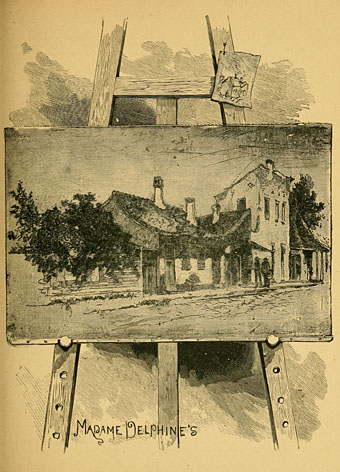
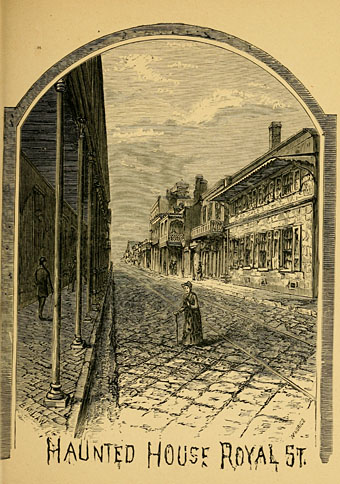
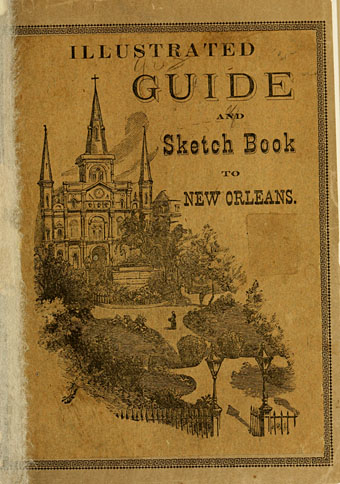
If you know the names Lafcadio Hearn and Joseph Pennell it’s surprising to see them brought together for this 1885 guide to the city of New Orleans. Hearn is better known for his many books about the folklore of Japan and China, while Pennell was a highly regarded artist and illustrator with a predilection for impressionistic cityscapes. The book is part of the Internet Archive so details are scant but it looks like a gathering together of prior work about the city with no single author—Hearn and others are credited inside. The deteriorated glamour of New Orleans means the illustrations are more picturesque than usual. Hearn had a fascination with ghost stories so he’d no doubt appreciate the view of the Haunted House on Royal Street. Browse the rest of the book here or download it here.

neworleans02.jpg

neworleans03.jpg

neworleans04.jpg

neworleans05.jpg

Continue reading “Old New Orleans”

Digital Grotesque

3d1.jpg

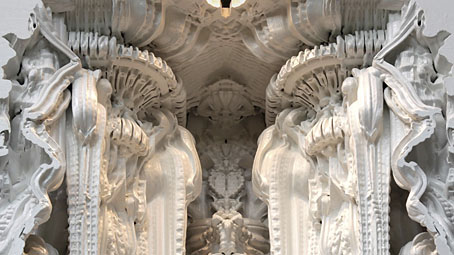
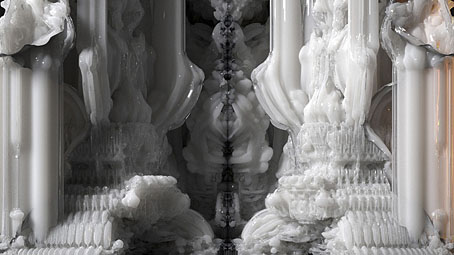
These organic forms are details of an architectural environment produced in sandstone using a 3D printer. The project is a collaboration between Michael Hansmeyer and Benjamin Dillenburger who use a series of algorithms to create the shapes the printer produces:

In the Digital Grotesque project, we use these algorithms to create a form that appears at once synthetic and organic. The design process thus strikes a delicate balance between the expected and the unexpected, between control and relinquishment. The algorithms are deterministic as they do not incorporate randomness, but the results are not necessarily entirely foreseeable. Instead, they have the power to surprise.

The resulting architecture does not lend itself to a visual reductionism. Rather, the processes can devise truly surprising topographies and topologies that go far beyond what one could have traditionally conceived.

3d2.jpg

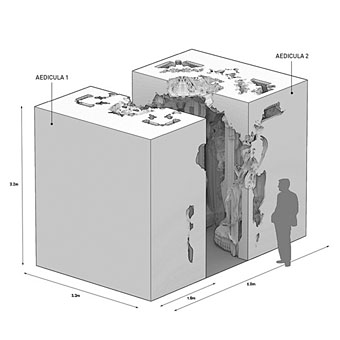
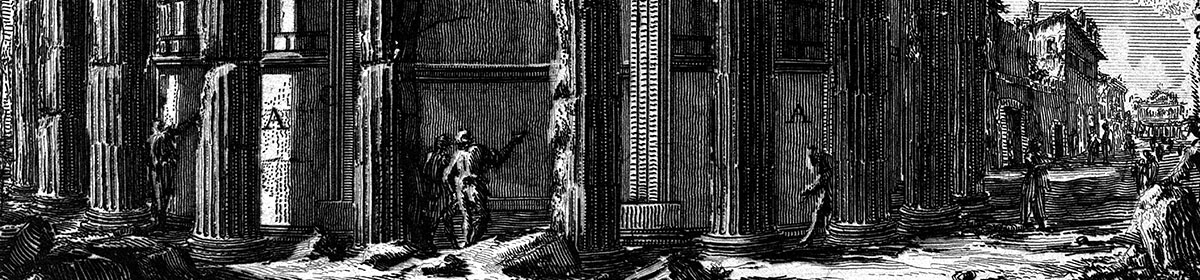
The diagram below shows the scale of the completed structure. Regular readers won’t be surprised to hear that the first thing that came to my mind when looking at these photos was “Lovecraft!” This unpredictable rendering process immediately solves the problem of how to depict or construct a non-human architecture without resort to anything Earth-bound. Those ridged and fluted columns could be R’lyeh or they could equally be the vast and ancient buildings that Dyer and Danforth discover in At the Mountains of Madness. I’ve been waiting for a while for 3D printing to start moving beyond the mere replication of existing objects; this is a very promising development. There’s more detail about the process and construction at the Digital Grotesque site.

3d3.jpg

Previously on { feuilleton }
At the Mountains of Madness

Weekend links 177

wickerman.jpg

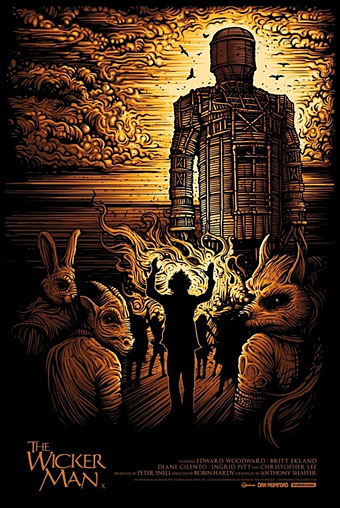
A new Wicker Man poster by Dan Mumford appears on the cover of the forthcoming DVD/BR reissues. Prints are available.

• The long-awaited release of a restored print of Robin Hardy’s The Wicker Man approaches. Dangerous Minds has a trailer while The Guardian posted a clip of the restored footage. The latter isn’t anything new if you’ve seen the earlier uncut version, but the sound and picture quality are substantially better. I’ve already ordered my copy from Moviemail.

• “It’s a fairly bleak place, and it has this eerie atmosphere. East Anglia is always the frontline when there’s an invasion threatening, so there are lumps of concrete dissolving into sand, bits of barbed wire and tank tracks that act as a constant reminder. I really love it.” Thomas Dolby talking to Joseph Stannard about environment and memory.

Dome Karukoski is planning a biopic of artist Tom of Finland. Related: Big Joy, a documentary about the life and work of James Broughton, poet, filmmaker and Radical Faerie.

The desire to be liked is acceptable in real life but very problematic in fiction. Pleasantness is the enemy of good fiction. I try to write on the premise that no one is going to read my work. Because there’s this terrible impulse to grovel before the reader, to make them like you, to write with the reader in mind in that way. It’s a terrible, damaging impulse. I feel it in myself. It prevents you doing work that is ugly or upsetting or difficult. The temptation is to not be true to what you want to write and to be considerate or amusing instead.

Novelist Katie Kitamura talks to Jonathan Lee.

Leonora Carrington: The Celtic Surrealist opens on Wednesday at the Irish Museum of Modern Art, Dublin.

Julia Holter turns spy in the video for This Is A True Heart.

Alexis Petridis talks to graphic designer Peter Saville.
hashim.jpg

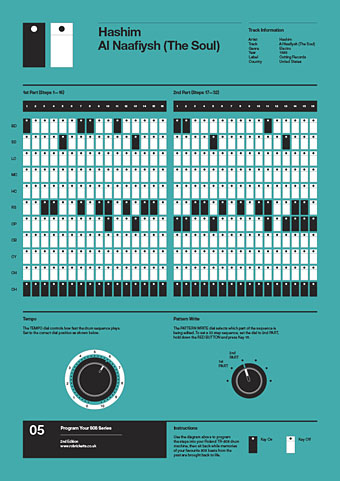
Al-Naafiysh (The Soul) by Hashim. From the Program Your 808 poster series by Rob Rickets.

Rob Goodman on The Comforts of the Apocalypse.

Post-Medieval Illustrations of Dante’s Sodomites.

• Annoy Jonathan Franzen by playing Cat Bounce!

Paolozzi at Pinterest

The Surrealist Waltz (1967) by Pearls Before Swine | The Jungle Line (1981) by Low Noise (Thomas Dolby) | Al-Naafiysh (The Soul) (1983) by Hashim
Abraxas 4

abraxas4.jpg

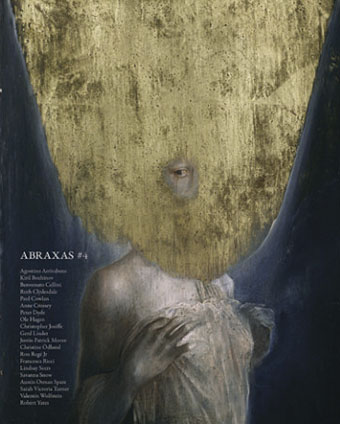
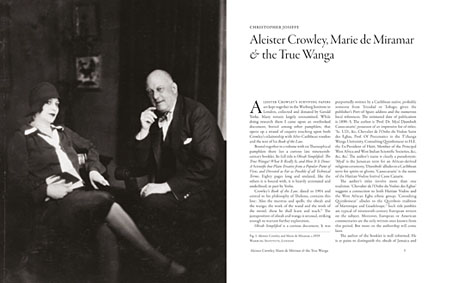
My thanks to Livia Filotico at Fulgur Esoterica for sending these previews from the forthcoming issue of Abraxas, the Journal of Esoteric Studies. Abraxas is a beautifully produced large-format book whose artist interviews—as I’ve mentioned before—are especially valuable. Issue 4 will include:

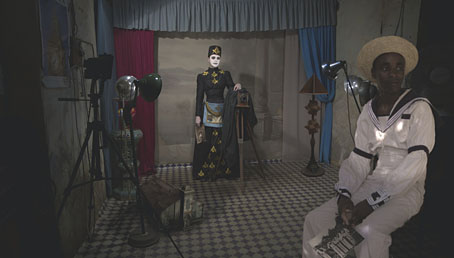
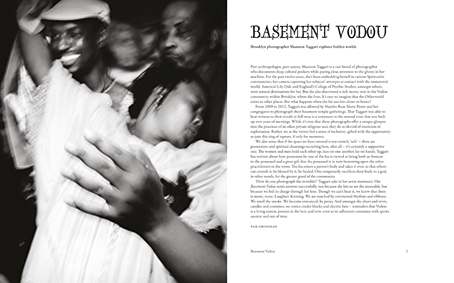
Prof. Sarah Victoria Turner’s interview with artist Christine Ödlund on theosophy and synaesthesia, a special feature on the Italian artist Agostino Arrivabene, a documentation of Art Angel artist Lindsay Seer’s ancestral performance/installation Nowhere Less Now, Shannon Taggart’s extraordinary photographs of Brooklyn vodou and Valentin Wolfstein insightful analysis of the Mystic Fool. Following this tarot theme, the artist Francesca Ricci provides an account of her working with urban symbols, and their subsequent transformation into a unique tarot, titled Anarca.

Mention of combining urban symbols with the Tarot sounds especially interesting after I’ve recently dealt with that challenge myself. Those who buy the limited edition hardback will receive a signed suite of Francesca Ricci’s Tarot cards. Abraxas 4 is published on September 22nd. Further details and page previews here.

abraxas1.jpg

Nowhere Less Now by Lindsay Seer.

abraxas2.jpg

abraxas3.jpg

Previously on { feuilleton }
Abraxas: The International Journal of Esoteric Studies

A Book of Old English Ballads

ballads01.jpg

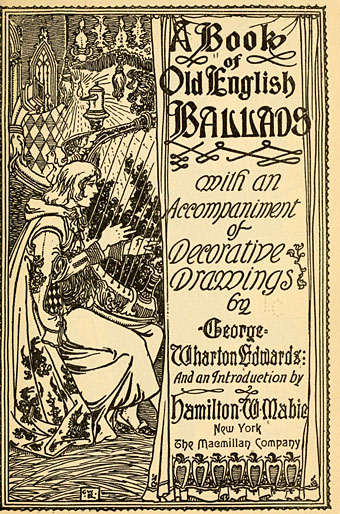
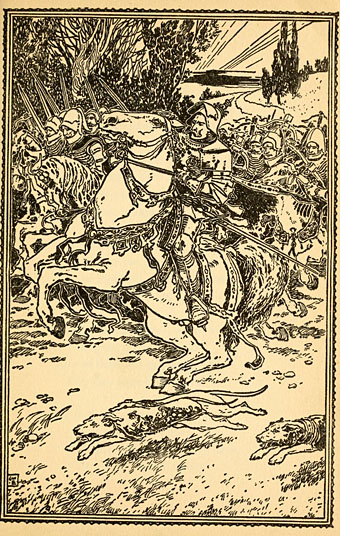
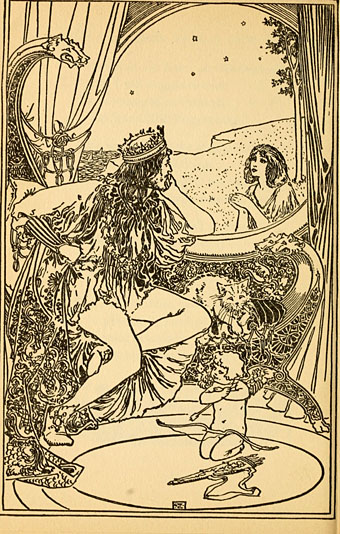
More illustration from George Wharton Edwards (1859–1950) with a collection of ballads from 1910. These being for the American market, the emphasis is on the picturesque England of kings and queens, duelling knights, and Robin Hood. A couple of exceptions, such as The Twa Corbies, point to the darker world of the Child Ballads where love and virtue aren’t always rewarded, and unnatural death is often the order of the day. Browse A Book of Old English Ballads here or download it here.

ballads02.jpg

ballads03.jpg

Continue reading “A Book of Old English Ballads”