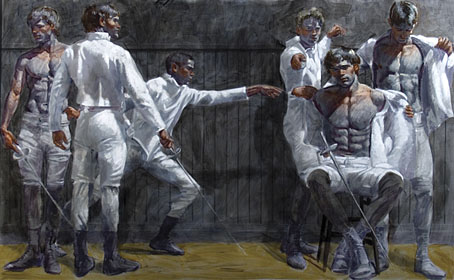
The Fencing Team by Bruce Sargeant.
Artists in the 20th century used to be multifarious in their activities, often taking their work through different stages or periods of evolution; Picasso and Max Ernst are two good examples of this. In today’s inflated art market this is no longer a wise move. As Brian Eno has noted in the case of the polymathic Tom Phillips, the pressure is there to establish yourself as a person who does one thing only, to turn yourself into a brand.
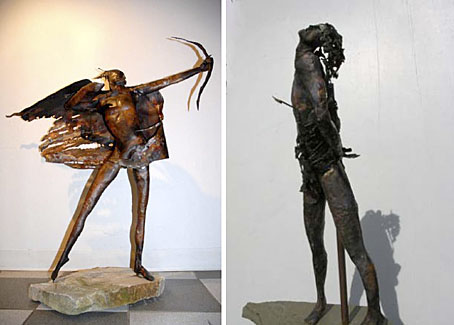
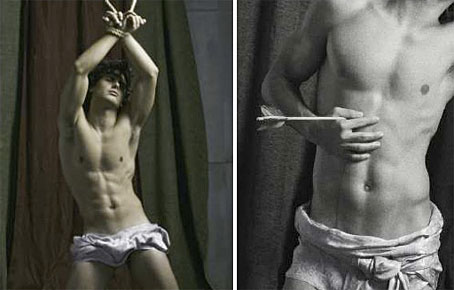
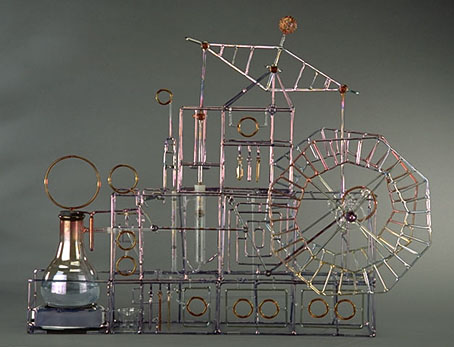
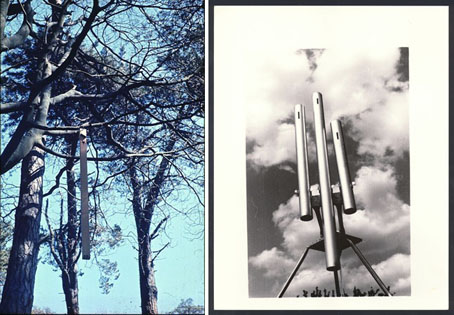
American artist Mark Beard isn’t happy with that situation. In order to satisfy a desire to create in whatever styles he chooses, he’s developed a number of distinct artist personalities, each with their own detailed biographies and even photographs (below). This isn’t entirely unprecedented, Marcel Duchamp famously had a female alter-ego named Rrose Sélavy, and was photographed by Man Ray in feminine attire, but offhand I can’t think of another artist going as far as creating six distinct personas. The painting above is one of a homoerotic sports-themed series by artist Bruce Sargeant who died, we’re told, in 1938 as a result of a wrestling accident. Examples of Beard’s other influences follow. For the complete artist biographies, see the Mark Beard pages at the Carrie Haddad gallery.
The artists
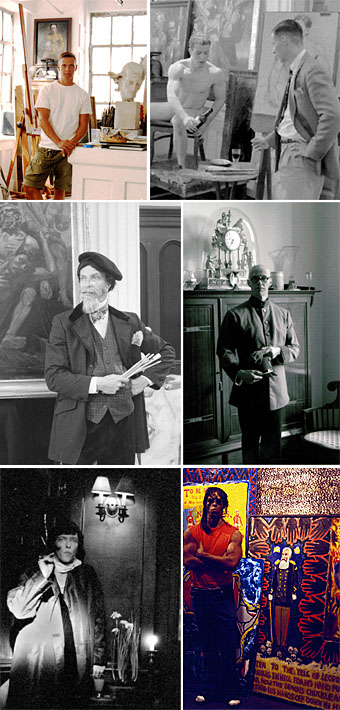
top left: Mark Beard (b. 1956); right: Bruce Sargeant and model (1898-1938)
middle left: Hippolyte-Alexandre Michallon (1849-1930); right: Brechtolt Steeruwitz (1890-1973)
bottom left: Edith Thayer Cromwell (1993-1962); right: Peter Coulter (b. 1948)
Their works
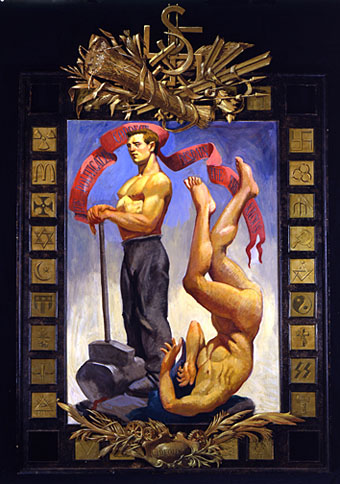
Ideology: The Politically Correct Disdain the Frivolous by Mark Beard (1989).
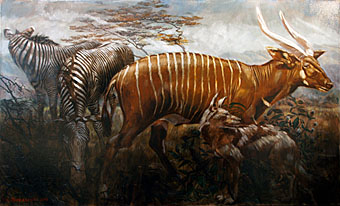
Avant la Fuite by Hippolyte-Alexandre Michallon (1894).
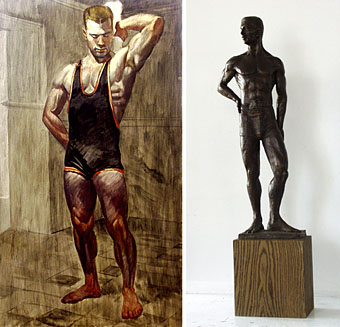
Swimmer Drying Himself, Berlin Olympics (1936), Young Athlete by Bruce Sargeant.
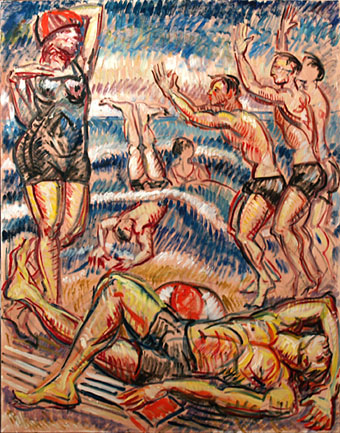
On the Strand by Edith Thayer Cromwell.
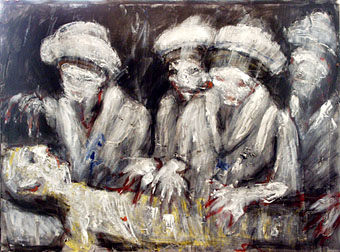
Das Krakenhaus by Brechtolt Steeruwitz (At the Hospital) (1923).
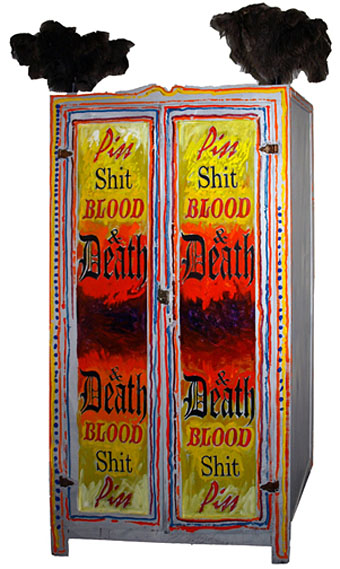
Cabinet by Peter Coulter.
Elsewhere on { feuilleton }
• The gay artists archive