The art of Juan de Valdés Leal, 1622–1690

leal1.jpg

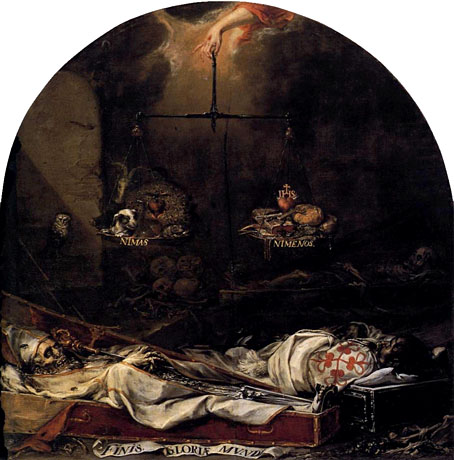
In ictu oculi (1672).

Having castigated Somerset Maugham yesterday for a novel that even he professed to dislike, thanks can be offered for the passage in The Magician which draws attention to a painter I hadn’t come across before. With a scythe-wielding skeleton snuffing a candle flame, and a bishop rotting in his casket, these are a very Spanish take on the vanitas genre. Some of the subsequent works of Salvador Dalí and Luis Buñuel are less surprising when you see art that’s this grotesque.

leal2.jpg

Finis gloria mundi (1672).

Previously on { feuilleton }
Alfred Rethel’s Totentanz
The art of Jacopo Ligozzi, 1547–1627
Massachusetts memento mori
Skull cameras
Walmor Corrêa’s Memento Mori
The skull beneath the skin
Vanitas paintings
Very Hungry God
History of the skull as symbol

Mrs Patrick Campbell

vampire.jpg

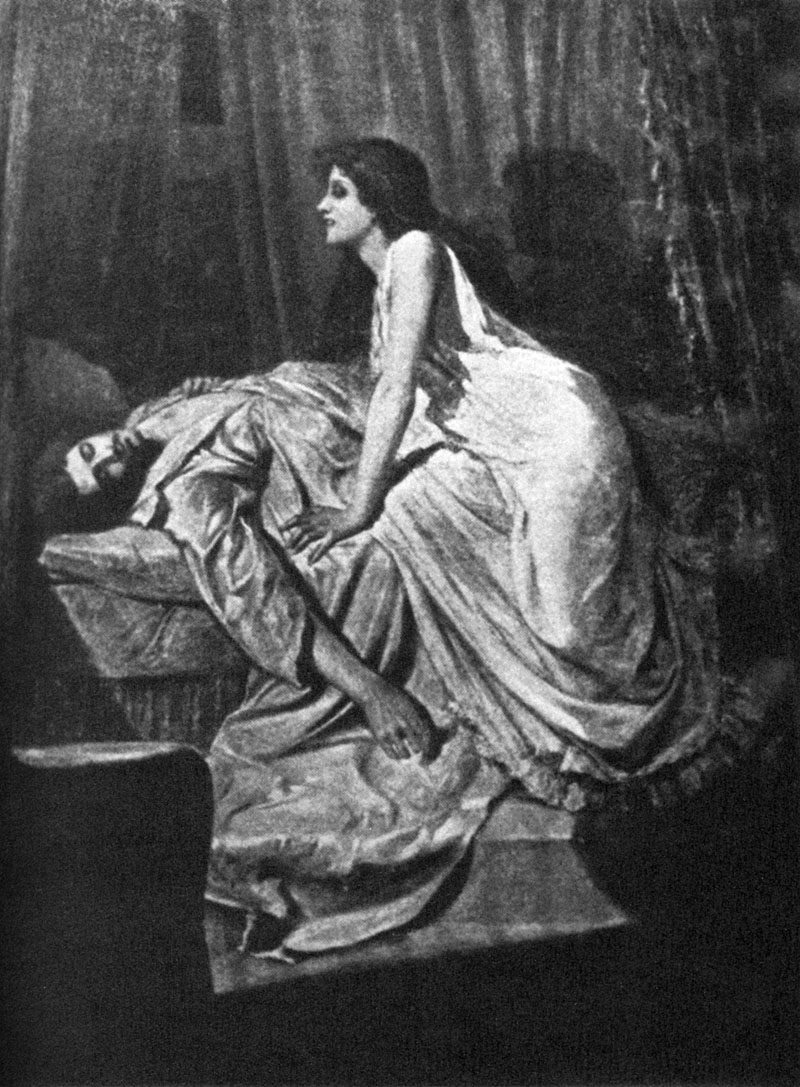
The Vampire (1897) by Philip Burne-Jones.

Two pictures of the same woman—Mrs Patrick Campbell (1865–1940)—that were regarded as scandalous in their time. Since the centenary of Bram Stoker’s death recently passed I was looking for better copies of the only painting by Philip Burne-Jones that anyone today bothers with, but the best copies to be had are in books so this is a scan from the Coulthart library. It seems the original is either lost or destroyed which makes its status as poor old Burne-Jones’ most celebrated work doubly unfortunate.

Philip Burne-Jones was the son of Edward Burne-Jones, and Burne-Jones Jr’s depiction of a predatory woman was deemed scandalous not for its content—predatory women were a common fixture of male paranoia in the 1890s—but for the rumours that its model, stage actress Mrs Patrick Campbell, and the artist, were having an affair. Mrs Patrick Campbell was born Beatrice Stella Tanner but took her first husband’s name as her stage name. Given the theme, and the fact that Burne-Jones painting was first exhibited the year that Bram Stoker’s Dracula was published, prints of The Vampire are a regular fixture in books about the cultural history of vampires in general and Dracula in particular.

beardsley.jpg

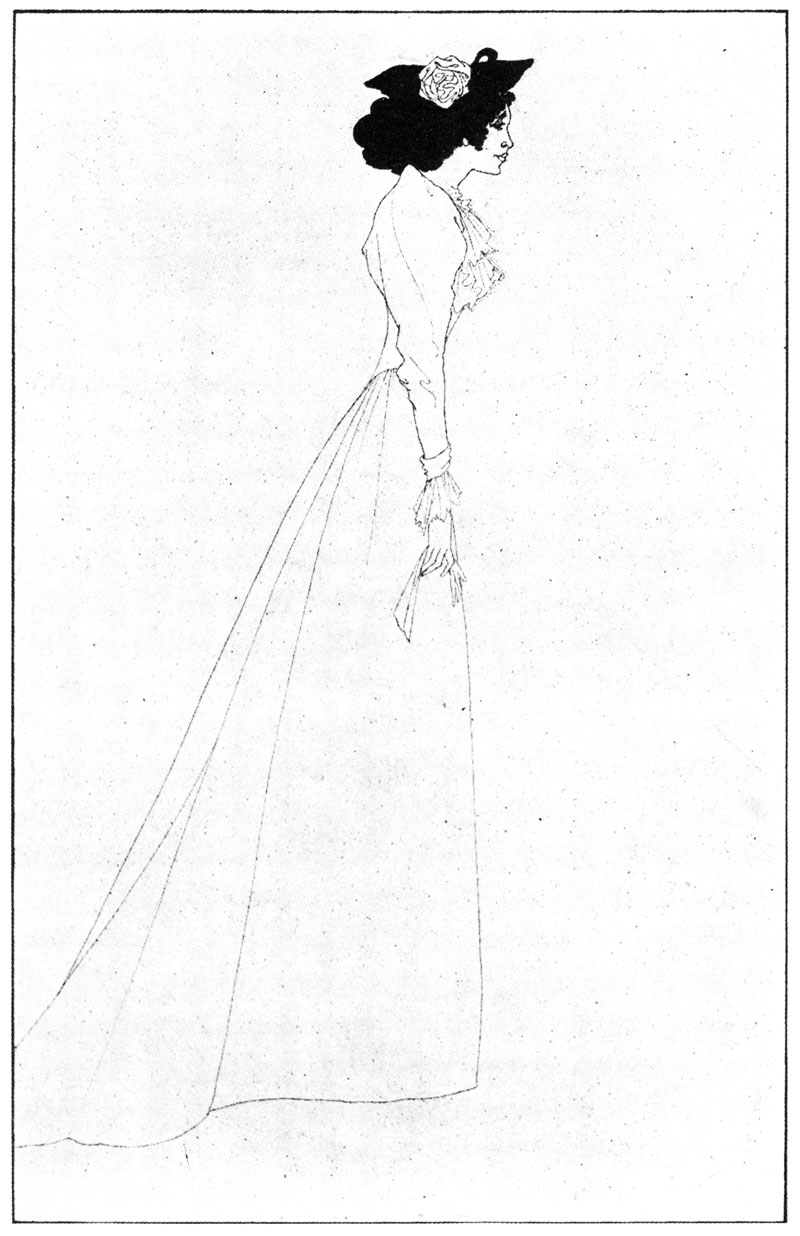
Mrs Patrick Campbell (1894) by Aubrey Beardsley. From The Yellow Book, Vol. I.

As for Aubrey’s delightful drawing, this is one of the many Beardsley pictures that caused great consternation when they were first printed yet which appear today to be quite innocuous. Beardsley’s presence in The Yellow Book, and the umbrage taken against drawings such as this, helped give that publication an edge which it lost when Beardsley was forced to leave the magazine following Oscar Wilde’s imprisonment in 1895.

Previously on { feuilleton }
Symbolist cinema
Druillet’s vampires

Weekend links 107

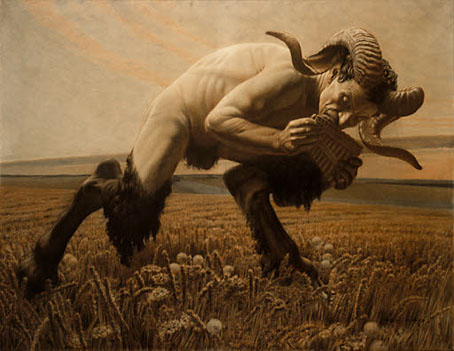
schwabe.jpg

Le Faune (1923) by Carlos Schwabe.

• “When I recently attended a conference in China, many of the presenters left their papers on the cloud—Google Docs, to be specific. You know how this story ends: they got to China and there was no Google. Shit out of luck. Their cloud-based Gmail was also unavailable, as were the cloud lockers on which they had stored their rich media presentations.” Ubuweb’s Kenneth Goldsmith on why he doesn’t trust the Cloud.

• “I’m a poet and Britain is not a land for poets anymore.” A marvellous interview with the great Lindsay Kemp at Dangerous Minds. Subjects include all that you’d hope for: Genet, Salomé, David Bowie, Ken Russell, Derek Jarman, The Wicker Man and “papier maché giant cocks”.

• “As early as the 1950s, Maurice Richardson wrote a Freudian analysis which concluded that Dracula was ‘a kind of incestuous-necrophilious, oral-anal-sadistic all-in wrestling match’.” Christopher Frayling on the Bram Stoker centenary.

Björk gets enthused by (among other things) Leonora Carrington, The Hourglass Sanatorium and Alejandro Jodorowsky’s YouTube lectures.

• Before Fritz Lang’s Metropolis there was Algol – Tragödie der Macht (1920). Strange Flowers investigates.
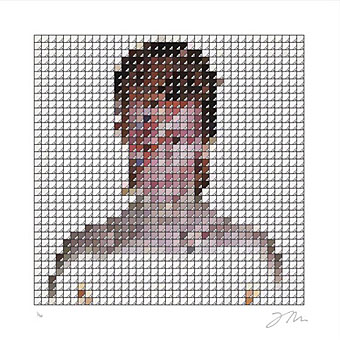
marsh.jpg

David Marsh recreates famous album covers using Adobe Illustrator’s Pantone swatches.

• New titles forthcoming from Strange Attractor Press. Related: an interview with SAP allies Cyclobe.

• 960 individual slabs of vinyl make an animated waveform for Benga’s I Will Never Change.

• An exhibition of works by Stanislav Szukalksi at Varnish Fine Art, San Francisco,

Keith Haring‘s erotic mural for the NYC LGBT Community Center is restored.

The Situationist Times (1962–1967) is resurrected at Boo-Hooray.

• Doors Closing Slowly: Derek Raymond‘s Factory Novels.

Will Wilkinson insists that fiction isn’t good for you.

• More bookplates at BibliOdyssey and 50 Watts.

The Top 25 Psychedelic Videos of All Time.

Flannery O’Connor: cartoonist.

• RIP Adam Yauch.

• Their finest moment: Sabotage (1994) by Beastie Boys.

The art of Léon Bonnat, 1833–1922

bonnat1.jpg

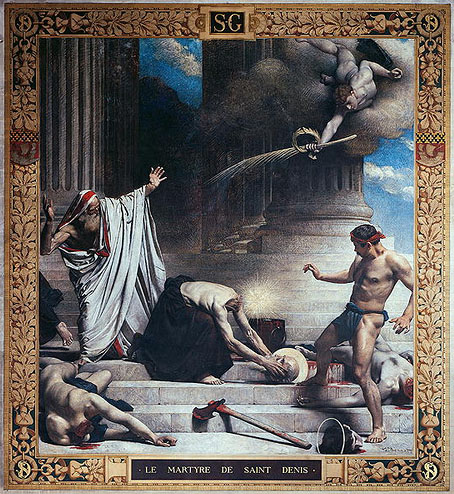
The Martyrdom of St Denis (1885).

Léon Bonnat’s depiction of St Denis reaching for his detached head might be included with St Lucy (always shown with her dish of eyeballs) and St Peter of Verona (seldom without an axe stuck in his skull) in a facetious list of Saints Do The Funniest Things. Bonnat’s gory painting can be found on a wall in the Panthéon in Paris, and is the kind of image I often keep in mind for those moments when someone wants to argue that violent imagery is a very recent thing. Academic painting at the end of the 19th century reached a pitch of photo-realism which demanded that acts of murder be shown with all the relevant blood splashes, hence St Denis and the characteristic excess of Georges Rochegrosse’s Andromaque, painted two years earlier. The 50 Watts Flickr pages have a large monochrome reproduction of Bonnat’s picture.

bonnat2.jpg

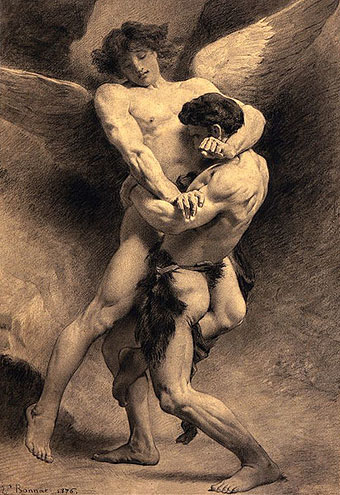
Jacob Wrestling with the Angel (1876).

It was this drawing of Jacob wrestling the angel that set me looking for more of Bonnart’s work. With the exception of a Tarzanesque painting of Samson fighting a lion there isn’t much else like this, a disappointment to those of us who can’t help but notice the Simeon Solomon-like homoerotic quality of the clinch.

Previously on { feuilleton }
Nirvana and The Conquerors

Weekend links 104

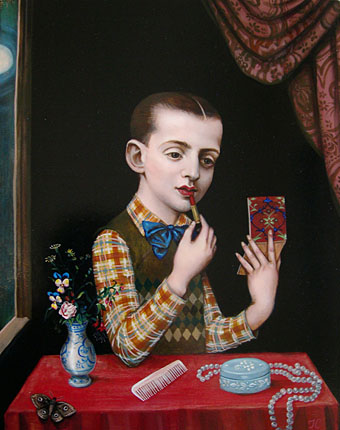
cummings.jpg

Prettiest Star (2004) by Timothy Cummings.

I Want Your Love, a feature film directed by Travis Mathews catches my attention for having been described as “the gay Shortbus” even though (as the director notes) Shortbus was pretty gay to begin with.

• I’ve always found Hans Christian Andersen’s story of The Tinderbox—a tale of spectral dogs with enormous eyes—to be rather weird. But these illustrations by Heinrich Strub for a 1956 edition beat everything.

• “From an early age, however, I became in secret the slave of certain appetites.” The line that Robert Louis Stevenson deleted from The Strange Case of Dr Jekyll and Mr Hyde.

Scientific American: Homophobes might be hidden homosexuals. Not exactly fresh news but always worth bearing in mind when someone starts ranting about those evil gays.

Minimal Wave: The 80s synth-pop underground. The Minimal Wave label releases a vinyl compilation by Hard Corps this month.

• “Blame the Victorians for making menswear boring.” Alex Jung on the endless tyranny of the suit-and-tie combination.

• Women, Vaginas and Blood: Breaking menstrual taboos with artist Sarah Maple.

London’s lost rivers (again): the hidden history of the city’s buried waterways.

Vincenzo Pacelli says the Knights of Malta murdered Caravaggio.

Street style 1906: Edward Linley Sambourne’s fashion blog.

Architectural Stationery Vignettes at BibliOdyssey.

Hans Bellmer & Unica Zürn at Ubu Gallery, NYC.

Pam Grossman admits to being a “candle hooch”.

Dirty (1986) by Hard Corps | Lost Rivers Of London (1996) by Coil | The Tinderbox (2009) by Patrick Wolf.