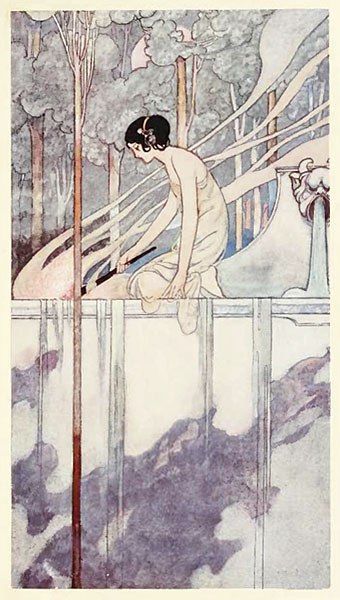
The art of Charles Robinson, 1870–1937

cr1.jpg

‘Fair and False’, Songs and Sonnets by William Shakespeare (1915).

More illustrated gems from the collection of books at the Internet Archive. Charles Robinson, as mentioned earlier, was the older brother of illustrator William Heath (there was also a third illustrator brother in the family, Thomas). Charles was so prolific it’s difficult to choose one work over the many examples available in the Internet Archive, so here’s a brief selection from different books. If you only look at one of these, his oft-reprinted edition of A Child’s Garden of Verses by Robert Louis Stevenson is especially fine. There’s a distinct Art Nouveau flavour to much of Charles Robinson’s work and he also devoted more attention to page layout than his younger brother, many of his drawings being presented within sinuous frames and augmented by some very elegant lettering. If they haven’t been digitised already at Fontcraft’s Scriptorium, some of these type designs would make great fonts.
cr6.jpg

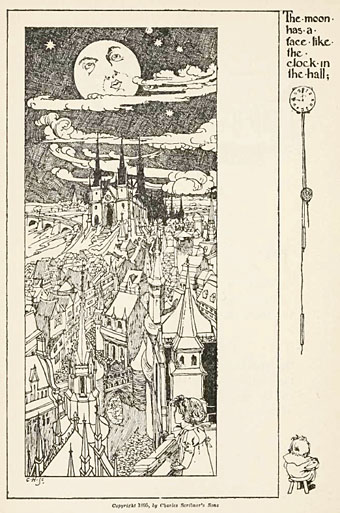
A Child’s Garden of Verses by Robert Louis Stevenson (1895).
cr4.jpg

Lullaby-land : Songs of Childhood by Eugene Field (1897).
cr2.jpg

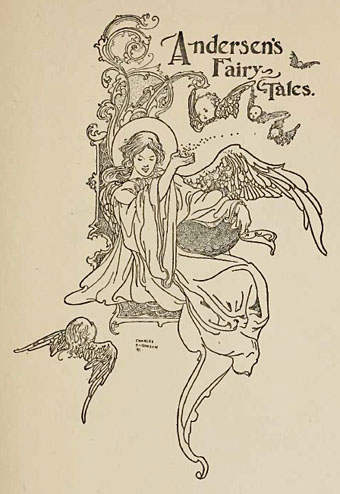
Fairy tales from Hans Christian Andersen (1899).
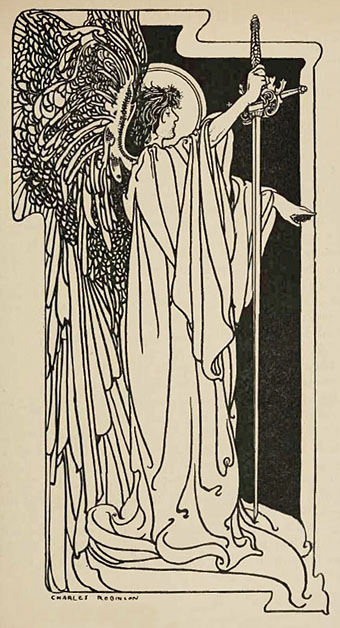
cr3.jpg

‘The Red Shoes’, Fairy tales from Hans Christian Andersen (1899).
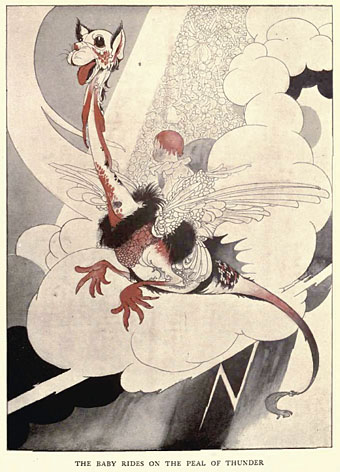
cr5.jpg

The Story of the Weathercock by Evelyn Sharp (1907).
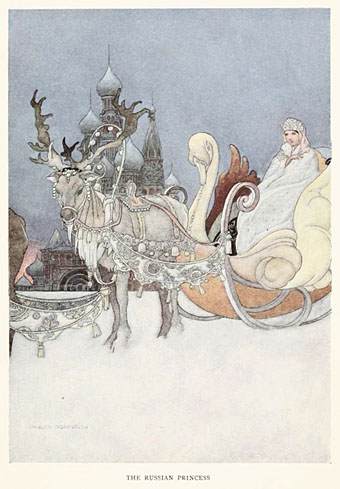
cr7.jpg

The Happy Prince and Other Tales by Oscar Wilde (1913).

Elsewhere on { feuilleton }
The illustrators archive

Derek Jarman at the Serpentine

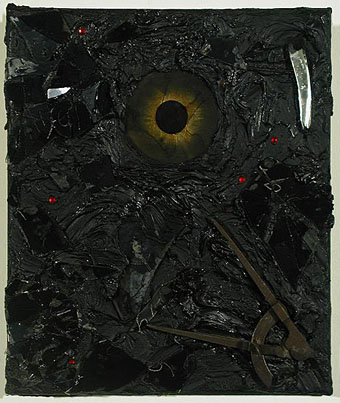
jarman.jpg

Untitled from The Black Series by Derek Jarman.

The Serpentine Gallery hosts an exhibition of Derek Jarman’s work selected by filmmaker Isaac Julian from 23 February to 13 April, 2008.

The Derek Jarman exhibition will present a selection of work by the leading British filmmaker of his generation. Curated by the celebrated artist and filmmaker Isaac Julien, it will highlight Jarman’s work in film and painting, including his pioneering presentation of the moving image within the gallery context. Jarman was arguably the single most crucial figure of British independent cinema in the 1970s, 80s and 90s. He struggled for Gay Liberation and with the impact of AIDS and lived as a participant observer, recording all that passed before him, from punk to Thatcher, Hampstead Heath to film premiere.

This exhibition is a timely reappraisal of Jarman’s work, conceived as an immersive environment by Julien, featuring rarely seen films from the Derek Jarman Super-8 archive, an installation of his film Blue, 1993, as well as a selection of his paintings. Julien has also created a series of photographic lightboxes documenting Jarman’s cottage and garden in Dungeness.

The exhibition will mark the premiere of Julien’s new film about Jarman, Derek, the centre of which is a day-long interview Jarman recorded in 1990. The film includes a narration by Tilda Swinton and clips of Jarman’s films, juxtaposed with news and footage of the current affairs from the times that this life illuminated. It is a film of Jarman’s life as well as the story of England from the 1960s to the 1980s.

The Serpentine salutes the unique genius of Derek Jarman
Derek Jarman the painter

And another piece of Jarman-related news, cinematographer David Watkin died earlier this week. Watkin photographed The Devils for Ken Russell (among many other great films of the Sixties and Seventies), a film which also featured Jarman’s striking production design. Watkin was also gay, something I wasn’t aware of until I read the Guardian’s obituary.

Elsewhere on { feuilleton }
The gay artists archive

Previously on { feuilleton }
The Angelic Conversation
The life and work of Derek Jarman

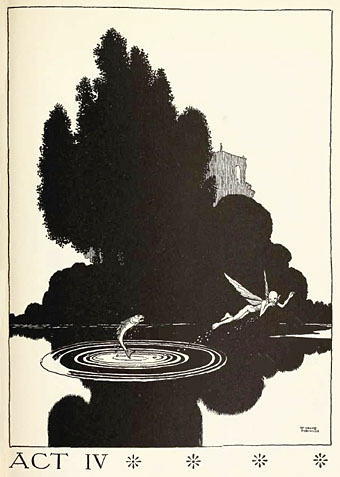
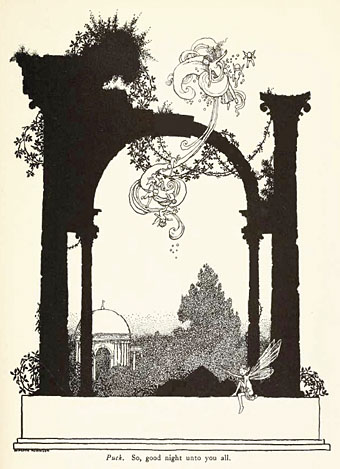
William Heath Robinson’s Midsummer Night’s Dream

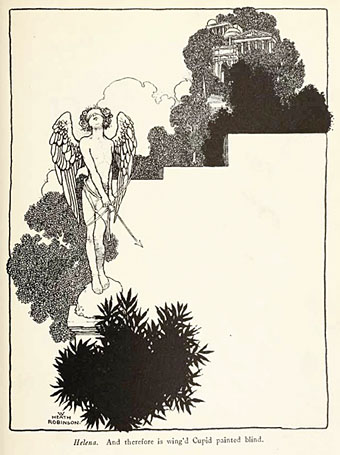
mnd1.jpg

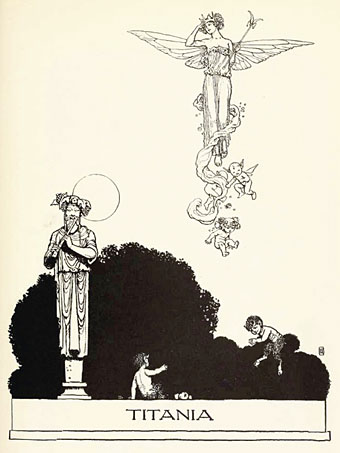
I wasn’t planning on featuring William Heath Robinson again so soon but I couldn’t resist posting some extracts from his 1914 edition of A Midsummer Night’s Dream, another great download from the scanned books at the Internet Archive. I have a few of these illustrations in a WHR monograph but I didn’t realise the book as a whole was so good. The Robinson brothers had a remarkable mastery of space in their work, no doubt derived from Beardsley but they found a way to make his expanses of black and white work for their own distinctive styles. This book, like many of those of the period, features colour plates but I much prefer Heath Robinson’s black-and-white work to his watercolours. His Poe book contains many fine drawings but his style is more suited to this Shakespeare play, especially in the depictions of clouds of fairy figures tumbling through the air.

mnd2.jpg

mnd3.jpg

mnd4.jpg

Elsewhere on { feuilleton }
The illustrators archive.

Previously on { feuilleton }
William Heath Robinson’s illustrated Poe

Yayoi Kusama

kusama.jpg

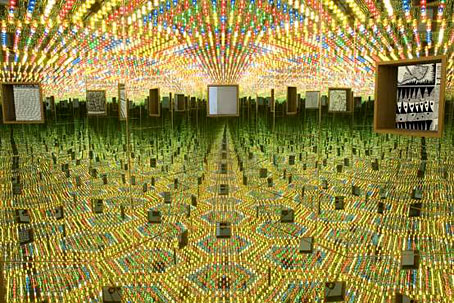
Infinity Mirrored Room—Love Forever (1994).

“It is not controversial to describe Yayoi Kusama as Japan’s greatest living artist,” says Hannah Duguid in The Independent. I made a post about Kusama’s artworks in 2006 and now her work is in exhibition at the Victoria Miro gallery, London.

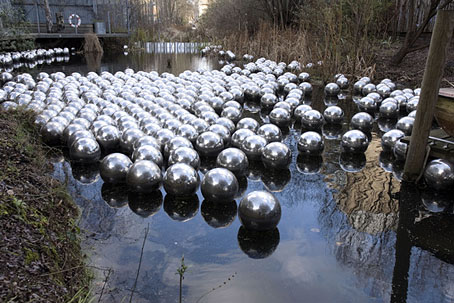
For this exhibition, revered Japanese artist Yayoi Kusama has conceived a new installation Dots Obsession—Infinity Mirrored Room (2008) especially for the upper gallery and in the lower galleries will install 50 new silkscreen works that will be shown alongside two significant sculptural pieces from the early nineties. At Victoria Miro 14 the artist will present a series of new dot paintings and an environmental installation I’m Here, but Nothing (2000-2008). The exhibition will continue outside the gallery where Kusama will install one of her most infamous works, Narcissus Garden in Regents Canal—a work which has never before been exhibited in the UK.

More pictures here. The exhibition runs until 20 March, 2008

kusama2.jpg

Narcissus Garden (1966—2008).

Previously on { feuilleton }
Maximum Silence by Giancarlo Neri
The art of Yayoi Kusama
Atomix by Nike Savvas