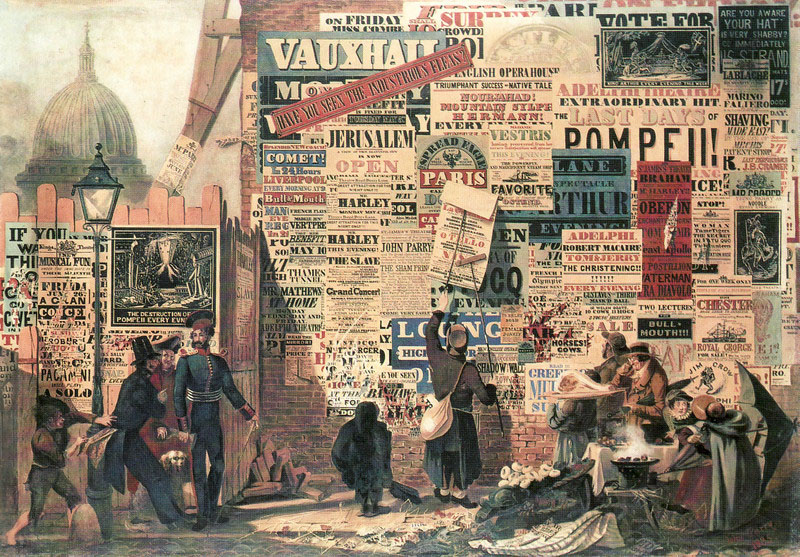
A London Street Scene

parry.jpg

A London Street Scene (1840) by John Parry.

If any painting requires the attentions of the Google Art Project it’s this depiction of a bill poster going about his work by John Orlando Parry (1810–1879). I know this from a cropped view (see here) which shows the care Parry applied to details of typography and the layering of the posters. There’s also some humour with the pickpocket boy on the left, and the artist himself as the subject of one poster in the centre of the picture. Wikipedia has a large version here but it’s too washed-out and blurred to be any use. For a view of the genuine article at work, see this LSE Library photo.

A note about the painting’s date: online sources give 1830 but the copy I have in a book from the V&A says 1840.
Watercolour ruins

roberts1.jpg

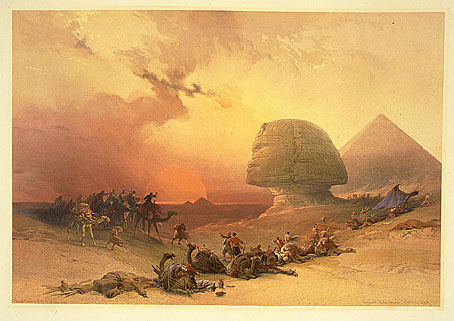
Approach of the simoom—desert of Gizeh.

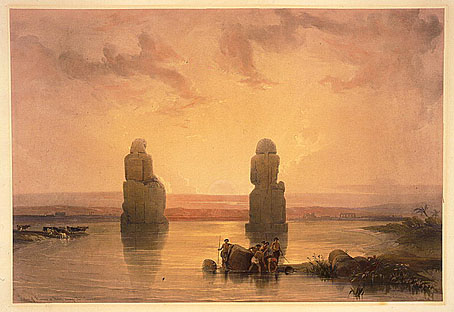
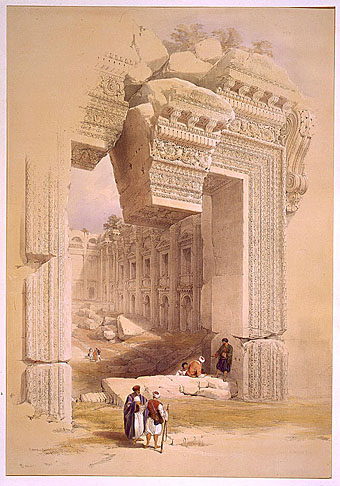
The paintings are by Scottish artist David Roberts (1796–1864) from two collections of prints of the Middle East, The Holy Land, Syria, Idumea, Arabia, Egypt and Nubia (1842–1845) and Egypt and Nubia (1846–1849). These are a small sample from many more at the Library of Congress Prints & Photographs archive, and as representations of places that most of the original viewers would never otherwise see they hold up very well beside photos of the same locations. (See this earlier post for photos of Thebes and Kom Ombo a few decades later.) I always enjoy old book illustrations of the Baalbec temple entrance for the way artists seldom resist doing the Piranesi trick of exaggerating its scale, the better to make its perilous keystone seem all the more precariously poised. The doorway is taller today (having been excavated) but less of a threat.

roberts6.jpg

Baalbec, May 7th, 1839.

roberts2.jpg

Statues of Memnon at Thebes, during the inundation.

Continue reading “Watercolour ruins”

Ver Sacrum, 1903

vs-1903-01.jpg

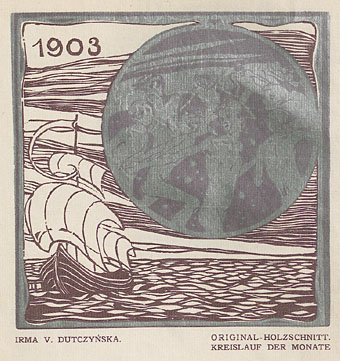
Concluding the series of posts about Ver Sacrum, the art journal of the Viennese Secession. The volume of issues for 1903 continues the bi-monthly format from the previous year only this time the calendar supplement is at the end of the volume. This was the last year for the journal, unfortunately, not least because the Secession had run its course, having perhaps proved its point in providing an alternative to the prevailing trends in Austrian art and design. Koloman Moser, Alfred Roller and Josef Hoffmann left to found the Wiener Werkstätte while Gustav Klimt, who again has an issue devoted to his drawings, went on to paint some of his most famous pictures, including The Kiss.

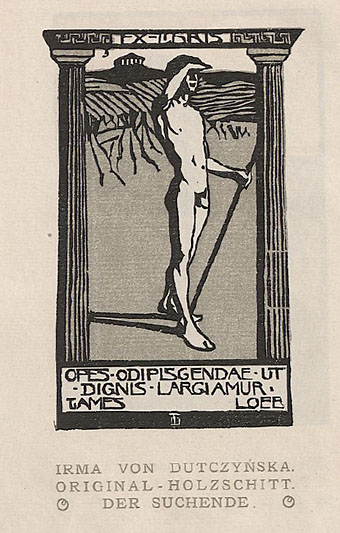
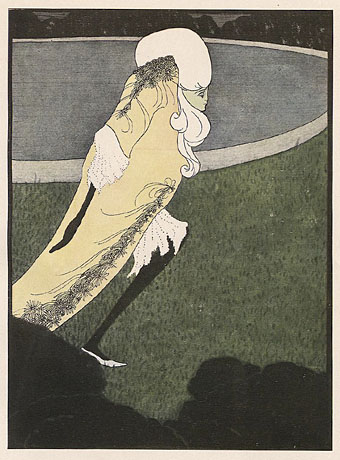
Ver Sacrum certainly ended on a high note. Most of the issues for 1903 contain woodcuts by a variety of artists with some superb examples of the form. For once there’s work by women—Irma von Dutczynska, Nora Exner and Hilde Exner—there’s more strange art from Marcus Behmer, and also a translated extract from the memorial book written by Arthur Symons following Aubrey Beardsley’s death in 1898. As before, anyone wishing to see more can browse all 498 pages or download the entire volume here.

vs-1903-02.jpg

vs-1903-03.jpg

Continue reading “Ver Sacrum, 1903”

Pogány’s Turkish fairy tales

pogany05.jpg

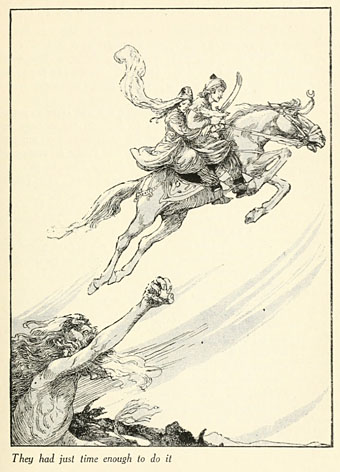
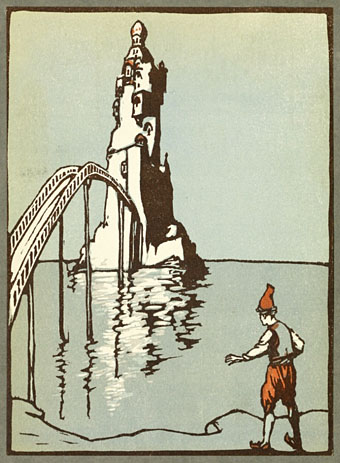
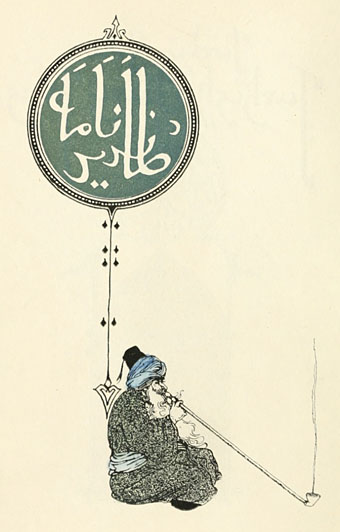
The illustrations are by Willy Pogány, the forty-four fairy tales were collected and translated by Ignácz Kunos. This wasn’t the first edition of Kunos’s book which dates back to 1889, but Pogány’s edition must be one of the most heavily illustrated, with drawings in a variety of styles throughout. The tipped-in plates look like woodcuts which is a style I’ve not seen from Pogány before. Elsewhere there are many comic demons and monsters rather like the kinds of things Sidney Sime used to enjoy inventing. And many Orientalist motifs, of course The Internet Archive copy isn’t dated but other sites give a date of 1913. This copy is also poorly hand-painted in places. Sacred Texts has the illustrations sans daubings.

pogany01.jpg

pogany02.jpg

Continue reading “Pogány’s Turkish fairy tales”

Japanese gay art

hasegawa.jpg

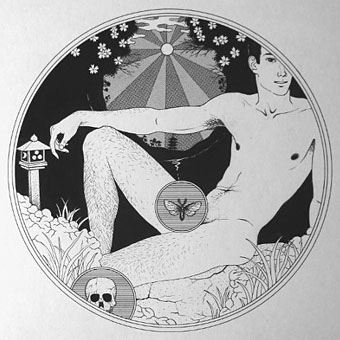
An untitled drawing by Sadao Hasegawa from Japanese Gay Art, an English-language site with a substantial collection of works by Hasegawa and others, all of which are for sale. Examples run the spectrum from Gengoroh Tagame‘s beefcake S&M to Hideki Koh‘s delicate geisha boys. Something for everyone, in other words. There are also artist interviews, and a handful of articles about this area of the Japanese art world.

Elsewhere on { feuilleton }
The gay artists archive

Previously on { feuilleton }
Gekko Hayashi: homoerotics and monsters
The art of Ben Kimura
The art of Goh Mishima, 1924–1989
The art of Hideki Koh
Secret Lives of the Samurai
The art of Sadao Hasegawa, 1945–1999
The art of Takato Yamamoto