Wildeana 7

wilde1.jpg

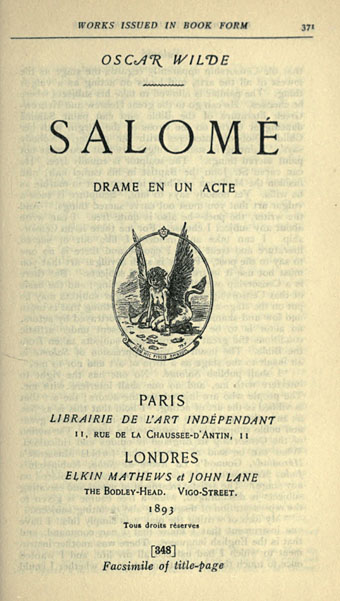
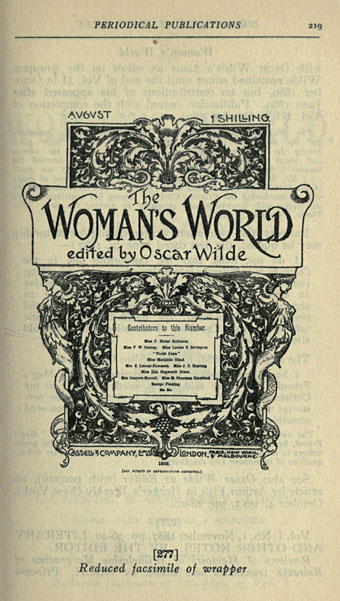
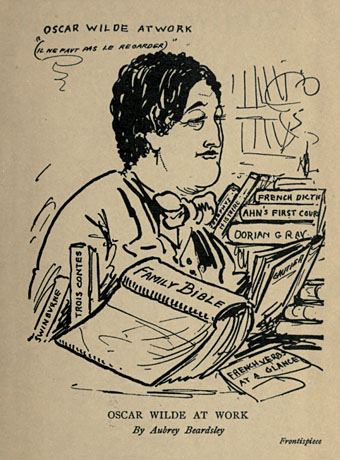
Continuing an occasional series. The drawing above is frequently credited to Aubrey Beardsley in books about Oscar Wilde but receives an “anonymous” attribution in books of Beardsley’s work. The copy here, and the pages below, are from Bibliography of Oscar Wilde (1914) by Stuart Mason.

Last November it was announced that Wilde’s lipstick-blotched tomb in Père Lachaise cemetery is to be cleaned (again) then shielded from the persistent kissers and graffiti writers by a glass screen. Flickr has a collection of photos showing the earlier condition of the tomb and its embellishments.

wilde2.jpg

• Maria Bustillos in The Vexed Posthumous Life of Oscar Wilde chronicles the story of the blue plaque on Wilde’s former home in Tite Street, London.

• “A hundred and twenty five years ago, Oscar Wilde edited a fashion magazine, his first and only office job. We have yet to learn from the experience.” Wilde in the Office by Kaya Genç.

wilde3.jpg

Elsewhere on { feuilleton }
The Oscar Wilde archive

Further echoes of Aubrey

verhagen.jpg

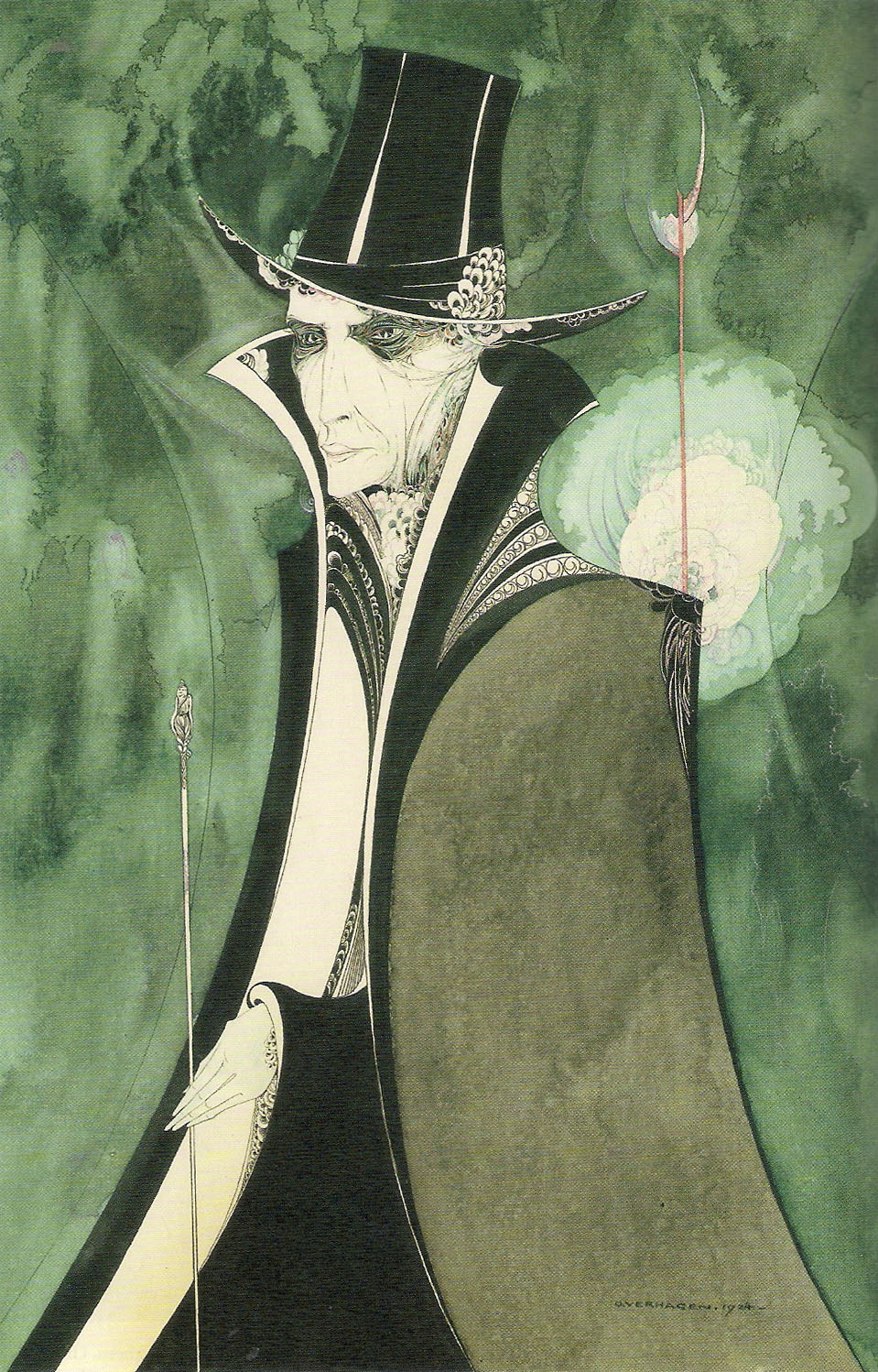
Dorian Gray (1924) by Otto Verhagen (1885–1951).

If you need an idea of the colossal impact Aubrey Beardsley’s drawing had on the art world of the 1890s consider that the entirety of his career—from his first public exposure in The Studio in 1893 to his very untimely death in 1898—lasted a mere five years. Decades afterwards artists around the world were still imitating his style. The later disciples are so numerous and so widespread it’s no surprise if some have yet to be fully acknowledged by subsequent generations. Sander Bink who maintains the Rond1900 site sent copies of these drawings (from Lopende Vuurtjes, Verloren Publishers, 2012) and provided some information about the artists:

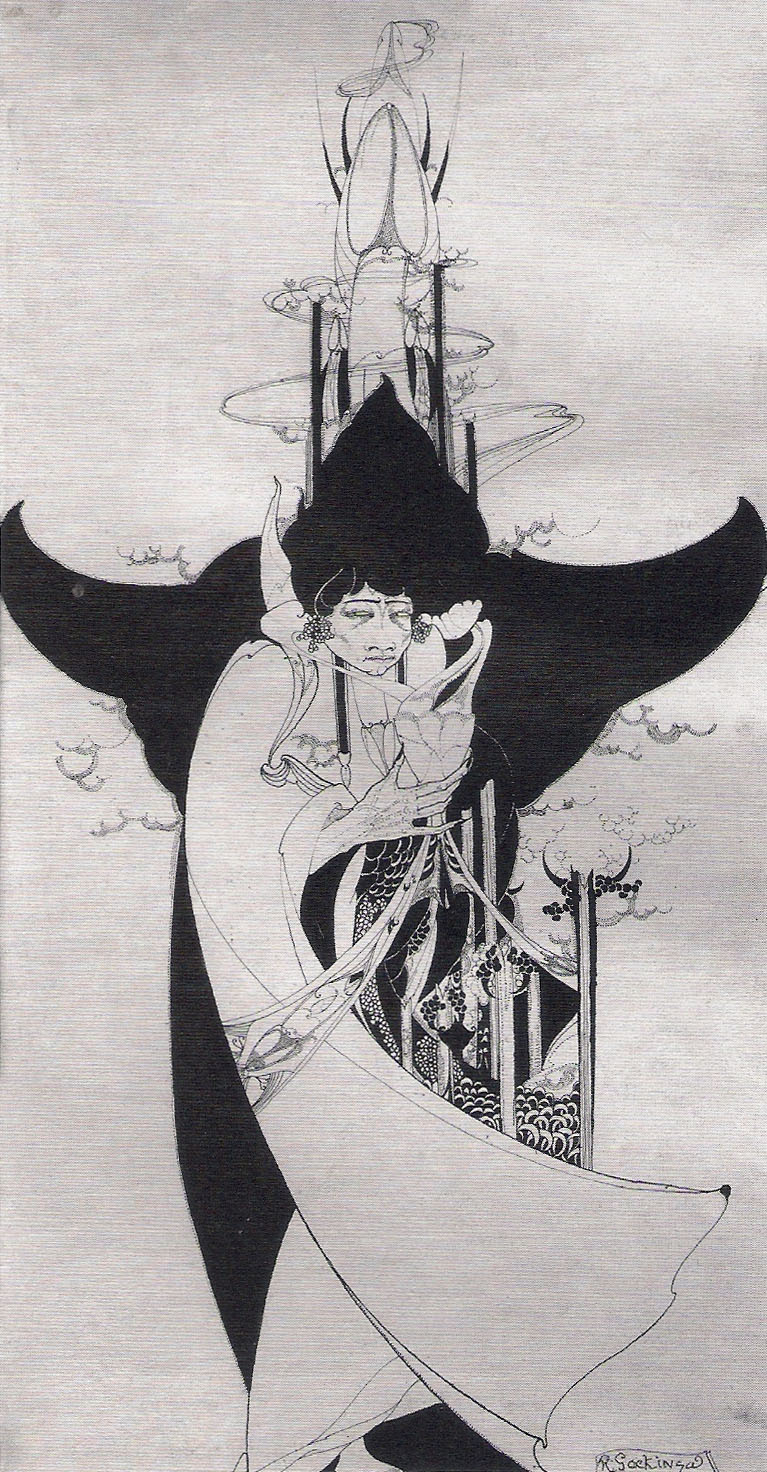
Verhagen was a government official for most of his life and seems to have led a very respected life and made his Beardsley-esque work privately, no expositions as far is I know. Gockinga appears to have led a more interesting life: born in Indonesia, lived in Holland 1908–1922, the Indonesia (Java) again, then New York, and the Indonesia and after wwii Amsterdam, probably homosexual. Had one exposition of his work in 1917.

Sander’s site has further examples of Verhagen’s drawings, and he says that both artists were probably inspired by Carel (or Karel) de Nerée, some of whose work was featured here a while back. Always good to have the dots joined. Verhagen’s Dorian Gray is a curious piece; in style it’s a little like the angular drawings that Beresford Egan was producing in the 1920s, while the subject can’t be Dorian himself unless it’s a rendering of his aged portrait. As for Gockinga’s drawing, it’s a lot more faithful to Beardsley’s early style (complete with phallic extrusions) than the poor Nichols fakes that appeared in 1919. If you want a successful forgery it’s always best to find someone with talent.

(Thanks Sander!)

gockinga.jpg

Old lady with ghost (c.1916) by René Gockinga (1893–1962).

Elsewhere on { feuilleton }
The Aubrey Beardsley archive
The illustrators archive
The Oscar Wilde archive

Weekend links 121

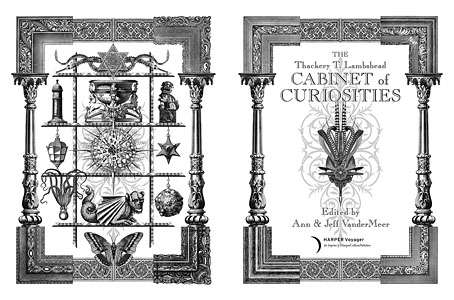
lambshead.jpg

Title spread for The Thackery T. Lambshead Cabinet of Curiosities (2011) edited by Ann & Jeff VanderMeer.

I was surprised this week to find myself nominated as Best Artist in the World Fantasy Awards. The results will be announced at the World Fantasy Convention in November. Among the books nominated for Best Anthology is the Thackery T. Lambshead Cabinet of Curiosities for which I provided title page designs and some illustrations. Editors Ann & Jeff are well-represented (and ought to win for their landmark The Weird anthology), and I’m pleased to see Mark Valentine receive a nod for his excellent Wormwood magazine. Mark and Roger Dobson published my first Lovecraft adaptation, The Haunter of the Dark, in a large-format edition under their Caermaen imprint in 1988.

I remember having a conversation with my father about it. I told him what I’d really have liked to find, in my exhaustive search of the canon, was a gay superhero. You know: fucking dudes, saving the world. Never mind the fact that superheroes, with their notoriously contour-hugging apparel, are usually assumed gay by default. I wanted something that had existed, something from history. My father considered my criteria.

“I think what you want is Gore Vidal.”

Henry Giardina on Gore Vidal’s Bully Republic at the Paris Review.

• Appreciations and memorials for the late Gore Vidal continue to surface: “He was punk rock with a traditional, smooth exterior. But there was nothing traditional about him, not really. He defied singular category,” says Aaron Tilford at Lambda Literary. “Jokes course through Vidal’s entropy-heavy commentaries like a warm, reviving current. They, more than the barbs to which they form a counterpoint, are what make his essays a continuing pleasure to read,” says “J.C.” at the TLS.

• “Winterson’s opposition to strict realism is less an artistic critique than a cultural one. She uses the term ‘realism’ to describe an entrenched way of viewing the world, which it is the writer’s duty to challenge.” Hannah Tennant-Moore on Jeanette Winterson at n+1.

The Ghosts of Bush by Robin The Fog: “A final hauntological perambulation around the hidden corners of Bush House, Aldwych, London, June 2012”.

• “For everything that is not shown, the filmmaker counts on the power of imagination of his viewers.” Lebbeus Woods on Chris Marker and La Jetée.

Joseph Burnett on “Rainbow Ambiguity: Defying conservatism in mainstream LGBT culture”.

• Leigh Brackett book and magazine covers at Golden Age Comic Book Stories.

BLDGBLOG visited the Whitechapel Bell Foundry in London.

Stilled Life: A collection of photography by Thom Ayres.

• Underground subversion: Stickers on the Central Line.

Andrei Codrescu on five favourite Fantastical Tales.

Vangelis performs an analogue synth freakout for Spanish TV in 1982 | Oro Opus Alter, a track from the forthcoming album by Ufomammut | New World, a track from the forthcoming album by The Irrepressibles. Can’t wait.

The art of Ismael Álvarez

alvarez1.jpg

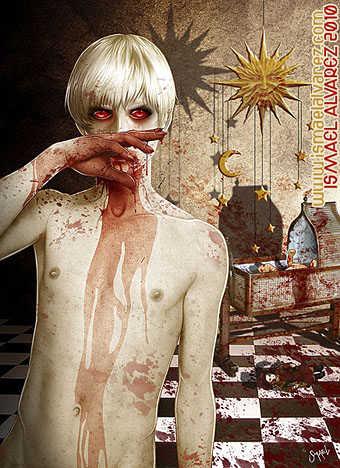
Sangre Virgen.

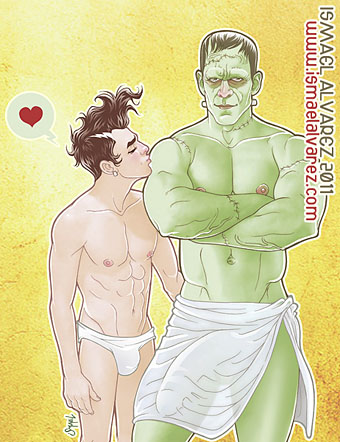
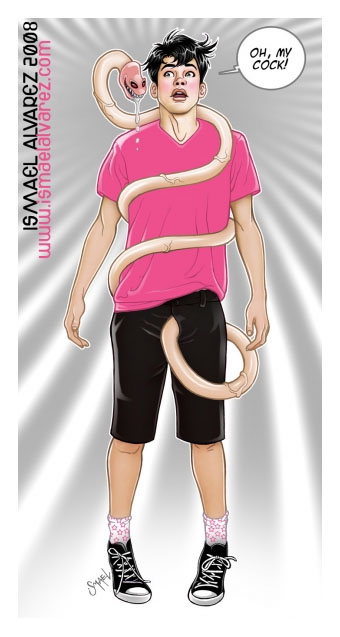
Yeah, trust me to pick the gore-drenched teen out of a gallery of otherwise wholesome drawings… Ismael Álvarez is a Spanish artist with a nice clean line, a sense of humour and an imagination that can encompass comic imagery like the pictures below or run to full-on erotica. Of the latter there’s a separate gallery replete with the Enormous Cocks that now seem de rigueur for a certain kind of gay art in the same way that Enormous Breasts are a feature of much straight erotica. I’m not complaining—heaven forbid!—merely acknowledging a trend. In addition to his art, Señor Alvarez also maintains a blog and creates his own YouTube broadcasts, all of which are of course in Spanish.

alvarez2.jpg

My boy is a monster (cock).

alvarez3.jpg

Oh My Cock.

Elsewhere on { feuilleton }
The gay artists archive

Robert Hughes, 1938–2012

hughes.jpg

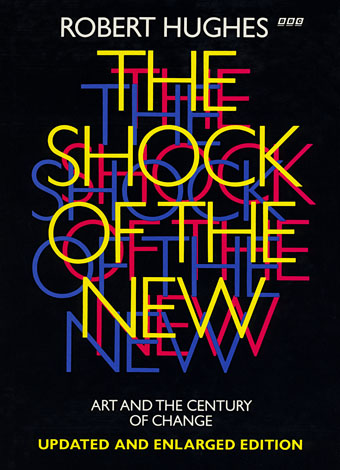
Read this book. Revised edition, 1991, no designer credited.

“Robert Hughes”: those were the first words I wrote in the first post for this blog, six years ago, referencing a piece Hughes had written about Rembrandt for the Guardian that week. Re-reading his polemic Culture of Complaint: The Fraying of America earlier this year I was feeling guilty about not having read more of his books; in slight mitigation I did watch every appearance of his on British television following The Shock of the New, and still have his American Visions series imprisoned on VHS in a box somewhere, along with The Fatal Shore, The New Shock of the New, some one-off things he did about Barcelona and Goya, and Visions of Space, a series of three films about European architects: Albert Speer, Mies van der Rohe, and Antonio Gaudi. Thanks to YouTube many of these exceptional documentaries can be given a fresh viewing; follow the links. Hughes used to write for the Guardian regularly so it’s no surprise they’ve filled several pages with memorials:

Obituary by Michael McNay
“Robert Hughes was Australia’s Dante,” says his friend Peter Carey
Robert Hughes on art
Robert Hughes quotes: 20 of the best

Elsewhere:
NYT obituary by Randy Kennedy
“Robert Hughes: The art critic with a dash of the streetfighter”: Judith Flanders at the Telegraph
At Open Culture: Remembering Robert Hughes, the Art Critic Who Took No Prisoners