Turn, Turn, Turn, a film by Jud Yalkut

yalkut.jpg

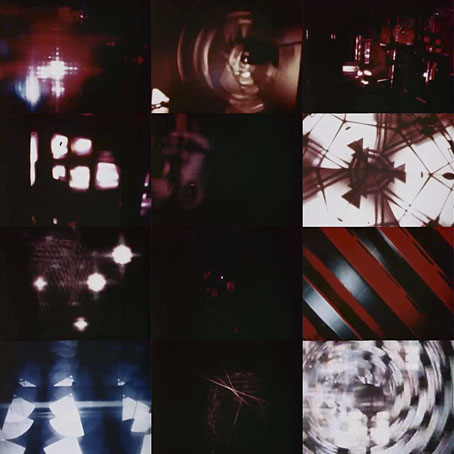
I’m currently reading my way through Rob Chapman’s lysergic doorstop Psychedelia and Other Colours, a comprehensive study of a cultural phenomenon that’s well-represented on these pages. So expect more posts like this one which concerns another gem of abstract/psychedelic cinema. Turn, Turn, Turn (1966) is a collaboration between Jud Yalkut (visuals) and the Us Company aka USCO (sound). The latter receive several mentions in Chapman’s detailing of the early psych scene in San Francisco in the mid-60s; here they put a Byrds song through the mangler while Yalkut’s mechanical and other effects flicker and gyrate. The visuals are reminiscent in places of the film made by László Moholy-Nagy of his Light-Space Modulator, fittingly so when Chapman credits Moholy-Nagy’s machine with being one of the many forerunners of psychedelia in the art movements of the early 20th century.

The YouTube copy linked here has a bonus at the end with a truncated version of a later Yalkut collaboration with Nam June Paik, Beatles Electronique.

Elsewhere on { feuilleton }
The abstract cinema archive

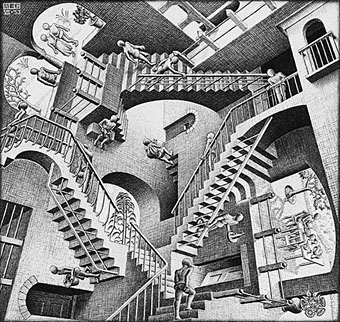
Relativity

escher1.jpg

Relativity (1953) by MC Escher.

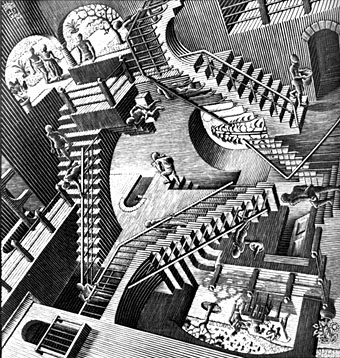
Escher’s famous lithograph has a less familiar companion piece in the woodcut below.

escher2.jpg

escher3.jpg

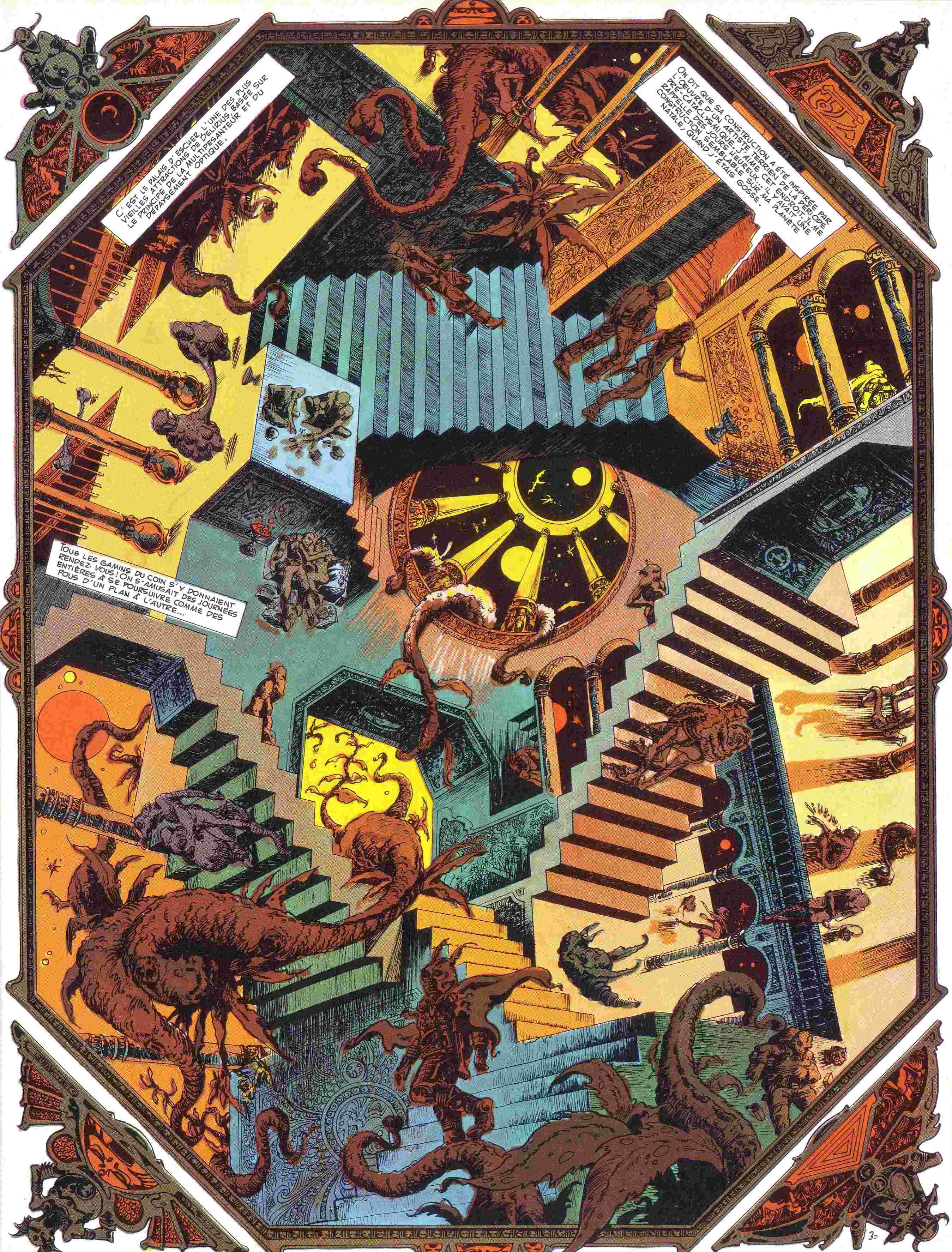
Delirius (1972) by Philippe Druillet.

Lone Sloane’s adventure on the pleasure planet of Delirius was written by Jacques Lob, and features this diversion in the Palais d’Escher. Possibly the first fictional use of one of Escher’s prints.

Continue reading “Relativity”

Hugo Steiner-Prag’s Ghostly Ballads

steinerprag01.jpg

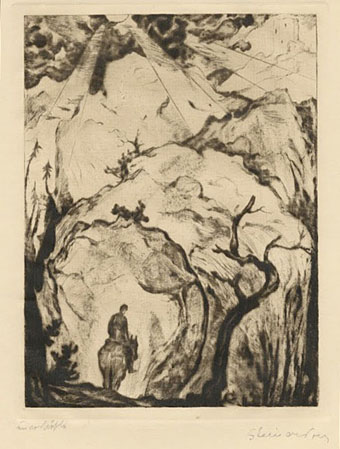
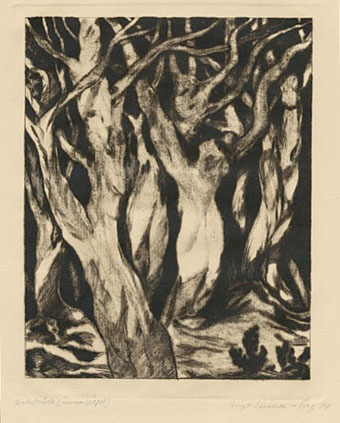
Mountain Voices.

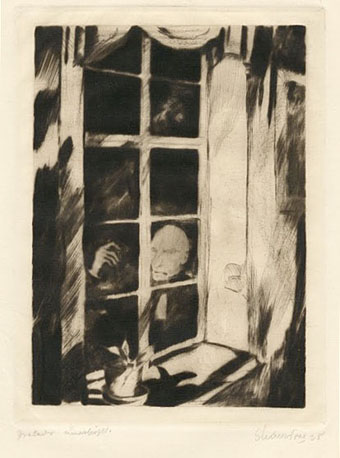
In which the illustrator of Gustav Meyrink’s The Golem illustrates six ballads or lieder by Heinrich Heine. These etchings don’t bear comparison to Steiner-Prag’s peerless Golem illustrations, or those for his illustrated Poe, but they’re good to see even if the meaning remains obscure.

steinerprag02.jpg

Man Behind a Window.

steinerprag03.jpg

The Dream.

Continue reading “Hugo Steiner-Prag’s Ghostly Ballads”

Yoshitoshi’s ghosts

yoshitoshi03.jpg

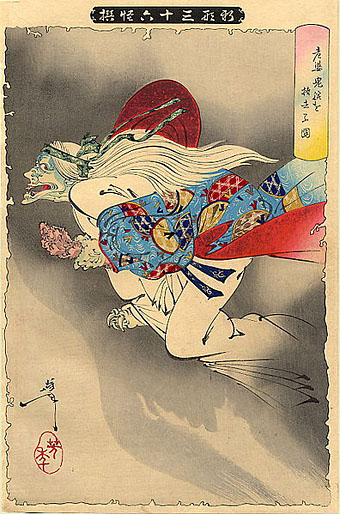
The Flying Demon (1889).

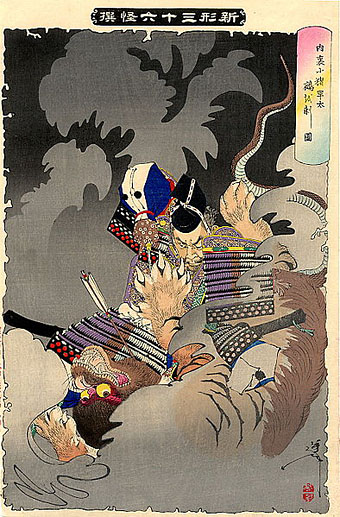
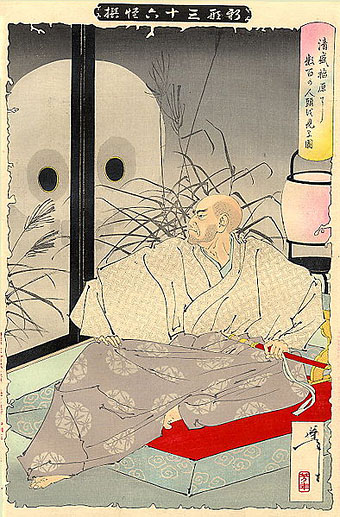
The season of mists and mellow fruitfulness is also the season of ghosts, spooks and spectres, so this post continues the Japanese trend of the past few days with a selection from New Forms of Thirty-Six Ghosts by Tsukioka Yoshitoshi (1839–1892). The more I look at Yoshitoshi’s print series the more I like them; the draughtsmanship is stunning, while the composition and graphic effects are persistently inventive. The series subjects range through portraits of warriors and generals, gory crime scenes (Twenty-Eight Famous Murders with Verses), A Collection of Desires, and One Hundred Aspects of the Moon. New Forms of Thirty-Six Ghosts was a later series produced from 1889 to 1892, and is notable as much for its demons as for its aesthetic qualities. Also of note is the frayed edges Yoshitoshi gives to each of the pictures, an effect I’ve not seen before in Japanese prints.

yoshitoshi01.jpg

The Killing of a Nue (1890).

yoshitoshi02.jpg

Skulls at Furuhara (1890).

Continue reading “Yoshitoshi’s ghosts”

Weekend links 278

sanmartin.jpg

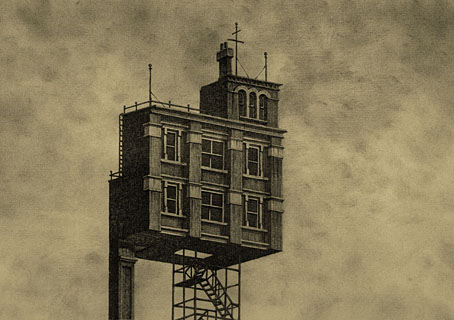
El Hotel Satina (2006) by Oscar Sanmartin.

Andrew Kötting’s By Our Selves is “a melancholy, maverick film” says David Jays. With Toby Jones following in the footsteps of poet John Clare, Iain Sinclair in a goat mask, and Alan Moore warning about the “vision sump” of Northampton.

• “Shunga means ‘spring pictures’. They depict sometimes spectacular sexual contortions and come imbued with the power of taboo. For years they have largely been out of sight—until now.” Related: shunga prints at Ukiyoe Gallery.

• “Who else could link Smokey Robinson and JG Ballard, Iggy Pop and Josephine Baker, James Bond and Stephen Sondheim, Gary Numan and Johnny Cash, Tricky and Tom Moulton…” Grace Jones is the best, says Joe Muggs.

Ballardian space – what he called “inner space” to differentiate it from the science fiction that concerned itself with distant planets and space rockets – is in fact a fusion of inner and outer space. There is no “out there” totally separate from his characters; just as there is no exclusively private, isolated inner life. His most psychologically fulfilled characters look to transcend their physical surroundings, however hostile, by embracing them.

Chris Hall on High-Rise by JG Ballard

• “In March 1984, Jorge Luis Borges began a series of radio ‘dialogues’ with the Argentinian poet and essayist Osvaldo Ferrari, which have now been translated into English for the first time.”

• “I came up with a couple of tunes, literally in my bedroom. People think of bedroom recordings as a modern, laptop invention. It wasn’t.” Daniel Miller on the accidental success of Mute Records.

• “It was in Prague that I first awoke.” Strange Flowers on Gustav Meyrink’s life in Prague.

• At 50 Watts: Stencilled ornament and illustration by William Addison Dwiggins.

• Mix of the week: The Ivy-Strangled Path Vol. X by David Colohan.

Wyrd Daze, Lvl2 Issue 4, is free and brimming with the weird.

Mythology, a new series of drawings by Howard Hardiman.

Spike Jones is the best, says MetaFilter.

Peacocks at National Geographic.

Warm Leatherette (1980) by Grace Jones | Warm Leatherette (1998) by Chicks On Speed | Warm Leatherette (2013) by Foetus