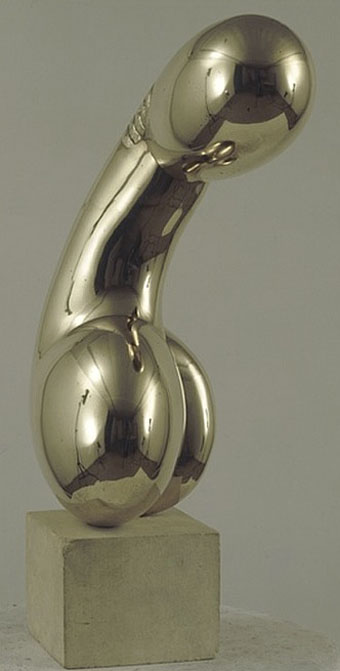
Princess X (1916) by Constantin Brancusi.
Happy new year. 02016? Read this.

The Melancholy of Departure (1916) by Giorgio de Chirico.

Merry-Go-Round (1916) by Mark Gertler.
A journal by artist and designer John Coulthart.

Art
Princess X (1916) by Constantin Brancusi.
Happy new year. 02016? Read this.
The Melancholy of Departure (1916) by Giorgio de Chirico.
Merry-Go-Round (1916) by Mark Gertler.

Kopfleisten.
A few plates by Koloman Moser from Allegorien: Neue Folge (1896), a collection of allegorical drawings, graphics and emblems by a number of artists in Moser’s circle, including Gustav Klimt, Franz Stuck and Carl Otto Czeschka. I keep hoping someone might upload a complete set of these plates but this doesn’t seem to have happened yet. Publisher and editor Martin Gerlach later commissioned Die Quelle (1901), a book of patterns and designs by Moser, several of which prefigure the tessellations of MC Escher.

Frühlingsmorgen.

Jagd.
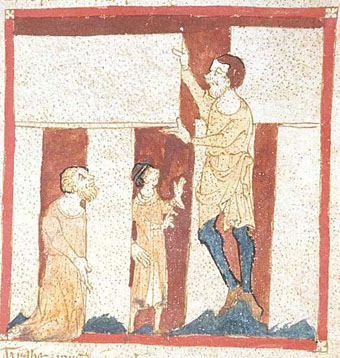
Merlin building Stonehenge (14th century) from Folio 30r of British Library, Egerton 3028.
The Arthurian magus in art and illustration. Despite the antiquity of the Arthur legend there doesn’t seem to be much early representation of Merlin outside a few drawings in old manuscripts. The British Library’s folio showing the raising of Stonehenge is the oldest known depiction of the ancient structure.
Most of the pictures here are illustrations for the Merlin and Vivien section of Tennyson’s Idylls of the King, the first book of which was published in 1859. Vivien (or Viviane, Nimue, etc) is the sorcerous Lady in the Lake who either imprisons Merlin underground or in a tree depending on whose account you read. Edward Burne-Jones’ The Beguiling of Merlin has long been my favourite of that artist’s paintings. This is only a very small selection of possible pictures, of course. A more complete catalogue would include Nicol Williamson in John Boorman’s Excalibur (1981), a performance that some find overly mannered but one that I’ve always enjoyed.
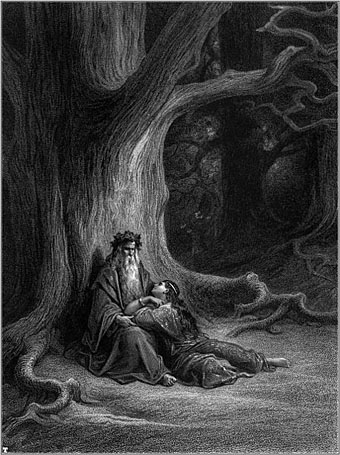
Merlin and Vivien (1867) by Gustave Doré.
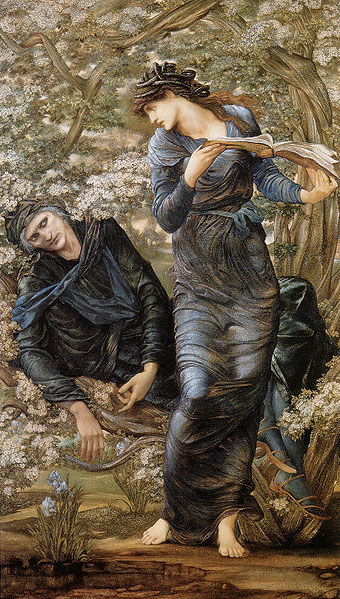
The Beguiling of Merlin (1874) by Edward Burne-Jones.

Fathomless Sounding (1932) by Gertrude Hermes.
• Over at Greydogtales (“weird fiction, weird art and even weirder lurchers”) I talk about art, design, the writing of this blog, and I also reveal more about my ongoing Axiom project. The latter currently stands at two novels, a couple of half-finished stories and a few pieces of artwork. I may be unveiling some of the art in the new year so watch this space.
• Howard Brookner’s Burroughs: The Movie (1983), a definitive film portrait of William Burroughs, is released at last on DVD/Blu-ray. US-only for the moment but further releases elsewhere are promised. The director’s nephew, Aaron Brookner, has a documentary about his uncle released next year.
• “…beautifully articulated bawdiness, perverse pleasures and a radical, though nondidactic, political view.” Melissa Anderson reviews Boyd McDonald’s Cruising the Movies: A Sexual Guide to Oldies.
The crisis, as Ellis and Silk tell it, is the wildly speculative nature of modern physics theories, which they say reflects a dangerous departure from the scientific method. Many of today’s theorists — chief among them the proponents of string theory and the multiverse hypothesis — appear convinced of their ideas on the grounds that they are beautiful or logically compelling, despite the impossibility of testing them. Ellis and Silk accused these theorists of “moving the goalposts” of science and blurring the line between physics and pseudoscience. “The imprimatur of science should be awarded only to a theory that is testable,” Ellis and Silk wrote, thereby disqualifying most of the leading theories of the past 40 years. “Only then can we defend science from attack.”
Natalie Wolchover on A Fight for the Soul of Science
• Mixes of the week: A mix by Front & Follow, and The Ivy-Strangled Path Vol. XIV by David Colohan.
• “Psychedelics can’t be tested using conventional clinical trials,” says Nicolas Langlitz.
• At Dangerous Minds: Ralph Steadman illustrates Ray Bradbury’s Fahrenheit 451.
• Why does Moby-Dick (sometimes) have a hyphen? Erin Blakemore investigates.
• My thanks again to Dennis Cooper for including this blog on his year-end list.
• Cian Traynor was given 20 minutes to ask Ennio Morricone some questions.
• Lolita at 60: Ten writers reconsider Nabokov’s novel, page by page.
• At Ballardian: High-Rise: Wheatley vs Cronenberg.
• Poison Ivy: The Queen of Psychobilly Punk
• The Cinema of Hotels: a list
• Moby Dick (1970) by Led Zeppelin | William Burroughs Don’t Play Guitar (1996) by Islamic Diggers | Physical (2001) by Goldfrapp
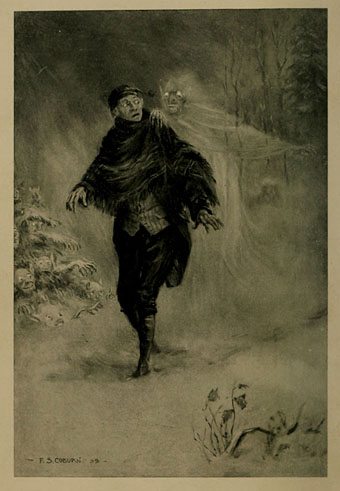
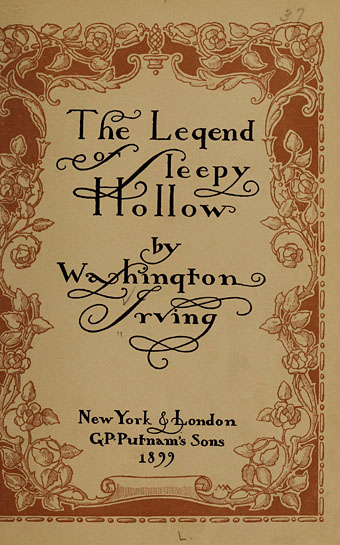
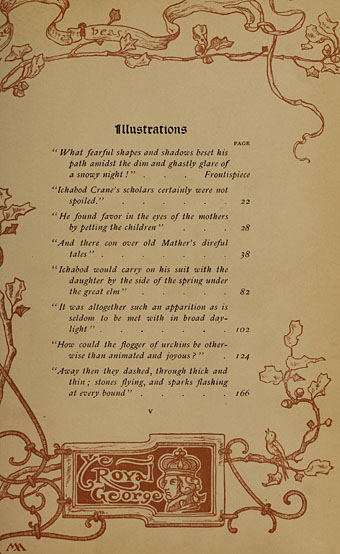
Washington Irving’s ghost story is illustrated by Frederick Simpson Coburn for an 1899 edition, with page decorations by celebrated book designer Margaret Armstrong. Coburn’s gloomy plates don’t look so good in this scanned copy but he also produced the many spot illustrations that run through the book. See the rest of the pages here.