After Beardsley by Ryan Cho

cho.jpg

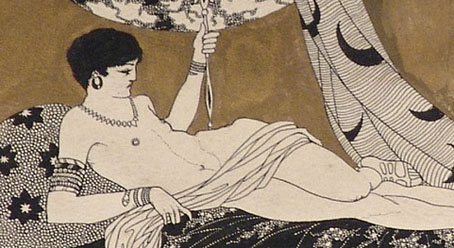
One of the posts last week concerned a swipe from Harry Clarke by an unknown illustrator. This Beardsley pastiche came to my attention shortly after the Clarke discovery, not a swipe but a deliberate exercise by American illustrator Ryan Cho in adopting the Beardsley style. It took some effort to trace the origin of Cho’s drawing since this is one of many similar works proliferating via Tumblr and Pinterest in which the credit goes to Beardsley himself. Cho’s exercise was one of a series following the styles of different artists and illustrators. In addition to another Beardsley drawing there’s also a couple of less successful attempts to pastiche Harry Clarke; having attempted a Clarke pastiche myself I can testify to the scale of the challenge. More of Ryan Cho’s work may be seen here.

Elsewhere on { feuilleton }
The Aubrey Beardsley archive
The illustrators archive

Copying Clarke

clarke.jpg

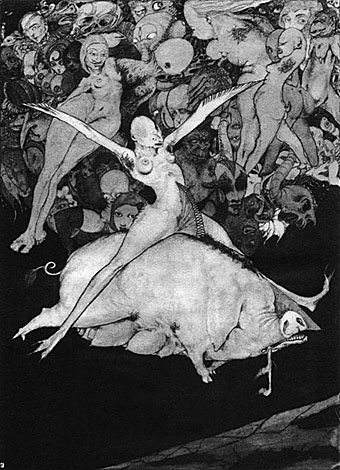
“On to the brocken the witches are flocking.” From Faust (1925) by Harry Clarke.

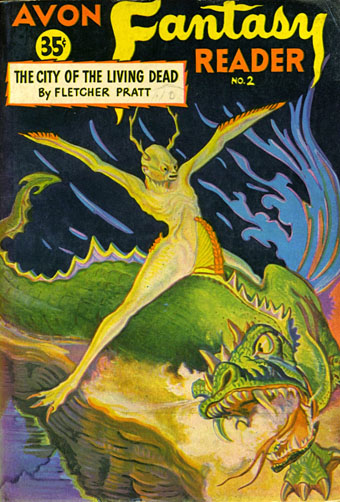
Spotted earlier this week, a rather blatant swipe from Harry Clarke’s Faust by an unknown cover artist for the Avon Fantasy Reader. Such borrowings weren’t uncommon in the pulp magazines—the pressure of deadlines no doubt encouraged them—and I’ve logged a couple of other examples in the past, here and here. Clarke’s scene shows a crowd of his mutated witches flaunting themselves in a manner that was too strong for a fantasy magazine. The Avon cover is probably illustrating The Day of the Dragon (1934), a novelette by Guy Endore. Everything in this edition was a reprint, and among the contents there’s also The Yellow Sign by Robert Chambers.

avon.jpg

Avon Fantasy Reader, No. 2, 1947.

Previously on { feuilleton }
Harry Clarke’s Fairy Tales of Charles Perrault
Harry Clarke in colour
The Tinderbox
Harry Clarke and the Elixir of Life
Cardwell Higgins versus Harry Clarke
Modern book illustrators, 1914
Illustrating Poe #3: Harry Clarke
Strangest Genius: The Stained Glass of Harry Clarke
Harry Clarke’s stained glass
Harry Clarke’s The Year’s at the Spring
The art of Harry Clarke, 1889–1931

A few more Salomés

benner.jpg

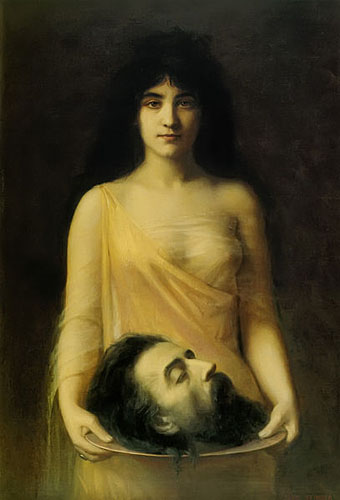
Jean Benner (1899).

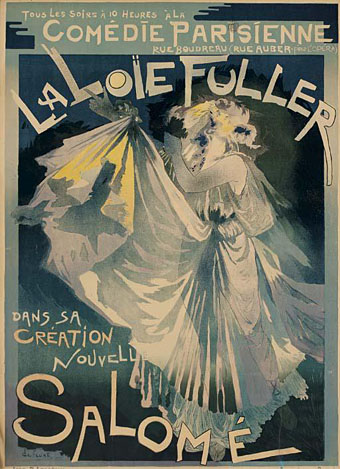
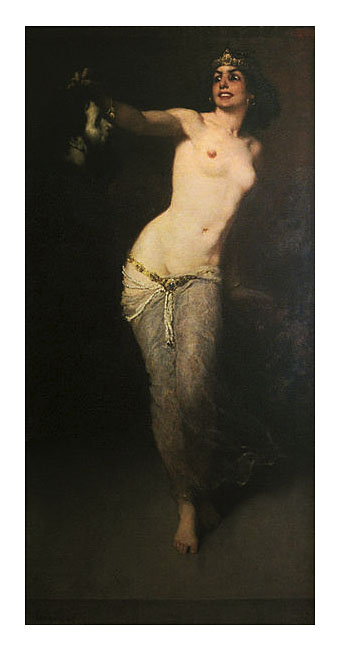
I’ve not done a Salomé post for a while so here’s another handful of different interpretations. The most interesting ones are the two most recent: a drawing by Barry Windsor Smith I’d not seen before (undated but it looks like his work from the 1980s), and a great piece by Paula Andrade that can also be seen in a black-and-white version here.

fuller.jpg

Georges De Feure (1900).

eder.jpg

Gyula Eder (1907).

Continue reading “A few more Salomés”

René Gockinga revisited

gockinga1.jpg

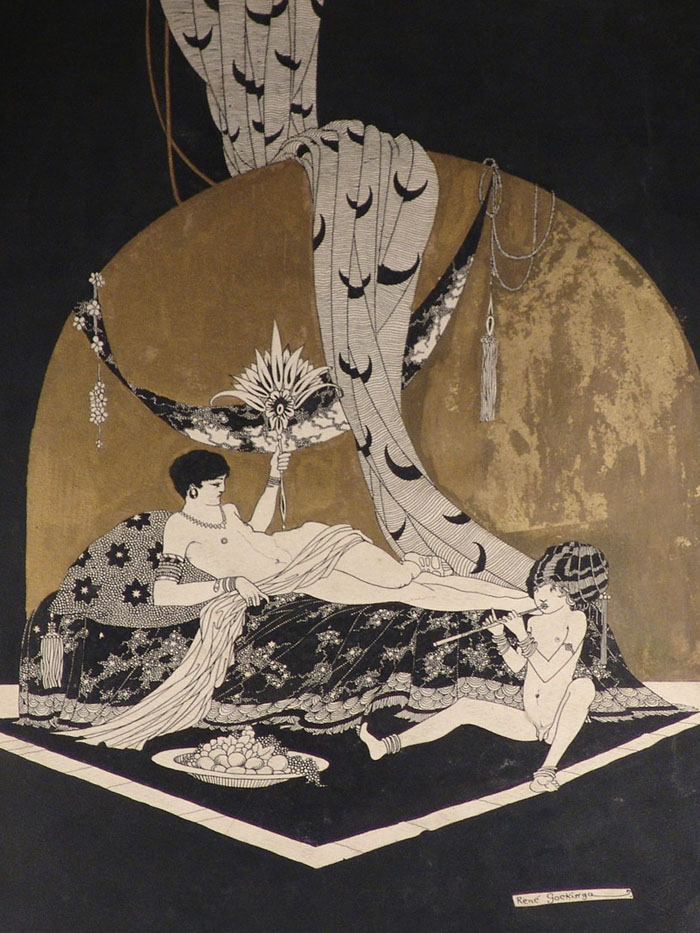
Presenting another guest post by Sander Bink concerning drawings by Dutch artists from the early decades of the 20th century, several of which show a distinct Beardsley influence. There’s also more than a little Harry Clarke in some of the details, especially the large Salomé picture below. Sander examines the provenance.

* * *

In our ongoing research into the influence of Aubrey Beardsley and Carel de Nerée in Dutch art of the early twentieth century, René Gockinga must be one of the most elusive. We wrote about him earlier but in the meantime we spoke to someone who has known him in the latter years of his life (he died 1962 in Amsterdam), she could not tell us more about the whereabouts of his early Beardsley-esque works. His more traditional Indonesian paintings from the 1930s sometime turn up at auction and I have also seen some samples of his post-WWII abstract paintings.

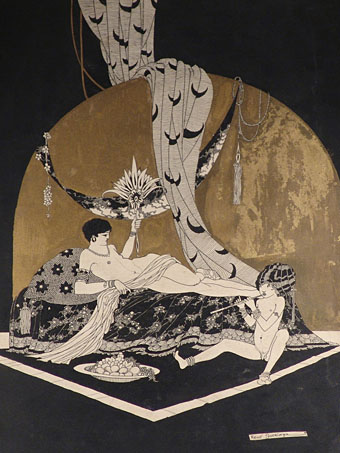
But of course, it’s the early, ‘decadent’ work, we’re most interested in. The RKD (Netherlands Institute of Art History) has pictures of about five of these, for the time being, lost drawings. So the Klein portrait was of course a great find. We were quite content and never dreamed of finding more unknown Gockinga’s (we do not know the whereabouts of the Salomé reproduced in the earlier post).

So one can image our surprise when we recently received an email from an art lover from Florida who had stumbled upon three drawings by Gockinga. At an Atlanta, Georgia antique show of all places! But then again: Gockinga has lived in New York from 1924 till 1932 or possibly 1938. At some point he might have sold his early work?

However it is, these are great and as far as we know never before seen examples of a quite talented but also quite obscure and neglected Dutch artist from the period. I suspect the main reason for this neglect could be due to the nature of his work which was probably too homo-erotic and pornographic for the (Dutch) public. As far as we know, he only had one exhibition where his Beardsley- and De Nerée influenced work was shown. That took place summer 1917 at the d’Audretsch gallery, The Hague. This  gallery which owned a large collection of work by De Nerée and Gockinga must have seen his work there. Otherwise they could have seen his work someplace else at the early De Nerée exhibitions which took place 1910–1917.
gockinga2.jpg

In the first drawing presented here the De Nerée influence is apparent in the use of the golden painted background, a technique De Nerée applied in several works from around 1903, like La Promeneuse (below; collection Meentwijck).

Continue reading “René Gockinga revisited”

Laurence Housman’s The Sensitive Plant

sensitive02.jpg

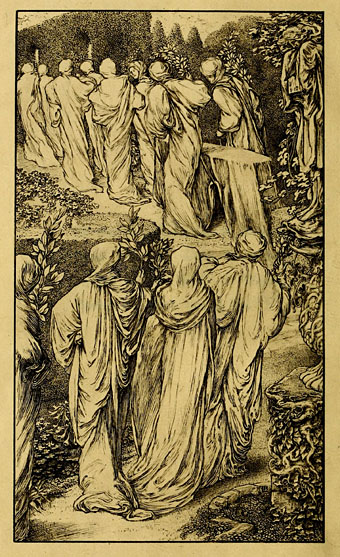
Shelley’s The Sensitive Plant is a lengthy poem written after the death of Percy and Mary Shelley’s first child. Laurence Housman illustrates the sombre garden scenes in a minutely detailed manner, and manages to incorporate some concerns of his own. Pan isn’t mentioned in the poem but Housman adds a Pan figure which he describes in a note as “the garden deity”, and a symbol of nature untamed.

sensitive01.jpg

sensitive03.jpg

Continue reading “Laurence Housman’s The Sensitive Plant”