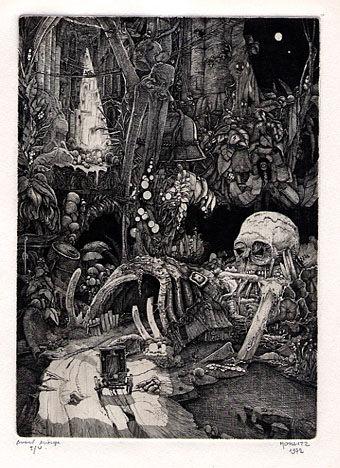
The art of Philippe Mohlitz

mohlitz3.jpg

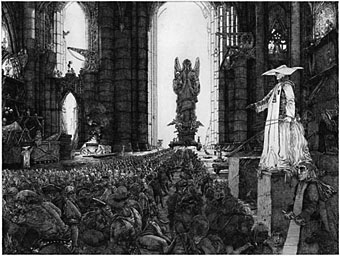
Planche où je me suis perdu (1972).
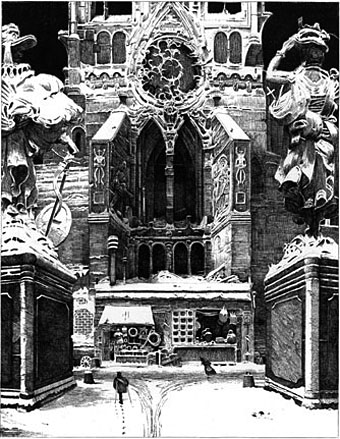
mohlitz1.jpg

31 Decembre (1982).

mohlitz2.jpg

Batir (1989).

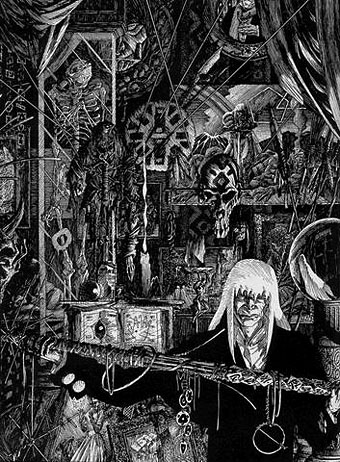
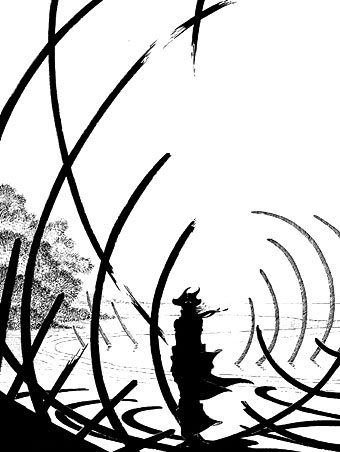
Recipient of the Grand Prix L.G. Baudry 2000, Philippe Mohlitz is well known to printmakers and collectors for having spectacularly rescued the art of copper engraving from a long period of increasingly stiff and stylized treatment. A true virtuoso of the burin (engraving tool), Mohlitz has restored a freedom of line to the medium not seen for centuries. In his best work he achieves a flow of light, particularly difficult to render in engraving, reminiscent of Dürer’s “St. Jerome in his Study”. The artist’s imagination, moreover, is equal to his technique, with fantastic visions which fascinate in both composition and detail.

Frustratingly small reproductions of what appear to be very detailed engravings here and here. Slightly larger images gathered here.

Update: another gallery of pictures at Velly.org.

Elsewhere on { feuilleton }
The etching and engraving archive

Angels 4: Fallen angels

delville_satan.jpg

The Treasures of Satan by Jean Delville (1894).

Some more favourite paintings today. Jean Delville produced a splendidly strange portrayal of Satan as an undersea monarch lording it over a sprawl of intoxicated, naked figures. When Savoy Books decided to put together the definitive version of David Lindsay’s equally strange fantasy novel, A Voyage to Arcturus, I felt this was the only painting adequate to the task of filling out the cover. That was in 2002; a year later Gollancz used the same painting on the cover of their Fantasy Masterworks paperback edition of the book. Lindsay’s book has been plagued by bad cover art for years so we managed to raise the bar for future editions. Delville was one of the great painters of the Symbolist school, all his work is worth looking at.

There are numerous representations of Lucifer but Franz Stuck’s is especially striking and apparently caused viewers to cross themselves before it when it was first exhibited.

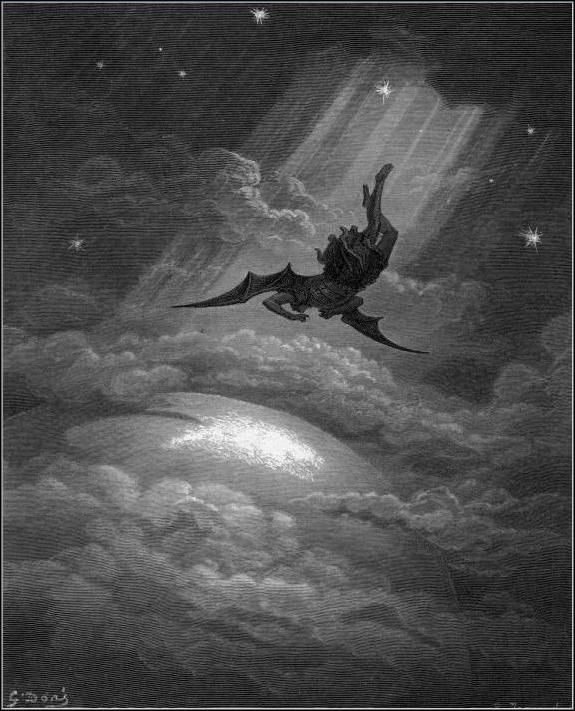
Gustave Doré’s tumbling figure is from his illustrated edition of Paradise Lost, a book full of armour-clad, spiky-winged angels. Some of those wings have even found their way into my work via the miracle of Photoshop.

stuck_lucifer.jpg

Lucifer by Franz Stuck (1890).

dore_lucifer.jpg

Paradise Lost by Gustave Doré (1866).

Elsewhere on { feuilleton }
The etching and engraving archive

Previously on { feuilleton }
The art of Thomas Häfner, 1928–1985

The art of Andreas Martens

rork1.jpg

rork2.jpg

Andreas Martens, artist of Rork.

A native of Germany, Andreas (Andreas Martens (1951- ) studied at the St. Luc comics school in Belgium, assisting Eddy Paape on Udolfo, before relocating to France. His genre series include Arq, Cromwell Stone, Cyrrus, Rork and its spin-off, Capricorne, as well as a number of single works such as La Caverne du Souvenir (The Cave of Memory), Coutoo, Dérives (Adrift), Aztèques, and Révélations Posthumes (Posthumous Revelations).

Previously on { feuilleton }
The art of Harry Clarke, 1889–1931

The art of Virgil Finlay, 1914–1971

finlay1.jpg

Mrs Amworth.

Another great artist of the macabre and supernatural, Virgil Finlay was the one of the most talented and imaginative illustrators of his generation. Unlike older contemporaries such as Joseph Leyendecker, who became wealthy producing elegant yet often bland advertising art, much of Finlay’s best work was for pulp magazines like Weird Tales and Amazing Stories which paid a pittance and printed his finely-hatched scratchboard drawings on the cheapest paper. The advantages to this work, such as they were, came in the access to a huge and appreciative audience, and the chance to provide the first illustrations for what would turn out to be classic genre stories. Finlay illustrated a number of HP Lovecraft’s tales and received the highest praise from the author in doing so. His illustration for Lovecraft’s The Thing on the Doorstep (below) contains a slight nod to Harry Clarke’s Valdemar picture (see previous post) with its distant, highlighted doorway, a detail that Clarke himself borrowed from the celebrated Las Meninas by Velázquez.

Therionweb has five galleries of Finlay’s pictures and Bud Plant again has a brief biography.

finlay2.jpg

Abercrombie Station.

finlay3.jpg

The Thing on the Doorstep.

finlay4.jpg

Six and Ten.

Elsewhere on { feuilleton }
The illustrators archive

The art of Harry Clarke, 1889–1931

hc1.jpg

The Masque of the Red Death.

Halloween approaches so let’s consider the finest illustrator of Edgar Allan Poe’s stories, Irish artist Harry Clarke. Aubrey Beardsley once declared “I am grotesque or I am nothing” yet even his grotesquery—which could be considerable—struggled to do justice to Poe. Clarke, the best of the post-Beardsley illustrators, found a perfect match in the Boston writer’s Tales of Mystery and Imagination, his edition being published by Harrap in 1919. He could decorate fairy tales with the best of the great Edwardian book illustrators but a flair for the morbid blossomed when he found Poe. Only his later masterpiece, Goethe’s Faust, improved on the dark splendour of these drawings. “Never before have these marvellous tales been visually interpreted with such flesh-creeping, brain-tainting illusions of horror, terror and the unspeakable” wrote a critic in The Studio.

Lots more pictures at Grandma’s Graphics (although none of the colour plates, unfortunately) including many of the Faust drawings. Wikipedia has photos of some of Clarke’s incredible stained-glass windows, as does Bud Plant’s biography page.

hc2.jpg

Ligeia.

hc3.jpg

The Facts in the Case of M. Valdemar.

Elsewhere on { feuilleton }
The illustrators archive