William Heath Robinson’s illustrated Poe

whr1.jpg

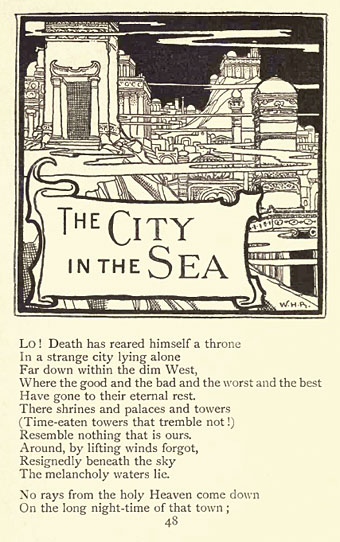
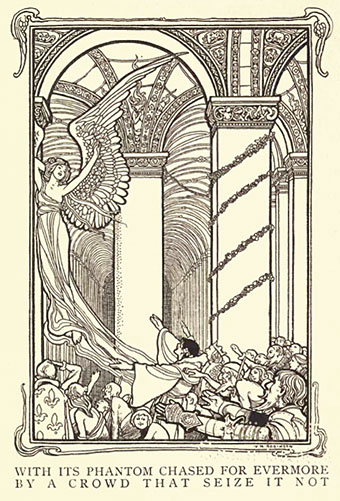
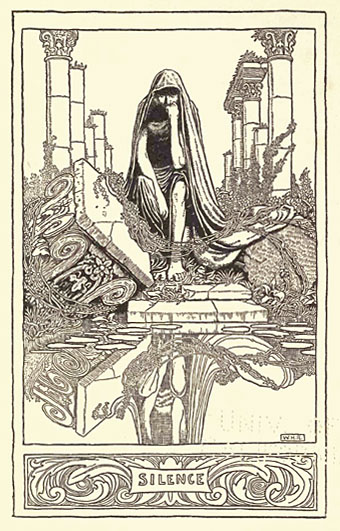
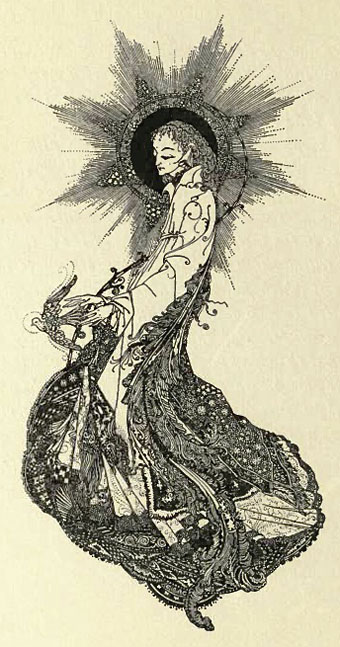
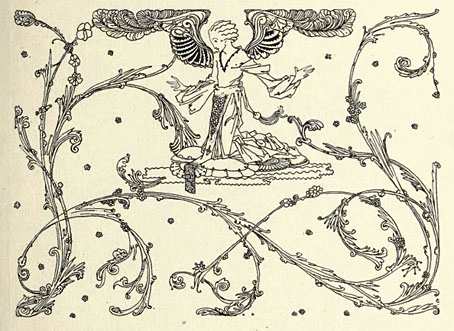
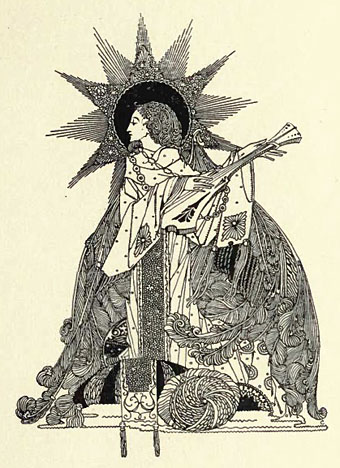
Another gem from the Internet Archive collection of scans from North American libraries. This edition of the poems of Edgar Allan Poe from 1900 was illustrated by William Heath Robinson (1872–1944), an artist whose later drawings of quirky inventions have completely overshadowed his earlier books, as well as the work of his equally talented older brother, Charles. I’m probably in the minority in preferring Heath Robinson’s book illustration to his later works, and this edition of Poe is a superb example of his mastery of line and space. It can’t compete with Harry Clarke’s Poe, of course, but then neither can anything else. WHR wasn’t really suited to the darker side of literature but he acquits himself here far better than Arthur Rackham did when he attempted his own Poe collection in 1935.

Bud Plant’s W Heath Robinson page
W. Heath Robinson’s fairy tale illustrations

whr2.jpg

The Conqueror Worm.

whr3.jpg

Elsewhere on { feuilleton }
The illustrators archive

Austin Spare’s Behind the Veil

spare.jpg

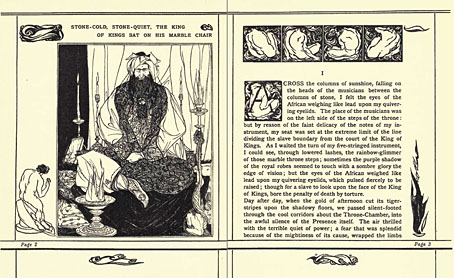
Another Internet Archive discovery, this is a scanned copy of one of Austin Spare’s first illustrated works. Behind the Veil was a small book of mystical fiction by Ethel Rolt Wheeler, published in 1906. Spare was only 20 at the time and the drawings, while accomplished, lack the finesse of his later work. They also owe a lot more to Beardsley’s style than his later drawing (with some figurative nods to Michelangelo, perhaps) which isn’t so surprising given that Beardsley’s influence, eight years after his death, was still considerable.

Also in the archives are two more Spare commissions of lesser interest: Twelve Poems (1916) and The Gold Tree (1917), both by JC Squire.

Elsewhere on { feuilleton }
The illustrators archive

Jessie M King’s Grey City of the North

advocates.jpg

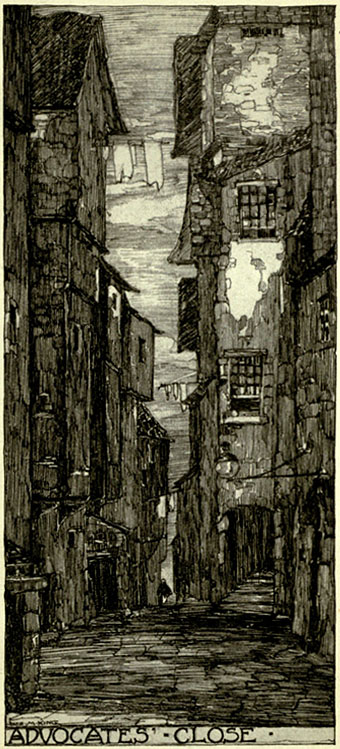
“This dark and steep alley took its name from Sir James Stewart of Goodtrees, Lord Advocate of Scotland, 1692–1713, whose mansion stood at the foot of the close. It was a fashionable quarter in the early 18th century, and here resided Andrew Crosby, the famous lawyer, the original of Scott’s ‘Andrew Pleydell,’ Lord Westhall, John Scougall, the painter of George Heriot, and many well-known people of the time.”

Another book scan from the Internet Archive, this time a title which plays to my fetish for Old Edinburgh. The illustration work of Jessie M King (1875–1949) was featured here in September with a delicate piece from A House of Pomegranates by Oscar Wilde. The Grey City of the North (1910) is quite a departure from her usual style, being a collection of monochrome views of buildings, streets and closes of the Old Town. Very nice lettering on all the plates which perhaps shows some influence from her colleague Charles Rennie Mackintosh.

Advocates’ Close has particular significance for me since I copied a view of the alley for my adaptation of HP Lovecraft’s The Haunter of the Dark in 1986. Providence looks nothing at all like Edinburgh, of course, but I couldn’t find adequate reference at the time so used photographs of Scotland by Edwin Smith instead. You can see Smith’s photograph and my rendering of it below. Among the Internet Archive’s other Jessie King books there’s a follow-up to the Edinburgh volume, The City of the West; 24 drawings in photogravure of Old Glasgow.
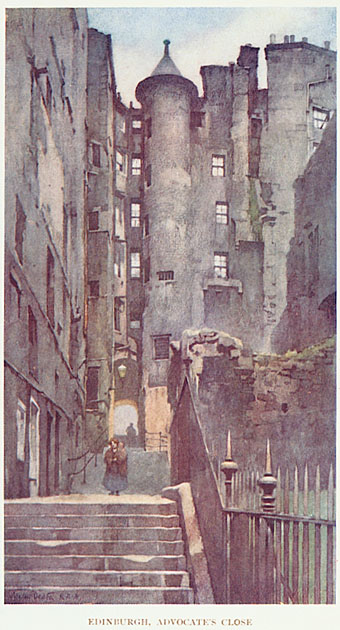
advocates2.jpg

Another view of the close from Edinburgh and The Lothians by Francis Watt; illustration by Walter Dexter (1912).
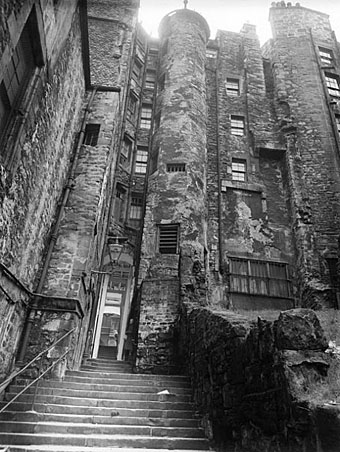
advocates3.jpg

Advocates’ Close by Edwin Smith from Scotland (1955).

This book of photographs was an early Thames & Hudson title using their typically excellent photogravure reproduction. My copy was rescued from a waste bin near Manchester University and I’ve used it so much for reference over the years I’ve often wondered what I would have done without that chance encounter. You can see from my copy below (drawn with a 0.2mm Variant pen) how much detail I skimped and how much I embellished. I skimped rather more than I remember, as it happens. I think if I’d have drawn this a couple of years later I might have been more faithful to the original.
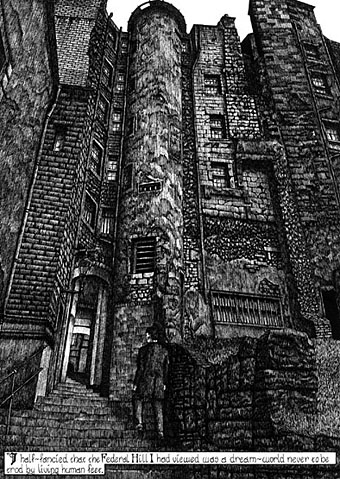
advocates4.jpg

Elsewhere on { feuilleton }
The illustrators archive

Previously on { feuilleton }
Ephemeral architecture
The Essex Street Water Gate
Harry Clarke’s The Year’s at the Spring

clarke1.jpg

The Internet Archive seems to be improving as a resource for out-of-copyright books. Browsing there this week it’s become apparent that a number of recent additions include rare illustrated titles which can be downloaded as PDFs or scanned pages. Project Gutenberg has the quantity where free books are concerned but their quality leaves much to be desired when it comes to illustrations. The nice thing about these scans from libraries is that they copy the complete book, including covers and endpapers. In many cases the covers have been spoiled by bar code stickers and other library ephemera but they still give a good idea of the original volume.

clarke2.jpg

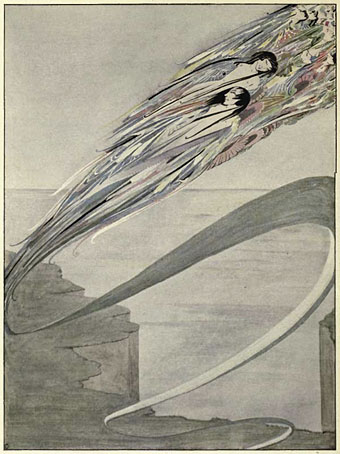
First of the discoveries is this poetry collection, The Year’s at the Spring (sic), from 1920 illustrated by the peerless Harry Clarke (1889–1931). Among the poets featured are WB Yeats, GK Chesterton, Rupert Brooke and Walter de la Mare. This really is a discovery for me since I don’t think I’ve seen any of the illustrations before. The drawings are certainly up to the standard of Clarke’s other work and the colour plates show a possible Japanese influence in some cases, as well as being reminiscent of the colour plates for his Poe volume. There are 21 full-page illustrations in all, with many vignettes.

A couple more illustration samples follow below the fold. I’ll be featuring other titles which have caught my eye over the next few days.

clarke31.jpg

clarke4.jpg

“I am born of a thousand storms, and grey with the rushing rains.”

Elsewhere on { feuilleton }
The illustrators archive

Previously on { feuilleton }
My pastiches

Beardsley’s Salomé

salome1.jpg

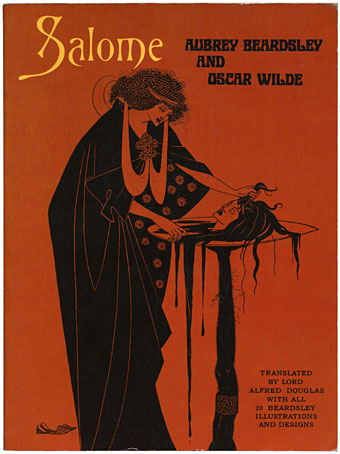
So the first book purchase of the year turns out to be the original Dover edition of Beardsley and Wilde’s Salomé. This appeared in 1967, a year after the major V&A exhibition which introduced Beardsley’s work to a new generation and commenced the Beardsley craze that lasted into the Seventies. Not that I’m in desperate need of these drawings, having most of them several times already in different Beardsley books, but this volume is worth having since the reproductions are large size, very sharp and they took enough care to ensure that the uncensored versions of the drawings were used. The book also includes the complete text of Wilde’s play and Robert Ross’s Note on Salomé from 1930 which I don’t have elsewhere.

salome2.jpg

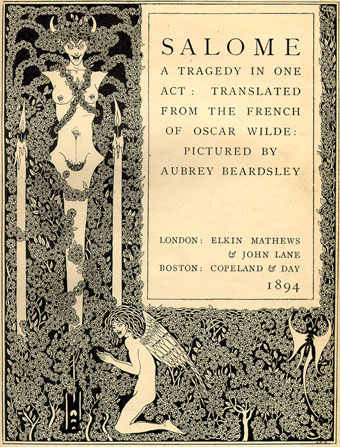
Beardsley’s work was subject to many censorship actions during his career but the Salomé book caused the most trouble (his later erotic works were private editions so don’t really count). The original title page shown here had the semi-erect penis of the winged boy and the pendulous genitals of the herma removed while one drawing, The Toilette of Salomé, was deemed too much and had to be redrawn entirely. That picture did contain a masturbating page boy so it’s perhaps not so surprising. There was such a lot to offend Victorian sensibilities in Beardsley’s work at this time, whether overt or surreptitious, that it’s remarkable the book was printed at all. His art was so radically different from anything else being done in 1894 that many people had difficulty accepting these pictures as illustrations at all, regardless of the content. As a result they missed salacious details that would have finished the career of a lesser artist. Wilde’s play was equally scandalous and could only be performed in France, having been banished from the London stage. As Robert Ross says in his Note:

Wilde used to say that Salomé was a mirror in which everyone could see himself. The artist, art; the dull, dullness; the vulgar, vulgarity.

salome3.jpg

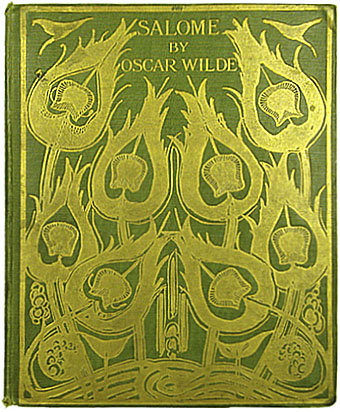
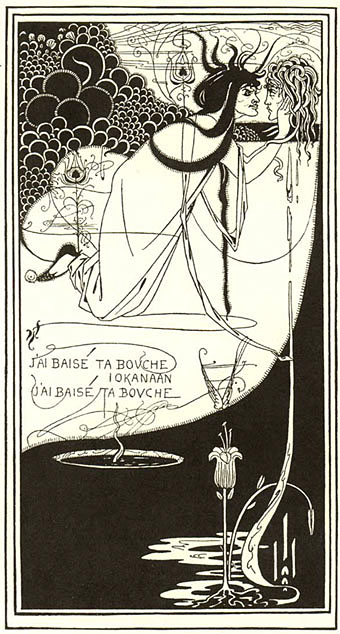
The sense of shock extended back to Beardley’s original Salomé drawing (also included in the Dover volume) which appeared in the first number of The Studio in 1893, some of the readers of that magazine finding the detail of the spilled blood nourishing a phallic lily a grotesque detail too far. The Studio drawing was reworked and simplified as The Climax for Salomé. You can see the complete set of illustrations here. Neither that collection nor the Dover book include a picture of the original cover, however, whose splendid gold-on-green peacock feathers look a lot more impressive than Beardley’s rough design. So here it is.

salome4.jpg

Download the 1906 US edition of Salomé free at the Internet Archive

Elsewhere on { feuilleton }
The book covers archive
The illustrators archive
The Salomé archive