Odilon Redon’s Temptations

redon09.jpg

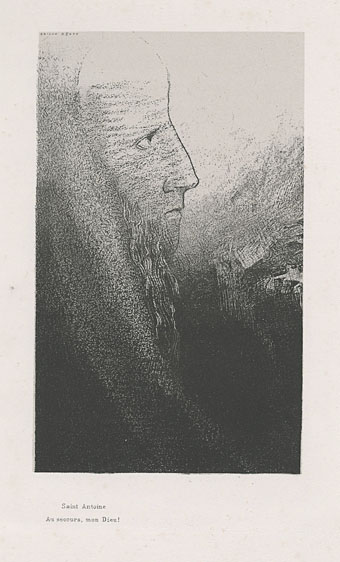
Saint-Antoine: Au secours, mon Dieu! (Saint Anthony: Help me, O my God!)

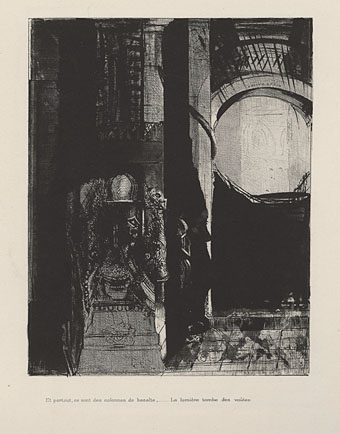
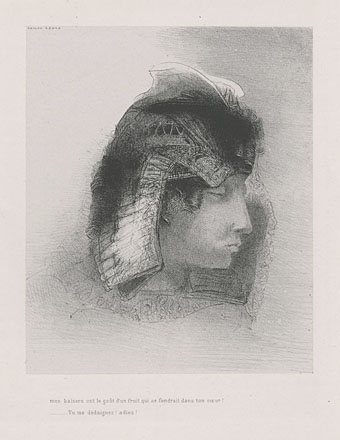
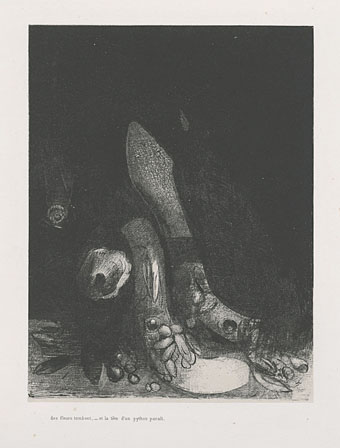
St. Anthony and his temptations provide another connection between the Surrealists and the Symbolists via Gustave Flaubert and his phantasmagoric drama. Flaubert’s The Temptation of St Anthony (1874) doesn’t quite stand in relation to the art of the time as does Oscar Wilde’s Salomé but, with its predominant themes of sex, death and spiritual transcendence, it both suited and pre-empted the concerns of the Decadence. Odilon Redon was particularly taken with the book, and from 1888 to 1896 produced three sets of lithograph illustrations. The examples here are from the final set of 24 images. A few of these are the ones you see most often in Symbolist studies, often in poor reproductions, but the other sets have some memorable moments. What’s most notable about all the drawings is how little the saint appears in them, Redon choosing to depict either the visions or the subjects of Flaubert’s philosophical discussions. See the complete set here.
redon10.jpg

Et partout ce sont des Colonnes de basalte, … la lumière tombe des voûtes (And on every side are columns of basalt, … the light falls from the vaulted roof)
redon11.jpg

Mes baisers ont le gout d’un fruit qui se fondrait dans ton cœur! … Tu me dédaignes! Adieu! (My kisses have the taste of fruit which would melt in your heart! … You distain me! Farewell!)
redon12.jpg

Des fleurs tombent, et la tête d’un python paraît (Flowers fall and the head of a python appears)
Continue reading “Odilon Redon’s Temptations”

Aubrey Beardsley’s Keynotes

keynotes1.jpg

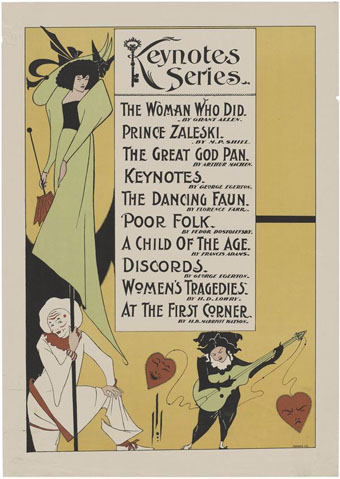
Promotional poster.

Keynotes was a series of 34 novels and short story collections published by John Lane from 1893. Aubrey Beardsley produced cover designs and embellishments for 22 of the titles in 1895 while he was working on The Yellow Book which John Lane was also publishing. Beardsley’s designs comprised a title frame with illustration or decoration which was blocked in gold on the cover and also used as a title page. For 15 of the titles he also created a series of key-shaped monograms for the authors, designs which were used on the spines and the backs of the books. Collections of Beardsley’s art often show one or two of these pieces but you seldom see them all, and even when the title frames are reproduced the type is often omitted.

keynotes4.jpg

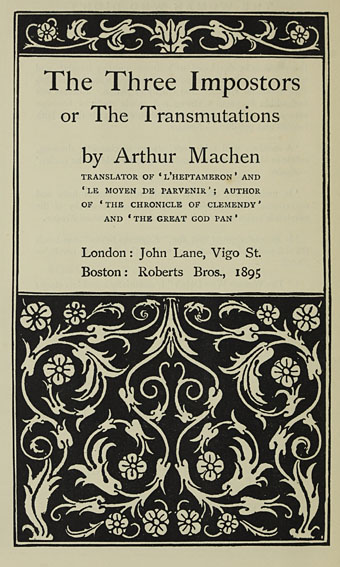
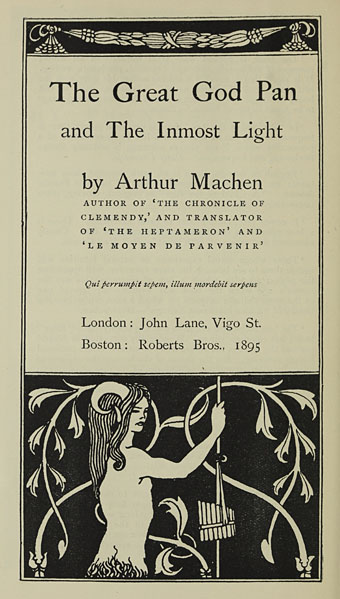
Keynotes Series of Novels and Short Stories was a small book published in 1896 intended to gather all the Beardsley designs in one place and also promote the series in general. Two of the most celebrated works to receive the Beardsley treatment are those by Arthur Machen: The Great God Pan and The Inmost Light, and The Three Imposters. The decoration for the latter gives no indication of the horrors lurking inside that volume, while the faun on The Great God Pan is a world away from the amorphous nightmare in a story that caused considerable outrage at the time. According to Stanley Weintraub’s biography, the Keynotes series was very popular despite (or because of) the stir it caused, and helped keep Beardsley’s work visible when many of his other illustrations were out of circulation.

keynotes5.jpg

Continue reading “Aubrey Beardsley’s Keynotes”

Lucian’s True History

lucian01.jpg

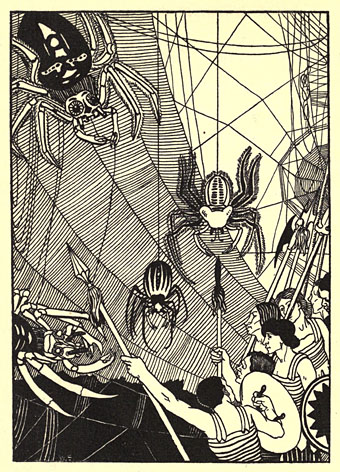
Lucian is Lucian of Samosata whose True History (also known as A True Story) is often regarded as one of the earliest works of science fiction. The book is a satirical work, but unlike many earthbound satires this one concerns a journey into outer space, encounters with the inhabitants of various planets, and descriptions of interplanetary war.

lucian02.jpg

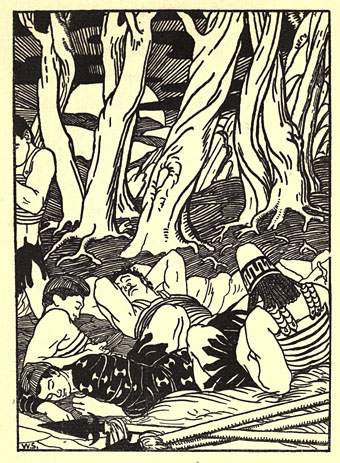
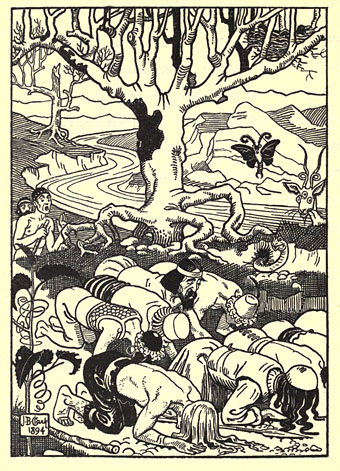
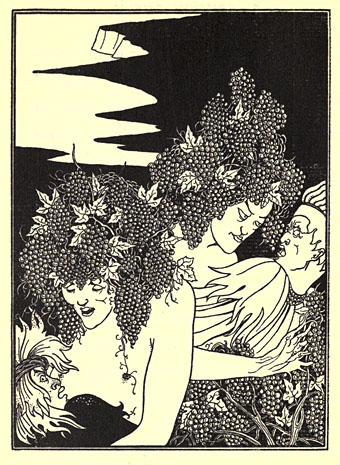
These illustrations are from the 1894 edition which included contributions by Aubrey Beardsley that were the artist’s earliest drawings after the enormous labour of the Morte d’Arthur. Beardsley was eager to illustrate the book which he found more stimulating than the Mallory but when commissions arrived for Wilde’s Salomé and The Yellow Book he found himself overworked. (The publishers also rejected two of the more grotesque drawings.) William Strang and JB Clark filled out the rest of the book. The Beardsley illustrations are familiar from the larger collections but I’d not seen the Strang and Clark drawings until now. Content-wise this was the strangest book that Aubrey worked on, and I can’t help but wonder how he might have illustrated the rest of it if he’d had the time.

lucian03.jpg

lucian04.jpg

Continue reading “Lucian’s True History”

More Esteban Maroto

maroto05.jpg

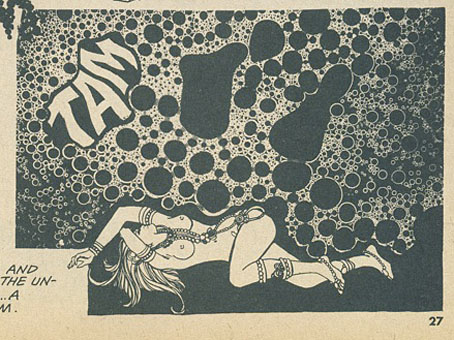
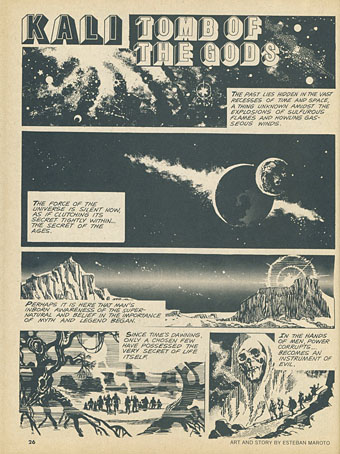
Psychedelic Kali from Vampirella 18.

Copies of the Dracula comics may be scarce these days but two of the artists who appeared in the title—Esteban Maroto and José Beá—were also appearing regularly in Vampirella around the same time. The Internet Archive has a large collection of Warren titles including an almost complete run of Vampirella. Esteban Maroto’s work stands out for me for his draughtsmanship, his page layouts, the atmosphere of heady eroticism, and the frequent touches of psychedelia of which the panel above is one of the more striking examples. The best strips are the ones he wrote himself; when he works with American writers the results tend to be more restrained. It’s a shame Vampirella was mostly a black-and-white title, so many of these pages would benefit from the same colour treatment as Wolff.

maroto01.jpg

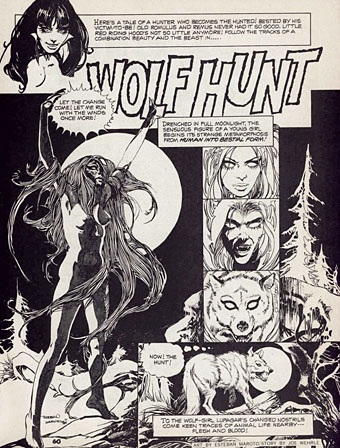
Wolf Hunt from Vampirella 14.

And speaking of wolves, there’s a similar collection of witches and lycanthropes in these stories.

maroto02.jpg

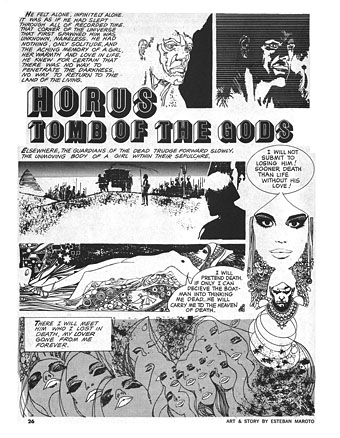
Tomb of the Gods: Horus from Vampirella 17.

Tomb of the Gods is a short series in which mythological stories are explored Maroto-style. The exception is Gender Bender, a piece of science fiction with masculine and feminine psyches pitted against each other in a virtual arena. The story title is a surprise for anyone thinks that phrase originated in the 1980s.

maroto03.jpg

Tomb of the Gods: Kali from Vampirella 18.

Continue reading “More Esteban Maroto”

Jo Daemen’s The Sacred Flame

daemen00.jpg

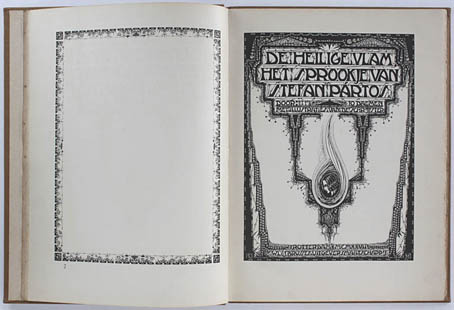
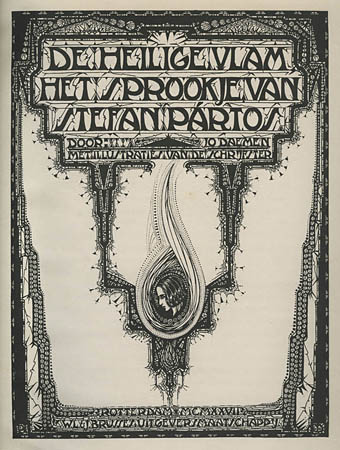
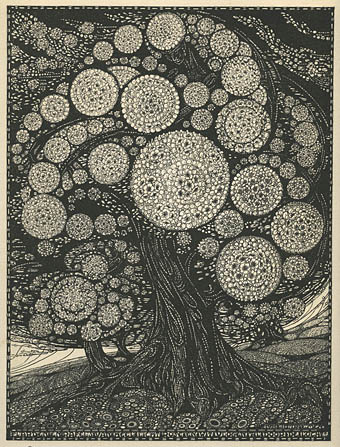
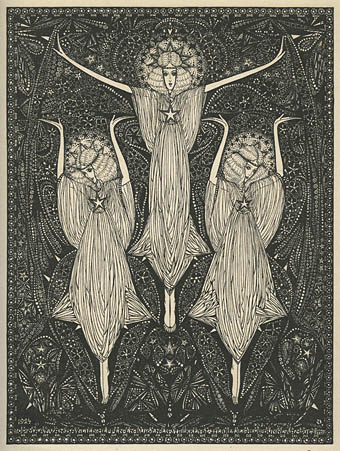
Johanna Maria Hendrika Daemen (1891–1944), credited here as “Jo”, wrote and illustrated The Sacred Flame: The Fairy-Tale of Stefan Pártos (1927), a tribute to a Hungarian violinist who died young. Daemen was a Dutch illustrator, graphic designer and glass artist who one suspects would be better known if she’d been British or American. The detail and composition of these illustrations is exceptional, falling somewhere between Kay Nielsen’s meticulous detailing and Harry Clarke’s stained-glass designs. This is another volume currently for sale at silver-gryph’s eBay pages where larger views of the drawings may be seen. (Thanks again to Nick for the tip!)

daemen12.jpg

daemen01.jpg

daemen02.jpg

Continue reading “Jo Daemen’s The Sacred Flame”