Weekend links 94

walpoth.jpg

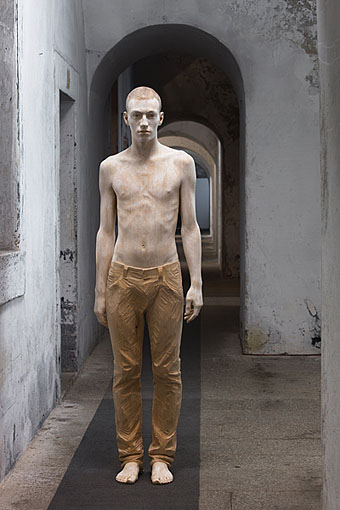
Mateo (2011), carved wood sculpture by Bruno Walpoth.

“Dennis Potter’s [The Singing Detective] is 25 years old but still feels avant garde,” says Stephen Armstrong. No fucking kidding, I watched the DVDs again last weekend. Potter’s drama featured non-linear flashbacks, song-and-dance hallucination sequences, an intertextual sub-plot, and a central character who was vitriolic, misanthropic, misogynist and covered from head-to-toe in flaking skin. This wasn’t exiled to an arts channel ghetto but was primetime viewing, Sunday evenings on BBC 1. • Related: “Is Dennis Potter’s singalong noir miniseries the all-time pinnacle of television drama? Graham Fuller thinks it is.”

• American band Earth are using Kickstarter to fund their next project, Wonders from the House of Albion, an LP/CD/DVD/book combining their music with “field recordings from various megalithic and other sites of human/fairy encounters across the UK, also the use of ritual and folkloric magical practices”. Dylan Carlson & Adrienne Davies discuss their work here.

…sort of like Nabokov’s objection to Our Lady of the Flowers, which he saw as a masterpiece but thought, “Why isn’t this book about women?” Nabokov hated homosexuality and was very edgy around it, partly because his own brother was homosexual and his uncle. And he believed that it was hereditary, so he was always nervous about it.

Edmund White chooses five favourite gay novels. Related: a dance adaptation by Earthfall of Jamie O’Neill’s At Swim, Two Boys.

• “The Belbury Tales is the kind of record you feel should have come out on Vertigo around ’73, but never actually did.” Belbury Poly‘s Jim Jupp on ploughman’s lunches, prog rock and avoiding “Clarkson/Wakeman territory”.

Morbid Curiosity: The Richard Harris Collection, an exhibition at the Chicago Cultural Center exploring “the iconography of death across cultures and traditions spanning nearly six thousand years”.

Geoff Dyer’s Zona, an exegesis of Andrei Tarkovsky’s Stalker, is officially out at the end of this month. The book is reviewed here and here.

• “Through a blurry electronic prism“: MetaFilter traces a history of analogue video synthesis.

Dylan Ricci‘s wonderful photography of the male body has moved to a new location.

Infinite Forest by Studio a+i, a design for an AIDS memorial in New York City.

Susan Cain discussing “the power of introverts” at Scientific American.

• Strange Flowers on that icon of Middle Eastern music, Umm Kulthum.

Ewan Morrison on “The self-epublishing bubble”.

Winter Sleep (2007) by Valgeir Sigurdsson feat. Dawn McCarthy | Black (2008) by Ben Frost with Valgeir Sigurdsson, Sam Amidon & Sigrídur Sunna Reynisdóttir | Unbreakable Silence (2011) by Ben Frost & Daníel Bjarnason

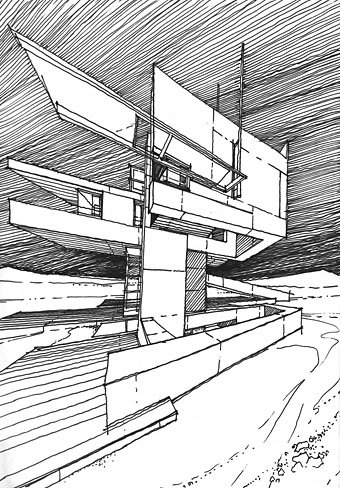
Mars architectures

davidovici1.jpg

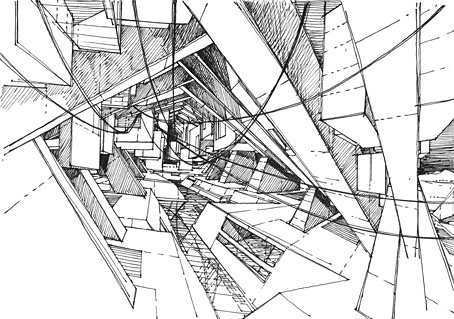
Mars Architectures 3

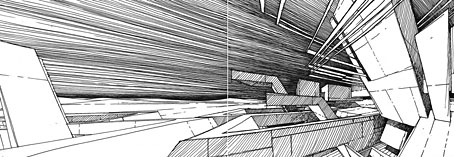
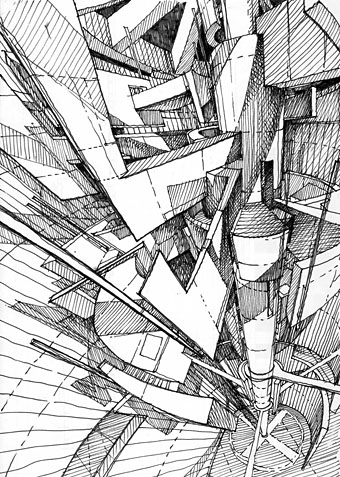
Italian architect Stefan Davidovici was in touch recently asking whether I’d be interested in his speculative views of Mars architectures and an imaginary Jerusalem. I am indeed interested in work such as this, whether the designs resemble Frank Lloyd Wright sketches for David Cronenberg’s unfilmed adaptation of Total Recall or the Piranesian buttresses of the Jerusalem pieces. As to the question of “why Mars?”, Davidovici says this:

Because the functions of any Mars settlement, be it made by near-future humans or by far-future post-humans or by the famous little green local cousins of humans are so, so, so completely obscure to us – answering to an unknown society in an unknown environment – as to become totally, completely, absolutely irrelevant. Therefore we can read the architectural space of such a place as pure art.

A range of his work can be found at his blog, the architecture draftsman.

davidovici2.jpg

Mars Architectures 6

davidovici3.jpg

Mars Architectures 9

davidovici4.jpg

Mars Architectures 10

davidovici5.jpg

Mars Architectures 9

Previously on { feuilleton }
La Tour by Schuiten & Peeters
The art of Pierre Clayette, 1930–2005
The art of Erik Desmazières
The art of Gérard Trignac

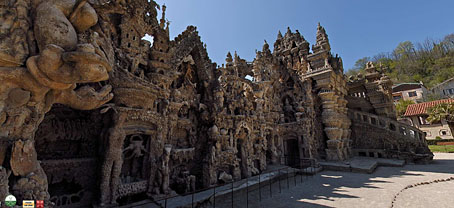
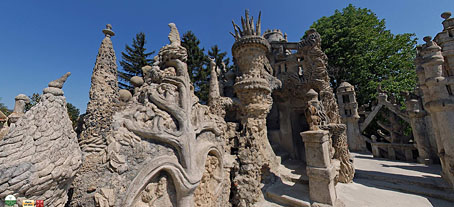
Palais Idéal panoramas

cheval1.jpg

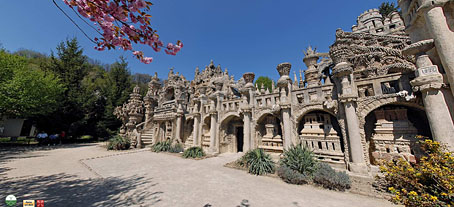
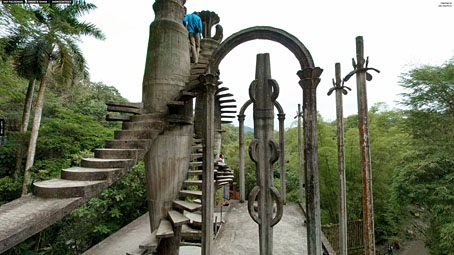
The oft-recounted story behind the extraordinary Palais Idéal in Hauterives, France, is that rural postman Ferdinand Cheval (1836–1924) found an unusually-shaped stone on his route which compelled him to spend the next thirty-three years building an elaborate architectural fantasy from cement and more stones collected on his rounds. The structure is aptly named if you consider it the ideal to which Edward James may have been aspiring with Las Pozas. James could hardly be unaware of Cheval’s work since it was praised as a Surrealist precursor by André Breton, admired by Picasso and inspired a collage by Max Ernst.

cheval2.jpg

These panoramas came via a link at the official Facteur Cheval site. As usual, Flickr is the place to go for detailed views.

cheval3.jpg

Elsewhere on { feuilleton }
The panoramas archive

Previously on { feuilleton }
Las Pozas and Edward James

Las Pozas panoramas

xilitla1.jpg

Photo by Carlos Ernesto Guadarrama Muñoz.

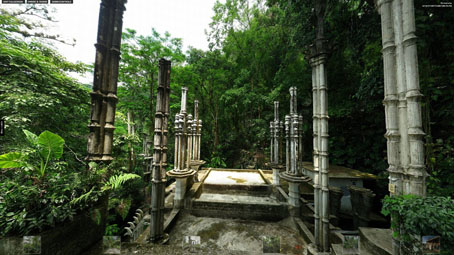
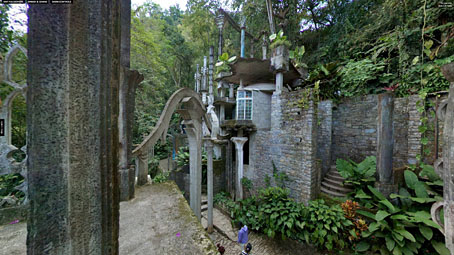
How soon things change. In 2006 when I wrote something about Las Pozas, the unfinished concrete fantasia constructed by Edward James at Xilitla in the Mexican jungle, there was little information about the place on the web. A couple of years later photos had appeared on Flickr and Monty Don had been there with TV cameras for the BBC’s Around the World in 80 Gardens. Now, thanks to 360cities.net, we have a collection of panoramic views inside James’ platforms, plazas and stairways to nowhere. See the complete set of views here.

xilitla2.jpg

Photo by Jose Luis Perez.

Edward James described himself as a poet (and is credited as such on his gravestone), but he’s far better known as one of the primary patrons of Surrealist art and a lifelong proponent of the Surrealist ethos, hence Las Pozas whose construction occupied him up to his death in 1984. In addition to being the model for Magritte’s La reproduction interdite (1937), James also converted Monkton, his home in England, into a Surrealist showcase. It’s a place I’ll be writing about at greater length when I find the time.

xilitla3.jpg

Photo by Jose Luis Perez.

Elsewhere on { feuilleton }
The panoramas archive

Previously on { feuilleton }
Return to Las Pozas
Las Pozas and Edward James

In the Village

portmeirion-map.jpg

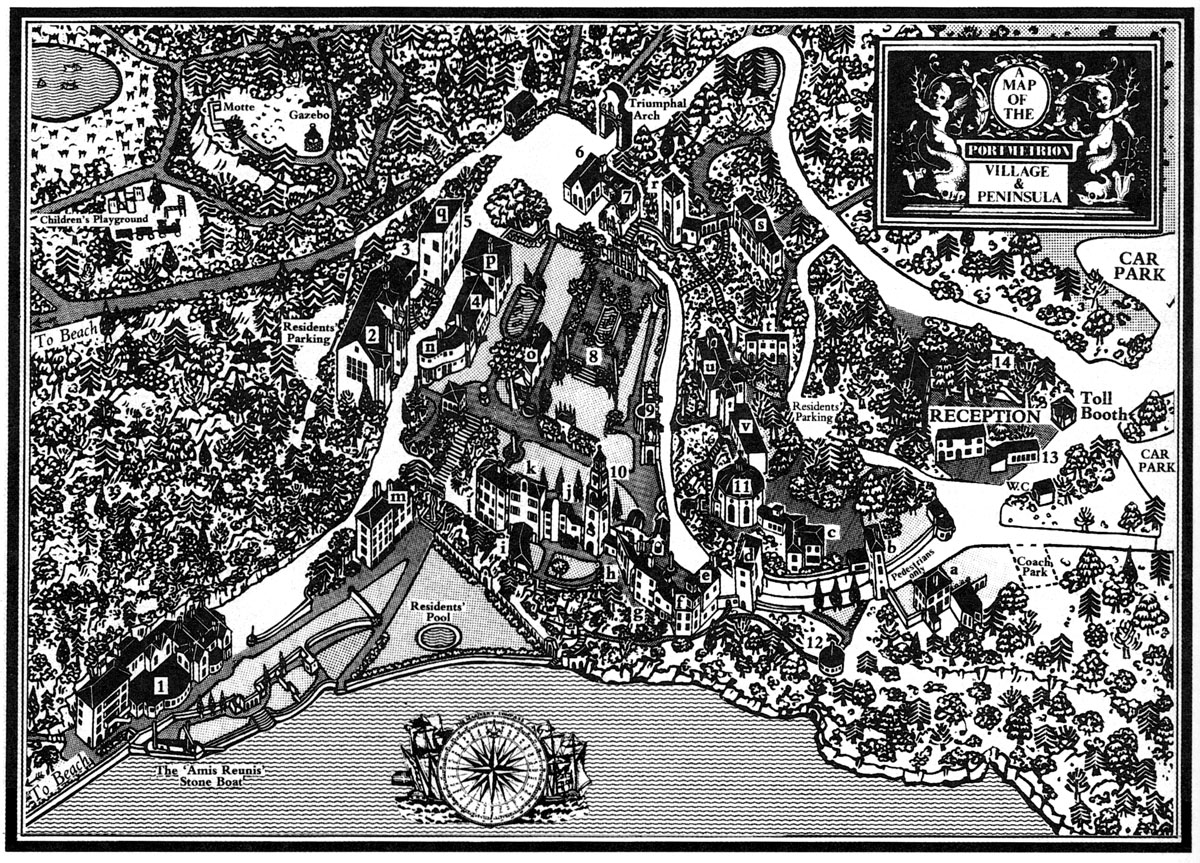
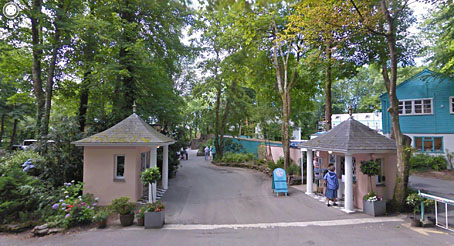
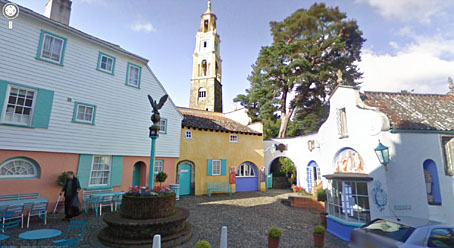
Ever fancied a wander around Portmeirion, aka The Village from The Prisoner? In the past you’d have to travel to Gwynedd in North Wales in order to do so but since August 2010 it’s been possible to roam the place using Google’s street view. This is somewhat surprising on two counts: firstly, while Portmeirion masquerades as a shrunken Mediterranean town it’s actually an open-plan hotel which visitors have to pay to explore. More surprising is finding the street view camera leaving the roads to follow many of the paths around Clough Williams-Ellis’s trompe l’oeil architecture. I imagine Google has done this elsewhere but this is the first instance I’ve come across. In addition to exploring a woodland walk it’s possible to follow the paths down to the beach, past the stone boat and along the coast for views of the Dwyryd estuary. There aren’t any white balloons or Mini Mokes in evidence, of course. If you want those you can always watch the TV series where the place appears larger thanks to camera lenses and some canny editing.

village.jpg

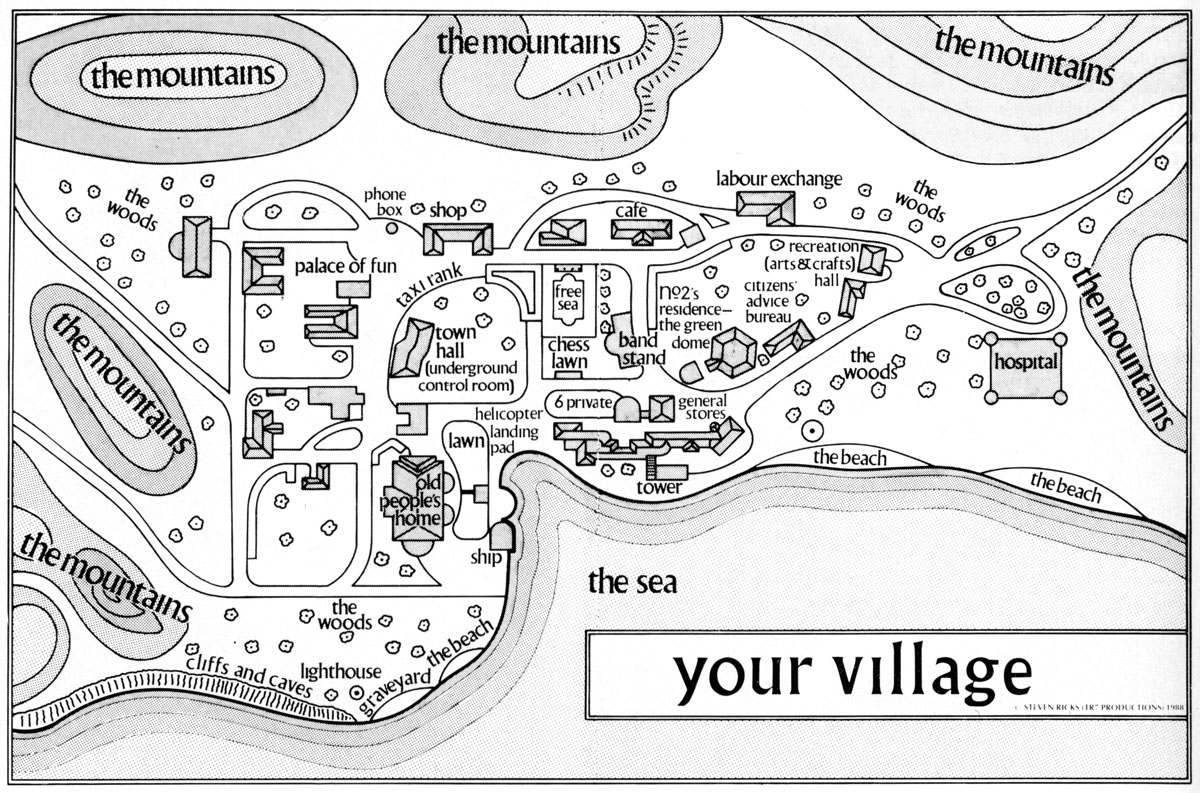
And speaking of lenses, ironies abound when you notice the surveillance cameras in the hotel car park, never mind the way the Google Panopticon has laid the place open to global eyes. In the Chimes of Big Ben episode of The Prisoner Number 6 asks whether Number 2 wants to see the whole world as the Village. “Yes,” says Number 2. Are we there yet?

The two maps here are from The Prisoner (1990), a book by Alain Carrazé & Hélène Oswald. Unfortunately the key to the map of Portmeirion wasn’t included. The following shots are my selection from the Google views starting at the toll booth and working down to the beach. Be seeing you.

gates.jpg

The Toll Booth.

tower.jpg

Battery Square.

Continue reading “In the Village”