Queer Noise and the Wolf Girl

queer_noise.jpg

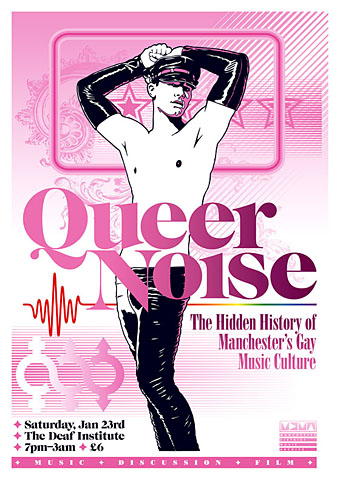
Two recent pieces of work which were being created at the same time so they share some similarity of style (and the same baroque flourish). Queer Noise is a music-related event taking place in Manchester (UK) next month. Music journalist Jon Savage will be leading the discussion and some may recognise the event title as relating to his Trikont CD compilation Queer Noises 1961–1978: From the Closet to the Charts. There are further details about the event at the MDMArchive.

Designing for gay content can be a fraught business since it’s almost inevitable that someone will disagree with your choices. Best then to abandon any thought of trying to please everyone and follow your own instincts. Making this a riot of pink seemed like a good way to offset the fetishised figure as well as making an eye-catching design. My first impetus had been to try an arrangement of pink and black on white similar to that used by Barney Bubbles in one of his Ian Dury designs. In the end this evolved away from that idea but it was a useful starting point. And while we’re on the subject of pink, there’s a growing backlash against the way the colour is forced on young girls:

Back in the 1800s, most children were dressed alike. Gender differences weren’t really apparent until they could walk, or later: boys and girls both wore dresses or skirts until they were six or so. By the end of the century, as the Ladies’ Home Journal noted, boys’ and girls’ clothing styles began to diverge. According to Professor Jo Paoletti of the University of Maryland, pink emerged as an appropriate colour for boys because it was “a close relative of red, seen as a fiery, manly colour”. Blue was considered better suited for girls because of its associations, in art, with the Virgin Mary. (More.)
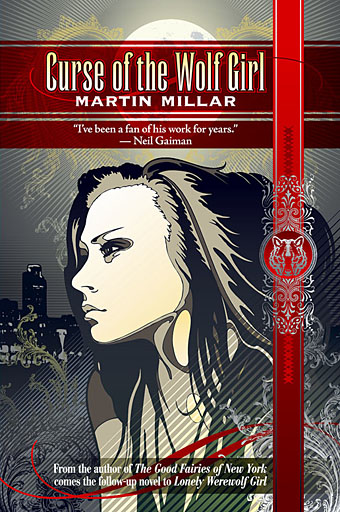
curse.jpg

Curse of the Wolf Girl is a young adult title by Martin Millar about which I can tell you very little at the moment other than I’ve finished the cover and the book will be out some time in the new year from Underland Press. More about that when it happens.

Previously on { feuilleton }
Coming Out Day
Over the rainbow
Queer Noises

The art of Ivan Bilibin, 1876–1942

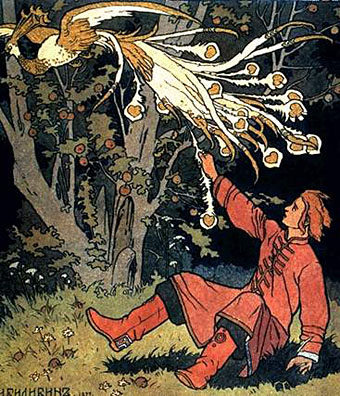
bilibin1.jpg

Ivan Tsarevich catching the Firebird’s feather (1899).

The Firebird again, one of Bilibin’s many illustrations of Slavic folktales. These examples are from the collection at Wikimedia Commons. SurLaLune has more of Tsarevitch Ivan, the Firebird and the Grey Wolf (1899) along with other Bilibin books while the trusty Internet Archive has a 1917 edition of Russian Wonder Tales.

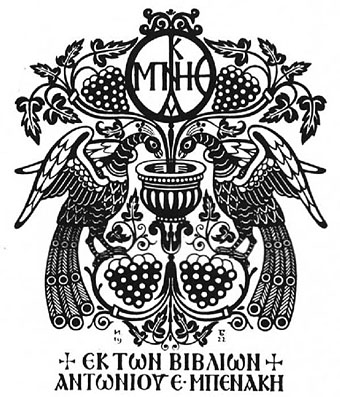
bilibin2.jpg

Ex libris design (1922).

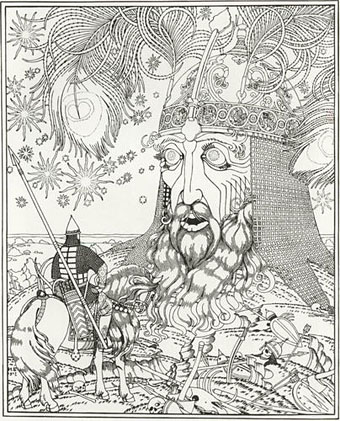
bilibin3.jpg

Ruslan and Giant’s Head (1917).

Elsewhere on { feuilleton }
The illustrators archive

Previously on { feuilleton }
Magic carpet ride

Grandville’s Un Autre Monde

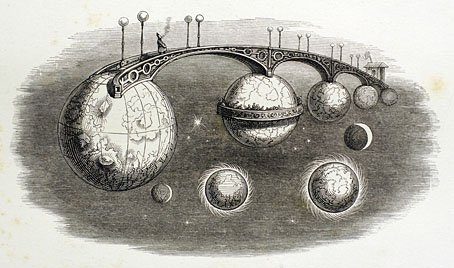
grandville1.jpg

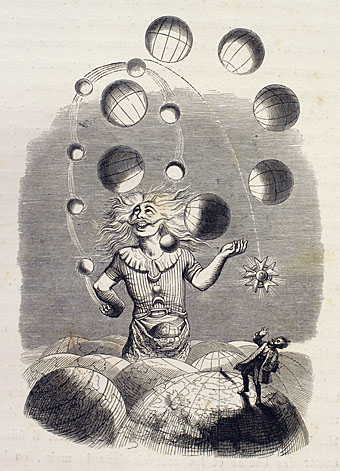
Un Autre Monde by JJ Grandville is a satire from 1844 whose wittily inventive illustrations were among that select group of prior works which received praise from the Surrealists. Some of them also act as early examples of humorous science fiction, and the two pieces shown here have been reprinted endlessly, they even turn up in histories of astronomy. The other illustrations are rarely seen, however, so it’s good to find a Flickr set with scans of the entire book. Comic artist Philippe Druillet took the bridge between worlds as the inspiration for his Lone Sloane story Torquedara Varenkor: The Bridge Over the Stars in 1970, turning the already unlikely construction into a galaxy-spanning edifice.

grandville2.jpg

Elsewhere on { feuilleton }
The etching and engraving archive

Previously on { feuilleton }
Druillet meets Hodgson

Jewelled butterflies and cephalopods

miller.jpg

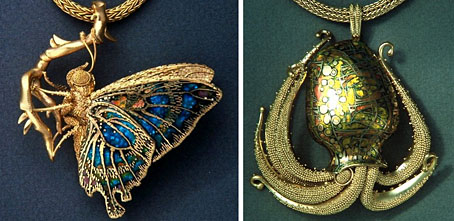
Above: gold, silver & enamel butterfly and squid, both by John Paul Miller. More at this Flickr page.

Below: Tintenfisch und Schmetterling (Octopus and Butterfly; 1900) by Wilhelm Lucas von Cranach, a master jeweller who liked his octopuses.

Tips by Chateau Thombeau and Fine & Dandy (NSFW).

cranach.jpg

Previously on { feuilleton }
Geoffrey Haberman’s brass insects
Elizabeth Goluch’s precious metal insects
Kelly McCallum’s insect art
The art of Jo Whaley
The art of Philippe Wolfers, 1858–1929
Lalique’s dragonflies
Lucien Gaillard