Frantisek Drtikol’s Salomés

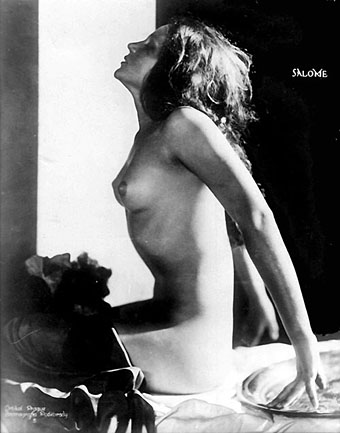
drtikol1.jpg

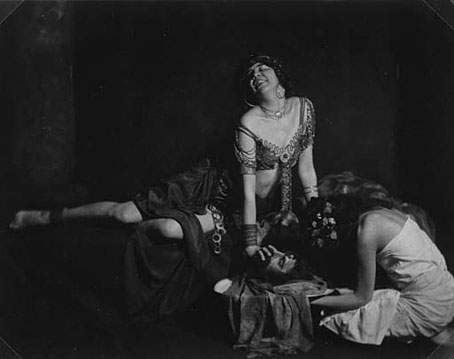
Salomé (c. 1919).

Frantisek Drtikol (1883–1961) was a Czech artist and photographer whose nude studies frequently borrowed fin de siècle themes. Salomé was a subject he returned to on many occasions with different models. In other hands this might be a pretext for showing naked flesh but Drtikol’s work goes beyond mere soft porn with his female figures (and the occasional males) juxtaposed against abstract shapes and shadows, giving them the appearance of Art Deco figurines. There’s a foretaste of that development in the strip of white in the picture below. See more of his earlier work here.

drtikol2.jpg

Salomé (c. 1920).

Elsewhere on { feuilleton }
The Salomé archive

Petulia film posters

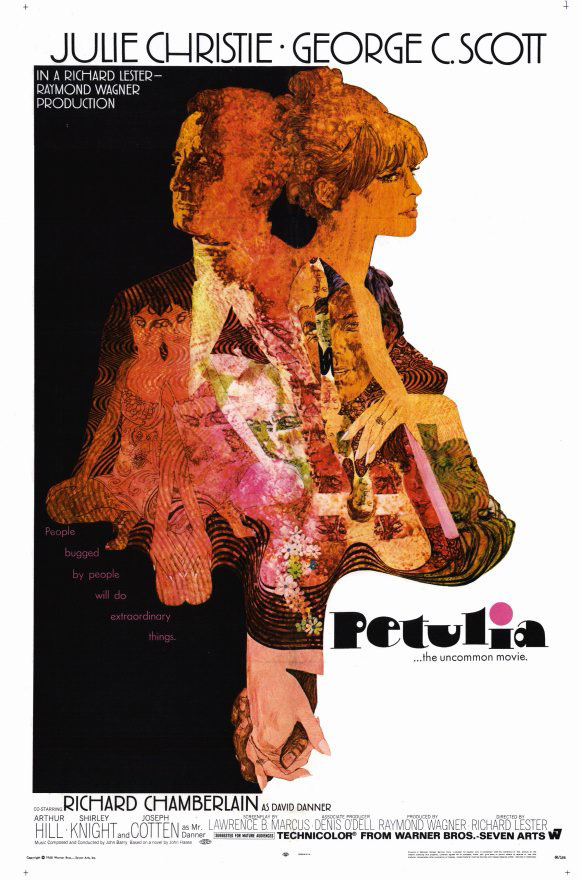
petulia1.jpg

Illustration by Bob Peak.

Further examples of those things you find when you’re searching for something else, these posters for Richard Lester’s Petulia (1968) are a good example of just how differently the same film can be presented by its advertising materials. Petulia (“the uncommon movie”) is a fascinating, unjustly neglected gem, a serious adult drama quite unlike the comedies (or comic dramas) Lester was making before and after. Nicolas Roeg photographed Petulia shortly before embarking on his own directing career, capturing San Francisco just after the Summer of Love in a more documentary fashion than the exploitation films of the period. There are nods to the psychedelic scene with party appearances by Big Brother and the Holding Company, and the Grateful Dead, but the narrative concerns the flipside of hippiedom with a group of middle-class professionals ensnared in adultery and marital failure.

A commonly remarked feature of Petulia is Antony Gibbs’ fragmented editing style which flashes backwards and forwards throughout, even showing events that never happen. The technique is usually taken to be derived from Alain Resnais although Gibbs had earlier edited The Knack…and How to Get It for Lester which is often as fragmented, albeit for a more comic effect. What’s notable about the technique is that Gibbs went on to edit Nicolas Roeg’s first two features, Performance (co-directed with Donald Cammell) and Walkabout, both of which take the fragmentation even further, creating the style which Roeg made his own.

petulia4.jpg

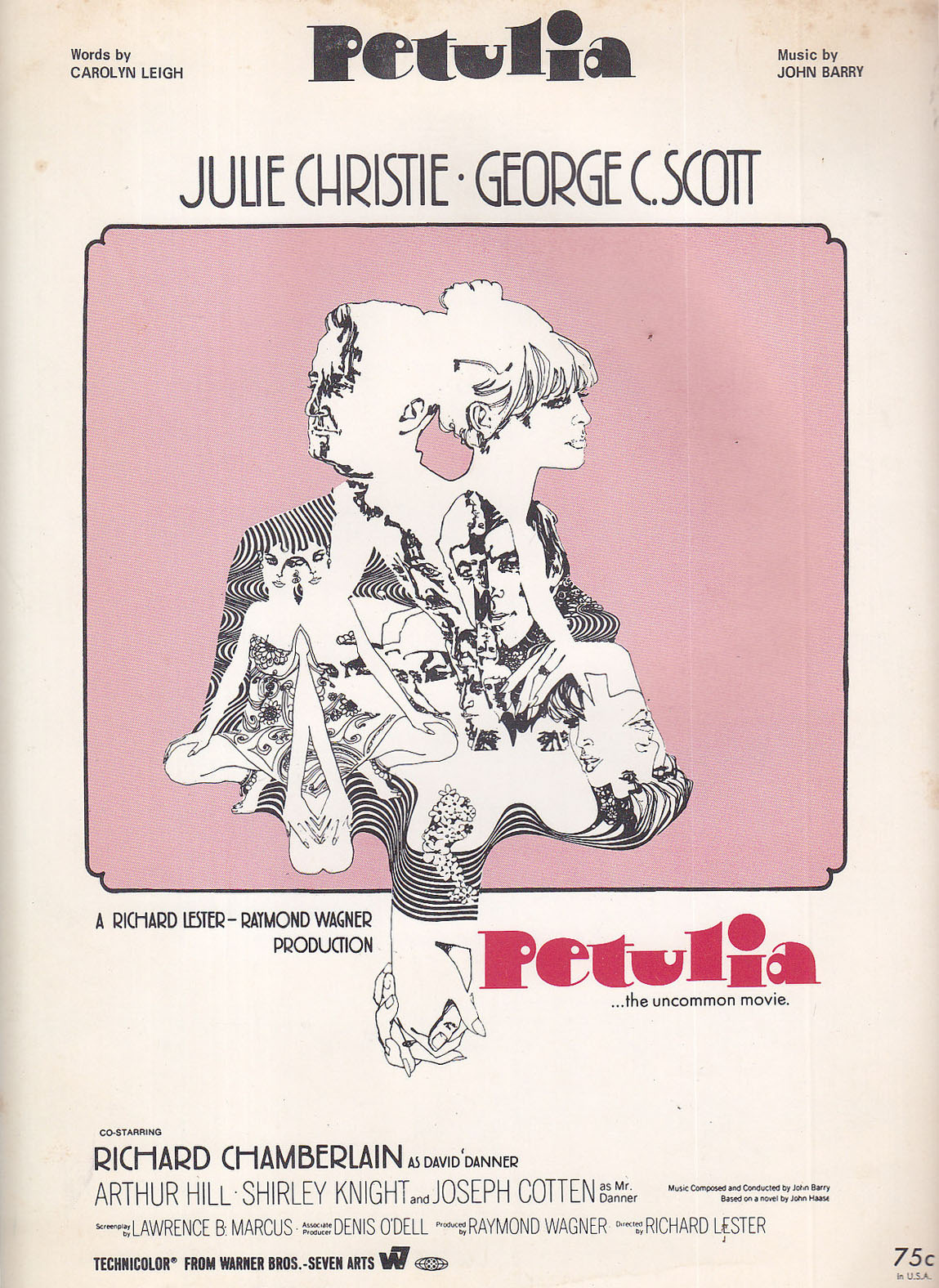
The poster that caught my attention was the marvellous one by Bob Peak who manages to depict the awkward relationship between the two leads—holding hands yet facing away from each other—whilst alluding to the psychedelic backdrop in the details. It’s difficult to tell at a small size but the sheet music design above shows that Peak’s drawing is a complex arrangement of blended faces, the reflected figure of a woman and a pattern of Bridget Riley swirls. If I was still collecting film posters I’d be sorely tempted to buy one of these.

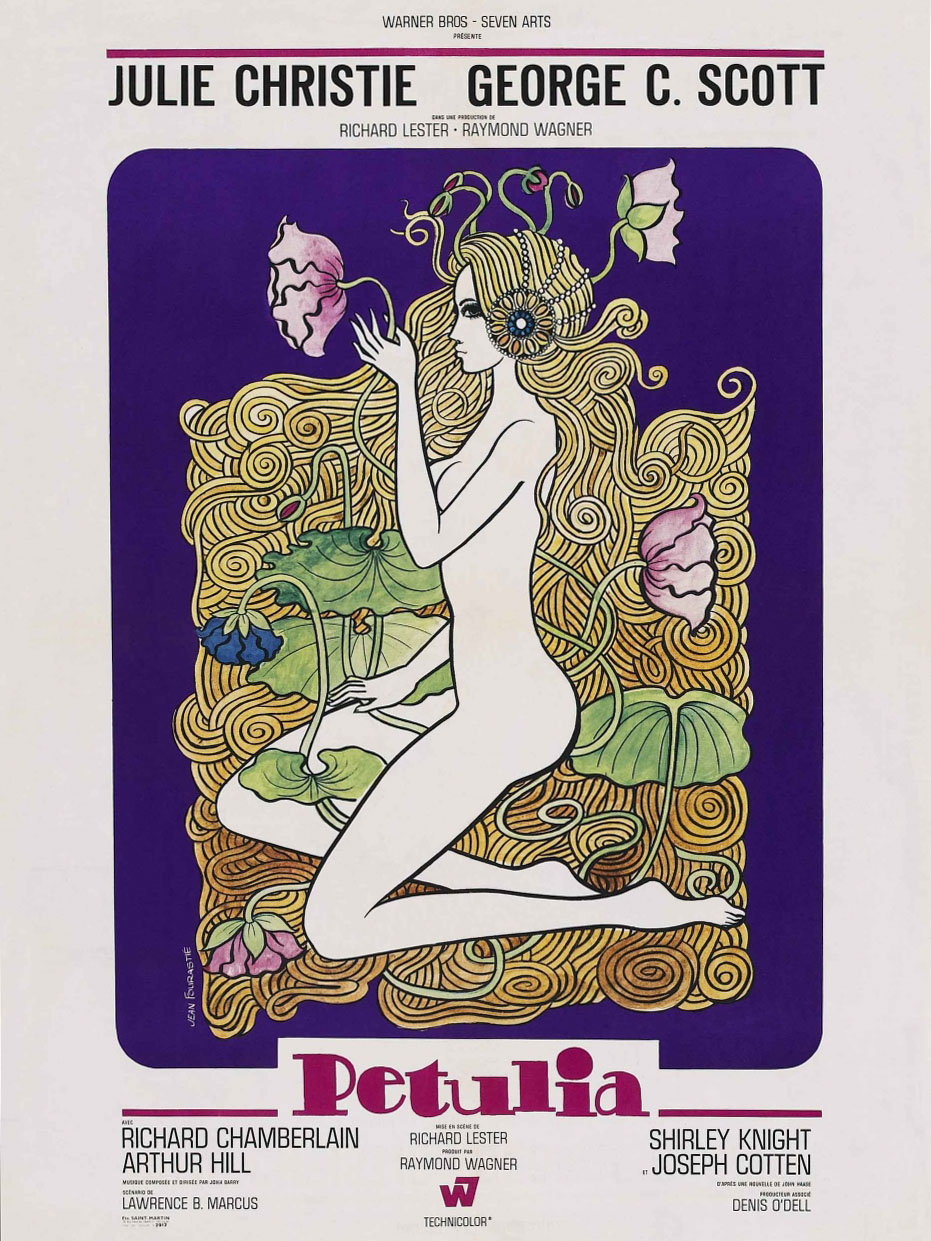
petulia2.jpg

Illustration by Jean Fourastié.

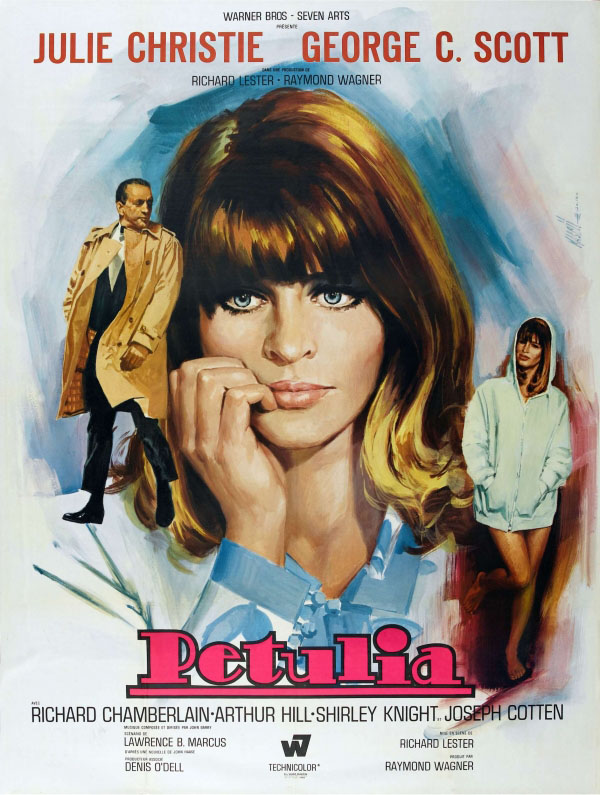
Compared to which this pair of French designs veer off in opposite and unsatisfying directions. Jean Fourastié seems to have been under the impression that the story concerned a San Francisco flower child not a bored housewife, while Jean Mascii’s painting isn’t inaccurate but is more suited to a romance paperback. Big heads were apparently Mascii’s métier even if there were no people in the film.

petulia3.jpg

Illustration by Jean Mascii.

Petulia has been available on DVD for a while now, it’s well worth seeking out. Watch the trailer here.

Previously on { feuilleton }
Lucifer Rising posters
Wild Salomés
Druillet’s vampires
Bob Peak revisited
Alice in Acidland
Salomé posters
Polish posters: Freedom on the Fence
Kaleidoscope: the switched-on thriller
The Robing of The Birds
Franciszek Starowieyski, 1930–2009
Dallamano’s Dorian Gray
Czech film posters
The poster art of Richard Amsel
Bollywood posters
Lussuria, Invidia, Superbia
The poster art of Bob Peak
A premonition of Premonition
Metropolis posters
Film noir posters

Salomé by Upside Down House

salome1985.jpg

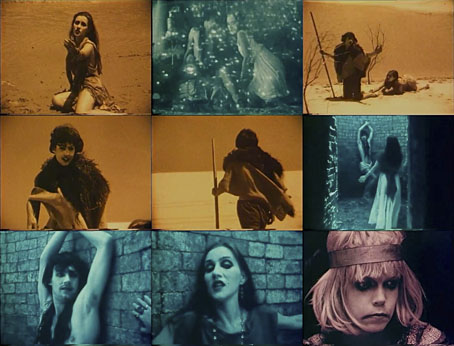
Big thanks to Mr. Kenneth at Radio Shirley for drawing my attention to this 1985 music video by Australian group Upside Down House. From their brief listing at Discogs the group don’t seem to have lasted long or released a great deal, Salomé being their second and final single. Given the quality of the music that’s not too surprising, you need someone like Jarboe to do justice to this theme. But the video is remarkably good for a low-budget imitation of silent cinema. The verisimilitude is no doubt a result of director Bob Eagle having used a hand-cranked camera which gives that distinctive flickering effect, a common feature of silent films which sound cameras and digital filters seldom replicate with any accuracy. The wildly emoting femme fatale is Kathleen Stewart, now better known as a novelist.

Elsewhere on { feuilleton }
The Salomé archive

Weekend links 127

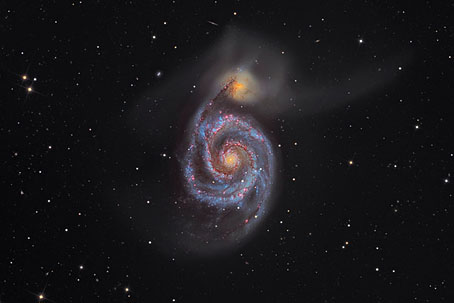
whirlpool.jpg

M15, The Whirlpool Galaxy photographed by Martin Pugh. The overall and deep space winner of Astronomy Photographer of the Year, 2012.

The Final Academy, the series of William Burroughs-themed events that took place in London and Manchester in 1982, will be celebrated at the Horse Hospital, London, on 27th October. Academy 23, a publication edited by Matthew Levi Stevens, will include my report on the Manchester Haçienda performances.

• “Architects are the last people who should shape our cities,” says the thrillingly pugnacious Jonathan Meades in a piece from his new writing collection Museums Without Walls. Andy Beckett reviews the book here.

• Ex-Minimal Compact singer/bassist Malka Spigel talks about her new album, Every Day Is Like The First Day, which can be streamed in full here.

What’s new about the current acknowledgments page is that it’s unsolicited—it appears like an online pop-up ad, benefiting no one but the author and his comrades. This is surely why these afterwords are often so garrulously narcissistic and strewn with clichés. The most radical experimentalist adheres to the most mindless acknowledgments-page formula; the most stinging social critic suddenly becomes Sally Field winning an Oscar.

Sam Sacks at the New Yorker on the blight of novelists’ acknowledgments pages. DG Myers at Commentary Magazine piles on.

• Another streaming album: Composed by Jherek Bischoff. Try Insomnia, Death & The Sea featuring Dawn McCarthy.

• Film of Lindsay Kemp being interviewed in 1977 about his production of Salomé.

Electronic Performers (2004): a video by Machine Molle for the song by Air.
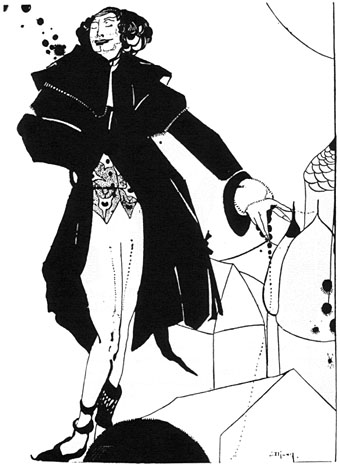
djuna.jpg

One of a series of Beardsley-like drawings by Djuna Barnes posted at Strange Flowers. The resurgent Ms. Barnes is mentioned three times in this Terry Castle review of All We Know: Three Lives by Lisa Cohen.

Fictitious Dishes, meals from novels photographed by Dinah Fried.

• Life, the Dinosaurs & Everything: Cosmicomics by Italo Calvino.

The Baby Died: Morbid Curiosities found in Old Newspapers.

• Portishead’s Adrian Utley gives a tour of his synth collection.

• Minimal Compact: Babylonian Tower (1982) | Not Knowing (1984) | When I Go (1985) | Nil Nil (1987).

Beardsley and His Work

beardsley1.jpg

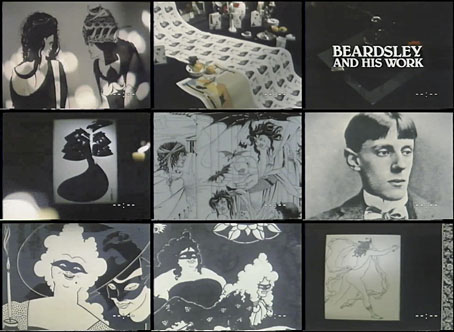
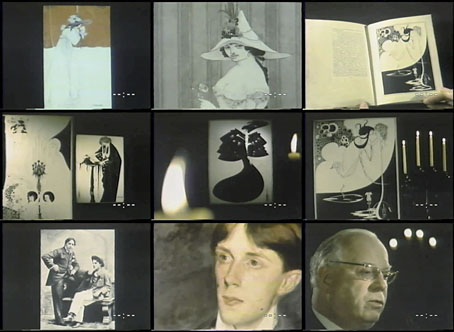
Back in 2008 I wrote at some length about Aubrey, an excellent BBC TV dramatisation of the last years of Aubrey Beardsley’s life written by John Selwyn Gilbert, and screened once in 1982. Mr Gilbert himself added a comment to that post in which he mentioned that he’d written and directed a documentary which was screened in tandem with the play, Beardsley and His Work. I have the documentary on tape but it’s a copy of a copy and is also missing ten minutes or so of its opening so it’s good to find that the entire thing is now on YouTube. (Thanks to Dominique for drawing my attention to this.)

Beardsley and His Work is essential viewing for Beardsleyphiles since it’s the only place you’ll see Beardsley scholar Brian Reade—author of the huge monograph, Beardsley (1967)—and Brigid Brophy—author of two excellent studies, Black and White (1968) and Beardsley and His World (1976)—talking at length about the artist. In addition there’s another artist, Ralph Steadman, examining some of Beardsley’s original artwork and discussing the techniques of ink drawing. The fifty-minute film is divided into four chunks, unfortunately, but is otherwise complete:

Part one | part two | part three | part four

beardsley2.jpg

Elsewhere on { feuilleton }
The Aubrey Beardsley archive