Winter Days: a renku

winter-days.jpg

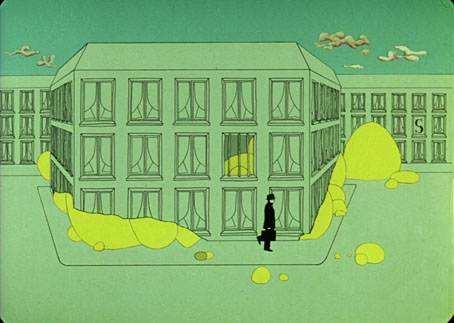
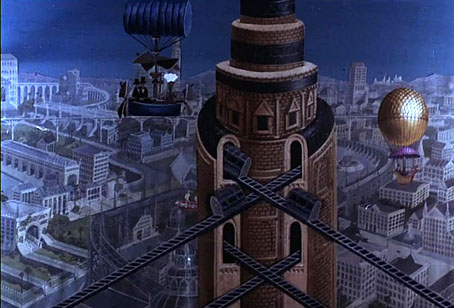
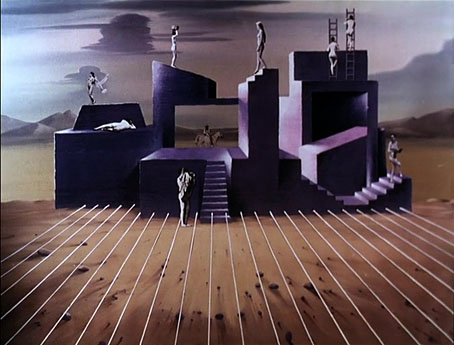
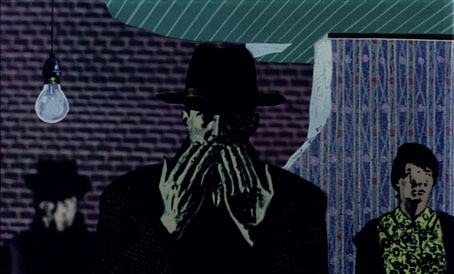
Winter Days is two things: a renku, or collaborative poem whose creation was initiated by Matsuo Bashō in Japan in 1684; and a 40-minute collaborative film from 2003 based on the same renku, with contributions by 35 animators from Japan and elsewhere, all under the direction of Kihachiro Kawamoto. The title of the poem provides the theme which the poets follow, with each poet repeating the last line of the previous stanza before adding a new of line of their own. The animators follow the same procedure, albeit much more loosely.

winter-days2.jpg

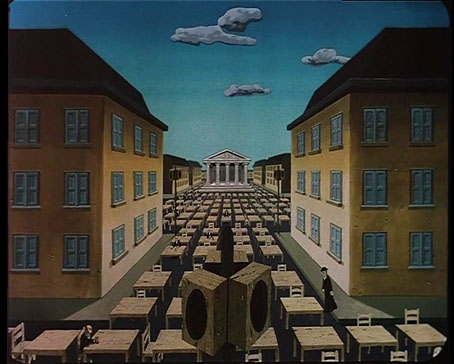
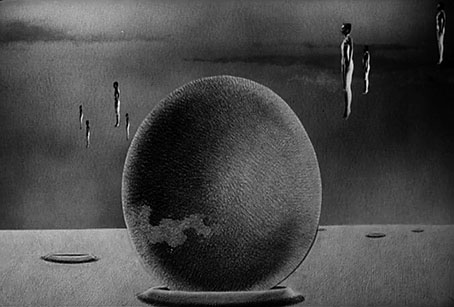
The results of this when transformed to animated sequences lacks the cohesion you’d get from a page or two of verse, especially when each sequence is self-contained. The moods of the individual sections also vary widely, from horror to broad comedy, but the film as a whole is a marvellous assembly of animation techniques, from simple drawings to clay animation, painting, puppetry, and computer graphics. The biggest attraction for animation aficionados will be the opening sequence which features a rare two minutes of film by the great Yuri Norstein. Among the other non-Japanese animators are Raoul Servais (whose piece appears to refer to Japanese ghost stories), Jacques Drouin with his pinscreen, and Britain’s Mark Baker. Wikipedia has a convenient chart that lists all the animators and the techniques they use. The Wikipedia page also notes the absence of any DVD release with English subtitles, but since all the sequences are wordless translation is only required for the intertitles and the readings that separate them. If you’re used to pairing video files with subtitles, however, you can download English subs here.

winter-days3.jpg

Given the allusions in some of the poem’s stanzas it no doubt helps when watching this to be familiar with Matsuo Bashō’s other writings, as well as the subtleties of Japanese poetry. But there’s more than enough artistry in Winter Days to warrant repeated viewing.

Previously on { feuilleton }
Tokyo Loop
Raoul Servais: Courts-Métrages
Yuri Norstein animations

Weekend links 667

kamekura.jpg

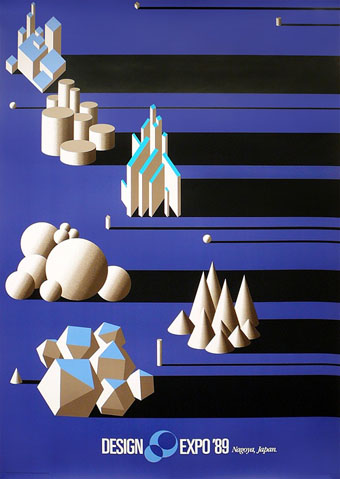
Design by Yusaku Kamekura.

• “Music and intoxication have gone hand in hand since prehistory, but the relationship of music and cannabis is particularly strong and complex, says Jono Podmore, a former habitual smoker, as he investigates a groundbreaking new study which may get us closer to understanding these links.”

• “[There] have been many instances of persons, who thought themselves metamorphosed into lanterns, and who complained of having lost their thighs.” Public Domain Review offers words to the wise from An Essay on Diseases Incidental to Literary and Sedentary Persons (1768).

• “Mathematicians have finally discovered an elusive ‘einstein’ tile.” Emily Conover explains. I thought Roger Penrose had already discovered these but none of his aperiodic patterns are created by a single tile.

Wes Anderson does science fiction…maybe. After watching The French Dispatch last month I’d caught up with the Anderson oeuvre so it’s good to have something new to look forward to.

20th century Japanese poster art. Related: Jason Booher on creating a cover for a book by Carlo Rovelli.

The Winners of Smithsonian Magazine’s 20th Annual Photo Contest.

• New music: Ghost Town Burning by The Lonely Bell.

Anthony “Surgeon” Child’s favourite music.

• RIP Raoul Servais, animator.

East Of Asteroid (1976) by 801 | Asteroide (1978) by Joël Fajerman & Jan Yrssen | Asteroid Witch (2022) by Ghost Power

Short films by Gérald Frydman

frydman01.jpg

Scarabus.

After writing about Gérald Frydman’s animated short Scarabus (1971) last year it’s taken me all this time to get round to watching the other films on his Vimeo channel, most of which are also animations. Scarabus was of interest for its deftly-crafted Surrealism, and there’s more of the same in some of these later films, especially Agulana. As with another Belgian director, Raoul Servais, Frydman directs all his films but doesn’t always animate them himself, hence the variety of art styles.

frydman02.jpg

Agulana (1976) is a kind of sequel to Scarabus with human figures being menaced and oppressed in a transforming environment. The Magritte quotient in films such as this raises the question of whether Magritte-ness (for want of a better term) is a quality unique to René Magritte or a component of the general Belgian character. Jonathan Meades insists on the latter in an excellent film of his own about Belgium.

frydman03.jpg

Alepha (1980) is more Surrealism, which in this case brings to mind the animated films of Piotr Kamler. Naked figures drift over landscapes filled with ambulatory spheres, vast spikes and other structures. Where Kamler favoured electronic soundtracks by Luc Ferrari and Bernard Parmegiani, Frydman has regular collaborator Alain Pierre provide a score of electronic drones.

frydman04.jpg

La Photographie (1983) is the first of two short films set in the 19th century. This one is little more than an anecdote, with a bored family forced to remain motionless while their photograph is taken, a process that lasts for the entire duration of the film. Outside the studio we see a Jules Verne wonderland of new inventions—dirigibles, rapid transport, electric light, typewriters and so on—where the frenetic activity contrasts with the inertia of the photographic process.

frydman05.jpg

Le Cheval de Fer (1984) is another photographic anecdote, this time concerning the wager prompted by an argument about whether a horse’s legs left the ground when it was galloping (and if so, at what point). The argument was famously settled by Eadweard Muybridge who invented a system to photographically record animal locomotion, thus paving the way for cinema, and for film animation.

frydman06.jpg

Les Effaceurs (1991) is Surrealism of a dark and disturbing kind with people urgently trying to scrub away their facial features.

Also on Frydman’s channel is La Sequence Silverstein (2000), a short science-fiction scenario which he wrote but didn’t direct. This one is live action and with dialogue in unsubtitled French. It not bad but I prefer the animations.

Previously on { feuilleton }
Raoul Servais: Courts-Métrages
Scarabus, a film by Gérald Frydman
L’Araignéléphant
Le labyrinthe and Coeur de secours
Chronopolis by Piotr Kamler

Raoul Servais: Courts-Métrages

servais.jpg

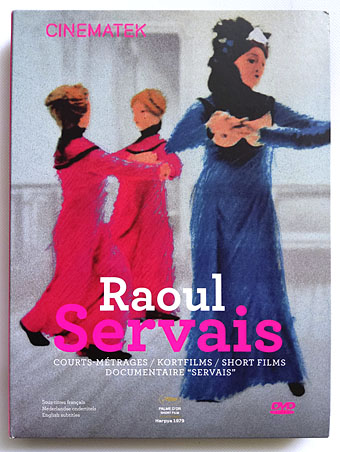
“Courts-métrages”, the French term for short films, is one of those phrases like “bande dessinée” that I prefer to its English equivalent. Among the weekend’s viewing was this double-disc DVD release devoted to the animated films of the Belgian director Raoul Servais. Some of the films are very familiar and have been the subject of previous posts, but the set comprises 14 films in total, and includes many I’d not seen before. Like Jan Švankmajer, Servais is generally the writer/director of his films rather than the animator which accounts for the great variety of graphic styles, although both directors helped animate their early works. The Servais art styles range from the flat UPA-derived idiom of the 1950s, through a variety of drawing techniques, to the later films which deploy “Servaisgraphy”, a process that combines live action and animation with drawn or photographed backgrounds. The last two films in the collection use digital technology.

harpya.jpg

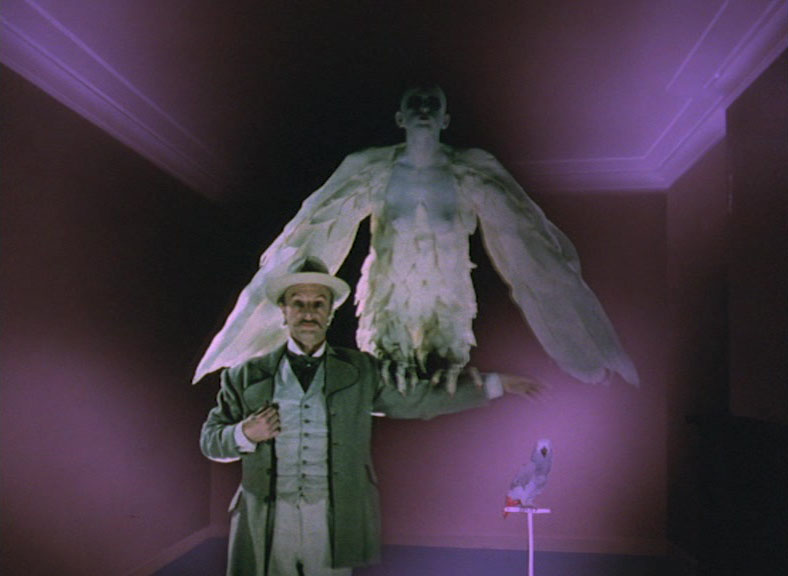
Harpya.

If there’s a common thread to this oeuvre it would be the Belgian brand of Surrealism, which might seem like a lazy comparison when so much animation can be described as superficially “surreal”. In the case of Servais, however, the connection is made explicit in Nocturnal Butterflies, a film dedicated to the Surrealist painter Paul Delvaux, whose paintings also inspired the director’s flawed feature film, Taxandria (1994). The Servais masterwork, Harpya, which won a Cannes Palme d’Or for best short film, is Surrealist to the tips of its feathers, a dark and absurd dream that’s a world away from his moralistic early works. One of the films I’d not seen before, November Diversion, resembles a Švankmajer live-action short, a wordless piece about a man trying to escape from an automobile cemetery. All the shorts have been restored by Cinematek, the Belgian film archive. I ordered my DVDs from Potemkine, Paris.

Contents
Disc 1: Harbour Lights (1960) / November Diversion (1962) / The False Note (1963) / Chromophobia (1965) / Sirene (1968) / Goldframe (1969) / To Speak or Not To Speak (1970) / Operation X-70 (1971) / Pegasus (1973) / Halewyn’s Song (1976) / Harpya (1979) / Nocturnal Butterflies (1998) / Atraksion (2001) / Tank (2015)
Disc 2: Servais (2018), a 60-minute documentary by Rudy Pinceel

Previously on { feuilleton }
Papillons de Nuit, a film by Raoul Servais
Sirene by Raoul Servais
Harpya by Raoul Servais
Taxandria, or Raoul Servais meets Paul Delvaux

François Schuiten record covers

schuiten01.jpg

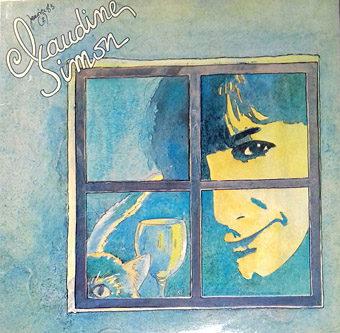
Claudine Simon (1980) by Claudine Simon.

Continuing an occasional series about artists or designers whose work has appeared on record sleeves. Belgian artist François Schuiten is a familiar name here, being the co-creator with Benoît Peeters of the Obscure World, one of my favourite zones of fantastic invention. The Obscure World has grown to become a multimedia endeavour so Schuiten’s involvement with some of the later entries in this post goes beyond providing the cover art to being connected to the music itself.

schuiten02.jpg

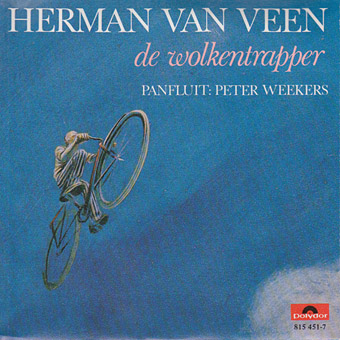
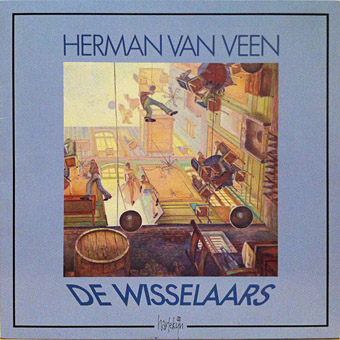
De Wolkentrapper (1983) by Herman van Veen.

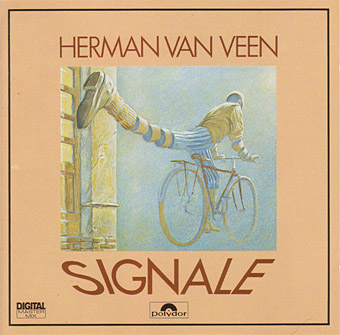
Herman van Veen is a Dutch writer and singer who produced a number of albums and singles in the 1980s featuring Schuiten cover art. The gravity-defying people are from an early comic strip unattached to the Obscure World mythos, Going to Pieces.

schuiten03.jpg

Signale (1984) by Herman van Veen.

schuiten04.jpg

De Wisselaars (1985) by Herman van Veen.

schuiten05.jpg

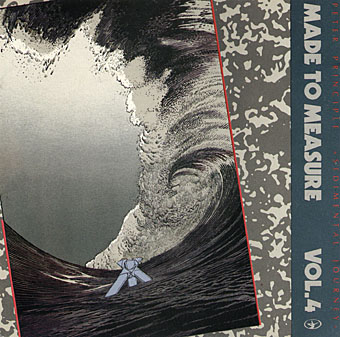
Sedimental Journey (1985) by Peter Principle.

The Obscure World makes its cover debut on this solo release by the late Peter Principle, bass player in Tuxedomoon. Principle was American but Tuxedomoon were based at the time in Europe, and their record label, Crammed are Belgian. Obscure World aficionados will recognise the structure about to be submerged by a vast wave as the Network, an inexplicable object first seen in Fever in Urbicand (1985).

Continue reading “François Schuiten record covers”