
Weekend links 812

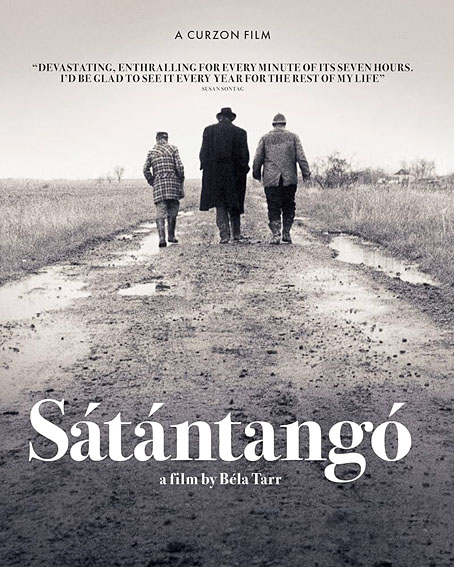
satantango.jpg

• RIP Béla Tarr. I came late to Tarr’s films, he’d retired from directing by the time I worked my way through most of his oeuvre in 2019. As I’m always saying: better late than never. What I never expected from reading reviews was the irreducible strangeness at the heart of the later films, as well as their meticulous construction. With regard to the latter, mention should be made of the director’s regular collaborators: Ágnes Hranitzky (wife, editor and co-director), László Krasznahorkai (writer), and Mihály Víg (composer).

More Tarr: “The whole fucking storytelling thing is everywhere the same. That’s why I decided I have to do my movies.” Tarr talking to R. Emmet Sweeney in 2012; and at Criterion, Béla Tarr: Lamentation and Laughter by David Hudson.

• “When [Fela Kuti] first saw Lemi Ghariokwu’s work, he said, ‘Wow!’ Then he plied him with marijuana and asked him to design his album sleeves. The artist recalls their extraordinary partnership – and the day Kuti’s Lagos HQ burned.”

• At Smithsonan Mag: “Hundreds of mysterious Victorian-era shoes are washing up on a beach in Wales. Nobody knows where they came from.”

• At Ultrawolvesunderthefullmoon: The collage art of Wilfried Sätty.

• At the BFI: Leigh Singer selects 10 great Lynchian films.

• At Unquiet Things: The vast luminous art of Andy Kehoe.

• At Dennis Cooper’s it’s another Jan Švankmajer Day.

• New music: Light Self All Others by Tarotplane.

• At I Love Typography: Heart-shaped books.

• At Colossal: Luftwerk.

• Sailin’ Shoes (1972) by Van Dyke Parks | Dead Man’s Shoes (1985) by Cabaret Voltaire | New Shoes (2007) by Angelo Badalamenti.

Weekend links 805

strausfeld.jpg

A poster by Peter Strausfeld for a 1966 screening of Alphaville and La Jetée.

• At Bandcamp Daily: “Caroline True obsesses over compilations so you don’t have to,” says Erick Bradshaw. I recommend CTR’s compilations.

• At The Wire: Read an extract from Music Stones: The Rediscovery Of Ringing Rock by Mike Adcock.

• At Colossal: Pastoral landscapes brim with patterns in luminous paintings by David Brian Smith.

One of the markers that sets Mamoru Oshii apart from his peers is his willingness to allow place to speak for itself. From the seasonality captured in his works, like the first two Patlabor films, to the otherworldly environments of Ghost In The Shell 2: Innocence (all projects in which Ogura was also involved heavily) and even the fantasy scapes of his Angel’s Egg, Oshii’s attention to place, and allowing it to be a player in the story, gives as much voice to world building, as he does to characterisation. This attentiveness and patience for place, allows us to settle deeply inside a worldview that is often simultaneously familiar but unerringly alien.

Lawrence English talks to art director Hiromasa Ogura and composer Kenji Kawai about their work on Oshii’s Ghost in the Shell

• At the BFI: Leigh Singer suggests where to begin with the films of Lucile Hadžihalilović.

• Necromodernist Architectures in Contemporary Writing: an essay by David Vichnar.

• New music: Hydrology by Loula York; Love Letters Via Echelon by Nerthus.

• There’s more Intermittent Eyeball Fodder at Unquiet Things.

• The Strange World of…Early Cabaret Voltaire.

• Winners of the Drone Photo Awards 2025.

Lautréamont’s Apocrypha

Drone Um Futurisma (1992) by Cusp | ABoneCroneDrone 1 (1996) by Sheila Chandra | Suspicious Drone (2009) by Demdike Stare

Weekend links 436

cthulhusex.jpg

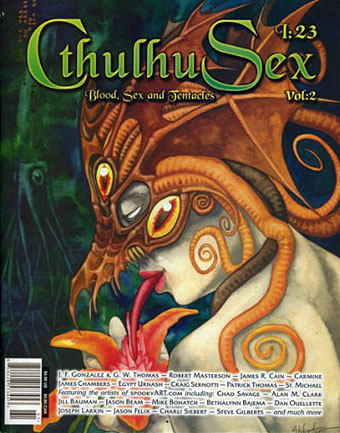
Cover for the now-defunct Cthulhu Sex magazine, volume 2, no. 23. Art by Chad Savage.

• Revising Lovecraft: The Mutant Mythos by Paul StJohn Mackintosh. Mackintosh was interviewed at Greydogtales in 2016 where he made a point that certainly chimes with my experience: “…the English-speaking genre community seems to have far more trouble with certain sexual themes than the mainstream literary community does, especially in Europe. […] A pity, because, for example, if H P Lovecraft’s worldview did owe much to sexual repression, then more mature engagement with that could really benefit the whole cosmic horror genre.”

• At Expanding Mind: Occultist and Aleister Crowley biographer Richard Kaczynski talks with Erik Davis about Jack Parsons, the “method of science,” the Agape Lodge, the women of Thelema, and the pluses and minuses of the Strange Angel TV series.

The Tell-Tale Heart (1953) is a short adaptation of the Poe story directed by JB Williams, and featuring Stanley Baker as the author. The film had been lost for 50 years but may now be seen on the BFI website.

• From July but more suited to the end of October: Paul Karasik on The Addams Family Secret: how a massive painting by Charles Addams wound up hidden away in a university library.

• Mixes of the week: Samhain Séance Seven: A Very Dark Place by The Ephemeral Man, Big Strings Attached, Oct. 2018 by Abigail Ward, and XLR8R Podcast 564 by Niagara.

• At Haute Macabre: Conjured from obscurity: lost, neglected and forgotten literature from Valancourt Books.

The Feathered Bough, a large-format collection of new fiction and art by Stephen J. Clark.

William Doyle on Music For Algorithms: in search of Eno’s ambient vision in a spotify era.

• The devils of our better nature: Daniel Felsenthal on Dennis Cooper and his new film.

Bone Mother, a short animated film by Dale Hayward & Sylvie Trouvé.

• “In Japan, the Kit Kat Isn’t Just a Chocolate. It’s an Obsession.”

Leigh Singer chooses 10 great films about the afterlife.

• “I am a haunted house,” says Sarah Chavez.

Psychedelitypes

Sex Voodoo Venus (1985) by Helios Creed | Sexy Boy (1998) by Air | Sex Magick (2002) by John Zorn