Evoluon

evoluon1.jpg

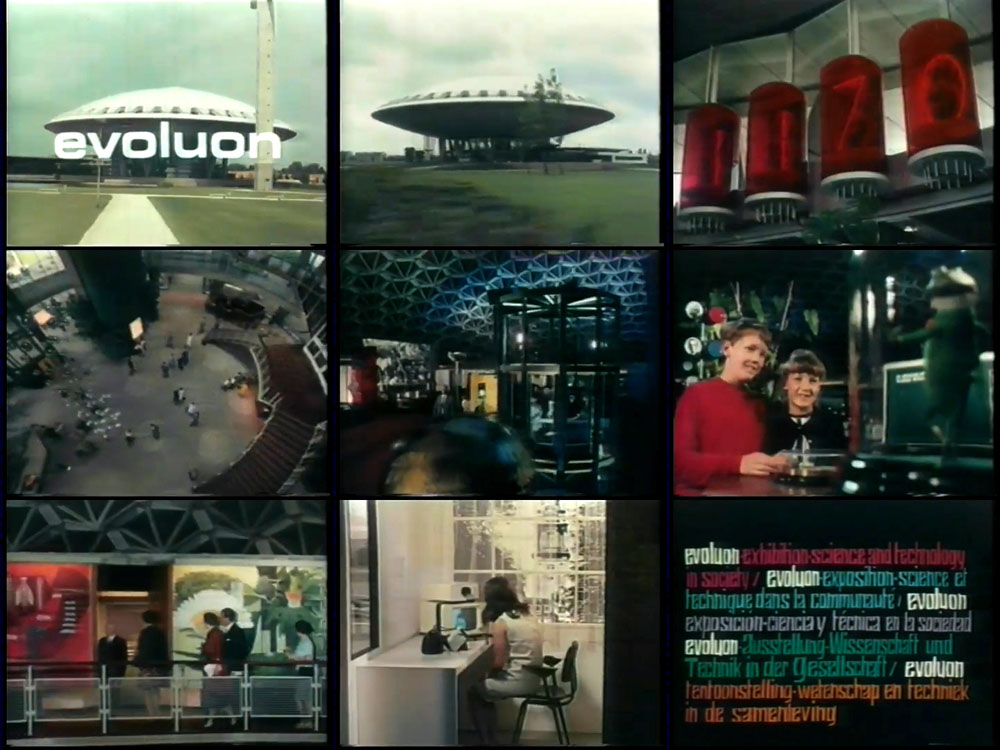
“Evoluon”: a Space Age name for a Space Age building in Eindhoven, Holland, constructed in 1966 by the Dutch electrical and electronics company, Philips. The building was designed by Leo de Bever and Louis Christiaan Kalff, and functioned for a number of years as a science museum, combining exhibits of innovative gadgetry with a three-dimensional representation of “the future” familiar from exposition architecture. I’d guess that Kalff was responsible for the flying-saucer shape, having already designed a range of lamps for Philips with similar shapes in the 1950s.
evoluon2.jpg

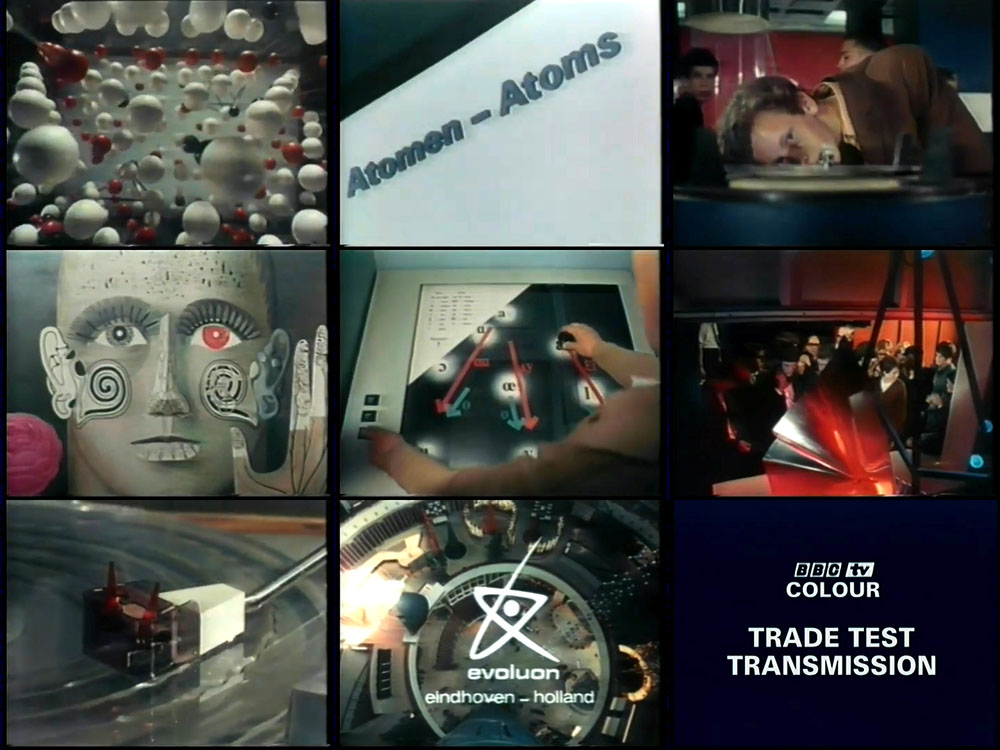
Bert Haanstra’s Evoluon was a short promotional film which was broadcast regularly by the BBC from 1968 to 1972 for trade test purposes, although I don’t recall ever seeing it before. Being someone who’s always liked architecture that looks like it fell out of a science-fiction magazine (preferably with a name to match: Skylon, Atomium, Space Needle, etc), an exhibition centre shaped like a flying saucer would have made an impression. British TV schedules were often empty during the daytime so films like this were broadcast for the benefit of TV retailers who needed something better than the testcard flickering on the screens of their brand-new colour boxes. As a science museum Evoluon looks like it was more fun to visit than the London Science Museum, with a profusion of interactive exhibits. (Although this isn’t to say that the London museum isn’t worthwhile, I went there several times in the 1970s. They have many large historical exhibits in the bigger halls, including the re-entry module from Apollo 10.) The music in Haanstra’s film isn’t much better than the bland testcard soundtracks but you do hear a snatch of eerie sound produced by a Cristal Baschet when the unique instrument makes a brief appearance. Philips’ own record division had many more suitable soundtracks at this time via their very collectable Prospective 21e Siècle recordings of avant-garde music. Most of these records aren’t easy listening by any means but the series was aiming at the same idea of a shiny future filled with surprising novelties.
spacelab.jpg

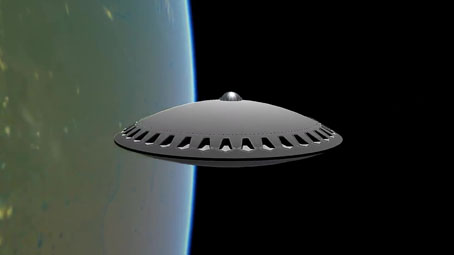
And speaking of “futuristic” music, a computer-generated Evoluon may be seen flying through the 3-D concert visuals for Spacelab by Kraftwerk who also played one of their recent concerts inside the building. I thought they could have done more with the visuals for this number, and with some of the other videos in the 3-D collection. Maybe they look better through 3-D glasses. I wouldn’t know, my eyesight has always been (and will remain) resolutely two-dimensional.

Previously on { feuilleton }
The world of the future
Space Needle USA

Kling Klang rundfunk

kraftwerk10.jpg

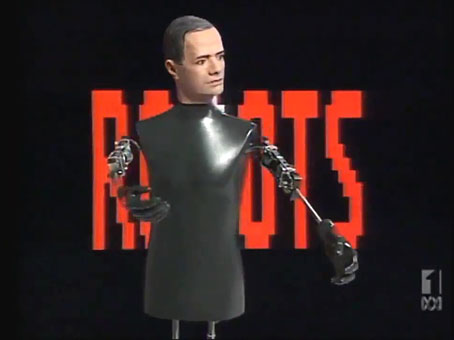
Kraftwerk on film and video, courtesy of recent uploads at the Internet Archive. These are mainly promotional clips, together with a few choice TV appearances. I’ve never liked music videos very much, even ones made for music that I enjoy a great deal, but I’m always curious to see how Kraftwerk portrayed themselves at different stages of their career, especially the early years when they were still tuning the group persona. I’m fairly sure I hadn’t seen the videos for Radioactivity and Antenna before, while some of the later videos are present in two or more versions. The quality is variable but that’s how things go with this group; everything from 1970 to 73 is treated like a period that never happened, while the years from 1974 to 1981 have been subject to continual revision. Kraftwerk is unique in being a very popular group that buries or reworks much of its own history, record covers included, leaving us with a trail of deleted or neglected “produkt” that ends up circulating secondhand or in bootleg form. A couple of these promo videos have been attached to CD singles but only a small portion of this material has been recycled into the official catalogue as it stands today.


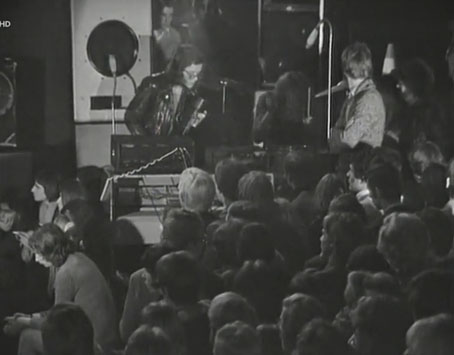
Winter Soest (1970)

kraftwerk01.jpg

The group in their rock-freakout period playing to an audience of bored/bewildered/enthusiastic German hippies. With Klaus Dinger on drums and Ralf playing some kind of portable keyboard. Spot the leitkegel.


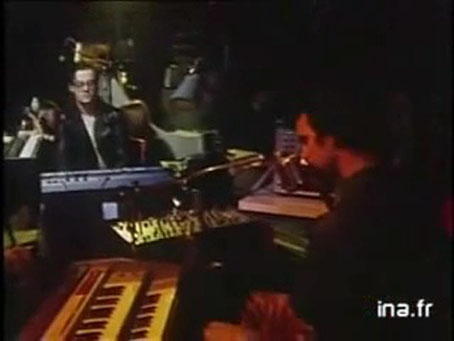
Pop2 (1973)

kraftwerk02.jpg

Pop2 was French TV’s equivalent of Germany’s Beat Club and the BBC’s Old Grey Whistle Test. This clip is from a programme devoted to “Kosmische” German music which also featured Tangerine Dream, Guru Guru, Klaus Schulze, and (in conversation) comic artist Philippe Druillet. The music here is very much in the melodic mode of the third album, Ralf & Florian. This is also about the last time you see Ralf wearing his leather jacket. The spectacles didn’t remain for long either.


Radioactivity (1975)

kraftwerk03.jpg


Antenna (1975)

kraftwerk04.jpg


Continue reading “Kling Klang rundfunk”

A Can pin

pin1.jpg

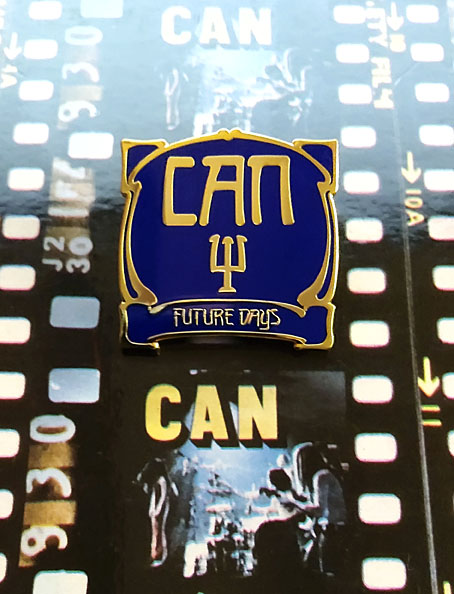
I’ve always liked badges, and I especially like the enamel pin variety even though I tend to buy them then not wear them very much for fear of losing them. This handsome item arrived a couple of days ago from an eBay seller, and is the first Can-related pin I’ve come across. After Kraftwerk, Can were the most popular of the German groups in the Britain of the 1970s but I’ve never seen any Can badges or anything else related to them from that decade aside from the records. The resurgence of interest in German music—Krautrock, if you must—has prompted the badge manufacturers who populate eBay, Etsy and elsewhere to create a number of items based on the record covers of Can, Neu!, Harmonia and others. The quality isn’t always very good but then badges in the 1970s were often crude designs as well. You can’t go wrong with a simple logo but shrinking an album cover down to 25 mm isn’t always a good idea. A couple of years ago I bought three Can badges from another eBay seller; two of them, with logo designs taken from sleeves, were okay but the third, based on the Future Days album cover was poorly printed. This pin equivalent is much better, as well as being one of the few Can sleeves you could transform in this manner. The raised gold lines are a good match for the Art Nouveau-styled design by Ingo Trauer and Richard J. Rudow which was embossed on the original German pressing. The group may have been popular in Britain but UA gave British Can-heads a flat sleeve.

pin2.jpg

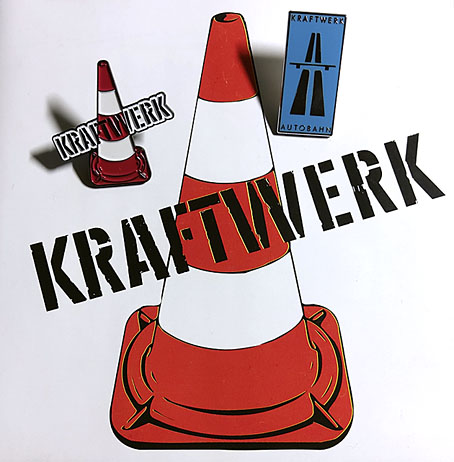
The same eBay seller also makes these Kraftwerk pins which I bought a while ago. I’d still prefer to have the traffic cone without the band name—something that only aficionados would recognise—but it was good to find a pin based on the early years of the group’s career, the period which Kraftwerk themselves have long disowned. The seller recently added a new design with the same traffic cone in green as it is on the Kraftwerk 2 album cover, but the green cone was only a variation on a theme, the orange leitkegel is the ubiquitous and definitive icon of the pre-Autobahn years.

Previously on { feuilleton }
Holger’s Radio Pictures
Jaki Liebezeit times ten
Can esoterics
Can soundtracks
The kosmische design of Peter Geitner
Reworking Kraftwerk (again)
Leitkegel
German gear
Autobahnen
Ralf and Florian
Can’s Lost Tapes
Reworking Kraftwerk
Autobahn animated
Sleeve craft
Who designed Vertigo #6360 620?
Old music and old technology
A cluster of Cluster
Aerodynamik by Kraftwerk

Weekend links 550

moebius

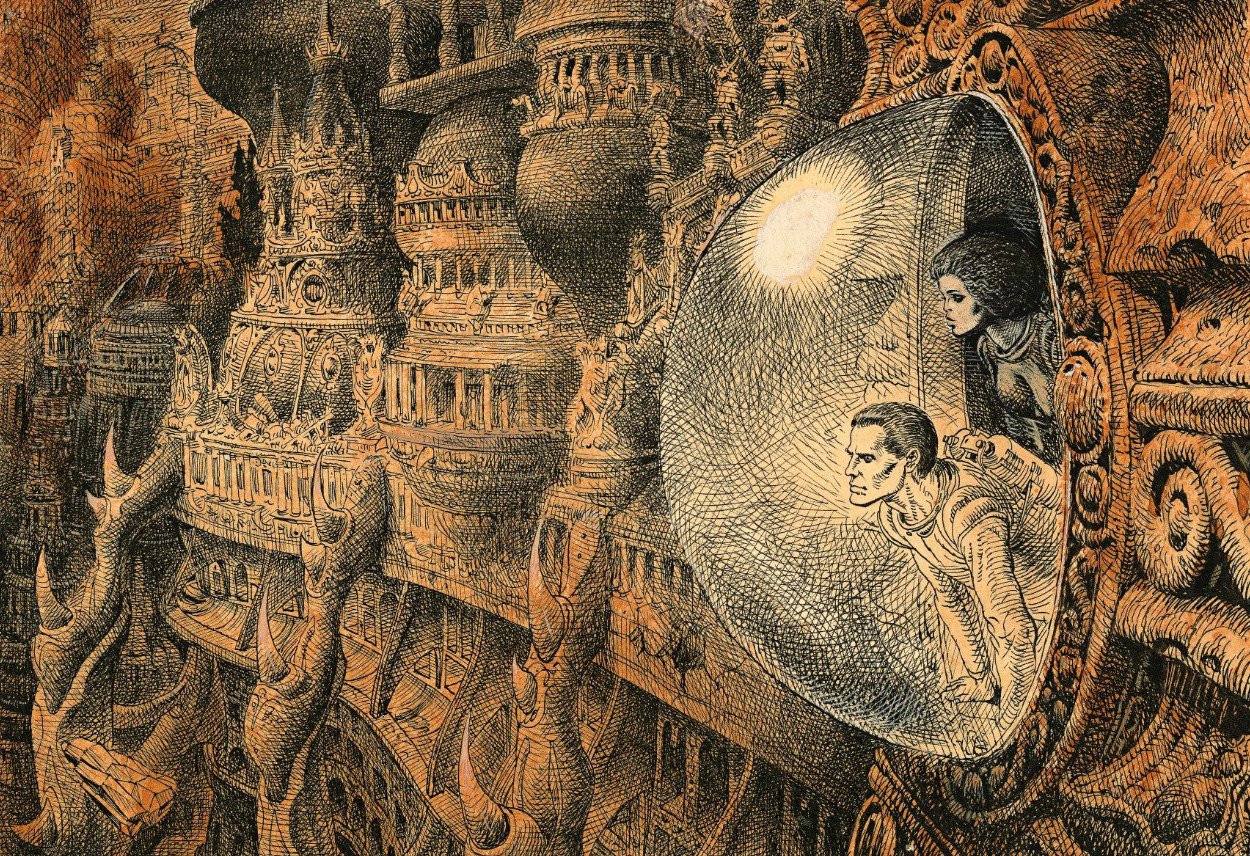
Illustration by Moebius for Les Robinsons du Cosmos (1970) by Francis Carsac.

Notre Dame des Fleurs is a collection of art based on or inspired by the Jean Genet novel. The book, which includes some new work of mine, will be published in February. Editor Jan van Rijn has a trailer for it here. It’s limited to 150 copies so anyone interested is advised to pre-order.

• Books that made me: William Gibson‘s influential reading. Good to see him mention Suttree by Cormac McCarthy, an outstanding novel that might be better known if it wasn’t for the gravitational pull of McCarthy’s other works.

• Zagava have announced a paperback reprint of The Art of Ilna Ewers-Wunderwald, a collection of neglected Art Nouveau drawings and designs compiled by Sven Brömsel.

• At Dennis Cooper’s: Black_Acrylic presents…He Stood In The Bath And He Stamped On The Floor: A Joe Meek Day.

• More yearly roundups: Our Haunted Year 2020 by Swan River Press, and The Year That Never Was by blissblog.

• New music: Spaceman Mystery Of The Terror Triangle by The Night Monitor.

Ralph Steadman’s guided tour through six decades of irrepressible art.

• At Greydogtales: Valentine Dyall: Mystery and Mesmerism.

• At Wormwoodiana: The Esoteric in Britain, 1921.

• At Strange Flowers: Marie Menken’s Lights.

I Want To See The Bright Lights Tonight (1974) by Richard and Linda Thompson | Neon Lights (1978) by Kraftwerk | Lights (1980) by Metabolist

Weekend links 519

minotaure.jpg

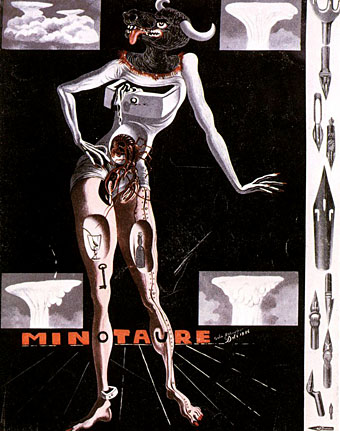
Cover of Minotaure no. 8 (1936) by Salvador Dalí.

• At Dangerous Minds: Irmin Schmidt talks to Oliver Hall about his new album of prepared piano, Nocturne, and also reveals more about the planned release of live recordings by Can.

• “Even the most zealous fan of the genre can learn something new from this book,” says Geeta Dayal in a review of Bring That Beat Back: How Sampling Built Hip-Hop, by Nate Patrin.

• The subject of a previous post but the video was later removed: Italo Calvino in a rare documentary feature for an English audience, on the BBC’s Bookmark in 1985.

• On 9th May, carillonneur Malgosia Fiebig played The Model by Kraftwerk on the bells of the Dom Tower in Utrecht as a tribute to the late Florian Schneider.

• Film footage of Alice Coltrane in her prime is a rare thing so even 17 minutes of TV from 1970 is something special.

Dan Reynolds on the fantastic alphabets designed by Jean Midolle. See also Luc Devroye’s page.

• Mix of the week: Jon Hassell tribute, part 1: Jon and his collaborators, by Dave Maier.

Nicolas Winding Refn on some of the films he’s been watching during lockdown.

• At Haute Macabre: Surrealist décor and tiny secret drawers.

HP Lovecraft dreams of a Providence trolley car in 1927.

The Museum of Ridiculously Interesting Things

Xerrox Voyage, a new recording by Alva Noto.

• At Dennis Cooper’s: Jean-Pierre Léaud Day.

The Model (1979) by Snakefinger | Model (1992) by The Balanescu Quartet | Das Modell (1997) by Rammstein