Into the Midnight Underground

midnight01.jpg

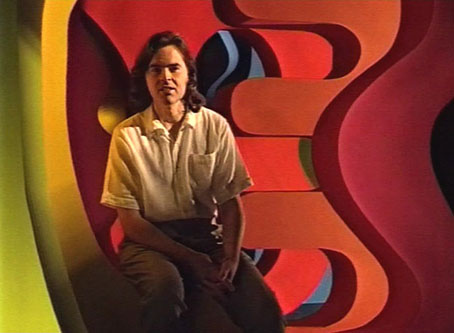
Browsing Vimeo recently I found a film by Anna Thew, Cling Film, which I remembered seeing years ago on Midnight Underground, a TV series devoted to avant-garde cinema. The series was broadcast by Channel 4 (UK) for eight weeks in 1993, with each episode being screened shortly after midnight. The presenter was the always reliable Benjamin Woolley, sitting before a backdrop resembling one of Verner Panton’s psychedelic environments from where he introduced the cinematic offerings, an eclectic blend of avant-garde and experimental films, unusual dramas plus a couple of animations. Episodes ran for around an hour, with each installment following a different theme. The films were a mix of the old and the new: “classics” (for want of a better term) of underground cinema set alongside more recent works. This was very much a television equivalent of the screenings of avant-garde cinema which Film and Video Umbrella had been touring around Britain’s arthouses since the mid-1980s; one of the founders of FVU, Michael O’Pray, is thanked in the series credits. Midnight Underground was so tailored to my interests at the time it was easy to feel like this was being screened for my benefit alone. I taped everything as it was broadcast but I never got round to digitising all the episodes, so that many of the films shown there, Cling Film included, I haven’t seen for a long time.
midnight02.jpg

Benjamin Woolley.

The discovery of Anna Thew’s film set me wondering whether it would be possible to replicate the contents of Midnight Underground via links to various video sites. Since this post exists, the answer is obviously yes, or almost… Of the 44 films shown in the series only 3 are currently unavailable, with one more being limited to an extract and another as pay-to-view. This was a much better result than I expected, especially for works with such a limited appeal. The majority of the films shown in the series were being screened on British TV for the first time, also the last time for most of them. In 1993 Channel 4 was still maintaining its original brief, offering a genuine alternative to the programming on the other three terrestrial channels. As I’ve often complained here, this didn’t last; the underground remained underground. Woolley’s series was a brief taste of a televisual world where the concept of diversity could apply to form and content as well as identity. It’s a world the corporate channels will never show you, one you have to find for yourself.

* * *

1: Strange Spirits
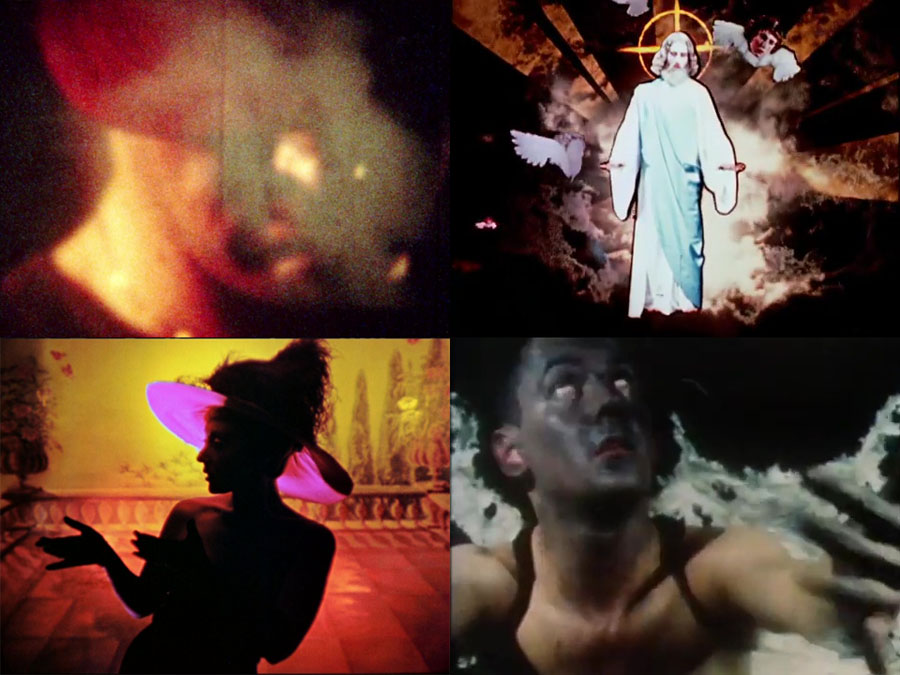
The opening episode shows why I felt they were broadcasting this for me alone. Derek Jarman’s grainy film of a Throbbing Gristle performance is probably the first (and only?) time the group appeared on British TV. This was the first surprise. The second one was Kenneth Anger’s film being shown with its Janácek score. I’d seen this at an FVU screening a couple of years before with its ELO soundtrack, the so-called “Eldorado Edition”, which Anger later discarded. As for Daina Krumins’ weird and creepy religiose short, I expected this one to be unavailable but the director now has several of her films on YouTube. Don’t miss her even-weirder animated slime moulds, Babobilicons. The angel in Maggie Jailler’s film is artist (and Jarman/TG associate) Cerith Wyn Evans.
midnight03.jpg

TG: Psychic Rally in Heaven (Derek Jarman, 1981)
The Divine Miracle (Daina Krumins, 1973)
Inauguration of the Pleasure Dome (Kenneth Anger, 1954)
L’ange frénétique (Maggie Jailler, 1985)


2: Music for the Eye and Ear
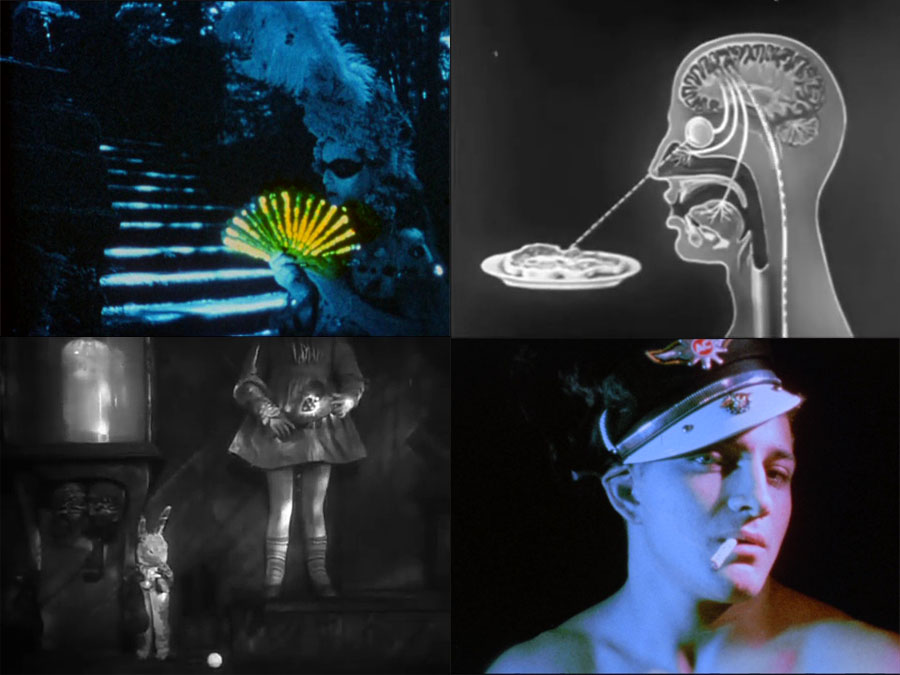
Bruce Conner’s films are continually elusive on the internet, especially those made to accompany music by Devo and Eno & Byrne. The version of Mongoloid linked here differs slightly from the original but it’s essentially the same film. Versailles II is taped from the Midnight Underground broadcast, and includes Benjamin Woolley’s introduction.
midnight04.jpg

Eaux d’artifice (Kenneth Anger, 1953)
Mongoloid (Bruce Conner, 1978)
Versailles II (Chris Garratt, 1976)
Stille Nacht II: Are We Still Married? (Quay Brothers, 1992)
All My Life (Bruce Baillie, 1966)
Scorpio Rising (Kenneth Anger, 1964)


3: New Sexualities
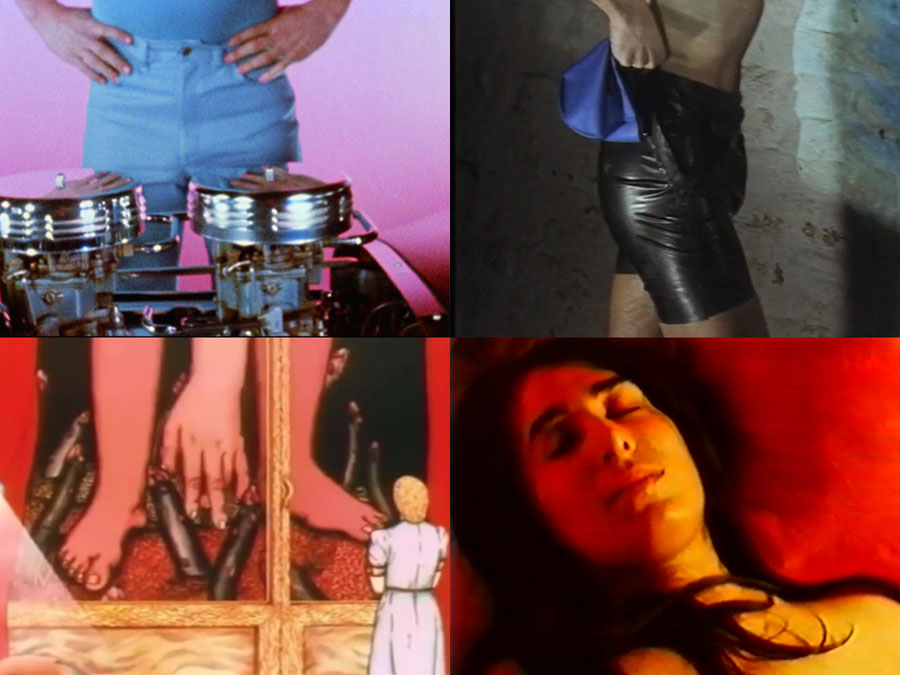
Stephen Dwoskin’s film is the one that shows a close-up of a woman’s face during the act of masturbation. This is paralleled later in the series by Antony Balch’s masturbatory self-portrait in Towers Open Fire. Cling Film is all about safe sex, and was broadcast in a slightly amended form to avoid being too explicit. The version on Vimeo is uncensored.
midnight05.jpg

Kiss (Chris Newby, 1992) (no video)
Kustom Kar Kommandos (Kenneth Anger, 1965)
Cling Film (Anna Thew, 1993)
Stain (Simon Pummell, 1992)
Asparagus (Suzan Pitt, 1979)
6/64: Mama und Papa (Materialaktion Otto Mühl) (Kurt Kren, 1964)
Moment (Stephen Dwoskin, 1969)


4: London Suite
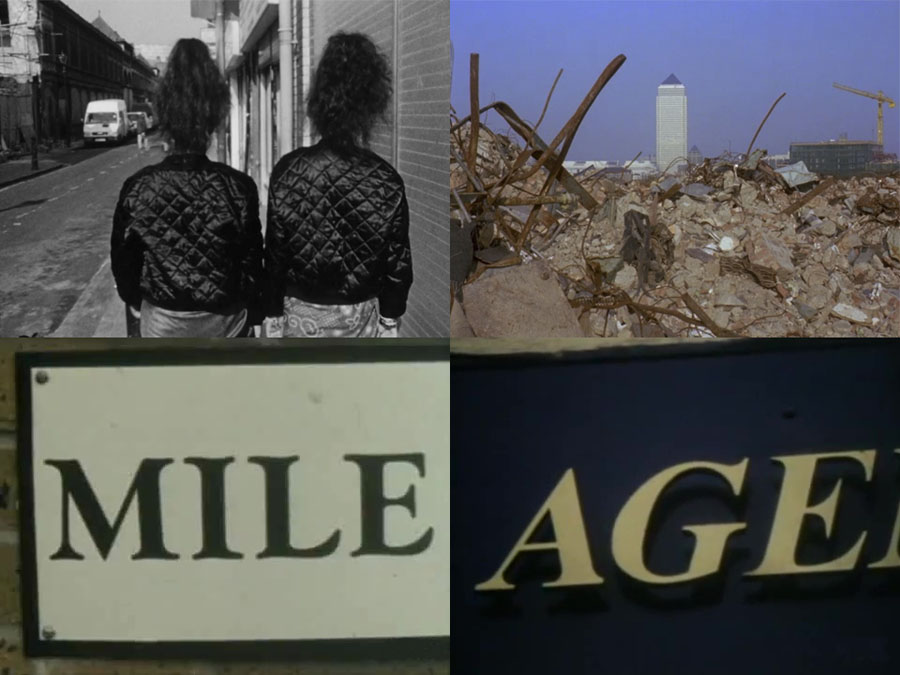
Sundial and Mile End Purgatorio have both appeared here before as a result of my seeing them on Midnight Underground.
midnight06.jpg

Latifah and Himli’s Nomadic Uncle (Alnoor Dewshi, 1992)
Sundial (William Raban, 1993)
The London Story (Sally Potter, 1987) (pay-to-view)
Mile End Purgatorio (Guy Sherwin, 1991)
London Suite (Vivienne Dick, 1989) (no video)

Continue reading “Into the Midnight Underground”

Švankmajer’s Decalogue

svankmajer3.jpg

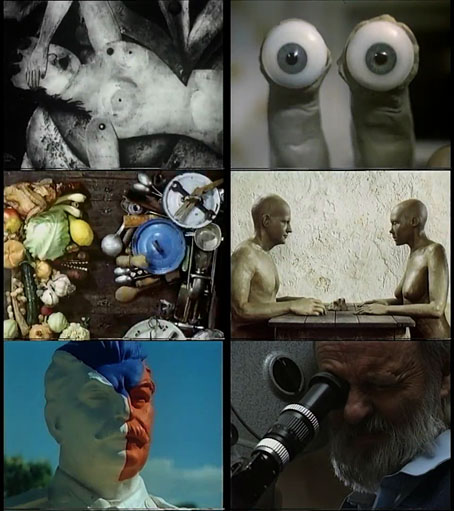
Natural History (1973) by Jan Švankmajer.

A Jan Švankmajer interview I was reading recently contained two references to something he called his “Decalogue” but no detail as to what this might be. The mystery was explained in a footnote: “Decalogue” is a collection of ten artistic principles that Švankmajer wrote for a film magazine, Vertigo, in 2006. Given the low circulation of these kinds of journals I expected the piece to be unavailable but the magazine has a website which reproduces the full text here.

Despite the title, these aren’t really Ten Commandments, they’re more statements of Švankmajer’s artistic philosophy, and as such won’t be suitable for everyone, or for every purpose when they’re so heavily oriented towards animated film. All the same, I like to see things like this even if I don’t agree with them; sometimes finding a principle you disagree with is a way of confirming or reinforcing the value of its opposite. In other cases you may find a condensation of a vague impulse which becomes easier to recall when set into words. A good example of the latter is the well-known instruction from Eno & Schmidt’s Oblique Strategies (which also has a quasi-religious tone:) “Honour your error as a hidden intention”. I seldom follow this one but I keep it in mind. As Švankmajer says at the end of his piece, rules like these are also made to be broken.

Previously on { feuilleton }
The Magic Art of Jan Švankmajer
Švankmajer’s cats
Jan Švankmajer: The Animator of Prague
Jan Švankmajer, Director
Don Juan, a film by Jan Švankmajer
The Pendulum, the Pit and Hope
Two sides of Liška

The Magic Art of Jan Švankmajer

svankmajer1.jpg

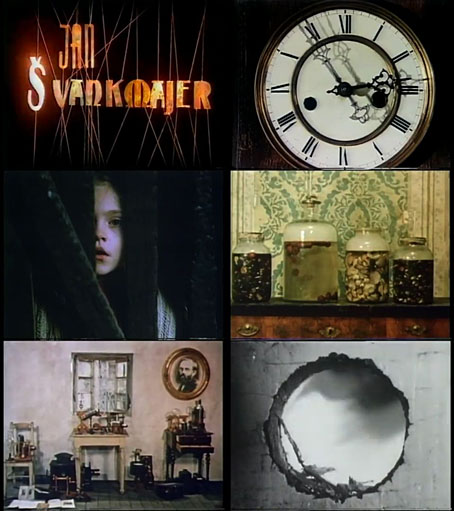
Three years ago I binged on all the Jan Švankmajer feature films after buying the box of blu-rays released by the director’s Athanor company. Once I’d worked my way through that lot, and rewatched the BFI collection of Švankmajer’s short films, I went through all the documentaries I’ve managed to accumulate, including this two-part BBC study which I taped when it was first broadcast in 1992. It’s likely that Švankmajer’s approach to film and to Surrealism no longer requires the kind of introduction that seemed necessary in the 1990s, but for those who do need such a thing this is a good place to start.

svankmajer2.jpg

Ben Fox’s documentary was made to coincide with an exhibition of Švankmajer’s films and artworks being shown at an animation festival in Cardiff. The two installments examine a different aspect of Švankmajer’s cinematic works: “Memories of Mysterious Beings” concerns the films that deal with childhood dreams and fears, while “The Naming of Demons” concentrates on his use of Surrealism as a tool for satire or social critique. In between lengthy extracts from the films the camera prowls around some of the director’s artworks while an actor reads statements Švankmajer has made about his interests and intentions. This last feature isn’t something I enjoy very much, not when the actor’s nasal delivery is so different from Švankmajer’s own voice. It’s a common ploy in documentaries, having someone impersonate an interviewee to avoid using subtitles, but it’s one I find distracting when done like this.

eva.jpg

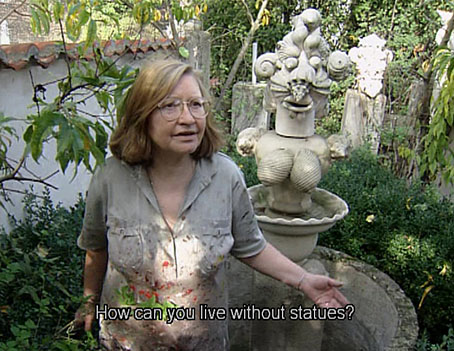
Eva liked statues.

At this point I would have directed your attention once again to Jan Švankmajer, Director, a documentary about Czech cinema which featured the man himself talking at length about his activities in the 1960s, but this has now been removed from YouTube. In its place, however, there’s a more recent upload, Les Chimères des Švankmajer, an 80-minute documentary for French TV by Bertrand Schmitt and Michel Leclerc which is included among the extras on the BFI’s collection of Švankmajer’s short films. The only trouble here is that the YT copy has no subtitles, you’ll need to be a French speaker to understand the voice-overs which run throughout. This is one of the best of all the Švankmajer documentaries since it shows the range of activities conducted by Švankmajer and his late wife, Eva Švankmajerová, as artists and foremost members of the Prague Surrealist Group; film-making, as Švankmajer has often stressed in interviews, was only one outlet for his creativity. (It was also one he was forbidden to practice for several years when the Communist authorities took exception to his work.) In addition to seeing the Švankmajers preparing an exhibition of their creations, Schmidt and Leclerc show us something of their home outside Prague, an artwork in itself that combines the sculpture park and Wunderkammer. Eva Švankmajerová was the creator of many of those sculptures, a celebrated artist in her own right whose contribution to her husband’s films has often been overlooked.

Elsewhere on { feuilleton }
The Surrealism archive

Previously on { feuilleton }
Švankmajer’s cats
Jan Švankmajer: The Animator of Prague
Jan Švankmajer, Director
Don Juan, a film by Jan Švankmajer
The Pendulum, the Pit and Hope
Two sides of Liška

Art on film: The Beast

beast1.jpg

The Beast: Lisbeth Hummel, Elisabeth Kaza and Marcel Dalio.

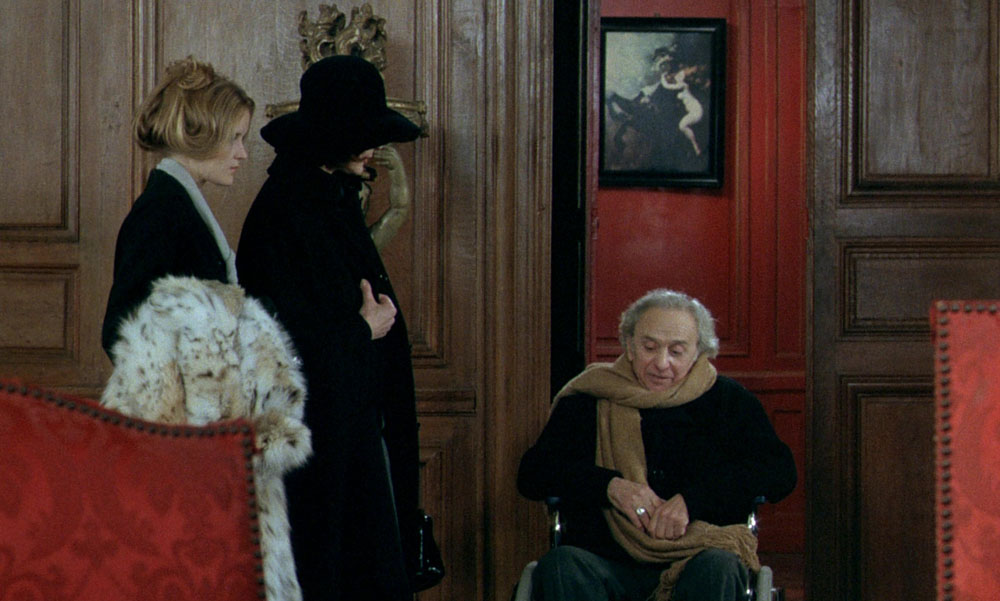
In which Polish director Walerian Borowczyk places a little-known Symbolist painting in the background of The Beast, his strange sex film (or should that be strange-sex film?) from 1975. I’ve spent the past week or so working my way through Arrow’s box of Borowczyk films, of which The Beast is the last in the collection. It’s also the one film by the director that many people may be aware of even if they’ve never seen it, thanks to a historical reverie in which an 18th-century woman has a very graphic sexual encounter with the beast of the title, a bear-like creature with a fully-functioning phallus. This episode is framed by a somewhat farcical modern-day story set in a French chateau, with the bestiality flashback being the culmination of a parade of sexual antics that include equally graphic scenes of horse-breeding, female masturbation, and thwarted attempts by the daughter of the house to have sex with one of the servants.

frenzy.jpg

Frenzy aka Frenzy of Exultations (1893).

And this is the painting that Borowczyk shows. I said that it’s little-known but it happens to be the most visible of all the paintings by Polish artist Władysław Podkowiński (1866–1895), with a popularity in Poland that extends to reproduction on postcards and jigsaw puzzles. (That huge area of shadow must cause puzzle-solvers some headaches.) I only recognised the picture because Michael Gibson includes it in his wide-ranging study of Symbolist art, although he doesn’t have much to say about it apart from its having caused a minor scandal when it was first exhibited. This isn’t too surprising; prior to the 20th century there were few Western artworks that were so overt in their depiction of erotic delirium without tipping into outright pornography. Given this you’d expect Borowczyk to make more of the reference but he keeps the picture in the background, a reward for the small percentage of the audience who can identify the thing at a distance.

Frenzy is dramatically different to Podkowiński’s other paintings, most of which are Impressionist studies, and is further distinguished by having been attacked by its creator when the artist slashed the canvas with a knife while it was still being exhibited. Paintings and sculptures have been subject to attacks by members of the public for many years but this is the first I’ve heard of an artist attacking their own work while it was on display. The scandalous history suits the film as much as the salacious subject matter; The Beast was almost subject to an obscenity prosecution when an uncensored print was shown in London in the 1970s. For a long time it was one of those troublesome features that you’d be more likely to read about than to see.

Continue reading “Art on film: The Beast”

Quay Brothers posters

quays01.jpg

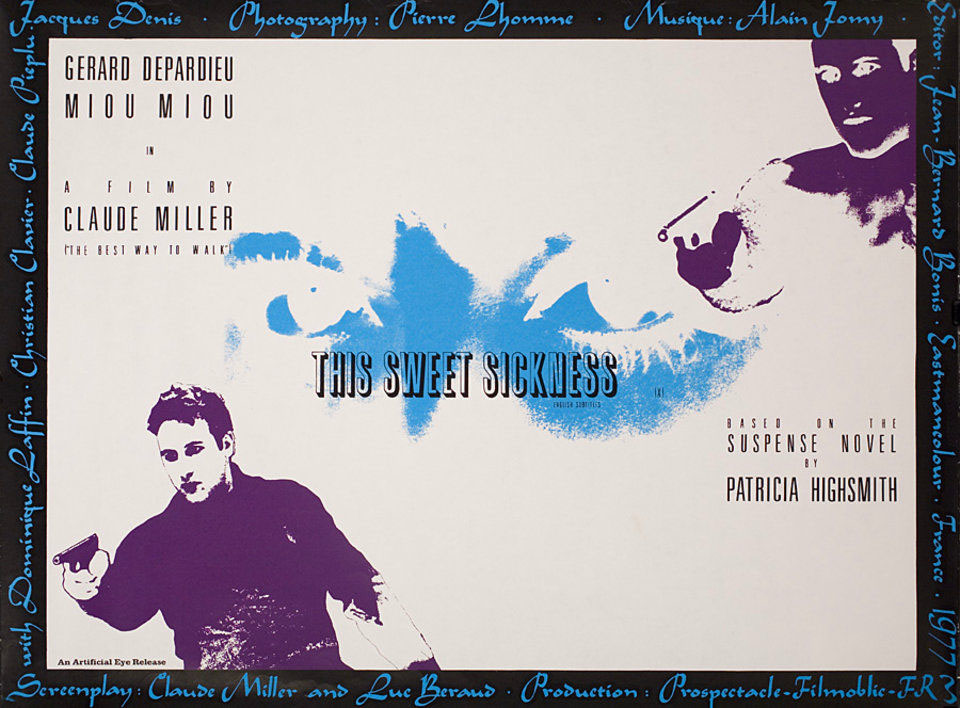
This Sweet Sickness (1977).

Looking around for Quay Brothers designs turned up an item I hadn’t seen before, a poster for the UK release of a French film by Claude Miller, This Sweet Sickness, starring Gérard Depardieu. I’ve not seen the film either, nor have I read the Patricia Highsmith novel on which it was based although a copy of the book has been sitting on my shelves for some time, together with a couple of other unread Highsmiths. The poster dates from just before the Quays started to get serious about their own film-making.

quays02.jpg

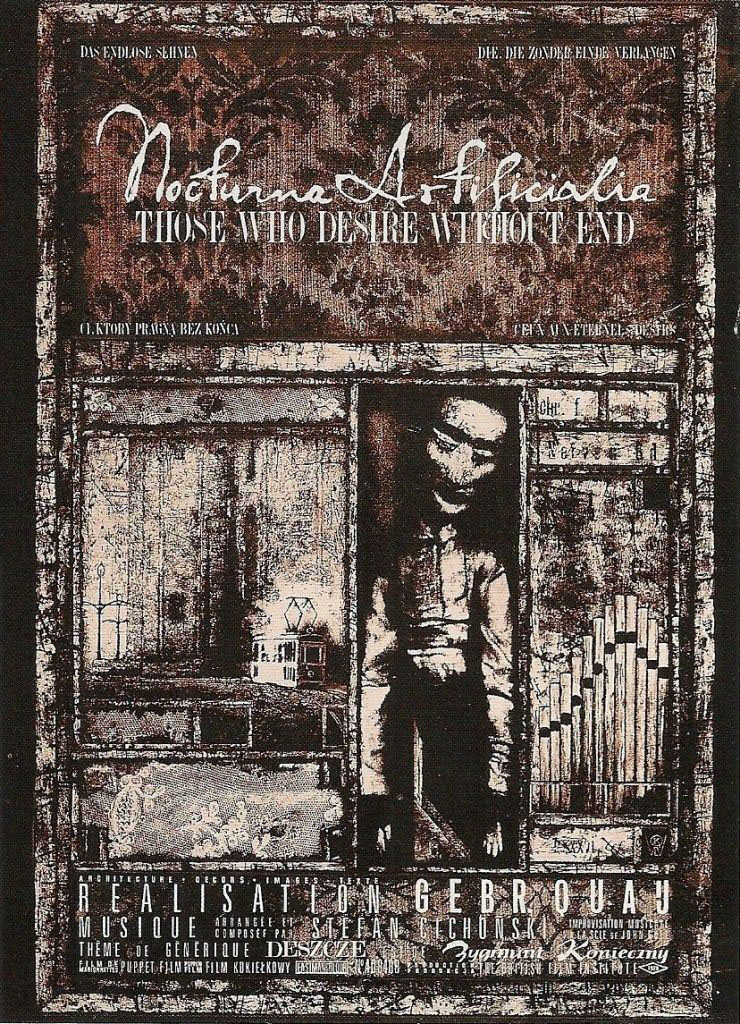
Nocturna Artificiala: Those Who Desire Without End (1979). The organ pipes, which don’t appear in the film, are an allusion to the improvised organ score by Stefan Cichonski.

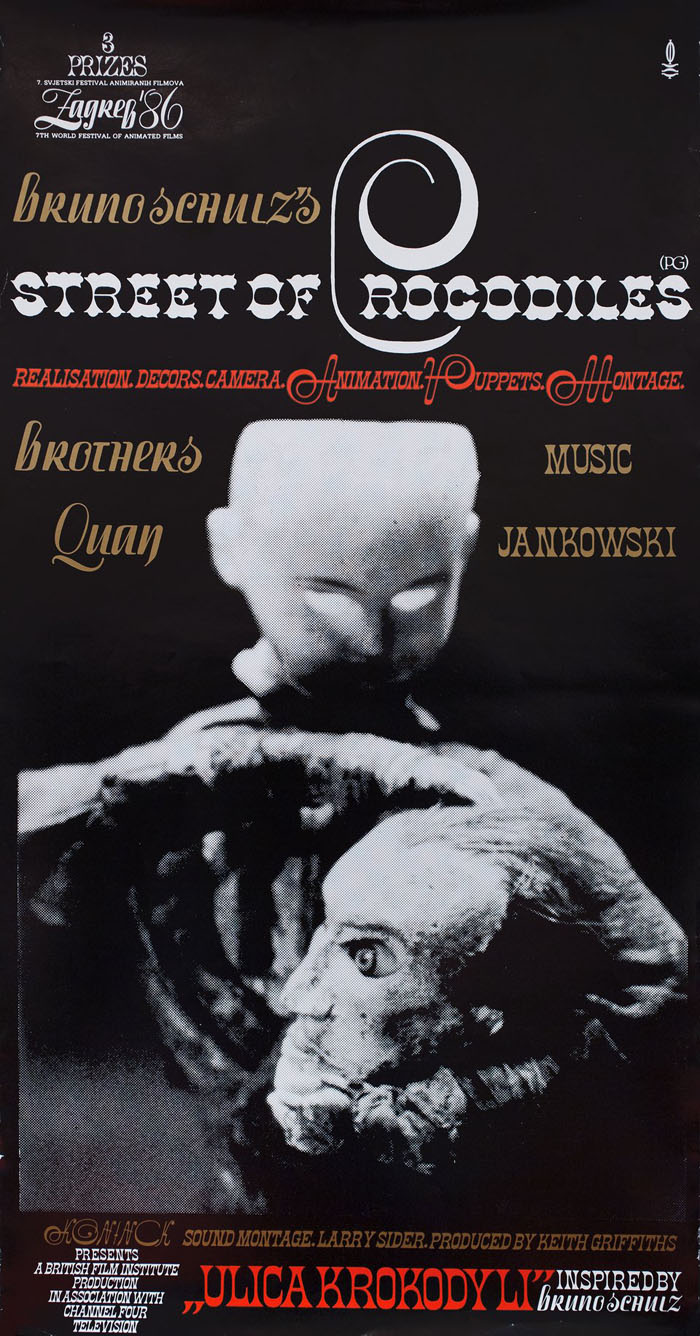
Being graphic designers as well as film-makers puts the Quay Brothers in a very rare class, one where they not only make the films but also design the posters used to promote their films. Offhand, I can only think of the late Eva Švankmajerová as being in the same company so it’s perhaps fitting that her husband and artistic collaborator, Jan Švankmajer, was the subject of an early film by the Quays.

quays03.jpg

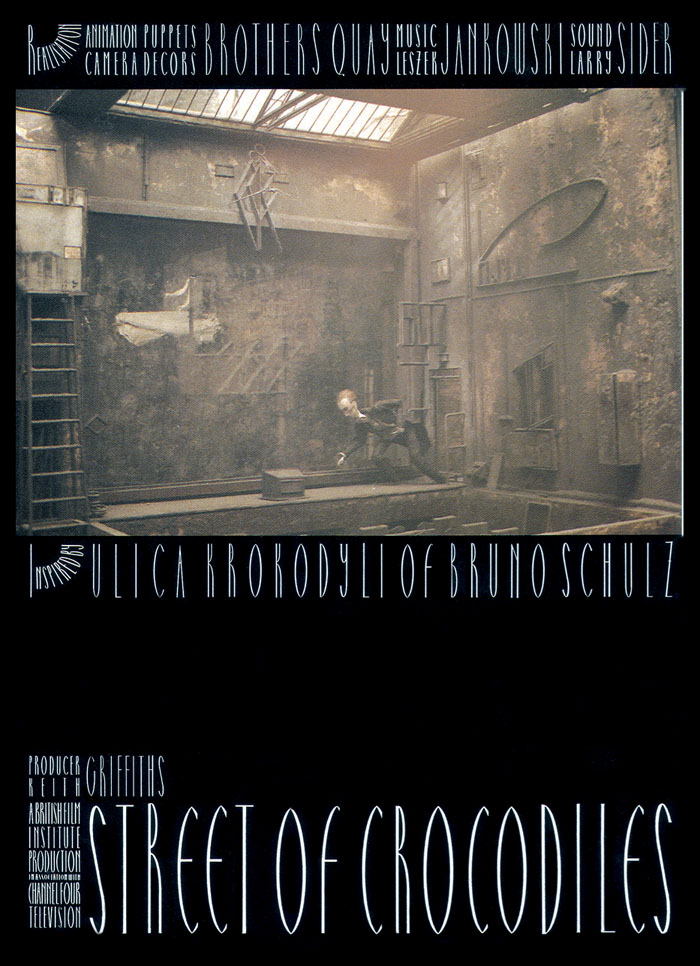
Street of Crocodiles (1986).

quays04.jpg

quays05.jpg

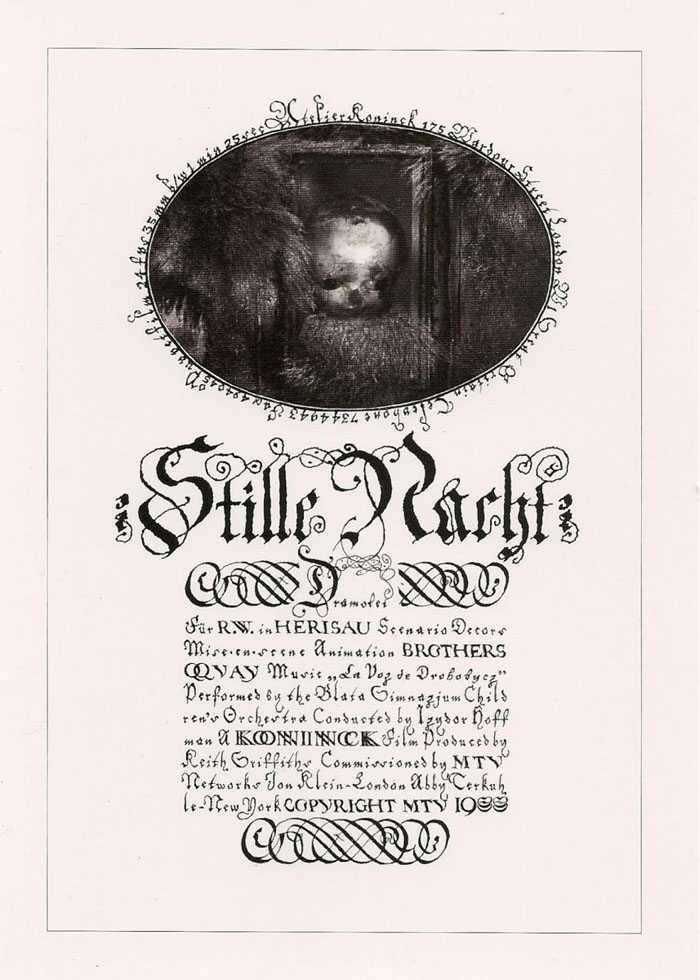
Stille Nacht: Dramolet (1988). An early use of Heinrich Holzmüller’s typographic designs.

Continue reading “Quay Brothers posters”