The Living Grave by David Rudkin

rudkin.jpg

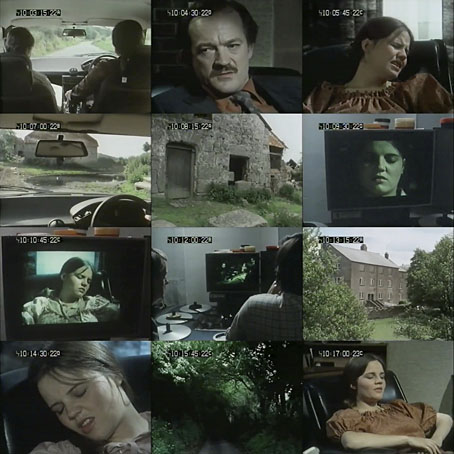
Having recently discovered two episodes from the BBC’s long-running Leap in the Dark series (In the Mind’s Eye, and Alan Garner’s To Kill a King), I was hoping the episode written by David Rudkin might turn up eventually. And here it is, posted to YouTube last month. Leap in the Dark, which ran from 1973 to 1980, was unusual for series dealing with the paranormal in the way it combined documentary episodes with fictional ones. The Living Grave (1980) is a skillful blend of both fact and fiction; Rudkin’s website describes it thus:

Based on documentary transcripts: the hypnotist Joe Keaton “regresses” Pauline, a Merseyside nurse, back beyond her birth to an earlier life – she starts to speak as Kitty, a maidservant on 18th century Dartmoor, who is made pregnant and hangs herself. To this day, on Kitty’s unconsecrated grave at a lonely forkroads, flowers are still left by an unknown hand.

I intercut the hypnosis scenes with glimpses of the life and death of Kitty herself as “her” voice was describing them – but with the camera as Kitty’s point of view, and so never seeing her, and using the locations as they are now. This was to avoid the inertia of mere illustration, creating instead a simultaneity of the two time-frames, and a sense of Kitty’s experience still present in the landscape today.

In May this year I wrote a lengthy essay about Rudkin’s dramas (more about that later) so The Living Grave has additional relevance beyond its cult interest. For a half-hour film it’s a more impressive piece than White Lady, a longer original drama that Rudkin wrote and also directed in 1987. Where White Lady is surprisingly inert, The Living Grave features familiar Rudkin touches, especially the voice of the unseen “haunted man” whose words are the closest thing to the speech in the stage plays. After spending some time tracing Rudkin’s recurrent use of sacred monuments, whether churches or stone circles, the shots of Dartmoor megaliths were especially notable. In the essay I sketched a comparison between Rudkin and Alan Garner, two writers who share concerns with the way the deep past of the British Isles impresses itself on the present, especially in a rural context. As noted above, Garner wrote an episode of Leap in the Dark, and there’s a further connection here in Lesley Dunlop who plays the hypnotised nurse, Pauline; two years before, Dunlop was Jan in Garner’s excellent TV adaptation of his novel, Red Shift. The hypnotist in The Living Grave is played by Ian Hogg, a friend of Rudkin’s who played Arne in Penda’s Fen, and has appeared in a number of the writer’s other dramas for stage and radio.

Previously on { feuilleton }
In the Mind’s Eye
To Kill a King by Alan Garner
Afore Night Come by David Rudkin
White Lady by David Rudkin
Red Shift by Alan Garner
Penda’s Fen by David Rudkin
David Rudkin on Carl Dreyer’s Vampyr
In the Mind’s Eye

itme.jpg

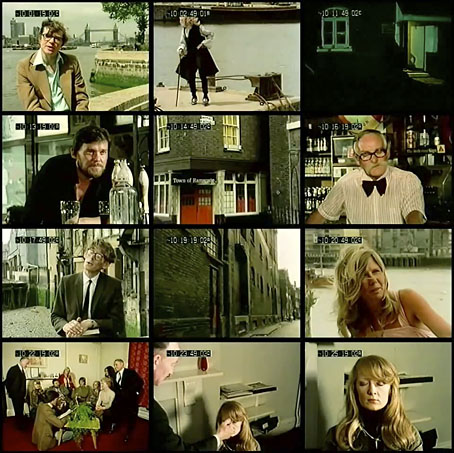
One of the posts last December concerned a short TV film by Alan Garner, To Kill a King, the final entry in the Leap in the Dark series which the BBC ran from 1973 to 1980. Each half-hour episode concerned the supernatural, presented in either drama or documentary form, which for me would have meant prime viewing but I don’t recall ever seeing the series. The Garner film was a strange piece of drama whereas In the Mind’s Eye (1977) is a documentary about ghosts presented by writer Colin Wilson. The film is almost more interesting for its production details than its subject, the Phantom Vicar of Ratcliffe Wharf, an alleged spectre whose murderous life is shown in a piece of unconvincing dramatisation. The Phantom Vicar was the invention of writer Frank Smyth who needed a supernatural story for the Frontiers of Belief section of Man, Myth and Magic during its publication as a part-work in the early 1970s. Smyth and friend describe hatching the tale then we hear a number of subsequent reports which show the story quickly became an East End legend. Between the interviews you get to see bits of the docklands area before the spirits of old London had been exorcised by redevelopment.

Previously on { feuilleton }
To Kill a King by Alan Garner
Dreaming Out of Space: Kenneth Grant on HP Lovecraft
MMM in IT
Terror and Magnificence

Owls and flowers

1: The pattern

pattern.jpg

A plate design by Christopher Dresser.


2: A novel by Alan Garner

garner.jpg

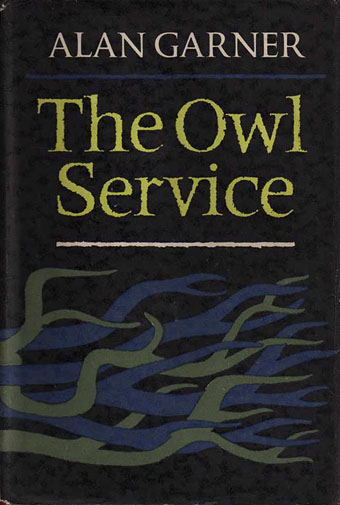
The Owl Service (1967). Cover design by Kenneth Farnhill.


3: A Granada TV serial

granada.jpg

The Owl Service (1969). Eight episodes, written by Alan Garner, directed by Peter Plummer.


4: A diversion

clockwork.jpg

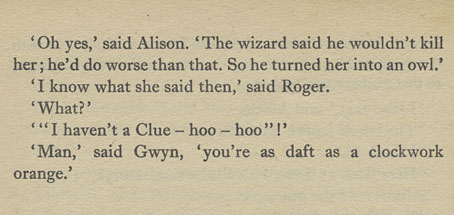
Chapter 8 of The Owl Service.

hills.jpg

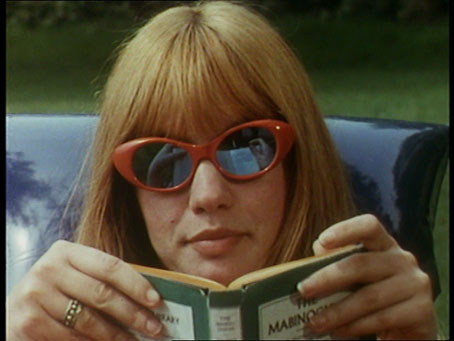
Gillian Hills as Alison in The Owl Service.

aco.jpg

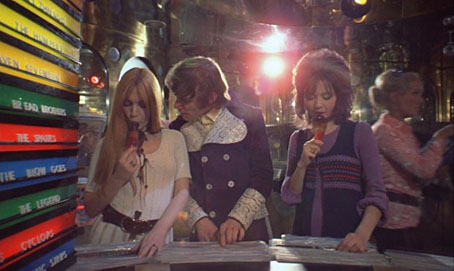
Gillian Hills (left) as Sonietta in A Clockwork Orange (1971).


5: A single by Pram

pram.jpg

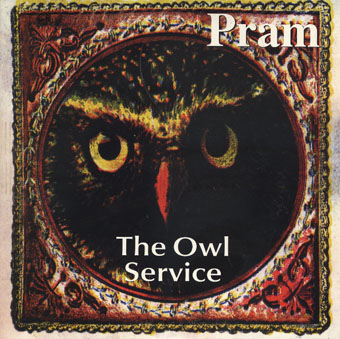
The Owl Service (2000) by Pram. Cover art by Mary Jo Bole.


6: Ghost Box

belbury.jpg

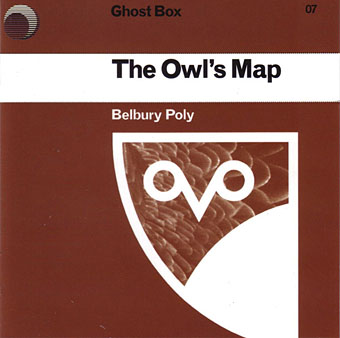
The Owl’s Map (2006) by Belbury Poly. Design by Julian House.

Track 1: Owls And Flowers

advisory.jpg

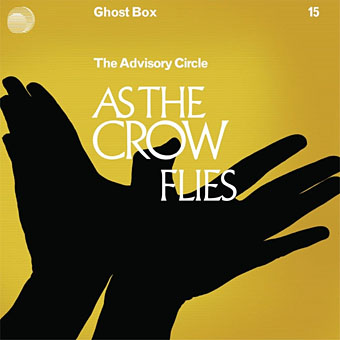
As The Crow Flies (2011) by The Advisory Circle. Design by Julian House.

Track 11: Learning Owl Reappears


7: A group

owlservice.jpg

The Owl Service.


8: A Folio Society edition

hopes.jpg

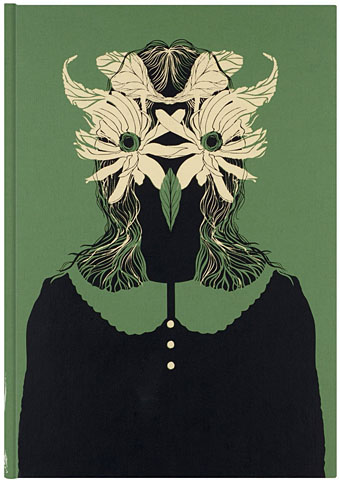
The Owl Service (2013) by Alan Garner, illustrated by Darren Hopes.


9: Twelve audiological pathways

ayitc.jpg

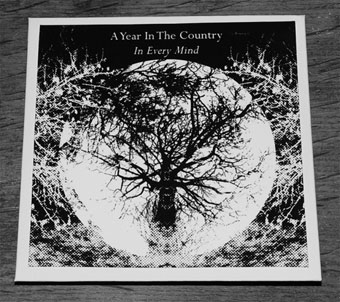
In Every Mind: Transmission Resonances, Volume 1 (2015) by A Year In The Country.

Transmission Resonances: Volume 1 takes as its wellhead the continuing reverberations of the 1969 cathode ray version of Alan Garner’s The Owl Service.

It pushes open the attic door from whence the scratching descends and travels to places that surprised, intrigued and even delighted our good selves when it was being shaped on our own particular audiological potters wheels.

Previously on { feuilleton }
To Kill a King by Alan Garner
Red Shift by Alan Garner

Weekend links 256

beardsley.jpg

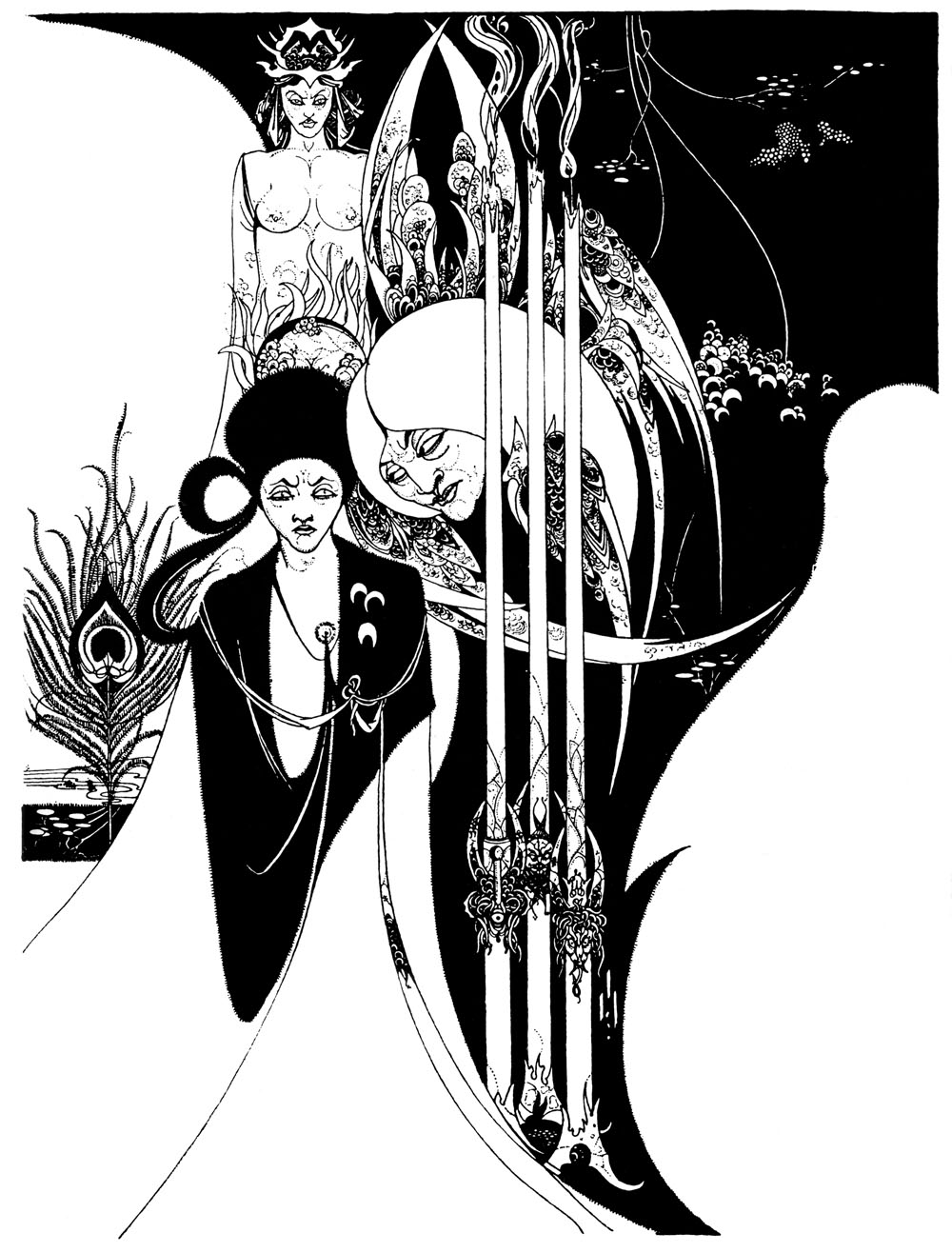
Of a Neophyte, and How the Black Art Was Revealed unto Him by the Fiend Asomuel. Aubrey Beardsley for the Pall Mall Magazine, 1893.

• The occult preoccupations of the 1970s appear to be in the ascendant just now. Whether this is mere nostalgia or something in the zeitgeist remains to be seen but BBC Radio 4 aired an hour-long documentary on the subject this weekend entitled Black Aquarius. The guest list implies an inevitable focus on film and television but Matthew Sweet covered a lot of ground, taking in the Hermetic Order of the Golden Dawn, Aleister Crowley, Dennis Wheatley, The Process Church, and Alex Sanders, the public face of British witchcraft in the 1960s and 70s. Earlier this week at AnOther the focus was on Maxine Sanders, High Priestess of the Alexandrian coven and putative fashion icon even though she was generally photographed naked. Maxine and husband Alex are unavoidable when reading about UK occultism in the 1970s; among other things they were occult advisors to Satanic rock band Black Widow, and also released an album of their own in 1970, A Witch Is Born. Of more interest is Sacrifice by Black Widow, a 55-minute concert for German TV’s Beat Club.

• Jacques Rivette’s OUT 1 (1971) is a film more talked about than seen, in part because of a running time that exceeds 12 hours. So news of a Blu-ray release later this year is very welcome.

• “Bruce LaBruce: taking zombie porn and gay homophobic skinheads to MoMA”. The director goes through his filmography with Nadja Sayej.

• “Art is anarchistic, and when it becomes categorized, it loses impact.” RIP Bernard Stollman, founder of the amazing ESP-Disk record label.

• Magickal (and pseudonymous) synth music by Mort Garson: Black Mass (1971) by Lucifer, and The Unexplained (1975) by Ataraxia.

Kevin Titterton on Angelo Badalamenti and the soundtrack that made Twin Peaks.

• Mix of the week: Secret Thirteen Mix 149 by Robert Aiki Aubrey Lowe.

Rare Decay, a free bonus track from Aurora by Ben Frost.

Alan Garner is celebrated in a new collection, First Light.

• At Dangerous Minds: The Residents’ radio special, 1977.

Black Sabbath (1969) by Coven | Black Sabbath (1970) by Black Sabbath | Her Lips Were Wet With Venom (Satan Oscillate My Metallic Sonatas 1 & 2) (2006) by Boris & Sunn O)))

Weekend links 253

mackey.jpg

A painting by Stephen Mackey.

• “Creativity is visual, not informed thought. Creativity is not polite. It barges in uninvited, unannounced—confusing, chaotic, demanding, deaf to reason or to common sense—and leaves the intellect to clear up the mess. Above all else, creativity is risk; heedful risk, but risk entire. Without risk we have the ability only to keep things ticking over the way they are.” Revelations from a life of storytelling by Alan Garner. Related: Tygertale on Garner’s Elidor (1965), “the anti-Tolkien”. The BBC’s 1995 adaptation of Elidor remains unavailable on DVD but may be watched on YouTube.

• “One of my revelations was to reverse everything I’d been taught. Making lettering as illegible as possible falls into that way of thinking.” Psychedelic artist and underground cartoonist Victor Moscoso talks to Nicole Rudick about a life in art and design. Related: “I’ve gotten a lot of bad write-ups in newspapers over the years and they like to refer to my stuff as ‘kitsch’…Well, my stuff is way fuckin’ kitsch. It’s kitsch to an abstract level, you understand. It’s fuckin’ meretricious.” I love it when Robert Williams kicks the art world.

• “…a cerebral, challenging, visually stunning piece of 1970s American science fiction that enweirds the human perspective by challenging it with a nonhuman one.” Adam Mills on the inhuman geometries of Saul Bass’s Phase IV.

• “[Delia Derbyshire] taught me everything I knew about electronic music.” David Vorhaus talks to David Stubbs about White Noise and why he prefers the latest technology to old synthesizers.

• Costumes from Alla Nazimova’s film of Salomé (1923) have been discovered in a trunk in Columbus, Georgia.

• Mix of the week: The Ivy-Strangled Path Vol. I, “music for a residual haunting” by David Colohan.

• At Dangerous Minds: Queer, boho or just plain gorgeous: photographs by Poem Baker.

Grimm City, a speculative architectural project by Flea Folly Architects.

Mad Max: “Punk’s Sistine Chapel” – A Ballardian Primer.

In Search of Sleep: photographs by Emma Powell.

Drains of Manchester

Road Warrior (1985) by The Dave Howard Singers | Warriors Of The Wasteland (Original 12″ mix, 1986) by Frankie Goes To Hollywood | Drive It Mad Max (Super Flu Remix, 2009) by Marcus Meinhardt