The art of Jean Boullet, 1921–1970

boullet3.jpg

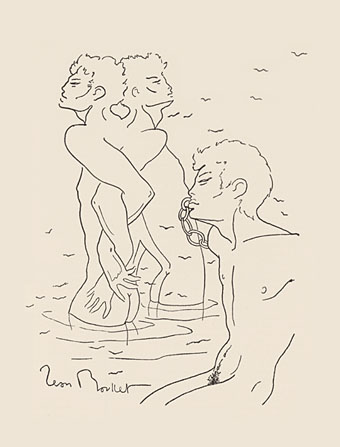
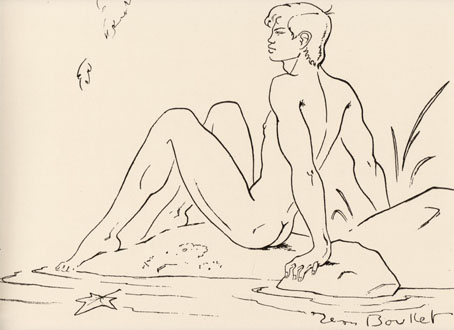
From Antinous (1954).

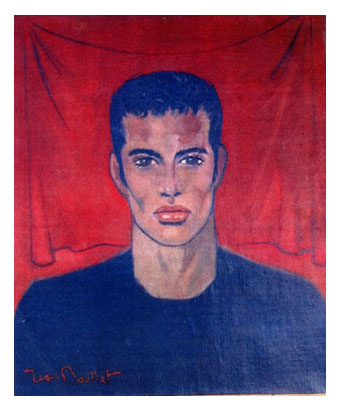
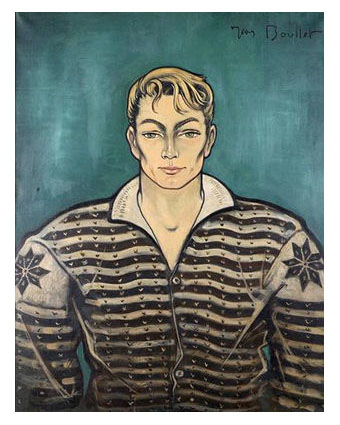
A few drawings and paintings by Jean Boullet, a prolific French illustrator who was also a writer—passionate about “sexology, conjuring, magic, demonology, and mythology”, says Wikipédia—and a film critic. His illustrations range from books by Raymond Radiguet, Boris Vian and Edgar Allan Poe to unabashed homoerotic collections of his own, one of which, Tapis volant (1945), has an introduction by Jean Cocteau. Boullet’s figures are very Cocteau-like, especially those depicting the sailors which Cocteau also liked to draw and fantasise about. The Au Bonheur du Jour gallery has many pages of Boullet’s drawings and publications, while Bibliothèque Gay has several posts showing complete sets of drawings from some of his books. Many of the artist’s drawings circulating without credit on the web seem to originate there. Don’t miss Metamorphoses (1950).

• See also: The Male Universe of Subversive Genius Jean Boullet by Julien Beyle.
boullet1.jpg

Portrait of Jean Marais.

boullet2.jpg

Portrait of Kenneth Anger.

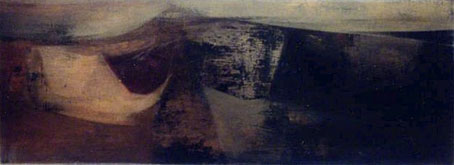
boullet4.jpg

Continue reading “The art of Jean Boullet, 1921–1970”

The Hell Courtesan

yoshitoshi.jpg

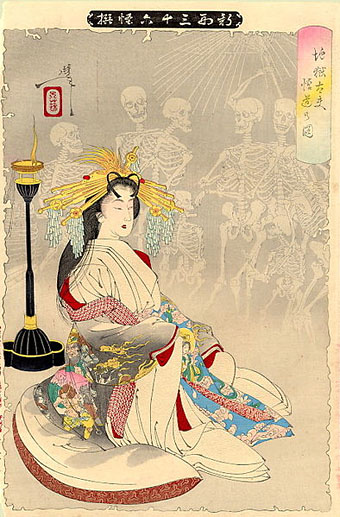
The Enlightenment of Jigoku-dayu (1890) from the series New Forms of Thirty-six Ghosts by Tsukioka Yoshitoshi.

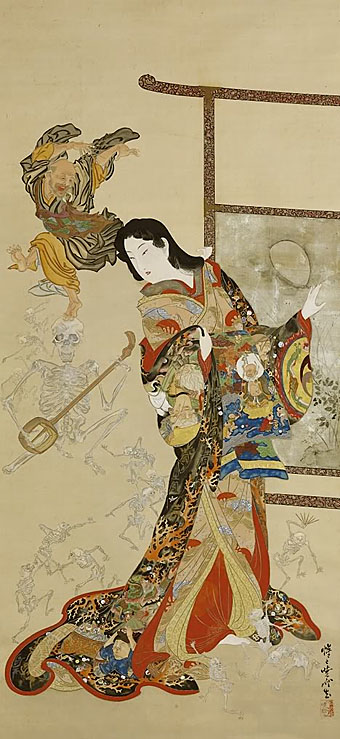
Jigoku-dayu of Takasu was a courtesan adopted by the Zen Priest Ikkyu (1394–1481), who converted her to a religious life and gave her a literary education. She is seated in meditation with a ghostly vision of a procession of the skeletons of a courtesan and her entourage, thus showing her the impermanence of life.

Jigoku-dayu is portrayed here as a high-ranking courtesan. Her white robe is embossed with fine key patterns and her outer robe is decorated with the Goddess of Mercy on the front and at the back with scenes of hell. Her name consists of Jigoku (hell), a term for the lowest form of unlicensed prostitute and dayu (respect) for a courtesan of the highest rank. (via)

See also Junko Mizuno‘s contemporary drawings of Jigoku-dayu.

kyosai1.jpg

Jigoku-dayu (date?) by Kawanabe Kyosai.

kyosai4.jpg

Jigoku-dayu (another version) by Kawanabe Kyosai.

Continue reading “The Hell Courtesan”

Dunes

dunes4.jpg

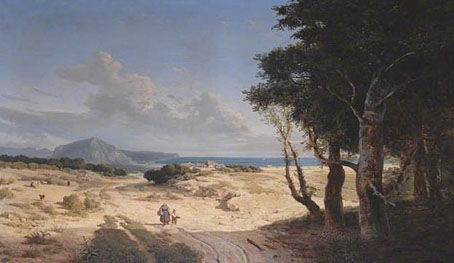
Sand Dunes near Boulogne-sur-Mer, France (c. 1870) by Joséphine Bowes.

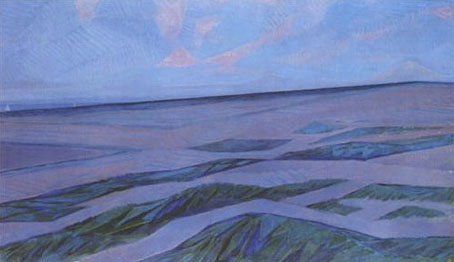
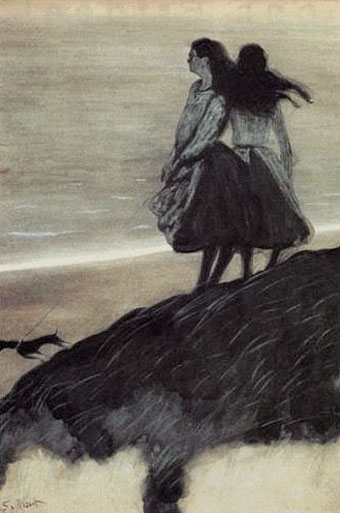
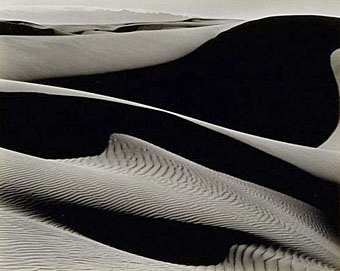
Dunes. Having visited the sand dunes that run along the French and Belgian coast it’s notable how much dune art has taken them as a subject. Belgian Symbolist Léon Spilliaert returned to them frequently, and managed to invest the littoral with a greater sense of mystery than many of his contemporaries.

dunes1.jpg

Dune Landscape (1911) by Piet Mondrian.

dunes6.jpg

Girls on a Dune (1913) by Léon Spilliaert.

dunes2.jpg

Dunes, Oceano (1936) by Edward Weston.

dunes5.jpg

Dune (1961) by Alexander MacKenzie.

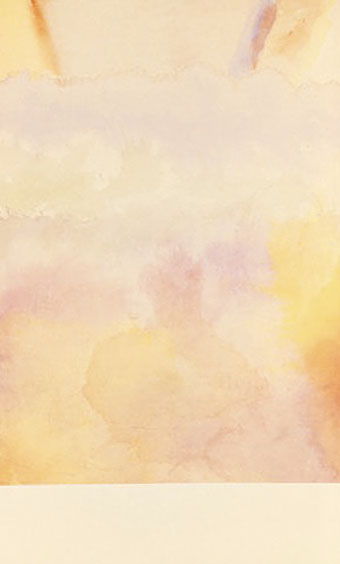
dunes3.jpg

Pale Dunes (1970) by Ronnie Landfield.

Midsummer

midsummer8.jpg

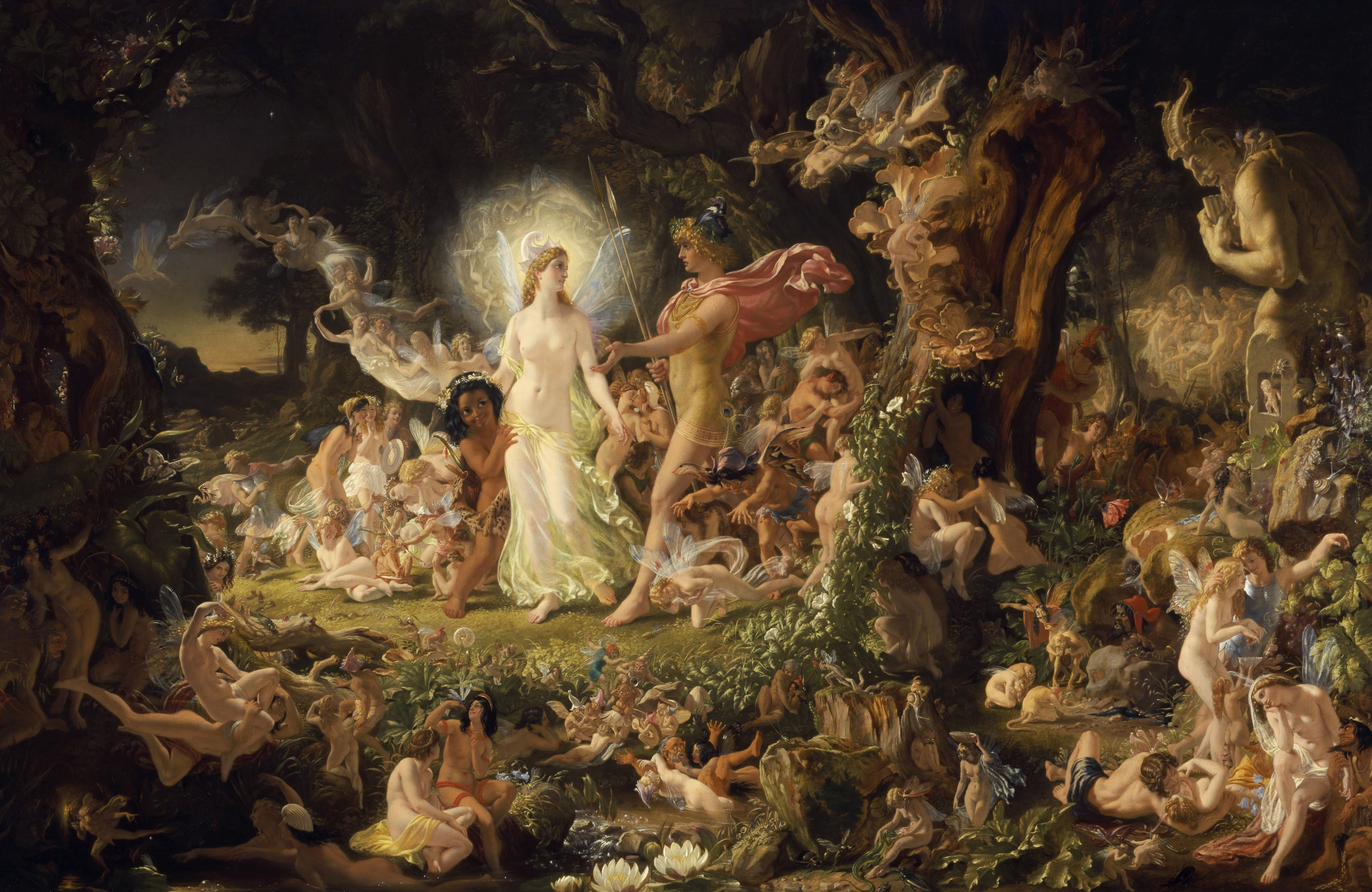
A statue of the Great God Pan looks down on the teeming chaos of Joseph Noel Paton’s The Quarrel of Oberon and Titania (1849), one of many 19th-century paintings based on A Midsummer Night’s Dream. Paton’s canvas gives Richard Dadd a run for his money in its wealth of incident and grotesque detail (see the big version at Wikipedia), and the artist returned to the theme a few years later with the equally excessive Fairy Raid (below). The later painting presumably depicts the kidnapping of the Changeling which Oberon and Titania quarrel over.

While we’re on the subject, a couple of years ago I wanted to link to the amazing fairy scene in William Dieterle’s 1935 film (which supposedly features Kenneth Anger as the Changeling) but it wasn’t on YouTube. Now you can watch it here.

midsummer7.jpg

The Midsummer Night’s Fairies (detail, 1847) by Robert Huskisson.

midsummer1.jpg

The Quarrel of Oberon and Titania (1849) by Joseph Noel Paton.

midsummer4.jpg

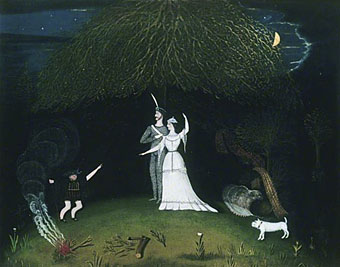
A Midsummer Night’s Dream (c. 1860) by W. Balls.

midsummer2.jpg

The Fairy Raid: Carrying Off a Changeling, Midsummer Eve (1867) by Joseph Noel Paton.

midsummer5.jpg

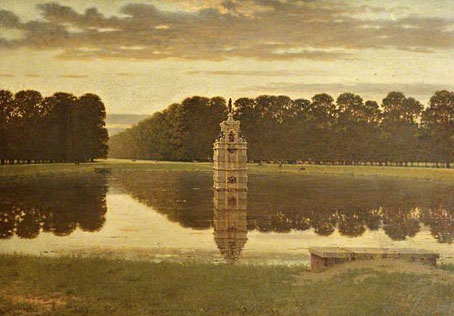
Midsummer Morn, Bushy Park (1905) by George Dunlop Leslie.

midsummer3.jpg

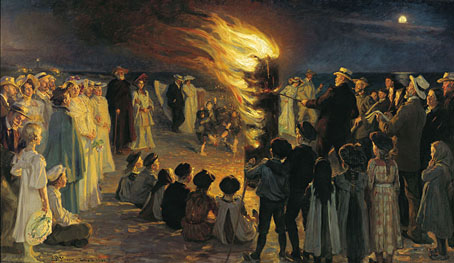
Midsummer’s Eve Bonfire on Skagen’s Beach (1906) by PS Krøyer.

midsummer6.jpg

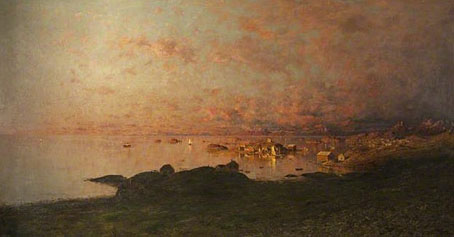
Midsummer Night, Lofoten, Norway (no date) by Adelsteen Normann.

Previously on { feuilleton }
Max Reinhardt’s Dream
The Midsummer Chronophage
Another Midsummer Night
A Midsummer Night’s Dadd
William Heath Robinson’s Midsummer Night’s Dream

More hypercubes

hypercube1.jpg

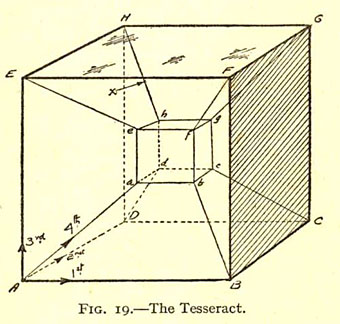
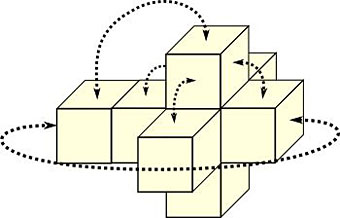
A few more extensions of the idea, not all of which have much to do with Hinton’s concepts beyond the name.

hypercube2.jpg

hypercube3.jpg

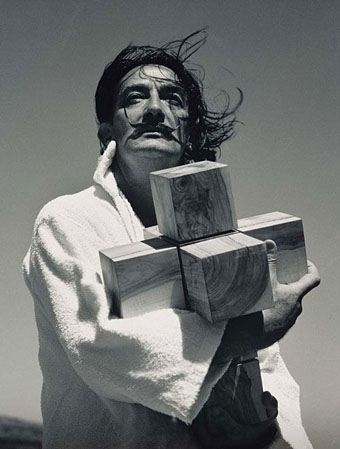
Salvador Dalí with hypercube (1952). Photo by Francesc Català-Roca.

hypercube4.jpg

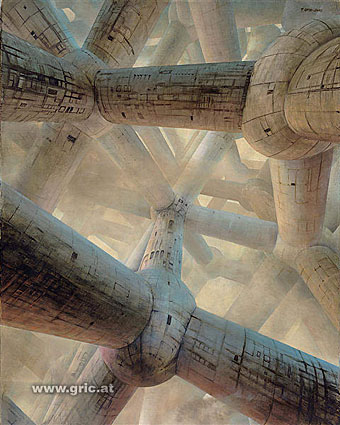
Hypercubic Metropolis (2002) by Peter Gric.

hypercube5.jpg

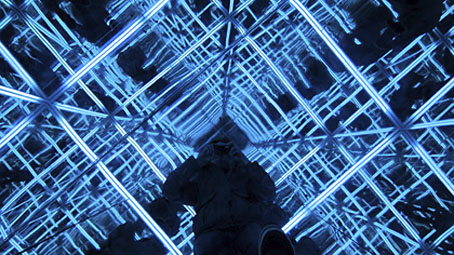
HyperCube (2012) is an installation by artist Jaap van den Elzen and sound composer Augusto Meijer which combines the mirror room familiar from the work of Yayoi Kusama with changeable lighting and sound effects. See also Cube 2: Hypercube (2002) which concerns a group of people imprisoned in a tesseract.

Previously on { feuilleton }
Hinton’s hypercubes
Infinite reflections