Entr’acte by René Clair

entracte.jpg

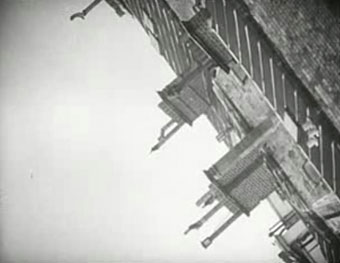
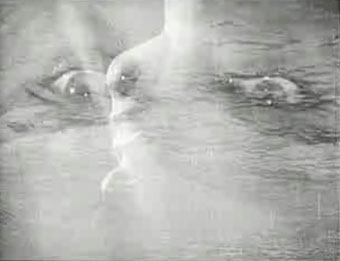
One of the best—and most entertaining—films to come out of the Dada/Surrealist period, Entr’acte (1924) is also worth watching for the appearance of notable figures such as Francis Picabia (who initiated the project), Marcel Duchamp, Man Ray and Erik Satie.

This extraordinary early film from director René Clair was originally made to fill an interval between two acts of Francis Picabia’s new ballet, Relâche, at the Théâtre des Champs-Elysées in Paris in 1924. Picabia famously wrote a synopsis for the film on one sheet of note paper, headed Maxim’s (the famous Parisian restaurant), which he sent to René Clair. This formed the basis for what ultimately appeared on screen, with some additional improvisations. Music for the film was composed by the famous avant-garde composer Erik Satie, who appears in the film, along side its originator, Francis Picabia. The surrealist photographer Man Ray also puts in an appearance, in a film which curiously resembles his own experimental films of this era.

entracte2.jpg

Entr’acte is a surrealistic concoction of unrelated images, reflecting Clair’s interest in Dada, a fashionable radical approach to visual art which relied on experimentation and surreal expressionism. Clair’s imagery is both captivating and disturbing, giving life to inanimate objects (most notably the rifle range dummies), whilst attacking conventions, even the sobriety of a funeral march.
Entr’acte can be watched and downloaded at Ubuweb. Tate Modern is running a major exhibition of the works of three of the participants, Duchamp, Man Ray, Picabia, until 26 May, 2008.

Previously on { feuilleton }
Alexander Hammid
Impressions de la Haute Mongolie revisited
Short films by Walerian Borowczyk
The South Bank Show: Francis Bacon
Rose Hobart by Joseph Cornell
Some YoYo Stuff
Beckett directs Beckett
Meshes of the Afternoon by Maya Deren
Not I by Samuel Beckett
La Villa Santo Sospir by Jean Cocteau
Un Chant D’Amour by Jean Genet
Borges documentary
Film by Samuel Beckett
Towers Open Fire

Sam Amidon in Manchester

samamidon.jpg

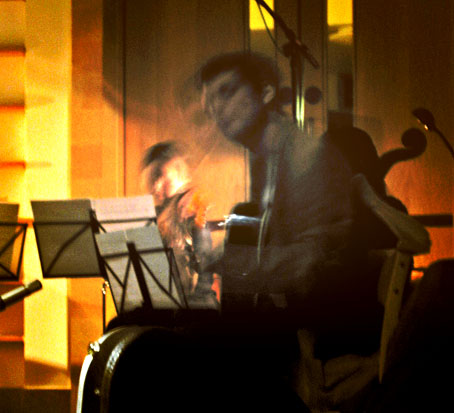
The phrase “breathless hush” might have been created for the rapt anticipation that greets some of the artists who play the Cross Street Chapel in Manchester. The circular space is a perfect arena for detailed electronica of the kind presented by Machinefabriek and company last year, or acoustic performances such as tonight’s astonishing set by American singer and guitarist/banjo player Sam Amidon. We were fortunate this evening to be treated not only to virtually the whole of Amidon’s All Is Well album but he was also accompanied throughout by a string quartet playing exclusively for this concert.

All Is Well is a collection of traditional songs of the Harry Smith Anthology of American Folk Music/“Old Weird America” school and Amidon himself comes from a musical family immersed in these folk traditions. As a result he swims in this world like a natural and when you add his equally natural talent plus Nico Muhly‘s string arrangements you have something very special. Some of the more poignant songs tonight were, if anything, better than their equivalents on the album, not least for the incomparable atmosphere that live strings bring to the occasion; when he opened with Saro I was on the verge on tears it was so wonderful. All Is Well is released by Bedroom Community, possibly the best label in the world right now with a small roster of essential artists that I keep intending on writing about at greater length for Arthur. Tonight’s event made that intention all the more urgent and necessary. Best gig of the year already? We’ll see…. Buy his album!

Sam Amidon on MySpace
Sam Amidon on YouTube

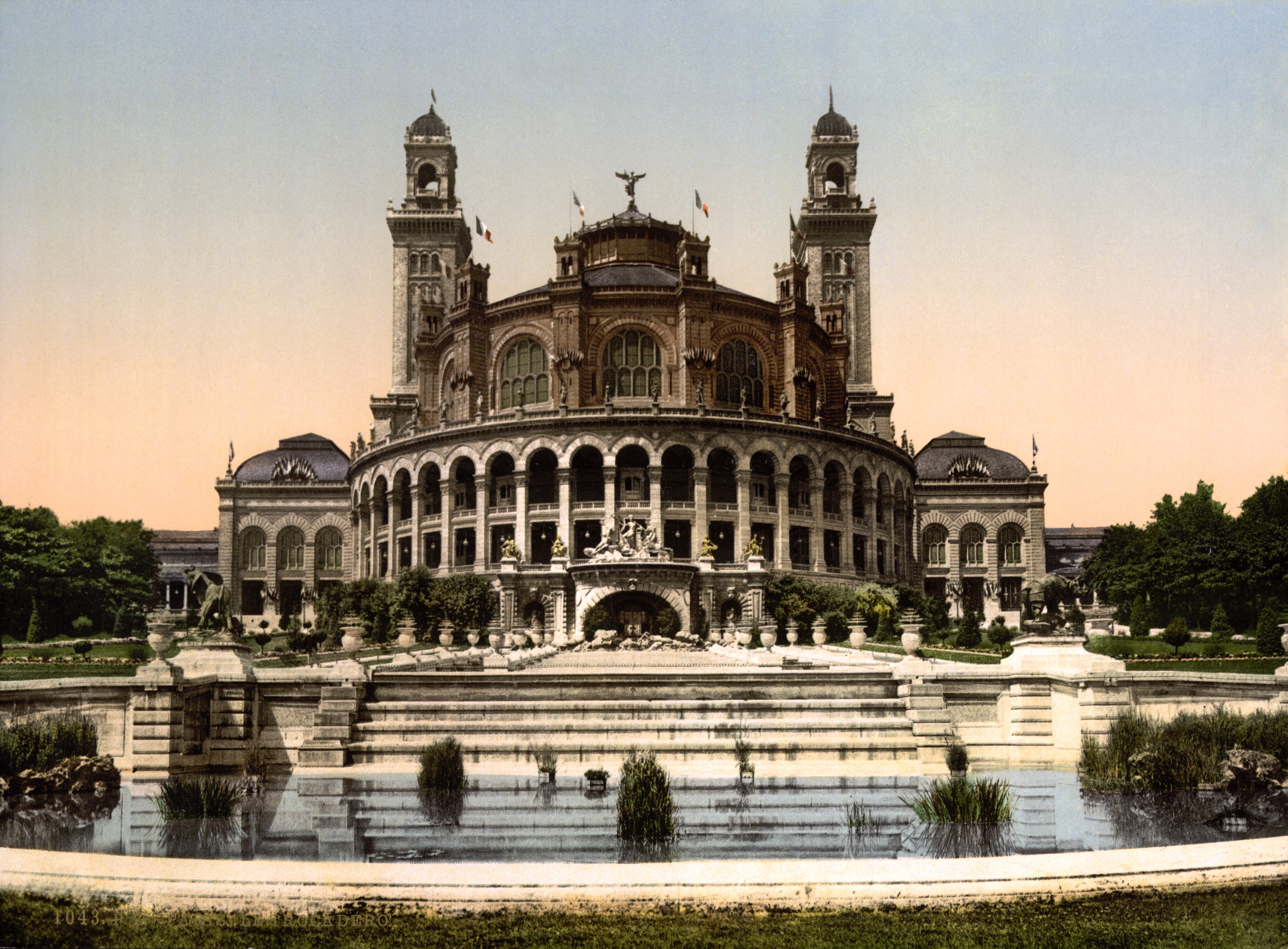
The Palais du Trocadéro

trocadero.jpg

More ephemeral architecture and also another example of old exposition architecture. The Palais du Trocadéro was designed by Gabriel Davioud for the 1878 World’s Fair and until its demolition in the 1930s faced the Eiffel Tower across the Seine after that edifice had been constructed as the entrance arch for another fair, the Exposition Universelle of 1889. Davioud designed other less extravagant works for Paris, including the Fontaine St Michel which I photographed during one of my visits there in 2006.

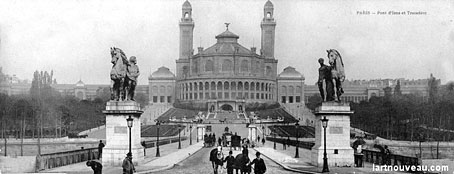
The Trocadéro is something of a heavy-handed confection, ostensibly “Moorish” in that Orientalist fashion favoured by 19th century architects. The numerous photographs of the place give it the same quality of ghostly grandeur that so many these long-demolished buildings possess; we’re able to look at a very real place which has now vanished utterly. The bridge in the picture below still stands, however, and the balcony of the Trocadéro’s replacement, the Palais de Chaillot, gives great views of the Eiffel Tower and the river.

trocadero1.jpg

Previously on { feuilleton }
The Evanescent City
Ephemeral architecture
Winsor McCay’s Hippodrome souvenirs