La fièvre d’Urbicande by Schuiten & Peeters

urbicande1.jpg

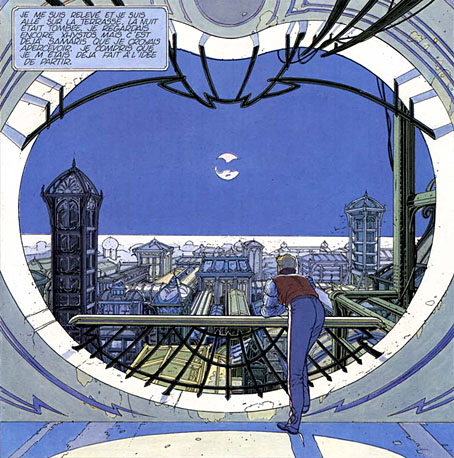
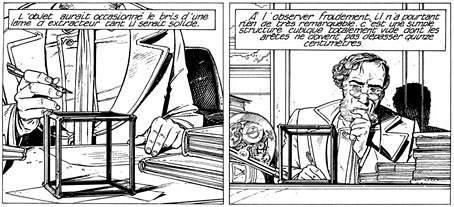
La fièvre d’Urbicande (1985) by François Schuiten and Benoît Peeters is the second volume in the Cités Obscures series. This was the story that captured my attention the most when I first saw it. The book opens with a foreword by the central character, Robick, chief architect of the city of Urbicande, in which he discusses his plans to unify the city’s separate halves by extending the design of the city’s southern half into the chaotic northern section.
urbicande2.jpg

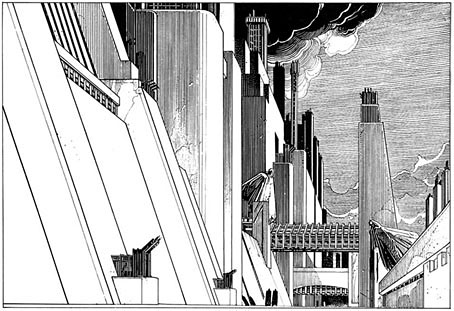
Urbicande is built on the steeply-sloped banks of a wide river. The rational, rectilinear southern bank is exposed to the sun while the northern bank is a place of shadow and mists; traffic between the two halves is strictly controlled by the administrators of the south who fear the chaos the north represents. The style of the southern region is a superb imagining of an Art Deco metropolis, the physical and psychological opposite of the north bank which is revealed as an older place of winding lanes and dishevelled buildings. In Robick’s foreword he refers to former “masters” who happen to be people from our world: architect Étienne-Louis Boullée and architectural renderer and theorist Hugh Ferriss. Mention of Ferriss was a surprise since he isn’t so well-known outside the architectural sphere. I’ve previously discussed his Metropolis of Tomorrow which is an evident influence in the style of some of Schuiten’s skyscrapers.

Continue reading “La fièvre d’Urbicande by Schuiten & Peeters”
Les Murailles de Samaris by Schuiten & Peeters

map.jpg

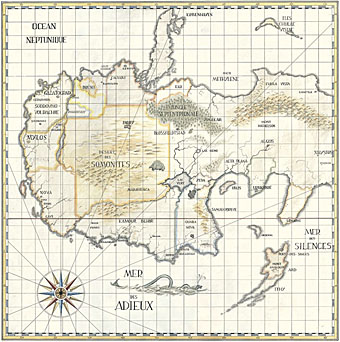
The Obscure World.

Les Murailles de Samaris (1983) by François Schuiten and Benoît Peeters is the first of the stories which explores the world of Les Cités Obscures, a “counter-Earth” on the opposite side of our Sun with a continent of separate city-states, each with their own distinct architectural style. Having discovered these stories first in their French editions it wasn’t immediately apparent how much the Obscure World was supposed to be connected to our own; a number of the books contain references to people or places in our world, while the city of Brüsel, subject of the book of that name, is a kind of parallel Brussels. The counter-Earth explanation isn’t given in the early books but seems to have evolved later, as does Schuiten and Peeters’ introduction of portals between the worlds which imply a two-way leakage of influence. Writer and artist encourage readers of the series to suggest or “discover” new portals to the Obscure World.

samaris1.jpg

A view over Xhystos.

The distant city of Samaris is the mysterious destination of Les Murailles de Samaris (The Walls of Samaris). The story begins in the city of Xhystos whose style is fully Art Nouveau in a manner reminiscent of the celebrated Belgian architect Victor Horta, if Horta had been allowed to design a city where every building is decorated with wrought-iron curves and glass-canopied roofs, and where trams go by on elevated roads several storeys high. The narrator, Franz, is informed by the city authorities that he’s been chosen to go on a perilous mission to discover whether rumours about the nature of Samaris are true or not. Previous explorers have failed to return so Franz’s friends and girlfriend regard his acceptance of the mission as suicidal. What follows is a journey by steam train out of the city into a surrounding zone of lawless ruins, then a journey by “altiplane” and “aerophele”, the latter being a kind of multi-winged sand yacht.

Continue reading “Les Murailles de Samaris by Schuiten & Peeters”

The art of François Schuiten

schuiten1.jpg

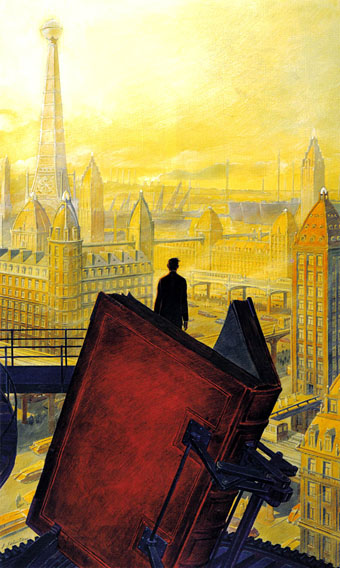
Paris au XXieme Siecle by Jules Verne (1994).

Following a comment I made last week in the post about the Temples of Future Religions by François Garas I’ve decided it’s time to give some proper attention to one of my favourite comic artists, François Schuiten, a Belgian whose obsession with imaginary architecture resembles the earlier endeavours of Garas and others. Schuiten’s parents were both architects which perhaps explains his predilection. In addition to a large body of comics work, he’s produced designs for film—notably Taxandria by Raoul Servais—Belgian stamps, and a steampunk makeover for the Arts et Métiers station of the Paris Métro. In 1994 he created cover designs and a series of illustrations for the publication of Jules Verne’s rediscovered manuscript, Paris au XXieme Siecle.

schuiten2.jpg

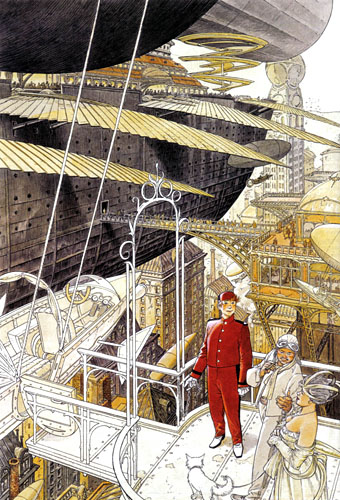
Cover for Spirou (2000).

I first encountered Schuiten’s work in a 1980 issue of Heavy Metal magazine which was reprinting translated stories from the French Métal Hurlant along with original work. Schuiten’s story, The Cutter of the Fog, was an erotic and futuristic tale of a small community and the obsession of the local “fog-cutter”. François’s brother Luc wrote the piece and it bears some similarity with JG Ballard’s Vermilion Sands story, The Cloud Sculptors of Coral D. Unusually for Schuiten, the architecture was downplayed in this one although the small homes with their geodesic roofs are like extrapolations of architectural plans from one of the Whole Earth Catalogues.

The next time I saw his work was several years later when artist Bryan Talbot showed me some of the comic albums he’d brought back from a European convention. Among these there were several of the Cités Obscures books that Schuiten had been creating during the Eighties and Nineties with writer Benoît Peeters. These knocked me out with their apparently effortless creation of an imaginary world comprised of several city states, each with their own unique architectural style, and a wealth of retro-future technology, from dirigibles of all shapes and sizes to ornithopters and huge motorised unicycles. One of the many things I liked about European comic artists, and something which made me favour their work over their American counterparts, was the creation of richly detailed imaginary universes with inhabitants one could expect to meet in our world, not facile superheroes or vigilantes. Schuiten went further than his contemporaries by making the architecture meticulously believable and foregrounding its design to an extent that in some of the Cités Obscures stories architecture itself is the subject.

Continue reading “The art of François Schuiten”

Villa d’Este

deste1.jpg

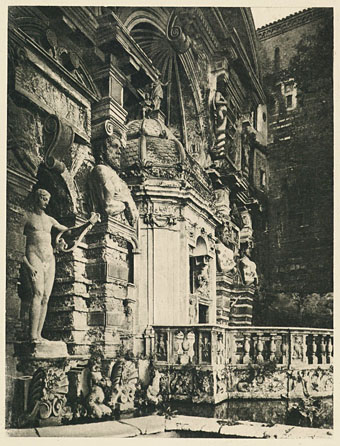
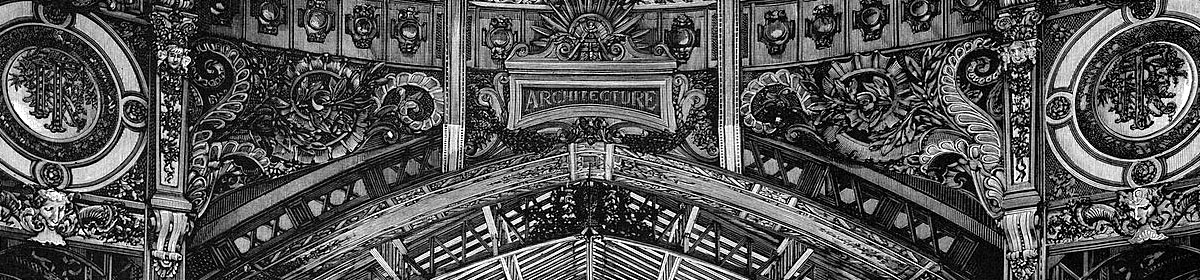
Detail of the Water Organ (1902).

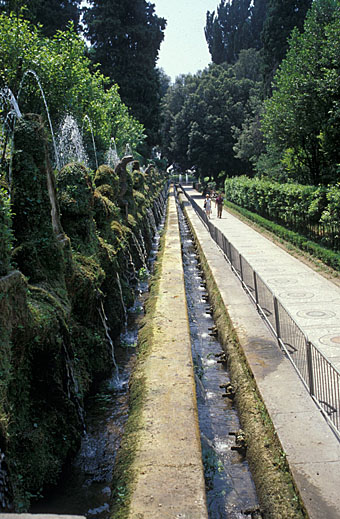
Samples from a set of pictures at LUNA Commons of the wonderful water gardens at the Villa d’Este, Tivoli, Italy. Among the 164 items in the collection are plans, engravings, and photographs old and new. I’m partial to the older photos, most of which seem to be photogravure reproductions whose temporal distance and technical shortcomings only add to the mystique of the place.

deste2.jpg

Alley of the hundred fountains (1997).

Previously on { feuilleton }
Gertrude Käsebier’s crystal gazer
The Door in the Wall
Paris II: The River Fountain

An apology for Alan Turing

turing.jpg

Sometimes petitions work. A few weeks ago one such was launched by computer scientist John Graham-Cumming on the UK government website requesting a public apology for the terrible treatment accorded mathematician and wartime codebreaker Alan Turing in 1952. Turing was prosecuted after admitting a gay affair to police investigating another matter and given the choice of imprisonment or parole with chemical castration; in order to carry on working he took the latter choice but subsequent depression led to his suicide. The law used was the same which sent Oscar Wilde to prison in 1895, and Turing’s case was probably the worst treatment of a notable figure on the basis of sexuality since Wilde. During the Second World War Turing had saved countless lives by helping crack the Enigma code, and his early computer research led to the development of machines like the one on which you’re reading these words. In 1999 TIME Magazine put him in a list of the 100 Most Important People of the 20th Century.

Turing has always felt like a local hero to me even though he only lived in Manchester for a few years. The house where he died isn’t far from where I live, and he has a memorial statue (above) in Sackville Park in the city centre, midway between the gay village and the Institute of Science and Technology where he worked. The petition gained a lot of support—30,805 signatures—including endorsement from high-profile figures such as Richard Dawkins and Stephen Fry. I signed it although I was sceptical it would lead to anything; this government doesn’t have much of a record for paying attention to the wishes of its citizens. So colour me surprised now that PM Gordon Brown has issued an apology:

Thousands of people have come together to demand justice for Alan Turing and recognition of the appalling way he was treated. While Turing was dealt with under the law of the time and we can’t put the clock back, his treatment was of course utterly unfair and I am pleased to have the chance to say how deeply sorry I and we all are for what happened to him. Alan and the many thousands of other gay men who were convicted as he was convicted under homophobic laws were treated terribly. Over the years millions more lived in fear of conviction.

I am proud that those days are gone and that in the last 12 years this government has done so much to make life fairer and more equal for our LGBT community. This recognition of Alan’s status as one of Britain’s most famous victims of homophobia is another step towards equality and long overdue. (More.)

I take a consistently dim view of the present administration when it comes to its diminishing of our civil liberties and its involvement in other people’s wars. But when it comes to gay issues, Blair and Brown have been the best Prime Ministers since 1967, when another Labour government overturned the law which killed Wilde and Turing. The best, bar none. This announcement is another plus in that direction.

Previously on { feuilleton }
Stonewall forty years on
Over the rainbow
Forty years of freedom after centuries of injustice