Emil Cadoo

cadoo.jpg

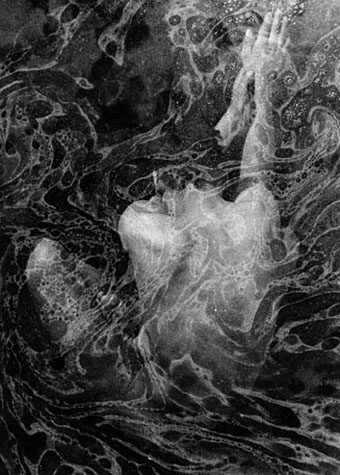
Untitled (1963).

One of a small number of pictures from a recent exhibition of work by American photographer Emil Cadoo (1926–2002) whose nude studies and often homoerotic themes were controversial in America of the Fifties and Sixties but welcomed in France, as was often the case at that time.

In April 1964, all 21,000 copies of the April/May issue no.32 of the American magazine Evergreen Review – containing (among others) texts by Norman Mailer, Jean Genet, William Burroughs, Bryon Gysin, Michael McClure, Karl Shapiro (a who’s who of the day’s practitioners of perceived outrage), and an erotic photo-essay by Cadoo – was seized by the police whilst it was still being bound. The edition had been deemed ‘obscene’ by the county’s district Attorney, whose particular disapproval was leveled at Cadoo. It took the special intermission of Edward Steichen, who compared the images to the work of Auguste Rodin “the greatest living sculptor of our time”, to obtain the condemnation of three judges of this action as ‘unconstitutional’, and to return the magazine to the public domain. (More.)

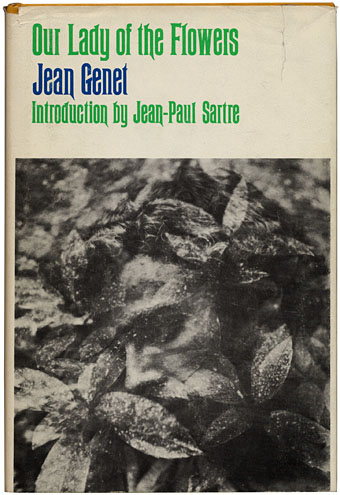
Cadoo favoured the double-exposure to achieve painterly or (for want of a better word) “poetic” effects, and some of these photos were used on book jackets by Grove Press (also the publishers of Evergreen Review), among them this Genet title which I posted a couple of years ago. More of Cadoo’s work can be found on various gallery sites but there’s no dedicated site unfortunately.
genet2.jpg

Photo by Emil Cadoo; design by Roy Kuhlman (1963).

Previously on { feuilleton }
Penguin Labyrinths and the Thief’s Journal
Un Chant d’Amour by Jean Genet

Short films by Sergei Parajanov

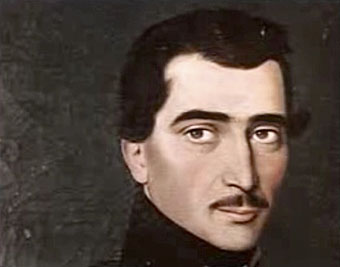
parajanov.jpg

Hakob Hovnatanyan (1967).

I’ve been enthusing for years about the unique films of Sergei Parajanov (1924–1990), usually in vain since his work hasn’t always been easy to see and is (for now) poorly served by DVD. His two masterworks, Shadows of Our Forgotten Ancestors (1964) and The Colour of Pomegranates (1968), have both been issued on disc but in shoddy versions with prints that are scratched and desaturated, and the latter suffers from poor subtitling. Parajanov’s films make bold use of colour and a washed-out print does him no favours at all. In an ideal world the BFI or Criterion would give these films the attention they deserve.

Grumbles aside, Ubuweb comes up trumps again by posting three of Parajanov’s shorter works, none of which I’d seen before. These give some idea of his distinctive tableaux style, and his recurrent preoccupation with decorative details and close views of objects.

Parajanov.com

Previously on { feuilleton }
The Disasters of War

Blast

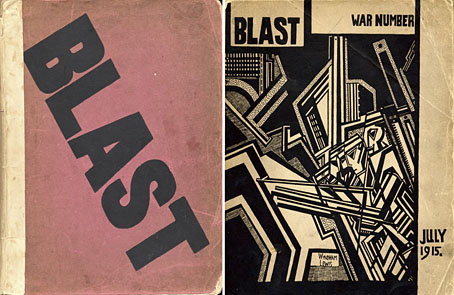
blast.jpg

Both issues of Wyndham Lewis’s avant garde art and literature journal can be found in a collection of similar publications from the Modernist years at Brown University here and here. I’ve always liked the bold graphics of Lewis and his fellow Vorticists, and BLAST 2, “the War Number”, is especially good in that regard. The MJP site reminds us that BLAST is still under copyright control outside the US and is also available in facsimile editions from Gingko Press.

BLAST was the quintessential modernist little magazine. Founded by Wyndham Lewis, with the assistance of Ezra Pound, it ran for just two issues, published in 1914 and 1915. The First World War killed it, along with some of its key contributors. Its purpose was to promote a new movement in literature and visual art, christened Vorticism by Pound and Lewis. Unlike its immediate predecessors and rivals, Vorticism was English, rather than French or Italian, but its dogmas emerged from Imagism in literature and Cubism plus Futurism in visual art.

The original BLAST was published by Aubrey Beardsley’s first publisher, John Lane, and it’s fascinating to see Lane advertising back issues of The Yellow Book in pages which include Lewis’s anti-Victorian polemic. Meanwhile I’m still waiting for copies of the Art Nouveau journal Ver Sacrum to turn up somewhere. If anyone runs across quality scans, please leave a comment.

Via Things Magazine.

Previously on { feuilleton }
Wyndham Lewis: Portraits