Sphinxes

sphinx09.jpg

Bei den Pyramiden (1842) by Leander Russ.

A horde of sphinxes from NYPL Digital Collections and Wikimedia Commons, a pair of sites I was searching through last week. I was looking for a very particular kind of sphinx, not the Great Sphinx that sits near the Pyramids at Giza. What I wanted was something smaller and less ruined, like the sentinels that proliferated during the fads for Egyptian art and design in the early 1800s and the 1920s. My search was satisfied eventually, the results of which will be revealed in the next post.

sphinx06.jpg

Approach of the Simoom. Desert of Gizeh (c. 1846–49) by David Roberts. 

As for the Great Sphinx, I enjoy seeing artistic representations of the monument, especially those which place the creature in a dramatic setting. Older depictions tend to look bizarre or even comical, especially the ones made during the centuries when the figure was little more than a head protruding from the drifting sands. The photographs I prefer are those that show the Sphinx in the 19th century before all the restorations began, when the creature was another half-buried fragment of antiquity, not something that seems to have just been removed from a box in a museum.

sphinx08.jpg

The Sphinx and Great Pyramid, Geezeh (1858–1859).

sphinx10.jpg

The Questioner of the Sphinx (1863) by Elihu Vedder.

sphinx07.jpg

The Sphinx by Harry Fenn (1881–1884). “Called by the Arabs “Father of terrors.” It faces the east, and is hewn out of the natural rock.”

Continue reading “Sphinxes”

Weekend links 804

phantom.jpg

Poster for The Phantom of the Opera, 1925. The first Universal horror film, and the best screen adaptation of Gaston Leroux’s novel, was released 100 years ago this month.

• “Evolution seems to have a thing for mind-bending molecules here on planet Earth. Psychedelics are more widespread in nature than you might think. These remarkable compounds, which can profoundly alter consciousness, arose repeatedly across evolutionary time, stretching back at least 65 million years. To date, some 80 species of fungi, at least 20 plants, and a species of toad have been documented to produce psychoactive molecules. And scientists continue to identify new ones.” Kristin French presents a trip around our surprisingly psychedelic planet.

• “There was no condescending sense with Potter —all too present today as then—that the public were idiots who needed to be intellectually housetrained, by their enlightened ‘betters’. […] Television was not treated as a particularly serious medium, something Potter upended not by performing ‘seriousness’ but by bringing out the possibilities few had believed it contained.” Darran Anderson on the television plays of Dennis Potter.

• At Public Domain Review: AD Manns on a possible origin for the occult lore presented in Charles Godfrey Leland’s Aradia, Or the Gospel of the Witches, a founding text for the witchcraft revival of the 20th century.

• New music: Implosion by The Bug vs Ghost Dubs; Herzog Sessions by Mouse On Mars; VHS Days Vol. 1 by Russian Corvette.

• At Wyrd Britain: A link to a video interview in which the great Ian Miller about his long illustration career.

• At the BFI: David West selects 10 great Hong Kong action films of the 1980s.

• Mix of the week: DreamScenes – November 2025 at Ambientblog.

• At The Wire: Stream the new album by Ann Kroeber & Alan Splet.

Seb Rochford’s favourite records.

• RIP Tatsuya Nakadai, actor.

Phantom Lover (2010) by John Foxx | Phantom Cities (2020) by The Sodality Of Shadows | Phantom Melodies (2018) by Cavern Of Anti-Matter

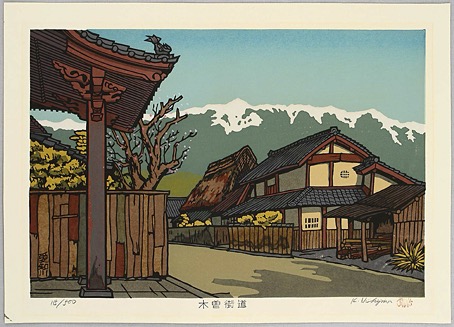
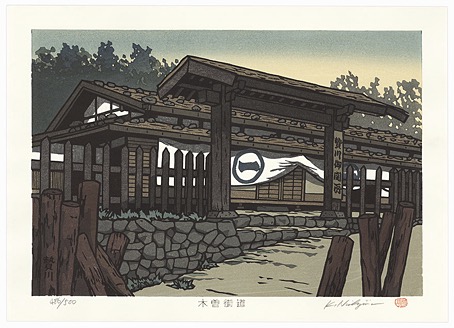
Koho Shoda’s nocturnes

shoda01.jpg

Futamigaura.

The biographical dates (1871–1946) are apparently uncertain for this Japanese artist about whom little documentation exists. What we do have is the prints he created, a couple of which have appeared here before. Nocturnes were Shoda’s speciality, together with other atmospheric scenes created with carefully graded colouring. As always with prints such as these, I’m in awe of the artist’s ability to create a sense of verisimilitude in the difficult medium of woodblock printing.

shoda09.jpg

Shrine Gate of Miyajima.

shoda05.jpg

Lake Biwa.

shoda08.jpg

Shinagawa Shore.

shoda10.jpg

Uyeno Park.

Continue reading “Koho Shoda’s nocturnes”

Eric Pape’s Arabian Nights

pape01.jpg

Eric Pape (1870–1938) was an American artist and illustrator who shouldn’t be confused with his contemporary Frank C. Papé, a Briton who was also a popular illustrator. Pape was more of a fine artist—he studied in Paris under Jean-Léon Gérôme—whose magazine illustrations are of that type that favoured realistic scenes using posed models. The illustrations in The Arabian Nights Tales of Wonder and Magnificence (1923) differ enough from his paintings to be taken for the work of another artist, the book being a substantial volume which Pape fills with many full-page ink drawings replete with stippling and detail.

pape02.jpg

The stories are a retelling by Padraic Colum with an eye to maintaining the flavour of the original (or older) texts. Books like this were aimed at a young readership but Colum begins with an introduction that describes the origin of the tales, and also weighs the pros and cons of the translations by Lane and Burton. In the stories he avoids simplifying the names of the more popular characters, so we have the six voyages of “El-Sindibad of the Sea”, and the tale of “Ala-ed-din” and his wonderful lamp. These gestures of fidelity are matched by Pape’s vignettes, many of are borrowed from Arabian or Persian sources. Pape had spent two years living and working in Egypt—his painting of the Sphinx by moonlight was a product of this period—a factor which may explain why he was offered the commission.

pape03.jpg

The pictures I’ve selected are mostly the full-page pieces which I’ve adjusted slightly to remove the grey tone of the paper. This copy of the book is a reprint from 1945, a period when print standards suffered from wartime restrictions. Older printings may be better.

pape04.jpg

pape05.jpg

Continue reading “Eric Pape’s Arabian Nights”

Weekend links 803

USA-ad.jpg

Ad for The United States Of America from Helix magazine, 1968.

• American composer Joseph Byrd died this week but I’ve yet to see a proper obituary anywhere. He may not have been a popular artist but he was significant for the one-off album produced in 1968 by his short-lived psychedelic group, The United States Of America. Their self-titled album has been a favourite of mine since it was reissued in the 1980s, one of the few American albums of the period that tried to learn from, and even go beyond, the studio experimentation of Sgt Pepper. The United States Of America didn’t have the resources of the Beatles and Abbey Road but they did have Byrd’s arrangements, together with an energetic rhythm section, an electric violin, a ring modulator, some crude synthesizer components, the voice of Dorothy Moskowitz, and a collection of songs with lyrics that ranged from druggy poetry to barbed portrayals of the nation’s sexual neuroses. The album became an important one for British groups in the 1990s who were looking for inspiration in the wilder margins of psychedelia, especially Stereolab, Portishead (Half Day Closing is a deliberate pastiche), and Broadcast. Byrd did much more than this, of course, and his follow-up release, The American Metaphysical Circus by Joe Byrd And The Field Hippies, has its moments even though it doesn’t reach the heights of its predecessor. Byrd spoke about this period of his career with It’s Psychedelic Baby Magazine in 2013.

• At BBC Future: “The most desolate place in the world”: The sea of ice that inspired Frankenstein. Richard Fisher examines the history of the Mer de Glace in fact and fiction with a piece that includes one of my Frankenstein illustrations. The latter are still in print via the deluxe edition from Union Square.

• A Year In The Country looks at a rare book in which Alan Garner’s children describe the making of The Owl Service TV serial.

• The final installment of Smoky Man’s exploration of The Bumper Book of Magic has been posted (in Italian) at (quasi).

• At Public Domain Review: Perverse, Grotesque, Sensuous, Inimitable: A Selection of Works by Aubrey Beardsley.

• At Colossal: Ceramics mimic cardboard in Jacques Monneraud’s trompe-l’œil ode to Giorgio Morandi.

• At the Daily Heller: The “narrative abstraction” of Roy Kuhlman‘s cover designs for Grove Press.

• New music: Elemental Studies by Various Artists; and Gleann Ciùin by Claire M. Singer.

• Steven Heller’s font of the month is Archive Matrix.

Sensual Hallucinations (1970) by Les Baxter | The Garden Of Earthly Delights (United States Of America cover) (1982) by Snakefinger | Perversion (1992) by Stereolab